
What types of surfaces can be effectively cleaned with commercial pressure washing services without causing damage?
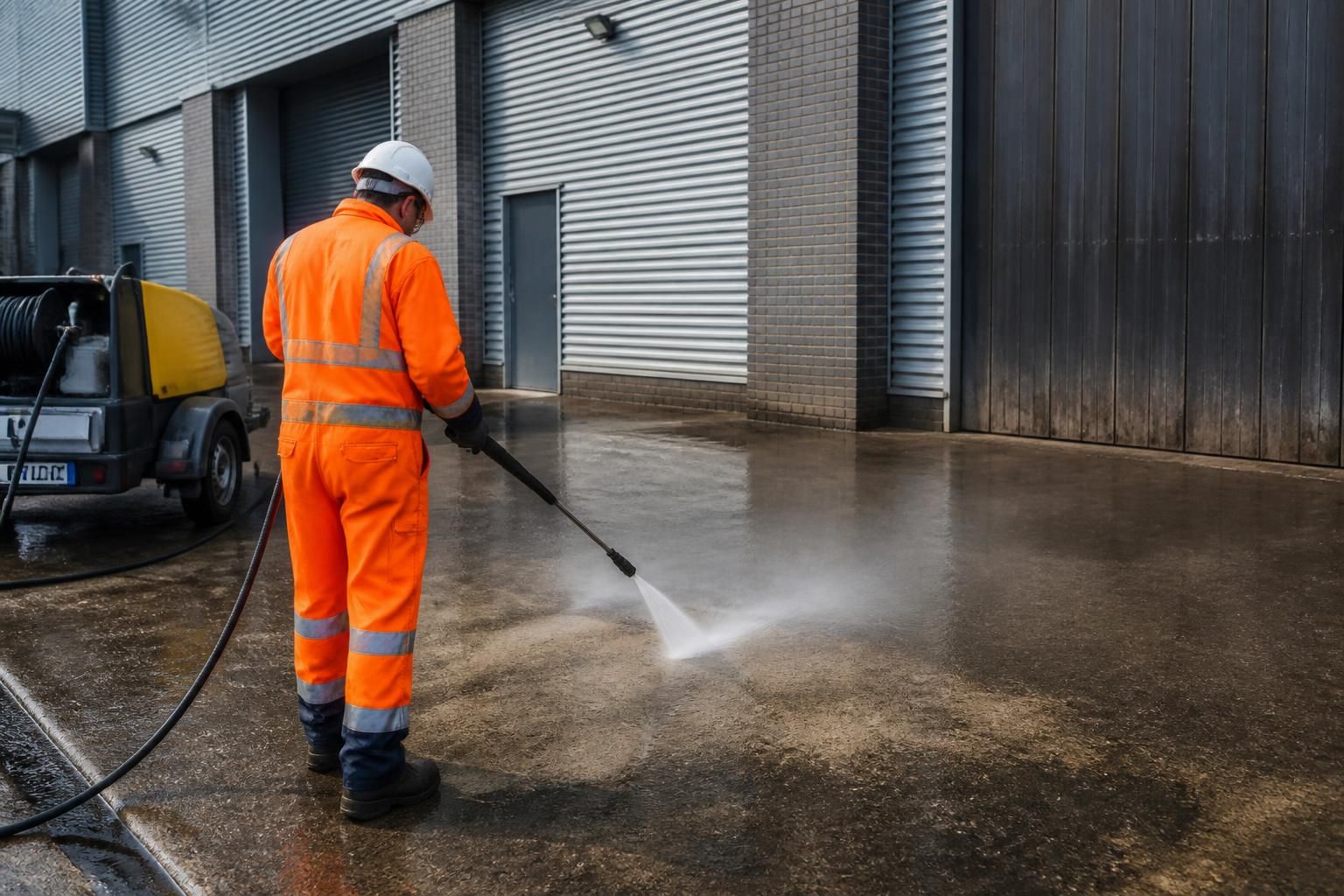
Commercial pressure washing can safely clean durable surfaces such as concrete, tarmac, paving, brickwork, stone, metal cladding, façades, roofs and car parks when the pressure, temperature and cleaning method are matched to the material. Sensitive or weathered surfaces, including painted finishes, render, timber and older masonry, require a controlled approach and an assessment before cleaning to prevent damage.
Commercial pressure washing can safely clean durable exterior surfaces such as concrete, tarmac, block paving, brickwork, natural stone, metal cladding, façades, roofs and car parks when the pressure, temperature, nozzle, cleaning solution and working distance are matched to the material. The method is not simply a matter of applying the highest possible pressure. A pre-cleaning inspection is essential because age, surface condition, coatings, joints, pointing and previous repairs all affect the safest approach.
For commercial premises, the objective is to remove dirt, algae, moss, traffic film, oil residues, biological growth, loose coatings and other staining without eroding the substrate or forcing water into the building. Where a surface is delicate, weathered or structurally compromised, controlled low-pressure cleaning, steam cleaning or a specialist soft-washing process may be more appropriate than conventional high-pressure washing.
Concrete and reinforced concrete
Concrete is generally well suited to commercial pressure washing. It can be cleaned effectively on service yards, loading areas, walkways, steps, external walls, car parks and hard-standing areas. Pressure washing removes soil, tyre marks, algae, surface grime and some oil contamination, although deeply absorbed oils may require a suitable degreaser and additional treatment.
Care is needed around cracked or spalled concrete, exposed aggregate, expansion joints and deteriorated edges. Excessive pressure can loosen weak material, enlarge cracks or remove the surface cement paste, leaving an uneven finish. Operators should use a suitable nozzle, maintain a consistent distance and avoid directing water into joints or damaged areas unnecessarily.
Tarmac and asphalt
Tarmac can usually be cleaned safely using a controlled pressure-washing technique. It is suitable for car parks, access roads, footpaths, forecourts and service areas where dirt, moss and general traffic film have accumulated. Cleaning can improve visibility of existing line markings and help identify defects that were hidden by surface contamination.
Older or poorly bonded asphalt needs particular care. Excessive pressure, concentrated spray patterns or excessive heat may disturb loose aggregate or soften the binder. Oil spills should be treated with a compatible cleaning product rather than repeatedly blasting the surface. Drainage points, kerbs and the edges of repairs should also be inspected before work begins.
Block paving, concrete paving and flags
Block paving and paving slabs are commonly cleaned with commercial pressure-washing equipment. The process can remove weeds, moss, algae, soil and atmospheric staining from pedestrian areas, courtyards, access routes and communal spaces. Rotary surface cleaners are often useful on broad, even areas because they distribute the cleaning action more consistently than a narrow lance.
The condition of the joints is important. High pressure can remove jointing sand, disturb loose blocks or expose movement between paving units. After cleaning, joints may need to be checked and reinstated with an appropriate material. Uneven, settled or cracked paving should not be treated as if it were sound, as cleaning may reveal or worsen existing defects.
Brickwork and masonry
Sound modern brickwork can often be cleaned successfully, particularly where the contamination is surface-level dirt, algae or atmospheric deposits. However, brick and mortar vary considerably in hardness and porosity. Older, handmade or historically significant bricks may be softer than the mortar surrounding them, making aggressive pressure washing unsuitable.
Weak pointing, open joints, frost-damaged bricks and existing cracks must be identified before cleaning. Water forced into defective joints can cause further deterioration or penetrate into the building. A lower-pressure process, steam cleaning or a carefully selected chemical treatment may provide a safer result. Small test areas should be assessed for colour change, surface wear and the release of grit before full-scale work proceeds.
Natural and engineered stone
Granite, some types of sandstone, limestone, paving stone and engineered stone can be cleaned, but there is no single pressure setting suitable for every stone. Dense stone may tolerate a controlled wash, while softer or porous stone can be etched, scoured or discoloured by excessive pressure or unsuitable chemicals.
Stone façades, steps, retaining walls and paving should be assessed for porosity, existing sealers, staining and biological growth. Acidic products can damage calcareous stone, and strong pressure can remove the natural surface or decorative finish. Cleaning should therefore begin with the least aggressive method likely to achieve the required result, followed by a visual inspection before progressing.
Metal cladding and coated façades
Aluminium, steel and other metal cladding systems are often suitable for controlled pressure washing. Cleaning can remove dust, bird fouling, traffic film, algae and other deposits from industrial units, warehouses, retail premises and office buildings. It is particularly important to identify whether the cladding has a painted, powder-coated, anodised or specialist protective finish.
Damaged or lifting coatings can be stripped by concentrated pressure. Water can also enter behind overlapping panels, trims, seals and service penetrations if the spray is directed into the joints. A broad spray pattern, appropriate working distance and careful control around seals are needed. Any cleaning solution must be compatible with the coating and rinsed away without allowing residue to dry on the façade.
Rendered, painted and coated surfaces
Render and painted façades may be cleanable, but they are more sensitive than bare concrete or sound masonry. A low-pressure wash or soft-washing system is often preferable for removing algae, mildew and atmospheric dirt. The condition of the render, paint adhesion, previous repairs and the presence of hairline cracks should be checked beforehand.
High pressure can cause pitting, flaking, colour variation and water penetration. It may also expose differences between original and repaired areas. Where a façade has a fragile coating or significant deterioration, cleaning should be limited to what the surface can safely withstand, with redecoration or repair considered separately where necessary.
Roofs and roof coverings
Some roof coverings, including sound metal roofing, concrete tiles and certain commercial membrane systems, can be cleaned using carefully controlled equipment. The correct method depends on the roof material, its age, its condition, the pitch and the risk of water entering laps, vents, flashings or joints.
Pressure washing is not automatically suitable for every roof. It can dislodge tiles, remove protective finishes, drive water beneath overlaps or damage membranes and insulation. Moss should not simply be blasted from fragile or aged coverings. Safe access, fall protection and a suitable low-pressure or steam-based approach may be required. Suspected asbestos-containing roofing must not be pressure washed; it requires appropriate assessment and specialist controls.
Car parks, loading areas and industrial yards
Car parks and service yards are usually made from concrete, tarmac or paving and can be cleaned effectively with commercial pressure-washing equipment. The work may include removal of traffic film, chewing gum, algae, mud, tyre marks and localised oil staining. Surface cleaning equipment can help produce a more uniform finish across large areas.
Before cleaning, drainage arrangements and environmental controls should be considered. Contaminated wash water must not be allowed to enter surface-water drains without appropriate controls. Oil separators, gullies, nearby landscaping, parked vehicles, pedestrian routes and line markings should be protected. Cleaning schedules may also need to account for curing times, access restrictions and the safe reopening of the area.
Glass, plastics and external fixtures
Glass, uPVC, signage, doors, shutters and external fixtures may be cleaned with water-fed or low-pressure methods, but they are not normally treated like concrete. High pressure can damage seals, scratch surfaces with loosened grit, force water behind frames or affect electrical components and sensors. A softer method, controlled rinsing and careful protection around openings are more appropriate.
How damage is prevented
- Inspect the material, age, condition, coatings, joints, pointing and previous repairs before selecting equipment.
- Test a discreet area to confirm that the pressure, temperature and cleaning solution produce the required result without marking or eroding the surface.
- Use the lowest effective pressure and the widest practical spray pattern rather than relying on concentrated force.
- Adjust the working distance, spray angle and water temperature for the substrate and contamination.
- Use compatible detergents and allow suitable dwell time instead of increasing pressure unnecessarily.
- Protect windows, doors, vents, seals, electrical equipment, landscaping, vehicles and vulnerable finishes.
- Control runoff and remove or collect contaminated water where required.
- Inspect the cleaned surface and surrounding details before the area is handed back for use.
The safest choice depends on the actual condition of the surface, not only its material name. Concrete may be sound in one area and badly spalled in another; a metal façade may have an intact coating on one elevation and failed seals on another. Providing photographs, access information and details of known defects helps determine the appropriate method, while an on-site assessment and test clean confirm whether pressure washing, steam cleaning, soft washing or a combination of techniques will deliver a clean result without causing avoidable damage.
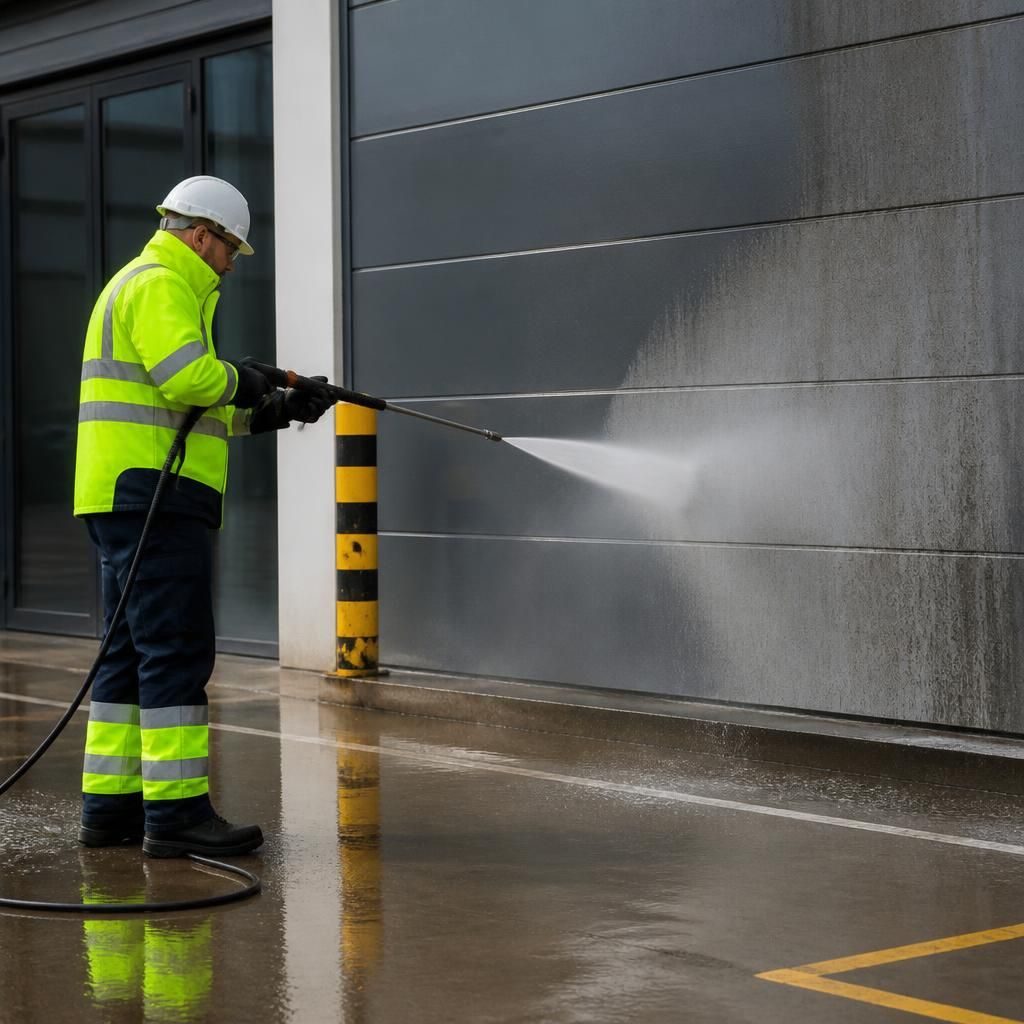
Commercial pressure washing cleans hard-wearing surfaces safely when the pressure, temperature, nozzle and cleaning solution are matched to the material and its condition. A sound concrete car park may tolerate a stronger cleaning method than weathered brickwork, painted render or coated cladding, where excessive pressure could remove the surface finish, damage joints or force water behind panels.
Before work begins, the surface should be inspected and a discreet test area cleaned. This confirms the least aggressive method that will remove the contamination effectively. Where pressure washing is unsuitable, controlled low-pressure cleaning, steam cleaning or soft washing can provide a safer alternative. Particular care is also required around windows, seals, vents, electrical fittings, drainage points and existing cracks or repairs.