
What surfaces are suitable for commercial pressure washing?
Commercial pressure washing is generally suitable for durable surfaces such as concrete, block paving, tarmac, brickwork, stone, car parks, loading areas, façades and some types of cladding. The pressure, temperature and cleaning method must be adjusted to the material, with delicate masonry, painted finishes, render, roofing and weathered surfaces assessed carefully before cleaning to prevent damage.
Commercial pressure washing is generally suitable for hard, durable surfaces including concrete, block paving, tarmac, brickwork, natural stone, car parks, loading areas and some façades and cladding. The correct method depends on the material’s strength, condition, finish and age. Pressure, water temperature, nozzle selection and cleaning products must be controlled so that contamination is removed without stripping coatings, eroding joints or forcing water into the building.
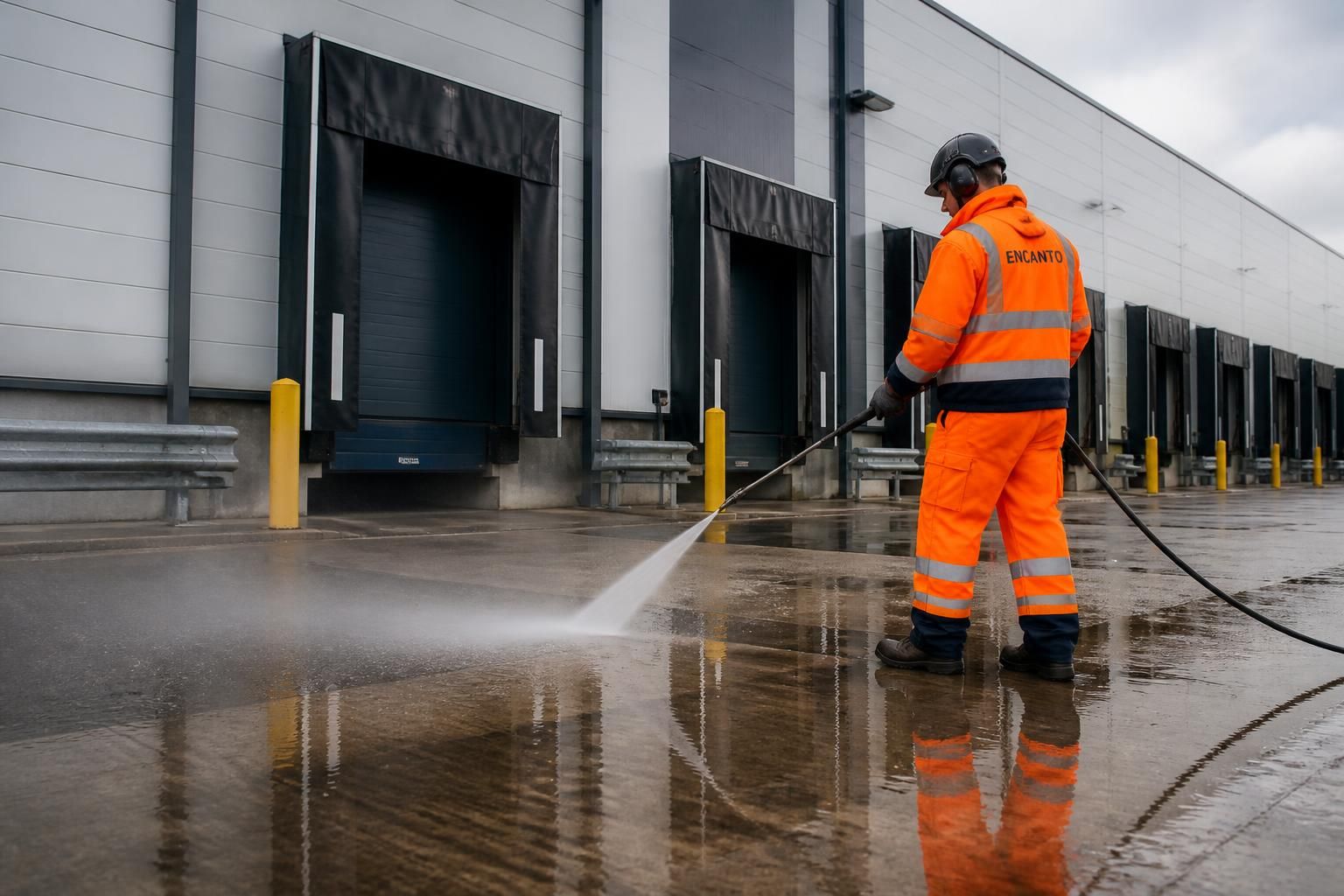
Concrete and reinforced concrete are commonly cleaned with pressure washing because their surfaces withstand robust cleaning when they are sound and properly cured. Suitable applications include paving, walkways, forecourts, service yards, car parks, loading bays, plant areas and concrete walls. Cleaning can remove dirt, algae, moss, tyre marks, oil residues and other surface contamination. Cracked, spalled or exposed concrete requires a more controlled approach, as water pressure can worsen loose areas or expose reinforcement.
Block paving and concrete paving can usually be cleaned effectively, including heavily trafficked paths and commercial entrances. The operator must avoid excessive pressure that could remove jointing material or dislodge blocks. After cleaning, joints may need to be refilled with an appropriate material once the surface has dried. We also assess for settlement, damaged blocks and weed growth before work begins, as pressure washing will not correct underlying movement or drainage problems.
Tarmac and asphalt are suitable for carefully controlled cleaning. Pressure washing can improve the appearance of car parks, access roads, yards and pedestrian routes by removing surface dirt, organic growth and some spillages. Tarmac can soften, loosen or lose aggregate if it is weathered, poorly bonded or cleaned too aggressively. Oil and chemical contamination may also require a suitable degreasing treatment and controlled recovery rather than pressure alone.
Brickwork can often be cleaned, particularly on robust commercial walls, boundary structures and external elevations. However, the condition of the bricks and mortar is more important than the appearance of the surface. Older, soft or porous bricks can suffer surface erosion, while weak mortar joints may be opened up by concentrated water pressure. Fan patterns, suitable working distances and lower-pressure methods are normally safer than directing a narrow jet at the masonry.
Natural stone may be suitable, but stone types vary considerably. Dense granite and some hard-wearing sandstone can tolerate controlled pressure washing, whereas softer or weathered stone, limestone and delicate historic masonry may require low-pressure, steam or other specialist cleaning. The cleaning method must account for porosity, existing sealants, surface deposits and any previous repairs. A test area should be completed where the material or finish is uncertain.
Façades and cladding can be cleaned using pressure washing where the construction and finish permit it. Metal, powder-coated, uPVC and certain composite cladding systems may respond well to a controlled wash, but panels, seals, joints and coatings must be protected. Water should not be forced behind panels or into vents, electrical fittings, doors and windows. Some façades are better suited to soft washing, steam cleaning or a low-pressure chemical process than to conventional high-pressure cleaning.
Roofs require particular care. Certain robust roof coverings can be washed under controlled conditions, but pressure washing is not automatically suitable for every roof. Concrete tiles, ageing tiles, slate, membrane systems, coated sheets and fragile roof surfaces can be damaged by excessive pressure or foot traffic. Before cleaning, we assess the covering, its condition, access requirements and the risk of water entering the building. Moss removal and roof cleaning may need a specialist low-pressure approach rather than aggressive washing.
Surfaces requiring caution include painted render, pebble dash, external insulation systems, aged coatings, timber, soft stone, historic brickwork and weathered surfaces. Pressure can remove paint, mark render, expose aggregate, damage fibres or increase water penetration. These materials may still be cleanable, but the process normally involves lower pressure, a wider spray pattern, steam, soft washing or manual treatment. Cleaning should be postponed if the surface is already loose, unstable or structurally defective until the underlying issue has been addressed.
Glass, windows and sensitive fittings are not normally treated in the same way as concrete or paving. Pressure can damage seals, force water into frames and affect vents, signage, lighting, sensors and electrical equipment. These areas are identified and protected before work starts, with a separate method used where necessary. Particular attention is also given to expansion joints, drainage outlets, vents, door thresholds and areas where water could enter the premises.
The condition of the surface determines the safe method. A sound surface may accept more effective pressure than one that is cracked, friable, delaminated or poorly bonded. Contamination also matters: algae and moss may need a different treatment from oil, chewing gum, carbon deposits, efflorescence or construction residue. Using more pressure is not always the best way to improve the result; the right combination of temperature, detergent, dwell time and agitation can clean effectively while reducing the force applied to the surface.
Before work begins, the area should be inspected to identify the material, existing damage, coatings, drainage routes and sensitive features. A discreet test clean helps confirm whether the proposed pressure and cleaning solution are appropriate and whether the result is acceptable. For larger commercial sites, the work plan should also cover water management, protection of pedestrians and vehicles, access equipment, run-off control and the safe collection or treatment of contaminated water.
In practice, the most suitable surfaces for commercial pressure washing are sound concrete, paving, tarmac, robust brickwork, hard natural stone and appropriate external cladding. More delicate materials are not automatically excluded, but they require a tailored method and, in some cases, a different cleaning system altogether. If the surface type or condition is unclear, an assessment and test area provide the safest basis for selecting the equipment and cleaning process.
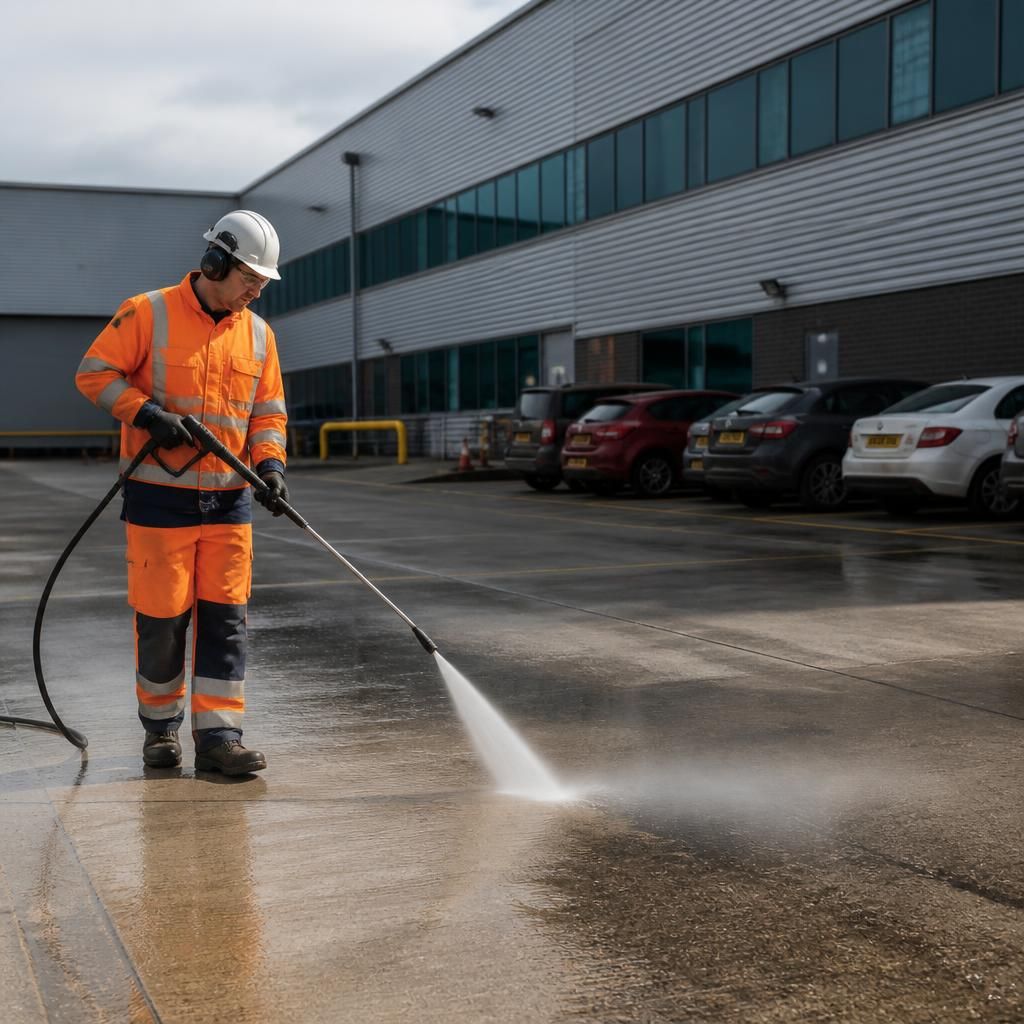
The suitability of a surface depends on its material and condition, not simply whether it is outdoors. Sound concrete, paving, tarmac, robust brickwork and hard natural stone generally tolerate controlled commercial pressure washing, while cracked concrete, soft brick, aged coatings, render and weathered stone require a gentler method.
Before cleaning, we inspect the surface for loose areas, damaged joints, coatings, drainage points and vulnerable fittings. A discreet test clean helps confirm the appropriate pressure, nozzle, water temperature and cleaning solution. Where conventional pressure washing could cause damage, we may recommend low-pressure washing, steam cleaning, soft washing or manual treatment instead. This approach removes contamination effectively while reducing the risk of erosion, water penetration or damage to the underlying material.