
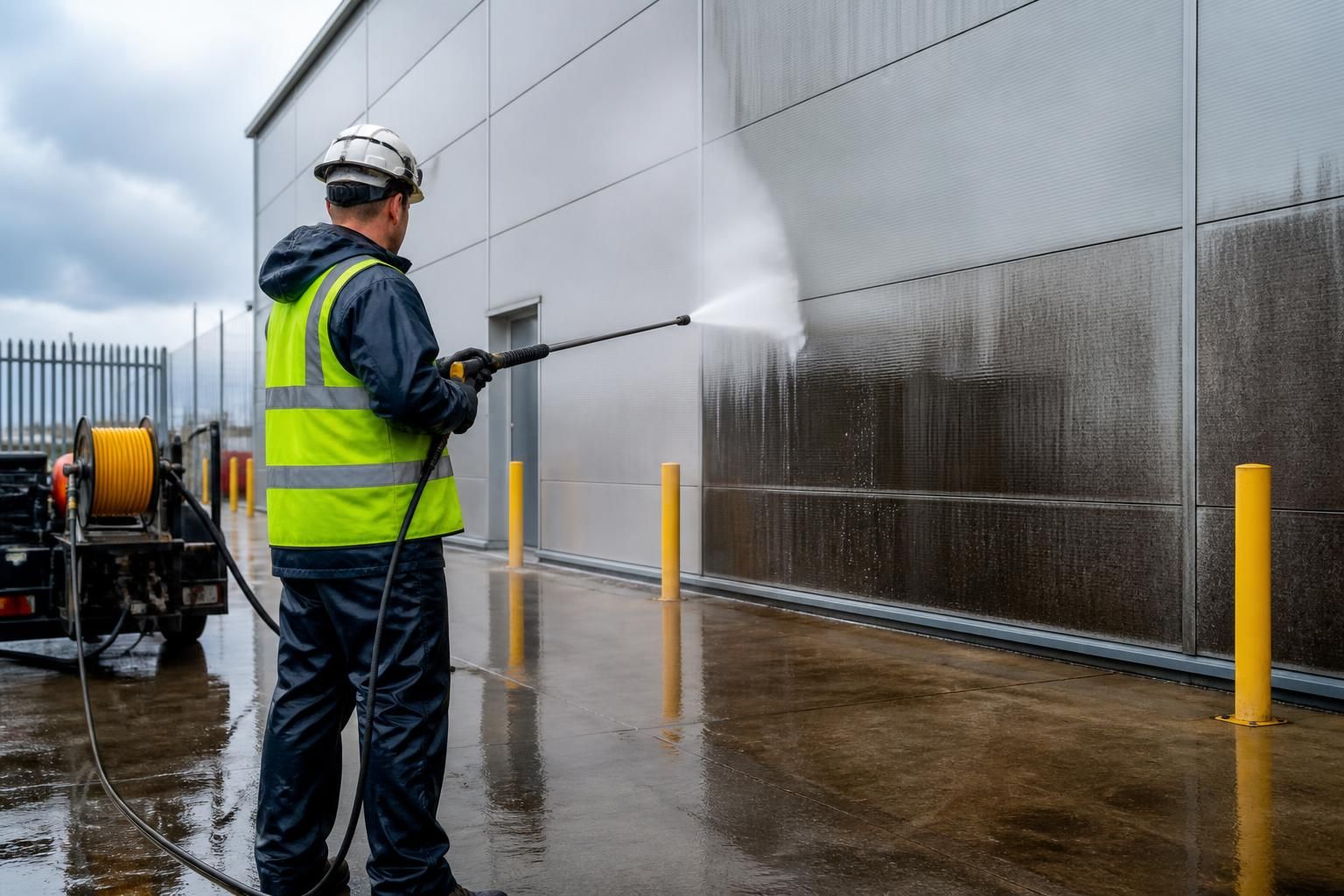
What specific techniques and equipment do you use to ensure effective cleaning results in commercial pressure washing?
We combine pressure washing, soft washing and steam cleaning with adjustable commercial-grade equipment, selecting the pressure, temperature, water flow and cleaning solution to suit each surface. Surface cleaners, telescopic lances, rotary tools, water-recovery systems and access equipment help us achieve consistent results across façades, cladding, roofs, paving and car parks while controlling overspray and protecting the property.
Effective commercial pressure washing depends on matching the cleaning method and equipment to the surface, contamination and site conditions. We assess the material first, then control pressure, water flow, temperature, cleaning solution and working distance rather than applying maximum pressure indiscriminately. This approach produces a consistent clean while reducing the risk of etching, surface loss, water ingress, staining or damage to coatings.
Our main cleaning techniques
- Pressure washing: Pressurised water removes ingrained dirt, algae, moss, traffic film, oil residues and other deposits from suitably robust surfaces. Pressure is adjusted at the machine and controlled further through the lance, nozzle selection and distance from the surface.
- Soft washing: Lower-pressure application combined with an appropriate cleaning solution is used where high pressure could damage the substrate. This is particularly useful for painted or coated façades, cladding, render and delicate areas affected by biological growth. The solution is allowed to work on the contamination before the surface is rinsed carefully.
- Steam cleaning: Heated water and controlled flow help loosen grease, oil, chewing gum, traffic film and biological deposits. Steam cleaning can be useful where a lower water volume is preferred or where heat improves the removal of stubborn contamination.
- Hot-water pressure washing: Heated water breaks down oily and greasy deposits more effectively than cold water alone. It is commonly considered for loading areas, service yards, car parks, plant areas and hard landscaping affected by hydrocarbon or food-related residues.
- Targeted rotary cleaning: Rotary surface-cleaning heads direct water evenly across hard, flat surfaces. They help reduce striping and overspray compared with using a standard lance over large areas of paving, concrete or car park surfacing.
How we select the pressure and water settings
Before work begins, we identify the substrate, its condition, the type of contamination and any existing coatings, joints, seals or vulnerable details. A small test area is used where appropriate to confirm the proposed settings and cleaning solution. We then set the equipment to provide the lowest effective pressure and water flow for the required result.
Pressure is only one part of the cleaning process. The nozzle pattern, spray angle, operator’s working distance and speed also affect the force applied to the surface. Broad fan patterns are generally suitable for controlled coverage, while narrower patterns are reserved for carefully targeted work. We avoid concentrating high pressure on pointing, mortar joints, seals, vents, louvres, painted finishes and damaged areas. On façades and cladding, the rinse direction is also controlled to reduce the chance of driving water behind panels or into openings.
Cleaning solutions and dwell time
Some deposits are best removed through mechanical pressure, while others need chemical treatment or heat. We select cleaning solutions according to the contamination and substrate, using them in a controlled way and following the relevant product instructions. Biological growth, atmospheric soiling, grease and graffiti may require different treatments.
Dwell time allows a solution to break down or loosen contamination before rinsing. The area is monitored so that the treatment does not dry on the surface, run onto unprotected materials or affect adjacent finishes. We protect nearby items where necessary and manage run-off so that cleaning agents and loosened contaminants do not spread across the site.
Commercial equipment used for controlled results
- Commercial pressure-washing units: These provide adjustable pressure and water flow for work ranging from detailed façade cleaning to large paved areas.
- Hot-water and steam equipment: Heated systems assist with grease, oil, chewing gum, traffic film and other deposits that respond poorly to cold water.
- Surface-cleaning machines: Rotary enclosed heads help deliver an even finish on expansive hard surfaces and limit spray to surrounding areas.
- Rotary and specialist nozzles: These are selected for particular cleaning tasks, including the removal of stubborn deposits from compatible hard surfaces. They are used cautiously because their concentrated action is not suitable for every material.
- Telescopic lances and extension systems: These allow controlled cleaning at height from a safer working position and can reduce the need to work directly against a façade.
- Access equipment: Where ground-level equipment cannot reach safely or effectively, suitable access systems may be used following a site-specific assessment. The choice depends on the height, layout, ground conditions and surrounding obstructions.
- Water-recovery and containment equipment: Wet vacuums, pumps, drain covers, bunding and related systems help collect dirty water and prevent uncontrolled discharge where the site or contamination requires it.
- Graffiti-removal equipment: Graffiti is treated according to the paint, marker or coating involved and the surface beneath it. Controlled pressure, steam, specialist cleaning products and suitable attachments may be combined to remove the marking without unnecessarily removing the substrate or protective finish.
Adapting the method to common commercial surfaces
Concrete, block paving and other robust hard surfaces can often tolerate more mechanical cleaning, although their joints, cracks and existing wear still require attention. Cladding and façades need more controlled pressure, suitable detergents and careful rinsing around laps, seals and openings. Roof cleaning is planned around the roofing material, fall protection requirements, drainage and the risk of loosened debris entering gutters or outlets. Painted surfaces, render and coated metal are normally approached with lower pressure and greater reliance on chemical action or steam.
Car parks, service yards and loading areas often need a staged process: removal of loose debris, application of a suitable treatment, mechanical cleaning, collection of run-off and a final inspection. Oil and fuel residues are not treated in the same way as ordinary dirt, so containment and disposal arrangements are considered before cleaning starts.
Quality control during and after cleaning
We work in manageable sections so that cleaning can be checked as it progresses. This helps identify differences in staining, surface condition or water absorption before they affect a larger area. After the main clean, we inspect edges, corners, joints, thresholds, drainage points and areas beneath fixtures, then carry out further controlled treatment where necessary. The finished result is assessed for evenness, remaining deposits, overspray and any signs that the method needs adjustment.
Equipment is selected and operated with protection of people and property in mind. We control access to the work area, protect vulnerable features, manage hoses and cables, and use appropriate personal protective equipment and access procedures. Where cleaning could affect drainage, neighbouring property or public areas, the method includes suitable containment and communication arrangements. This combination of surface assessment, adjustable equipment, controlled cleaning agents and inspection is what makes commercial pressure washing reliable across façades, cladding, roofs, paving and car parks.
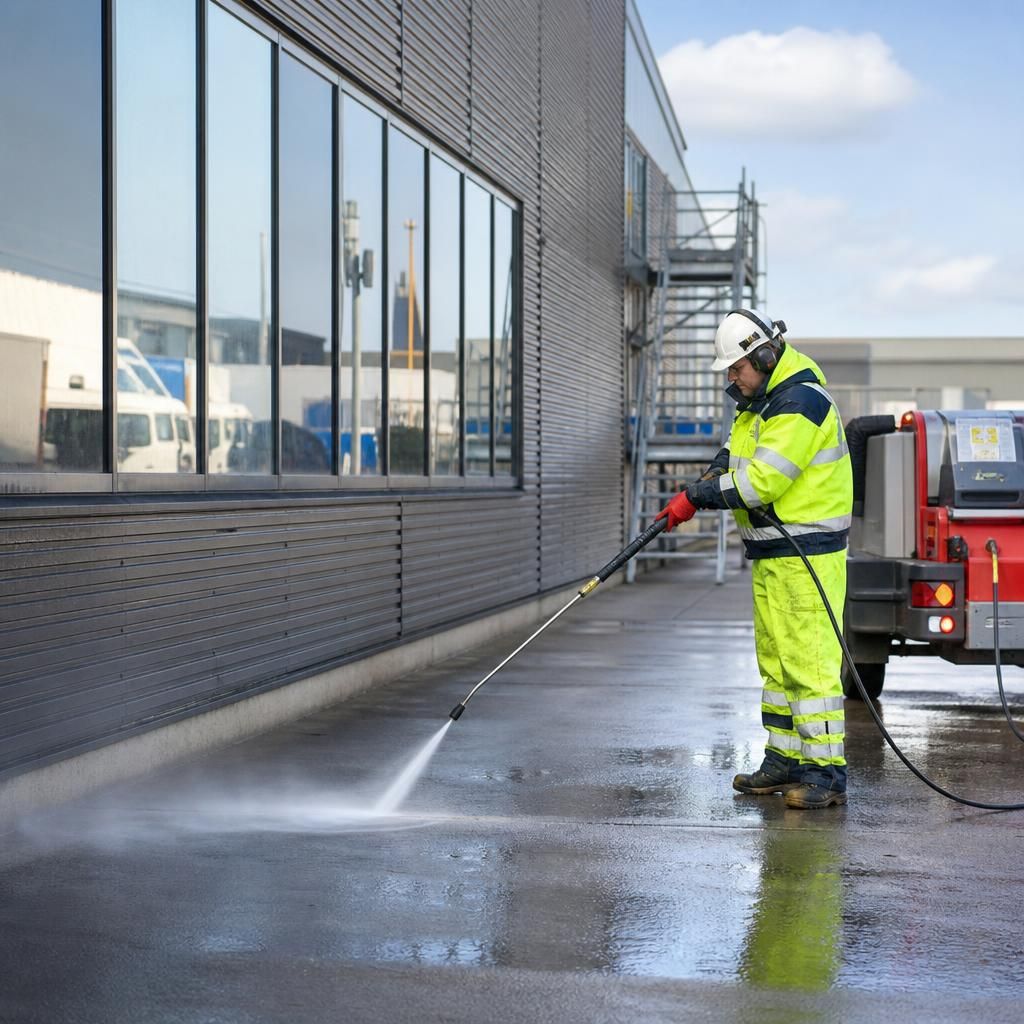
Effective commercial pressure washing starts with selecting the lowest pressure and water flow that will remove the contamination without damaging the surface. We assess the substrate, its condition and the type of soiling before choosing the nozzle, temperature, cleaning solution and working distance.
Where appropriate, we test a small, inconspicuous area first. This confirms that the method will not etch paving, disturb pointing, lift coatings or drive water behind cladding. The same controlled settings are then applied in manageable sections, with regular checks for an even finish and any areas needing further treatment.