
What factors influence the cost of commercial pressure washing services?
The cost of commercial pressure washing services is mainly influenced by the size and condition of the area, the surface materials, site access, required cleaning methods and any additional safety or waste-management measures. Complex access, heavy staining and specialist techniques such as hot-water pressure washing or steam cleaning can increase the overall quotation.
The cost of commercial pressure washing services is primarily influenced by the size and condition of the area, the surface materials, site access, the cleaning method required and the safety controls needed. Heavy contamination, restricted access, delicate surfaces, out-of-hours working and additional waste or water-management requirements can all increase the quotation.
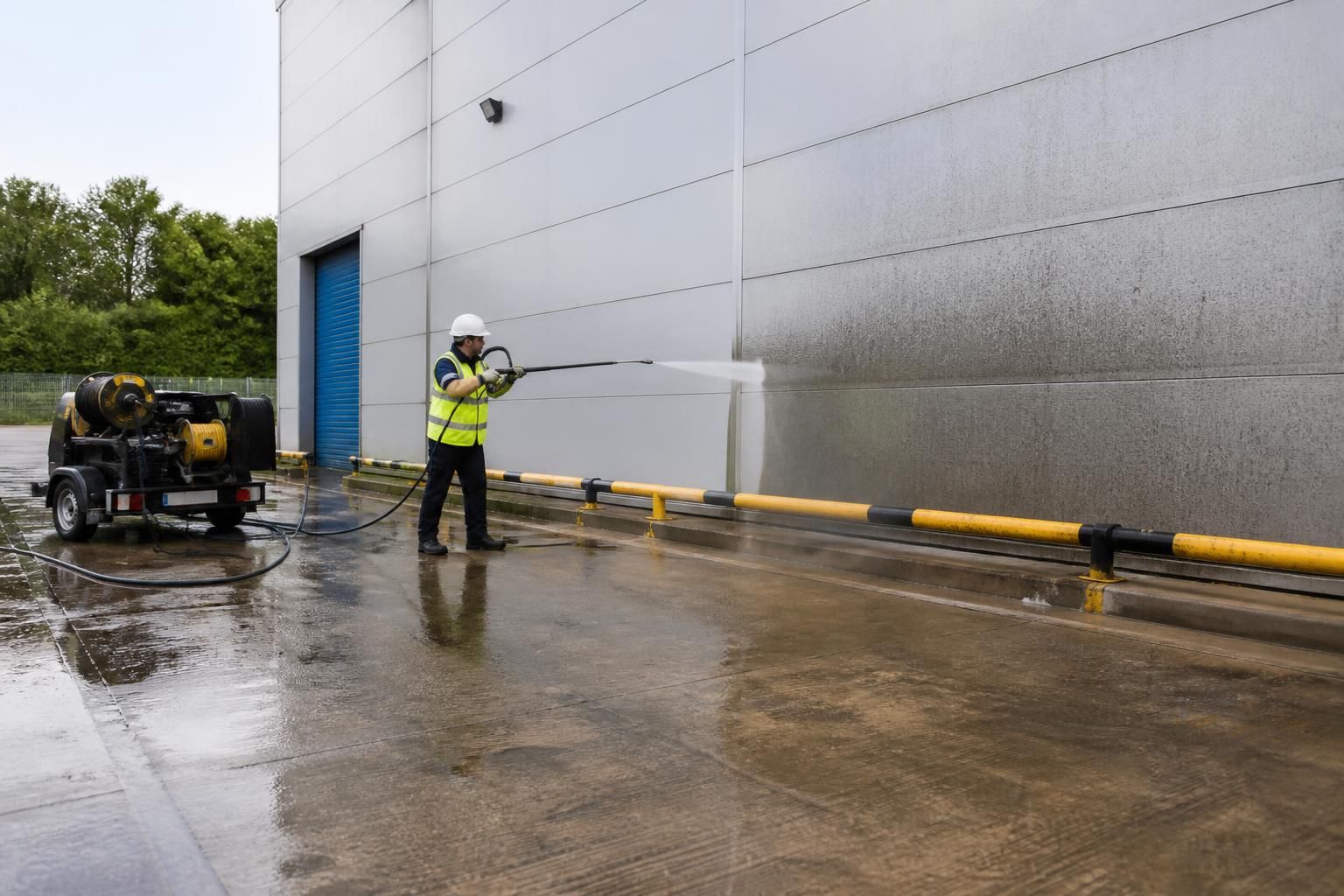
Area size and cleaning time are usually the starting points. A large car park, warehouse façade or extensive paved area generally requires more labour, water, fuel and equipment time than a small entrance or loading bay. However, price is not determined by surface area alone. A compact site with severe oil contamination or difficult access may take longer to clean than a much larger, straightforward surface.
The condition of the surfaces also affects the work involved. Dirt, algae, moss and general weathering may be removed using a standard pressure-washing process, whereas ingrained oil, chewing gum, tyre marks, cement residue, paint or accumulated organic growth can require pre-treatment, agitation, hot water, steam cleaning or repeated passes. Where staining cannot be completely removed without risking damage to the substrate, the quotation should allow for a realistic cleaning outcome rather than promise an unsuitable result.
Surface type and sensitivity influence both the technique and the time required. Concrete, block paving and robust industrial surfaces can often tolerate higher pressures when they are sound and correctly assessed. Brickwork, render, natural stone, painted finishes, cladding, roof coverings and older materials may need lower pressure, controlled water flow, soft washing, steam or a test clean. Protecting joints, coatings and vulnerable finishes can make specialist cleaning more labour-intensive than simply using the highest available pressure.
Access and site layout are significant factors on commercial premises. Open areas with nearby water and power supplies are generally more efficient to clean than locations blocked by vehicles, plant, fencing, stored materials or narrow entrances. Multi-level façades, roofs, canopies and difficult-to-reach elevations may require water-fed equipment, long hose runs, elevated platforms, scaffolding or other access equipment. The quotation may therefore include equipment mobilisation, set-up and dismantling as well as the cleaning itself.
Health and safety requirements must be considered before work begins. A site assessment may identify risks from traffic, pedestrians, working at height, electrical installations, fragile roofs, contaminated water, slips and trips or nearby operations. Measures such as barriers, exclusion zones, traffic management, personal protective equipment, permits, a method statement and risk assessment can affect the amount of preparation and supervision required. Out-of-hours work may be recommended where cleaning could disrupt employees, visitors, tenants or deliveries.
Water, drainage and run-off controls can also affect the price. Pressure washing produces contaminated water that may contain oil, detergents, sediment, paint particles or biological matter. Depending on the site and the type of contamination, run-off may need to be contained, filtered, collected or disposed of appropriately rather than allowed to enter surface-water drains. Where drainage is limited or the work takes place indoors, additional recovery equipment and handling time may be required.
The cleaning method and equipment are selected according to the surface and contamination, not simply the desired speed. A quotation may allow for:
- Cold-water pressure washing for suitable hard surfaces and general dirt.
- Hot-water pressure washing to help break down grease, oil and other stubborn deposits.
- Steam cleaning where lower water use or more controlled treatment is appropriate.
- Detergents, biocides or specialist pre-treatments for organic growth and particular stains.
- Soft-washing techniques for sensitive materials that could be damaged by high pressure.
- Surface cleaning attachments for more even results across large paved areas.
Specialist equipment can improve the result and reduce cleaning time, but mobilisation, fuel, operators and set-up still form part of the overall cost. The most economical method is the one that achieves the required standard without causing damage or creating avoidable rework.
Site location and mobilisation may influence the quotation, particularly for projects outside the usual Birmingham and West Midlands operating area or for works requiring larger equipment. Travel, transport of machinery, fuel, parking restrictions, accommodation where applicable and coordination with other contractors may need to be considered. For a national or multi-site programme, the work can often be planned more efficiently by grouping locations and agreeing a consistent specification.
Timing and frequency affect the total cost in different ways. Night work, weekends and bank holidays may carry additional labour or access-planning requirements, but they can be appropriate where the premises must remain operational during normal hours. Regular maintenance cleaning can prevent heavy build-up and may reduce the intensity of future treatments. It is useful to compare the cost of a one-off restorative clean with a planned maintenance schedule, particularly for entrances, façades, loading areas and car parks exposed to continuous use.
Additional services should be separated from the pressure-washing element when reviewing a quotation. These may include graffiti removal, chewing-gum removal, stain treatment, moss removal, façade or cladding cleaning, roof cleaning, sealing, re-sanding block paving, waste-water recovery or the cleaning of furniture, signage and external plant. A clear scope helps prevent unexpected charges and confirms which areas, treatments and finishing tasks are included.
Commercial quotations may be based on the measured area, the estimated labour and equipment time, a fixed project price or a combination of these approaches. A fixed quotation should state the areas to be cleaned, the proposed method, preparation and protection measures, access arrangements, waste or run-off controls, working hours and any assumptions. Where the condition cannot be assessed fully in advance, the quotation should identify circumstances that could require a revised price, such as concealed contamination, unsafe access or damaged surfaces.
To obtain an accurate quotation, provide site photographs or arrange a survey and include the approximate areas, surface types, contamination, access restrictions, preferred working hours, drainage information and any required completion deadline. Details of pedestrian or vehicle movements, planned construction works and site-specific induction requirements are also useful. We can then assess the substrate and contamination, select a suitable cleaning process and explain which costs are essential, optional or dependent on site conditions.
The lowest initial price is not necessarily the lowest overall cost if it excludes access equipment, protection, traffic management, specialist treatment or responsible disposal of contaminated water. A like-for-like comparison should therefore consider the proposed method, expected finish, safety arrangements, environmental controls, insurance and the scope of any follow-up work, as well as the headline figure.
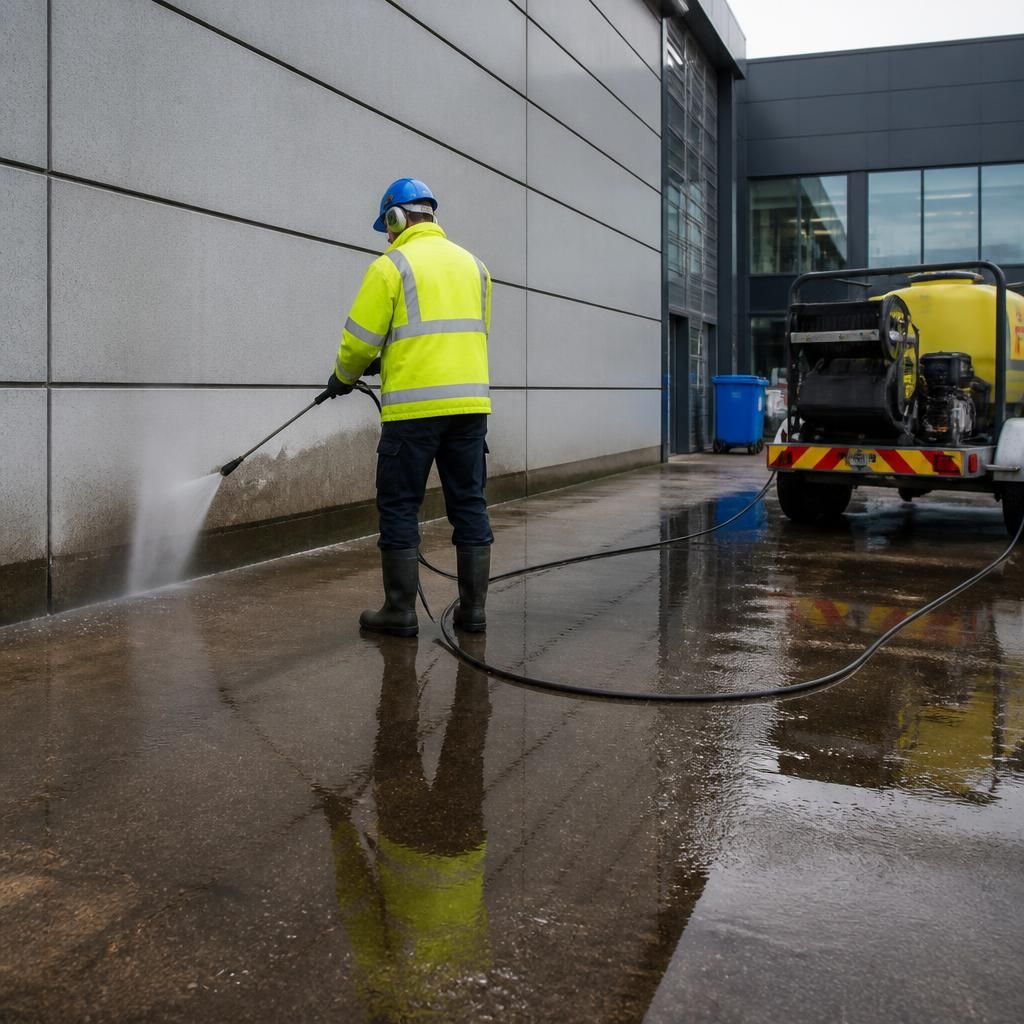
Site access and surface condition can influence the cost of commercial pressure washing as much as the size of the area. Open, unobstructed surfaces with nearby water and power supplies are generally quicker to prepare and clean, while restricted access may require longer hose runs, additional equipment, traffic management or out-of-hours working.
A survey or clear site photographs help identify these requirements before work begins. They also allow the cleaning method to be matched to the surface and contamination, reducing the risk of unexpected charges for specialist treatments, access equipment or contaminated-water recovery.