
What are the benefits of hiring a professional commercial pressure washing service?
Hiring a professional commercial pressure washing service provides safer, cleaner and more presentable premises by removing ingrained dirt, algae, oil, grime and graffiti with the appropriate equipment and techniques. It also reduces the risk of surface damage, protects building materials and avoids the time, safety risks and inconsistent results associated with in-house cleaning.
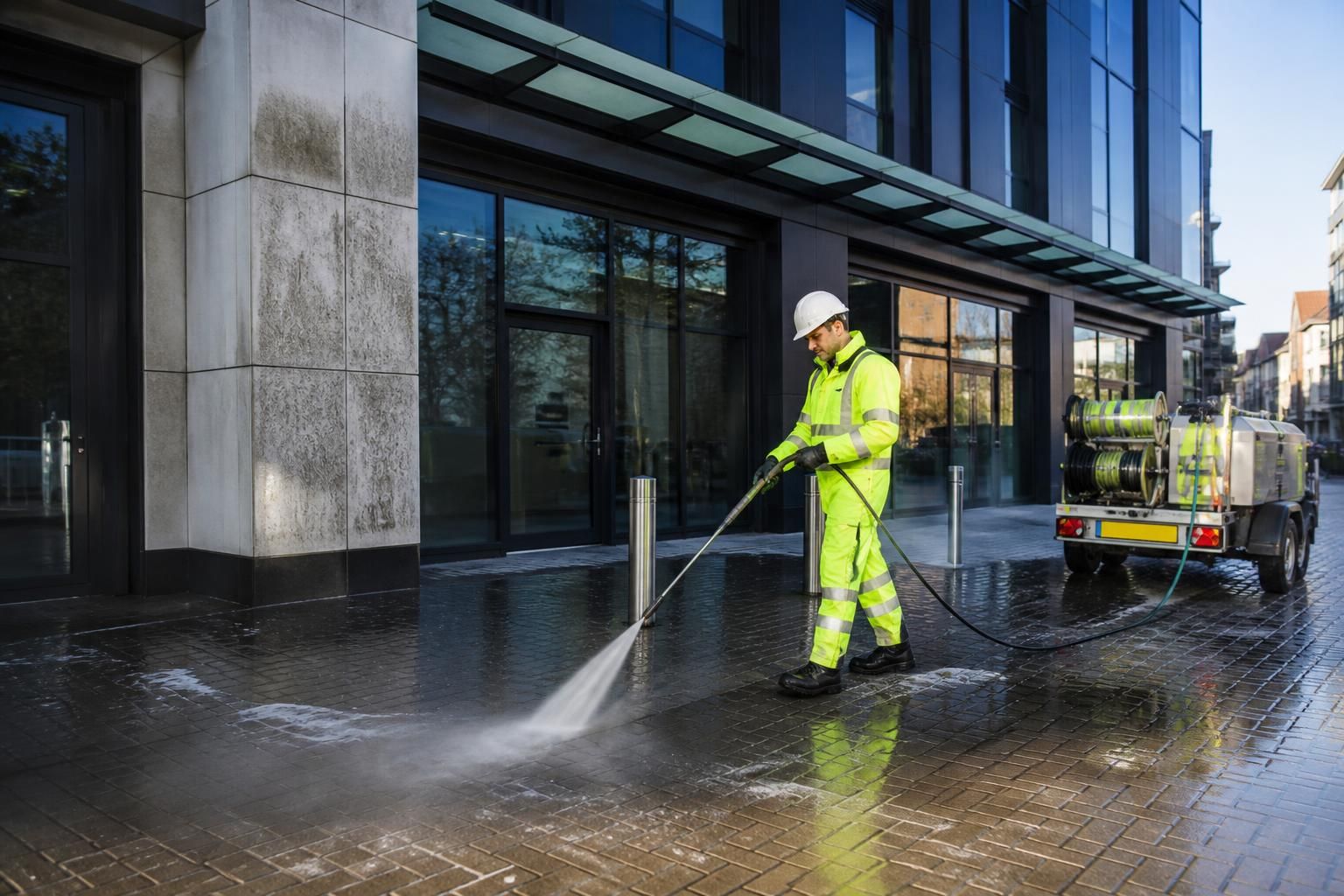
Hiring a professional commercial pressure washing service delivers more consistent, safer and more appropriate cleaning than relying on general maintenance staff or unsuitable equipment. Experienced contractors assess the surface, contamination and site conditions before selecting pressure washing, steam cleaning, soft washing or specialist access methods. This helps remove ingrained dirt, algae, oil, moss, tyre marks and graffiti while reducing the risk of damage to building materials, people and surrounding property.
Professional cleaning improves the appearance of commercial premises. Dirt, traffic film, algae, staining and weathering can make façades, cladding, entrances, loading areas and car parks look neglected even when the building itself is well maintained. Cleaning these areas restores a more uniform appearance and helps present the site appropriately to customers, tenants, visitors, employees and other stakeholders. It is particularly useful before inspections, handovers, property marketing, planned maintenance or refurbishment work.
It supports safer access and working conditions. Algae, moss, oil and other contaminants can make paving, steps, ramps, walkways and service areas slippery. Removing these deposits can help reduce avoidable slip hazards, although cleaning is only one part of a wider site safety process. A professional contractor can identify areas requiring additional attention, manage pedestrian and vehicle movements, and plan the work to minimise disruption while surfaces are being cleaned and allowed to dry.
It reduces the likelihood of surface damage. Commercial buildings contain a wide range of materials, including concrete, brick, stone, render, metal cladding, tarmac, block paving, roof coverings and painted surfaces. These materials do not all respond well to the same pressure, temperature or cleaning product. Excessive pressure can remove jointing material, damage coatings, drive water into vulnerable areas or mark softer surfaces. A competent contractor adjusts the cleaning method to the material and condition of the surface rather than treating every area in the same way.
Professional assessment is especially important where surfaces are aged, weathered, previously repaired or coated. The cleaning team may inspect for loose pointing, failed sealants, cracks, flaking paint, corrosion, fragile render or defective drainage before work begins. Where high-pressure cleaning would be inappropriate, lower-pressure washing, steam cleaning, controlled chemical treatment or a softer rinsing method may provide a safer alternative. Testing a small, inconspicuous area can also help confirm that the selected process is suitable.
It protects the condition and serviceability of the building. Regular removal of organic growth, pollutants and accumulated grime can help prevent contamination from becoming more difficult to manage. Cleaning does not replace repairs, roof maintenance, repainting or remedial work, but it can reveal defects that would otherwise remain hidden. Identifying blocked drainage routes, deteriorating joints, damaged coatings or areas of water ingress at an early stage gives the property manager better information for planning maintenance.
It saves internal resources and avoids unsuitable equipment purchases. Commercial exterior cleaning can require high-pressure systems, steam equipment, surface cleaners, water recovery systems, chemical application equipment, water-fed tools or access platforms. Buying, storing and maintaining this equipment may not be practical for a property team, particularly when specialist cleaning is needed only periodically. Using a contractor allows your staff to remain focused on their normal responsibilities while the work is planned and carried out by people familiar with the risks involved.
A professional service can also provide a more controlled process. Before starting, the contractor should consider:
- the type, age and condition of each surface;
- the nature of the contamination and whether it requires pressure, heat, treatment or agitation;
- nearby doors, windows, vents, electrical equipment, landscaping and vehicles;
- water supply, drainage, runoff and the possible need to recover contaminated water;
- pedestrian, traffic and tenant access requirements;
- safe access to elevated façades, roofs, canopies and other difficult-to-reach areas; and
- weather conditions and the time required for surfaces to dry.
It helps maintain a professional standard across larger sites. Property portfolios, retail areas, industrial premises, offices, schools, public buildings and managed estates often include several surface types and zones with different cleaning requirements. A planned commercial service can coordinate work across façades, cladding, roofs, car parks, yards, walkways, loading bays and bin areas. This creates a more consistent result than cleaning visible areas on an ad hoc basis and makes it easier to identify which locations require periodic maintenance.
It can improve the cost control of planned maintenance. Professional cleaning is not a substitute for repairing damaged materials, and it should not be used to conceal defects. However, a documented cleaning programme can help prevent heavy build-up and reduce the need for reactive work caused by neglected surfaces. The most suitable frequency depends on the location, exposure, footfall, traffic, nearby vegetation, type of contamination and surface material. A contractor can recommend an interval based on the property rather than applying a fixed schedule to every site.
It improves safety management during the work. Commercial pressure washing involves pressurised water, equipment, cleaning agents, wet surfaces, electrical considerations, access equipment and potentially contaminated runoff. Professional contractors should use suitable personal protective equipment, inspect equipment before use, control the work area and follow safe systems of work. They should also consider working at height requirements, public protection, chemical handling, environmental controls and emergency arrangements. These precautions are important on active commercial sites where employees, visitors, residents and vehicles may remain nearby.
There are also environmental and practical benefits when the process is properly planned. Using the least aggressive effective method can reduce unnecessary water use, limit chemical application and avoid repeated cleaning caused by poor technique. Runoff should be managed so that oils, sediment, detergents and other contaminants do not enter unsuitable drains or neighbouring areas. The correct approach depends on the site and the contaminants present, so environmental controls should be agreed before work begins rather than added as an afterthought.
For commercial and industrial properties, the main benefit is therefore not simply a cleaner-looking surface. Professional pressure washing combines appropriate equipment, surface knowledge, access planning, risk control and repeatable cleaning methods. It can make premises safer and more presentable, protect vulnerable materials, support planned maintenance and reduce the burden on internal teams. Before work starts, ask for a clear scope covering the areas to be cleaned, proposed methods, access arrangements, protection measures, runoff management and any limitations identified during the site assessment.
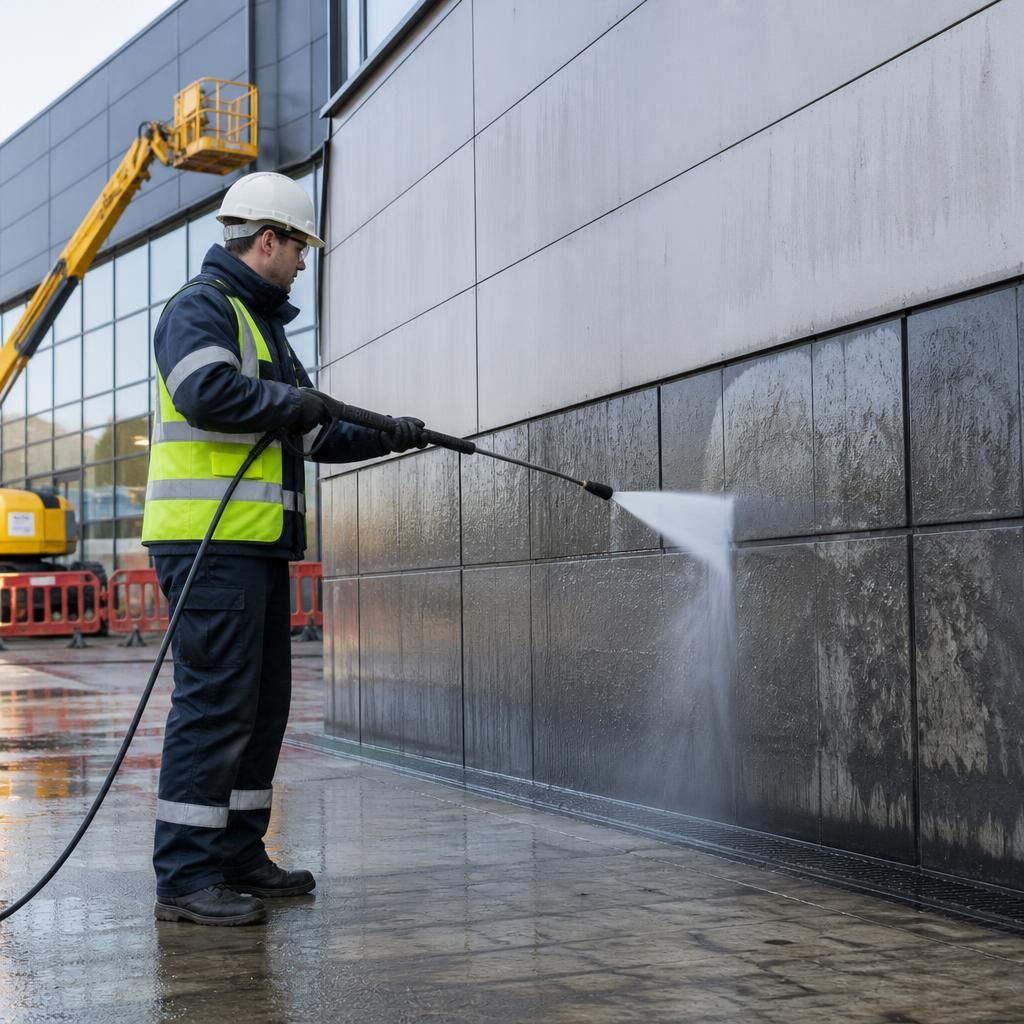
A key benefit of using a professional commercial pressure washing service is that the cleaning method can be matched to the surface and contamination. Concrete, brick, stone, render, cladding, tarmac and painted finishes can require different pressure levels, temperatures, detergents and rinsing techniques. Treating every material in the same way may remove coatings, loosen joints, drive water into vulnerable areas or mark softer surfaces.
Before cleaning, the contractor should assess the material, its condition and nearby features such as doors, vents, electrical equipment and drainage. Where high-pressure washing is unsuitable, a lower-pressure process, steam cleaning, soft washing or controlled treatment may be used instead. Testing a discreet area can help confirm the approach, while careful water and runoff management helps protect surrounding property and the wider site.