
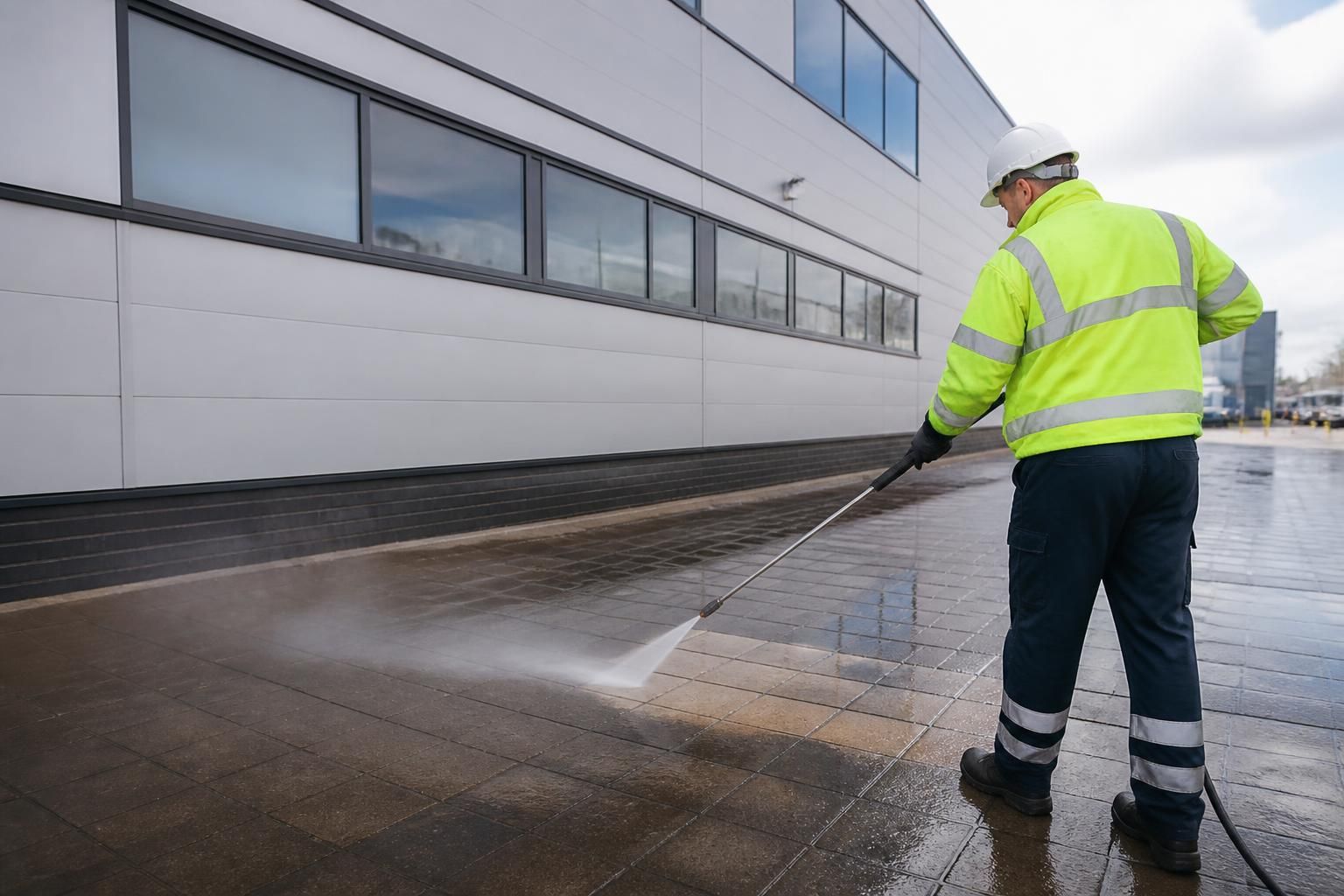
How often should commercial properties undergo pressure washing?
Commercial properties commonly benefit from pressure washing at least annually, although high-traffic premises, exposed sites and areas affected by pollution, algae or heavy vehicle use may need more frequent cleaning. The right schedule depends on the building materials, site conditions, appearance requirements and any safety or maintenance risks.
Commercial properties commonly benefit from pressure washing at least annually, but the appropriate interval depends on the site’s use, exposure, surfaces and maintenance requirements. High-traffic premises, sites near busy roads or industrial activity, areas with persistent damp or shade, and locations affected by algae, oil or heavy vehicle use may require cleaning more frequently. A planned maintenance schedule is generally more effective than waiting until dirt becomes ingrained or creates a safety concern.
Annual pressure washing is a useful starting point for many commercial buildings. It can help control the gradual build-up of road film, airborne pollution, organic growth and general grime on external walls, cladding, entrances, loading areas and hard landscaping. The schedule should then be adjusted following site inspections and the condition of the surfaces. Some properties may need a targeted clean every few months, while others may only require more extensive pressure washing at longer intervals alongside routine maintenance.
More frequent cleaning may be appropriate where:
- Large numbers of pedestrians use entrances, walkways or communal areas.
- Vehicles regularly deposit mud, oil, rubber marks or other contaminants on car parks and loading bays.
- The property is close to a busy road, construction activity, manufacturing premises or agricultural land.
- Buildings are shaded, poorly ventilated or exposed to persistent moisture, encouraging algae, moss or other organic growth.
- The site has food, retail, hospitality or public-facing operations where presentation and hygiene are particularly important.
- Graffiti, flyposting or accidental spills need prompt removal.
- Surface contamination could contribute to slippery conditions, blocked drainage or deterioration of coatings and joints.
- The property is subject to a facilities management, landlord or local authority maintenance programme with defined appearance standards.
High-use areas often need a different approach from the rest of the building. For example, entrances, paths, ramps, service yards and bin storage areas may require targeted cleaning when contamination becomes visible, while upper façades or less exposed elevations can be assessed and cleaned less often. This avoids treating every surface identically and helps ensure that cleaning intensity matches the actual risk and level of soiling.
Seasonal conditions should also be considered. Autumn and winter can leave leaves, mud and organic debris on walkways and hard surfaces, while damp weather can accelerate biological growth. A spring clean may remove winter grime and provide a useful opportunity to inspect façades, cladding, roofs and paved areas. In some cases, a further clean before a busy trading period, planned inspection or handover can be sensible. Timing should take account of weather, drying conditions, access requirements and the site’s operating hours.
The type and condition of the material affect both frequency and method. Concrete, block paving and some robust hard surfaces may tolerate regular pressure washing when cleaned at a suitable pressure and distance. Render, painted surfaces, older masonry, delicate stone, timber, roof coverings and coated cladding may require lower-pressure washing, soft washing or steam cleaning instead. Repeatedly using excessive pressure can erode surfaces, open joints, remove coatings or force water into vulnerable areas. A professional assessment should therefore establish the safest cleaning method before a recurring programme is set.
Pressure washing should not be used as a substitute for everyday housekeeping. Sweeping, litter removal, spill response, drain clearance and prompt removal of organic debris can reduce the amount of contamination that becomes bonded to a surface. Good routine maintenance may extend the interval between intensive cleans, although it will not remove all pollution film, staining, biological growth or ingrained deposits.
Signs that a commercial property may be due for cleaning include visible darkening or staining, green or slippery growth, tyre marks, oil deposits, persistent dirt around entrances, graffiti, blocked or dirty drainage channels and a noticeable deterioration in the appearance of façades or hardstanding. Safety-related contamination should be addressed promptly rather than deferred until the next planned visit. Where staining is recurring, the underlying cause should also be investigated; cleaning alone may not resolve defective drainage, leaking plant, standing water or damaged surfaces.
A practical maintenance plan usually combines a documented site assessment, routine visual inspections and scheduled deep cleaning. The assessment should record the materials present, areas of higher risk, access restrictions, drainage arrangements, water management requirements and any sensitive neighbouring features. Cleaning can then be prioritised by condition and use, with records kept of the methods applied and any defects identified. This provides a more reliable basis for future scheduling than using a fixed interval for every part of the property.
For many commercial sites, an annual professional review with planned pressure washing where required is a sensible baseline. Increase the frequency for heavily used, highly exposed or contamination-prone areas, and arrange additional cleaning when appearance, hygiene or slip risks demand it. The most suitable interval should always balance cleanliness with the need to protect the building materials, coatings, surrounding environment and people using the premises.
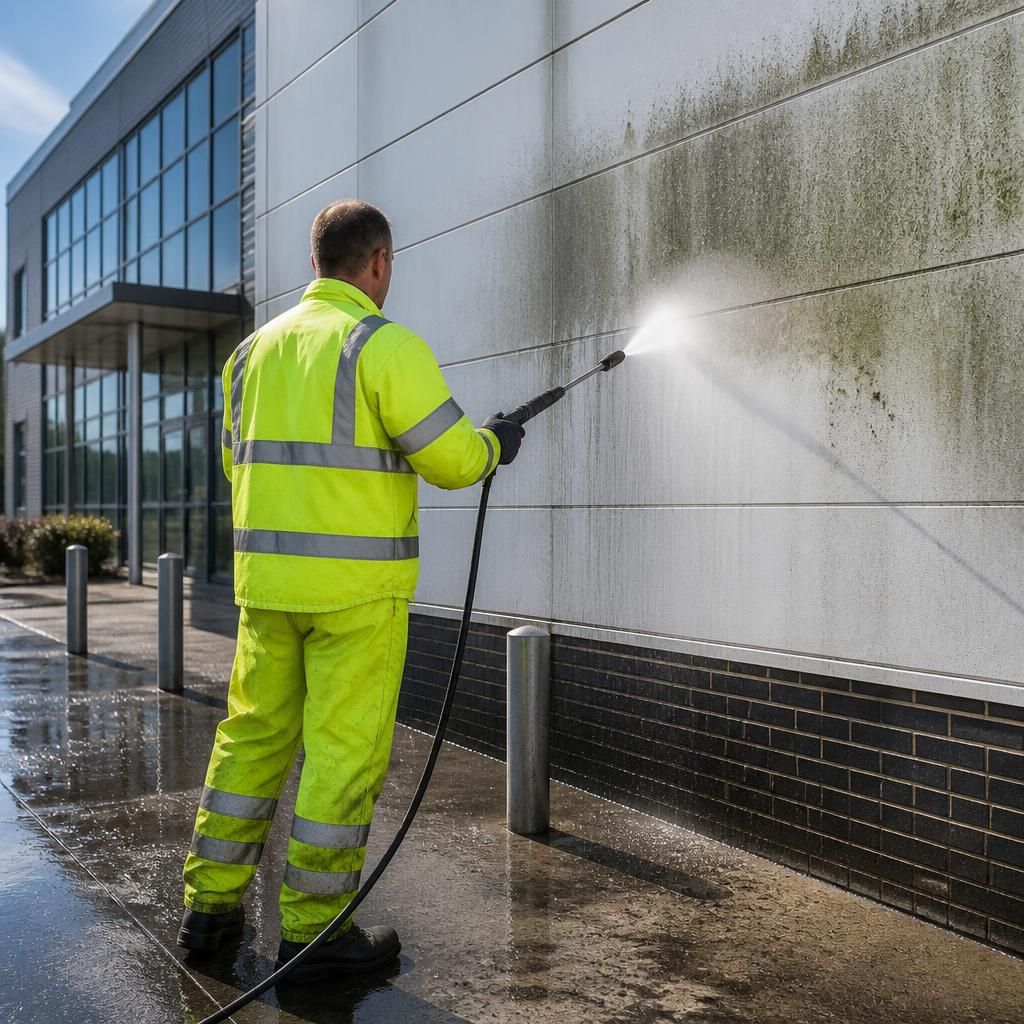
Commercial pressure washing is usually best planned as a condition-based maintenance task rather than a fixed one-time service. An annual professional review is a sensible starting point, but entrances, walkways, loading bays and car parks may need more frequent cleaning where heavy use, vehicle traffic, pollution, oil or persistent moisture causes contamination to build up quickly.
Routine inspections help identify when cleaning is needed before dirt becomes ingrained or creates a slip, drainage or presentation issue. Lower-use façades and sheltered areas may need attention less often, while shaded surfaces with algae or moss, and areas exposed to busy roads or industrial activity, may require targeted cleaning during the year. The cleaning method should also reflect the material, as delicate masonry, render, coatings and roof coverings may need low-pressure washing, soft washing or steam cleaning rather than repeated high-pressure treatment.