
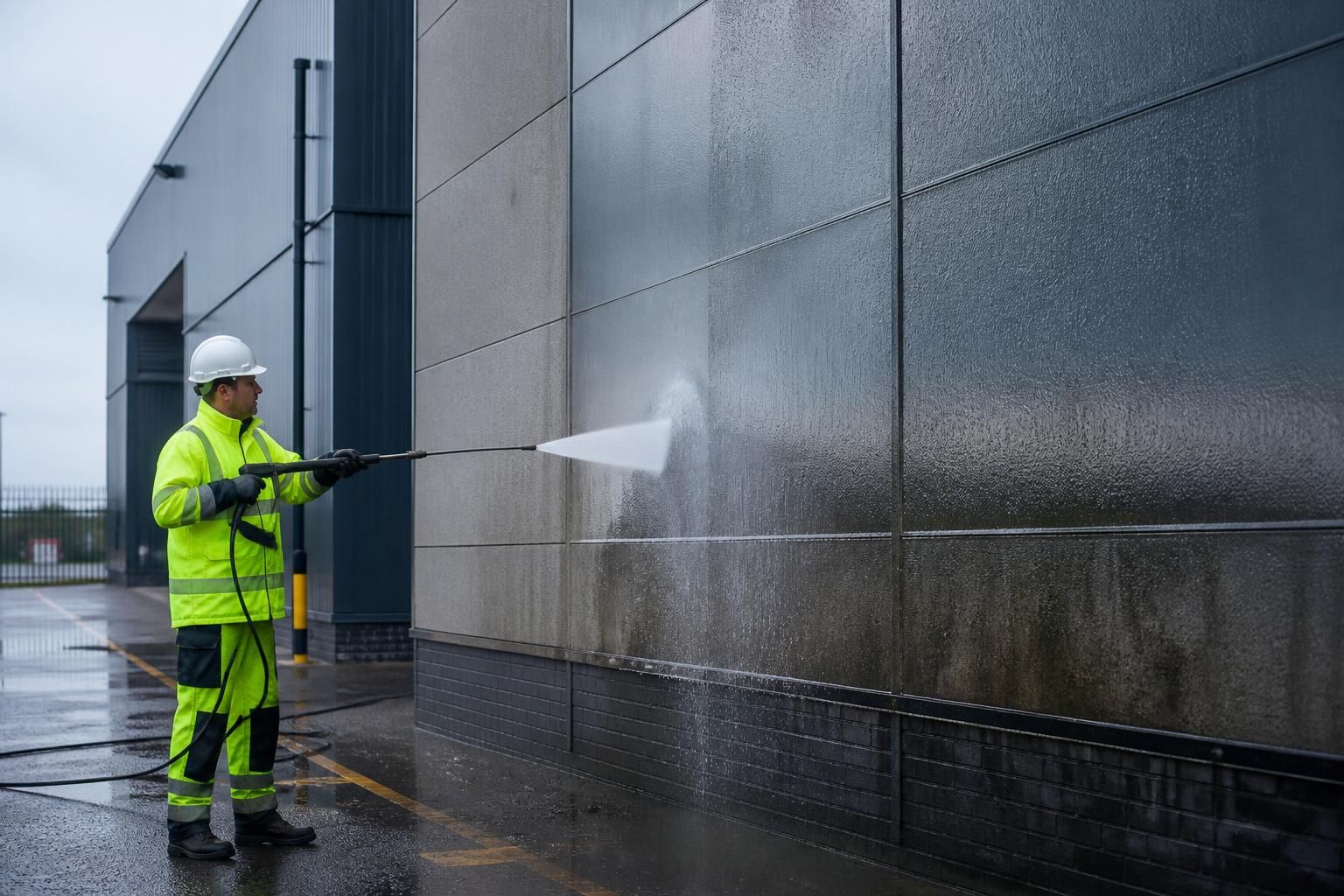
How frequently should a commercial property undergo pressure washing to maintain both its appearance and structural integrity?
Most commercial properties benefit from professional pressure washing at least annually, while busy sites, exposed façades, car parks and areas affected by pollution, algae or heavy foot traffic may require more frequent cleaning. Regular inspections and prompt removal of contaminants help maintain the property’s appearance, prevent surface deterioration and protect structural integrity.
Most commercial properties should receive a professional pressure washing assessment at least annually, with the appropriate cleaning frequency adjusted for the building materials, site use, local exposure and type of contamination present. High-traffic premises, car parks, loading areas and buildings exposed to pollution, algae or heavy rainfall may need cleaning more often, while less exposed façades may only require periodic treatment as part of a planned maintenance programme.
Pressure washing should not be scheduled by appearance alone. Dirt, traffic film, organic growth, bird deposits, oil and de-icing residues can remain on surfaces before they become visibly severe. If left in place, these contaminants may retain moisture, encourage biological growth, stain finishes and contribute to the deterioration of pointing, coatings, paving or drainage areas. Regular inspection allows cleaning to be planned before deposits become more difficult or damaging to remove.
A practical commercial cleaning schedule usually includes:
- Routine inspections: Check façades, cladding, roofs, paths, entrances, loading bays and car parks for staining, algae, moss, oil, loose coatings and blocked drainage.
- Annual professional cleaning: This is a sensible starting point for many commercial buildings and helps maintain a consistent standard of presentation and upkeep.
- More frequent cleaning for heavily used areas: Entrances, pedestrian routes, service yards, waste storage areas and car parks often collect contamination faster than other parts of the site.
- Seasonal or condition-led cleaning: Organic growth may become more noticeable after wet periods, while salt, grit and traffic film can require attention following winter conditions.
- Prompt spot treatment: Oil, graffiti, bird fouling and chemical or construction-related deposits should be addressed as soon as they are identified rather than waiting for the next routine visit.
The building’s location is an important consideration. Premises near busy roads, industrial activity or construction work can accumulate airborne pollutants and dust more quickly. Shaded elevations and areas with poor ventilation may remain damp for longer, increasing the likelihood of algae, moss or mildew. Coastal exposure, hard water deposits and nearby trees can also affect the appearance and maintenance needs of external surfaces.
Site function should be considered alongside environmental exposure. A retail, hospitality or office property may need more regular façade and entrance cleaning because these areas are constantly visible to visitors. An industrial unit may place greater priority on loading bays, yards, cladding and roof areas. For property managers and local authorities, a planned schedule can coordinate cleaning across multiple assets and reduce the risk of reactive work following complaints, access issues or surface deterioration.
Maintaining structural integrity depends on using the correct cleaning method, not simply applying more pressure. Before work begins, the surface should be assessed for its material, age, condition, coatings, joints and previous repairs. Masonry, render, concrete, brick, natural stone, metal cladding, uPVC and painted surfaces all have different tolerances. Pressure, water temperature, nozzle selection, distance and cleaning agents should be adjusted accordingly. In some cases, soft washing or steam cleaning is more suitable than high-pressure water, particularly where the surface is delicate or contamination can be removed with lower mechanical force.
Pressure washing is not a substitute for building repairs. Cracked render, failed pointing, loose coatings, defective sealants, damaged cladding or leaking gutters should be identified before cleaning. Water can enter existing defects, so these issues may need to be repaired or isolated first. Professional cleaning should also include appropriate measures to protect doors, vents, electrical equipment, landscaping and adjacent property, with suitable control of runoff and waste materials.
After cleaning, the condition of the property should be reviewed and recorded. Comparing inspection notes or photographs over time can help identify recurring staining, drainage problems or areas that require preventative treatment. If contamination returns quickly, the underlying cause may be persistent dampness, blocked drainage, leaking pipework, inadequate ventilation or excessive traffic pollution. Addressing that cause is usually more effective than repeatedly increasing the cleaning frequency.
For most sites, the best approach is a written maintenance plan combining annual professional pressure washing with regular inspections and targeted cleaning when conditions require it. A site-specific assessment can establish which surfaces need routine attention, which areas should be treated seasonally and where lower-pressure or alternative cleaning techniques are necessary to protect the building while keeping the premises presentable and safe.
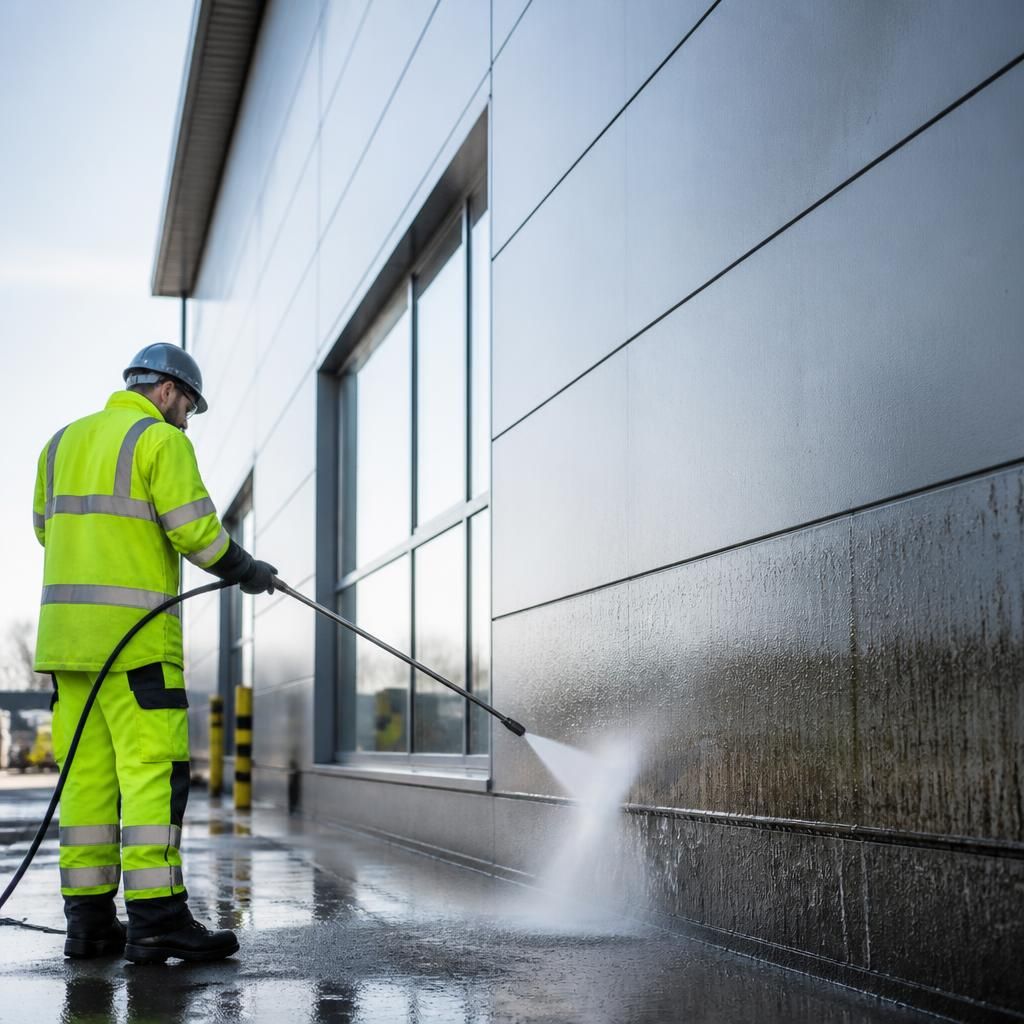
Commercial pressure washing should usually be planned as an annual maintenance task, but the appropriate frequency depends on how quickly the property accumulates contamination and how vulnerable its surfaces are. High-traffic entrances, car parks, loading bays and façades near busy roads may need additional cleaning between scheduled visits.
Regular inspections help identify algae, moss, oil, traffic film, bird fouling and de-icing residue before they stain surfaces or contribute to deterioration. Cleaning should also be brought forward when contamination returns quickly, drainage remains damp or the premises has recently been affected by construction work or severe weather.
A practical schedule combines annual professional cleaning with targeted treatment of heavily used areas and prompt removal of graffiti, oil and other deposits. The cleaning method should be selected for each material, using lower pressure, steam cleaning or soft washing where high-pressure water could damage coatings, pointing or delicate finishes.