
Can you provide examples of past commercial pressure washing projects similar to mine, and what were the outcomes?
Yes. Our commercial pressure washing projects have included car parks, façades, cladding, roofs, paving and graffiti removal, with outcomes such as cleaner, safer surfaces, improved presentation and the removal of built-up dirt, staining, algae and unwanted markings.
Our commercial pressure washing projects have covered car parks, paved access areas, building façades, cladding, roofs, service yards and graffiti removal. The typical outcomes are the removal of ingrained dirt, algae, organic growth, traffic film, staining and unwanted markings, together with safer walking and driving surfaces and a more consistent appearance across the site. The exact method and result depend on the substrate, contamination, access arrangements and the condition of the property before cleaning.
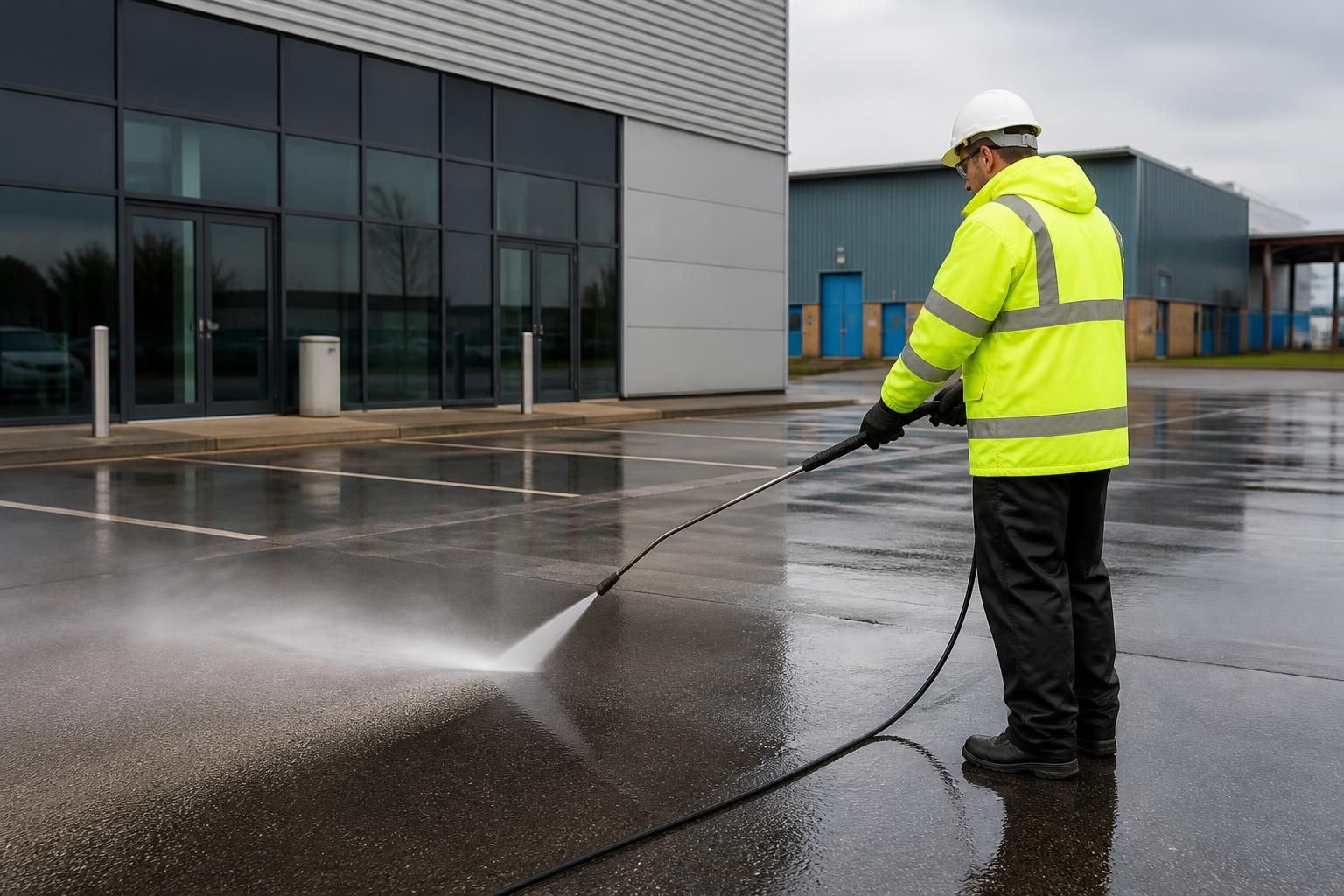
Car parks and paved access areas
Car parks commonly accumulate tyre marks, oil-related residue, mud, moss, algae, chewing gum and general traffic film. We have worked on hard-surfaced parking areas, pedestrian routes, loading approaches and entrance forecourts where appearance, slip resistance and site usability are important.
These projects normally begin with an assessment of the surface, drainage and surrounding areas. We then select an appropriate pressure level, cleaning head and treatment method. Where practical, wastewater and loosened debris are controlled so that adjoining roads, landscaped areas and drainage systems are protected.
The outcome is a visibly cleaner surface with reduced organic growth and less accumulated grime around bays, kerbs and access routes. Removing contamination can also improve the condition of pedestrian areas, although pressure washing is not a substitute for repairing damaged surfacing, failed drainage or contaminated areas requiring specialist remediation.
Commercial façades and entrances
External walls and entrances are often affected by dust, atmospheric pollution, algae, bird fouling, splashback and weathering. We have cleaned façade areas and entrance zones for commercial premises where the building presentation needs to be maintained without disturbing signage, glazing, seals, pointing or sensitive finishes.
Façade cleaning requires more control than simply applying maximum pressure. We consider whether the wall is brick, concrete, render, stone or another material, test the proposed approach where necessary and adjust the pressure, temperature, nozzle and distance accordingly. Steam cleaning or a lower-pressure method may be more suitable where the surface or surrounding details are vulnerable.
The outcome is the removal or reduction of surface contamination and a more even appearance across the accessible façade. Cleaning can also make defects easier to identify, including cracked render, deteriorated pointing, loose coatings or failed sealant. We report such issues rather than attempting to conceal them through aggressive cleaning.
Cladding and industrial buildings
Cladding on warehouses, factories, distribution facilities and other large buildings can develop streaking, dust deposits, algae and pollution staining. We have undertaken cleaning of accessible cladding and associated areas where the objective was to improve the external appearance and maintain the building envelope as part of planned property care.
Metal, coated, composite and other cladding systems can react differently to pressure and cleaning products. Our process therefore takes account of the coating, joints, fixings, vents and any areas where water ingress could be a concern. Access equipment may be needed to reach high-level sections safely, and the work is planned around operational requirements where the site remains in use.
The result is a cleaner, more consistent cladding finish and the removal of deposits that can make a building appear neglected. Cleaning does not restore a failed coating or remove permanent corrosion in every case, so we distinguish between removable surface contamination and deterioration that requires repair or replacement.
Roofs and high-level areas
Commercial roofs can collect moss, algae, lichen, leaves and other debris, particularly where water remains on the surface or nearby trees shed material. We have cleaned roof areas and associated high-level surfaces where safe access, controlled water use and protection of the roofing system were key requirements.
Roof cleaning is planned around the material and condition of the roof. High-pressure cleaning may be unsuitable for some membranes, coatings, tiles, joints and flashings, so softer washing, steam cleaning or manual removal may be considered instead. We also take precautions around rooflights, gutters, outlets, plant and vulnerable edge details.
The outcome is the removal of unwanted organic growth and debris from suitable areas, with clearer gutters and drainage paths where these are included in the agreed scope. Roof cleaning should not be presented as a repair service: leaks, damaged membranes, defective flashings and structural problems need to be assessed and addressed separately.
Graffiti and unwanted markings
Graffiti removal projects have included walls, shutters, doors, street furniture and other external surfaces. The most suitable treatment depends on the paint or marker, how long it has been present and the material beneath it. We use controlled pressure, steam or compatible cleaning treatments to reduce the risk of spreading the marking or damaging the underlying surface.
The intended outcome is the removal of the marking or a substantial reduction in its visibility, while preserving the original surface as far as possible. On porous masonry, some pigment may have penetrated below the surface, meaning complete removal may not be achievable without causing unacceptable damage. In such cases, we explain the likely result before work proceeds.
Service yards, loading areas and industrial surfaces
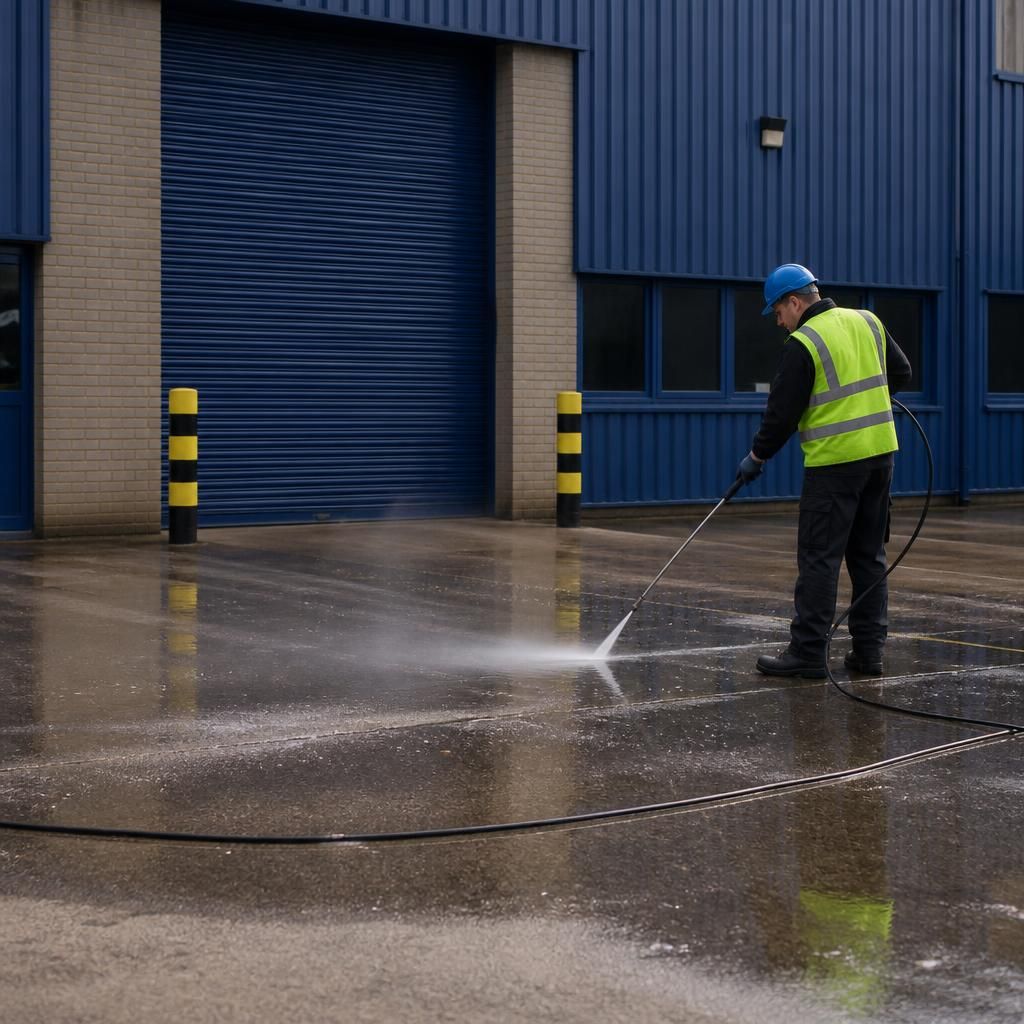
Service yards and loading areas are exposed to mud, dust, pallets, vehicle movements, spill residue and general industrial contamination. We have cleaned these areas for commercial and industrial sites where the work needed to fit around deliveries, staff movement and other operational constraints.
Before cleaning, we identify potential hazards such as oil or chemical residues, uneven surfaces, moving vehicles and nearby equipment. The cleaning plan can include controlled working zones, suitable signage, surface testing and measures to prevent contaminated water from entering inappropriate drainage systems.
The outcome is a cleaner and more manageable working environment, with reduced surface contamination and improved presentation around loading and service areas. Where a substance is hazardous or has penetrated the surface, additional environmental controls or specialist treatment may be necessary.
What determines whether a project outcome is successful?
We assess success against the agreed scope rather than promising that every surface will look new. Relevant factors include:
- the original material and its condition;
- the type, depth and age of the contamination;
- whether staining is on the surface or has penetrated the material;
- the cleaning method that can be used safely;
- access, weather and site operating restrictions;
- the condition of drainage and wastewater controls; and
- whether repairs, redecoration or specialist remediation are also required.
For larger commercial projects, we can assess representative areas and agree the expected finish before wider cleaning begins. This helps establish a realistic standard and identifies any limitations caused by ageing, damage, permanent staining or previous treatments.
After completion, the practical outcomes may include improved visual presentation, reduced organic growth, cleaner access routes, easier maintenance and a clearer view of defects requiring attention. We can also advise on a planned cleaning schedule where the property would benefit from ongoing maintenance rather than infrequent intensive cleaning.
For commercial pressure washing projects, the expected outcome is agreed after assessing the surface, contamination, access and condition of the property. This ensures the cleaning method is suitable and distinguishes removable dirt from permanent staining, material deterioration or damage that requires repair.
Where appropriate, we assess a representative area before wider work begins. This helps confirm the likely finish on surfaces such as paving, cladding, façades or service yards, while identifying any limitations caused by porous materials, aged coatings, oil residue, algae or previous cleaning. The agreed result may be improved presentation, safer access routes, reduced organic growth or clearer visibility of underlying defects, rather than a promise that every surface will look new.