
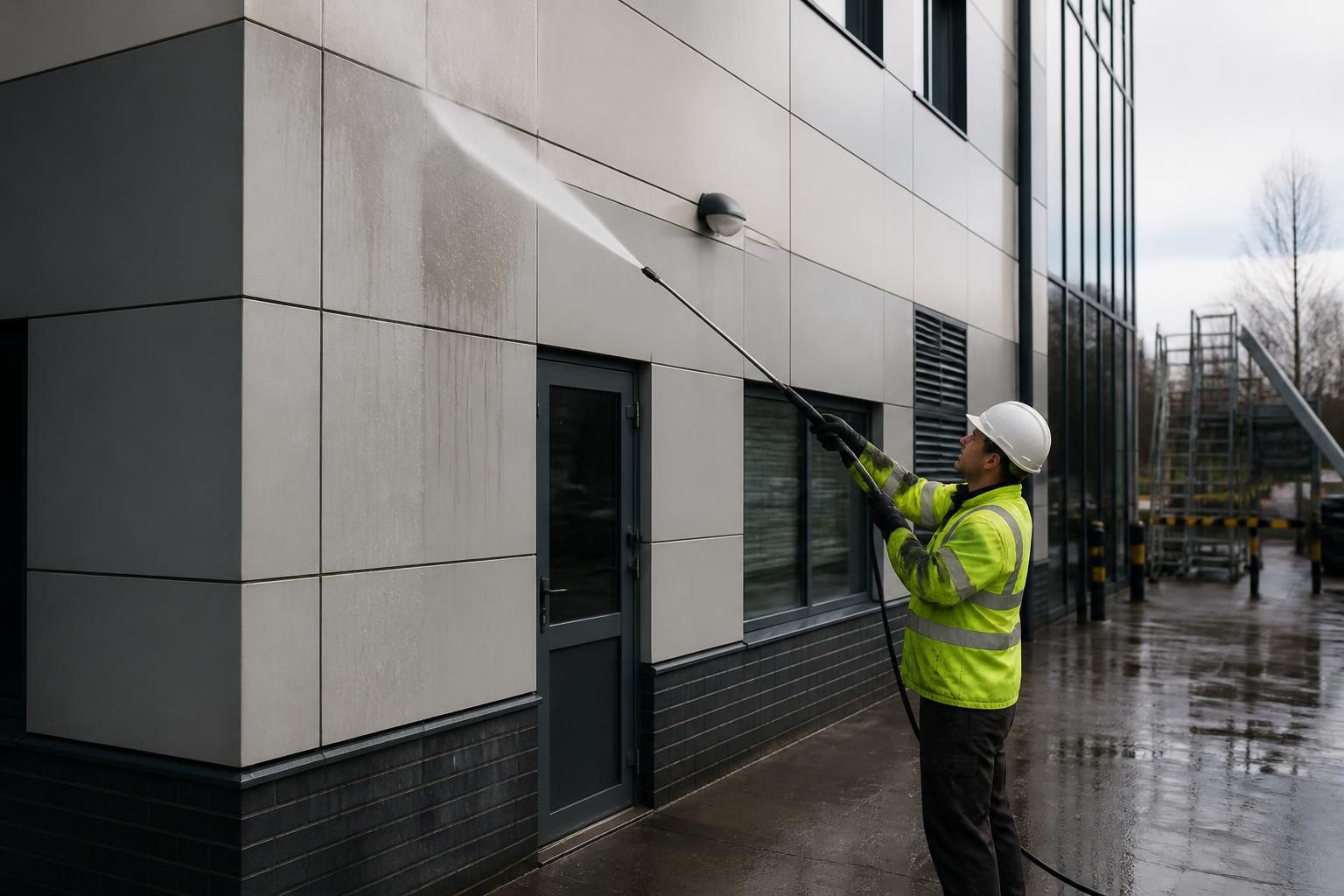
Can commercial pressure washing harm building materials?
Yes, commercial pressure washing can harm building materials if excessive pressure, unsuitable water temperature or incorrect cleaning methods are used. Professional assessment and controlled techniques help protect façades, cladding, masonry, roofing and other surfaces while removing dirt, staining and contaminants effectively.
Yes. Commercial pressure washing can harm building materials when the pressure, water temperature, nozzle, cleaning chemical or technique is unsuitable for the surface. Damage may include etched masonry, fractured pointing, lifted coatings, broken seals, water penetration and surface erosion. A professional approach begins with identifying the material and its condition, then selecting the least aggressive method that will remove the contamination effectively.
Pressure washing is not a single fixed process. The operating pressure at the machine is different from the pressure reaching the surface, which is affected by the nozzle type, spray angle, distance, flow rate and the operator’s technique. Holding a lance too close, using a narrow fan pattern or concentrating on one area can create visible striping, scarring or uneven cleaning. Controlled application and continuous movement help distribute the cleaning action more evenly.
Surface condition is equally important. Sound concrete, engineering brick and robust metal cladding may tolerate controlled pressure, while aged brickwork, soft stone, historic masonry, painted finishes and weathered coatings may require lower-pressure washing, steam cleaning or a non-pressure treatment. Loose pointing, cracked render, failed sealant and delaminated coatings can be worsened by water pressure, even when the underlying material would normally be suitable for cleaning.
Different building materials present different risks:
- Brickwork and masonry: Excessive pressure can erode softer faces, damage mortar joints and drive water into cracks or porous areas. Older or handmade bricks often need particularly cautious treatment.
- Natural stone: Limestone, sandstone and other porous stones can be marked, etched or weakened by aggressive cleaning. The correct method depends on the stone type, finish, soiling and previous treatments.
- Concrete: Strong, uneven washing can expose aggregate, leave wand marks or remove a weak surface layer. Cracks and joints also require care to prevent water entering the structure.
- Render and painted surfaces: Pressure can lift paint, dislodge render or reveal repairs. Low-pressure cleaning and suitable detergents are often more appropriate than forceful washing.
- Metal cladding: The panels may tolerate cleaning, but coatings, joints, fixings, vents and seals can be vulnerable. Water should not be directed into openings or behind damaged panels.
- Roofing materials: Roof tiles, slate, membranes and protective coatings can be cracked, displaced or stripped by unsuitable pressure. Roof cleaning also requires controls to prevent water entering the building.
- Glass, frames and seals: High-pressure water can damage seals, force water behind frames and affect vents or electrical components. These areas should be protected or cleaned using a more controlled method.
Water temperature can also affect the outcome. Heated water or steam may improve the removal of grease, oil, chewing gum and biological growth, but heat is not automatically safer or more effective for every surface. Sudden temperature changes may stress some materials, while excessive heat can soften coatings, damage sealants or alter sensitive finishes. Temperature should therefore be selected according to the substrate and contaminant rather than used routinely.
Cleaning chemicals carry their own risks. An unsuitable alkaline or acidic product can discolour façades, attack mortar, corrode metals or damage protective coatings. Chemical residue may also harm nearby planting, drainage systems or pedestrians if it is not contained and rinsed correctly. The product, dilution, contact time and rinsing method all need to be appropriate for the surface and the type of soiling.
A safe commercial cleaning process normally includes:
- Surveying the area: Identify the substrate, surface finish, contamination, access restrictions, drainage arrangements and any visible defects.
- Checking for weak points: Look for cracks, open joints, loose coatings, failed sealant, damaged roof coverings, defective windows and vulnerable fixtures.
- Choosing the least aggressive effective method: This may involve low-pressure washing, soft washing, steam cleaning, chemical treatment, rotary surface cleaning or manual work instead of unrestricted high-pressure cleaning.
- Testing a discreet section: A test area helps confirm the cleaning result, identify colour or texture changes and establish suitable pressure, temperature and chemical settings before wider application.
- Protecting adjacent features: Cover or isolate doors, vents, signs, electrical equipment, sensitive landscaping, vehicles and areas where water could enter.
- Controlling the application: Use a suitable nozzle and spray pattern, maintain a safe working distance, avoid directing water at joints or openings and keep the lance moving.
- Inspecting during and after cleaning: Review the surface for inconsistent results, exposed defects, coating loss or water ingress, then rinse and clear residues responsibly.
Pressure washing should not be used to conceal a maintenance defect. If cleaning exposes loose masonry, failing pointing, cracked render or damaged coating, the underlying repair should be assessed before further work. Cleaning a defective surface without addressing the cause can lead to repeat contamination or additional deterioration.
For commercial premises, planning is also important because façades, car parks, roofs and cladding may contain different materials within the same work area. A single pressure setting or cleaning product is unlikely to be suitable for all of them. The work method should account for building use, pedestrian movement, vehicles, neighbouring properties, drainage and the potential spread of dirty water.
When the assessment shows that pressure washing is unsuitable, an alternative method can usually be considered. Steam cleaning, low-pressure chemical cleaning, soft washing, controlled abrasion or manual treatment may provide the required result with less risk. The correct choice depends on the material, the contamination and the condition of the surface, not simply on how powerful the equipment is.
In practice, pressure washing does not inherently damage building materials; uncontrolled or poorly specified cleaning does. A documented assessment, test clean, appropriate equipment and trained operation help remove dirt, algae, oil, staining and graffiti while protecting the façade or external surface. Where a material is fragile, deteriorated or historically sensitive, the safest recommendation may be to avoid pressure washing altogether and use a gentler treatment.
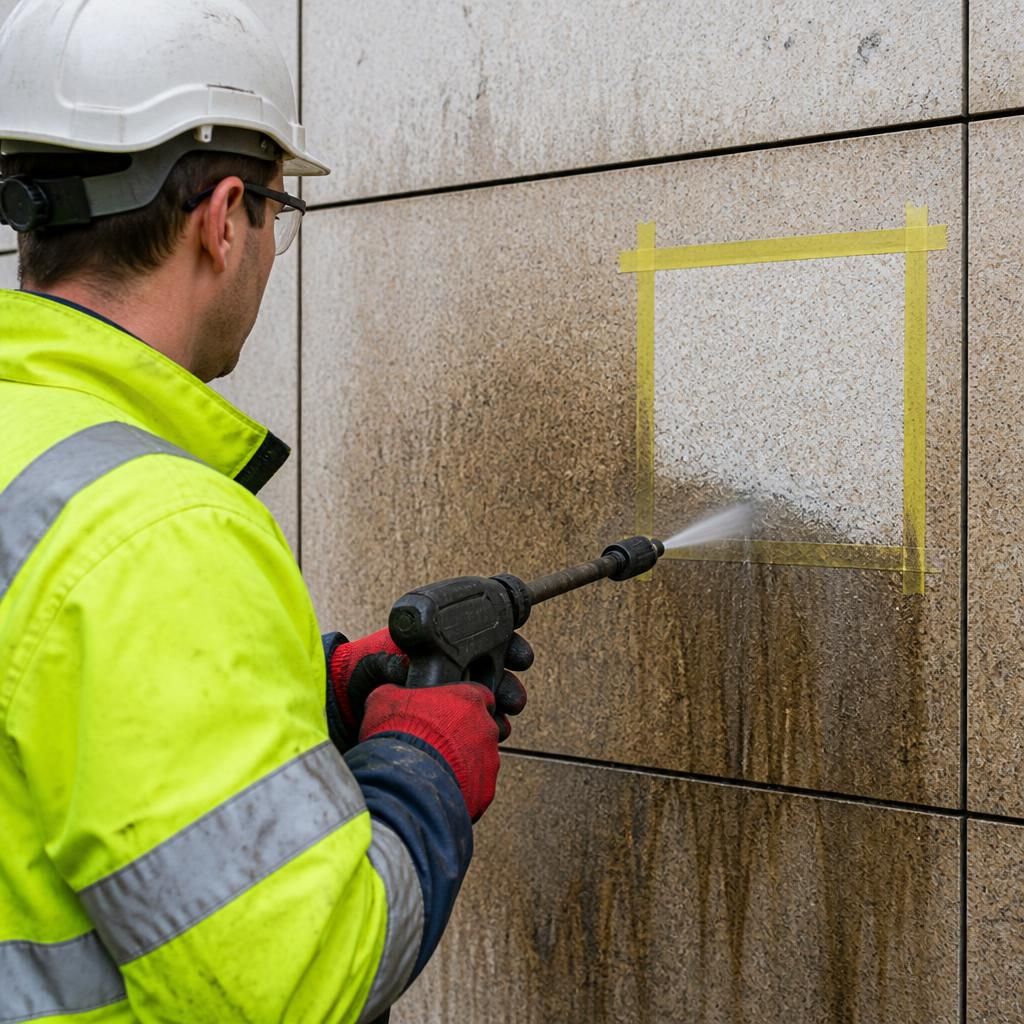
Commercial pressure washing is safest when the cleaning method is selected for the building material and its condition, rather than applied at one standard pressure across the whole site. A discreet test area helps confirm whether the surface, coating and joints can tolerate the proposed pressure, temperature and cleaning solution before wider work begins.
During the test, the operator checks for changes such as exposed aggregate, lifted paint, mortar erosion, staining or water penetration. The method can then be adjusted by increasing the working distance, widening the spray pattern, reducing pressure or switching to low-pressure washing, steam cleaning or a manual treatment. This controlled approach is particularly important on aged brickwork, natural stone, render, painted cladding and areas around windows, seals and vents.
Arrange a Safe Commercial Pressure Washing Assessment
Arrange a commercial pressure washing assessment with Encanto Exterior Cleaning to identify suitable methods for each building material and surface condition. We can recommend a controlled cleaning approach that reduces the risk of damage to façades, cladding, roofs and associated features.