
What surfaces can be effectively cleaned by commercial outdoor pressure washing?
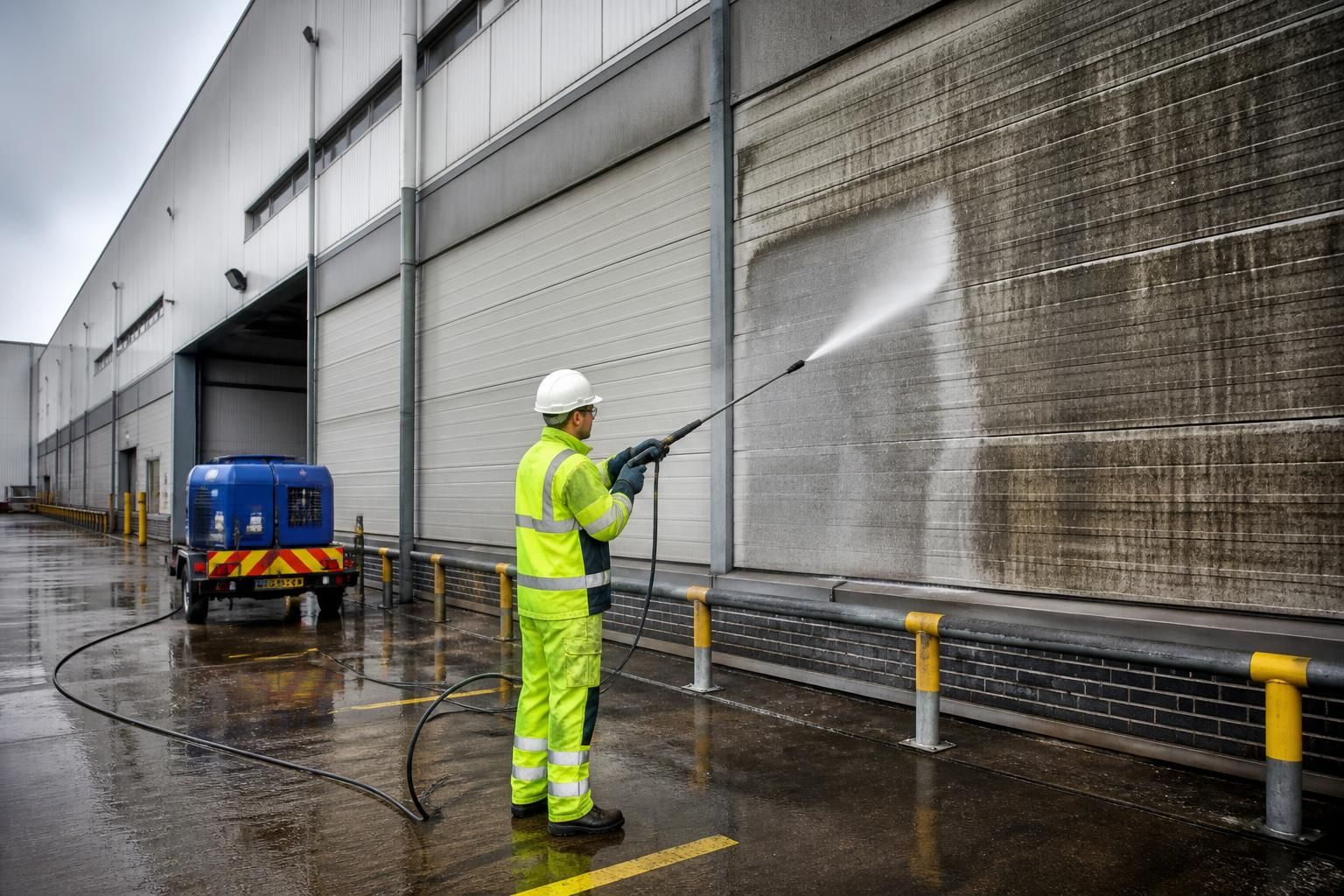
Commercial outdoor pressure washing can effectively clean durable exterior surfaces including brick façades, concrete, paving, car parks, loading areas, roofs, walls, cladding and other hard-standing areas. The pressure, water temperature and cleaning method should be adjusted to suit each material, with softer or more delicate surfaces assessed carefully to prevent damage.
Commercial outdoor pressure washing can effectively clean many durable exterior surfaces, including brick façades, concrete, paving, tarmac, car parks, loading areas, roofs, walls, cladding and other hard-standing areas. The cleaning method must be matched to the material and condition of the surface: pressure, water temperature, nozzle selection, cleaning solution and working distance all affect the result and the risk of damage.
Brick façades and masonry
Brickwork can usually be cleaned to remove traffic film, dirt, algae, moss, bird fouling and atmospheric staining. Sound, dense brick may tolerate controlled pressure washing, while older, softer or damaged brick requires lower-pressure cleaning or steam cleaning. Mortar joints, decorative brickwork and areas affected by frost damage need particular care. Excessive pressure can erode the brick face, widen defective joints or force water into the building envelope.
Concrete, paving and hard-standing areas
Concrete yards, pedestrian routes, steps, service areas and external floors are well suited to commercial pressure washing when the surface is structurally sound. Cleaning can remove embedded soil, algae, moss, tyre marks, oil residues and general grime. Rotary surface cleaners are often useful on broad areas because they provide more even coverage and help control overspray compared with a standard lance.
Block paving, concrete flags and natural stone paving can also be cleaned, but the surface and jointing material should be assessed first. Strong pressure may displace jointing sand, loosen damaged blocks or mark softer stone. After cleaning, joints may need to be refilled, and drainage channels should be checked to ensure that removed debris has not been carried into the system.
Tarmac and asphalt
Car parks, access roads, forecourts and other tarmac areas can be pressure washed to remove surface dirt, algae, moss, mud and some staining. Tarmac is more vulnerable to scarring, loss of aggregate and softening than concrete, particularly where it is aged, poorly bonded or exposed to heat. A contractor should use a suitable pressure and technique, avoid concentrating the spray in one place and treat oil or fuel contamination separately rather than relying on water pressure alone.
Car parks, loading bays and service yards
Commercial hard-standing areas are commonly cleaned to improve hygiene, reduce slip risks and maintain a professional appearance. Pressure washing can remove accumulated dirt, food residue, organic growth, tyre marks and deposits around bins, loading points and delivery routes. Oil, grease, chewing gum, paint and other heavy contaminants may require pre-treatment, hot water or specialist stain-removal methods. Contaminated run-off must be controlled and disposed of in accordance with relevant drainage and environmental requirements.
Cladding and façades
Metal, coated, plastic and composite cladding can often be cleaned using low- to medium-pressure washing with an appropriate detergent. This removes dust, traffic film, algae, bird fouling and other deposits from industrial and commercial buildings. The coating, sealants, joints, fixings and insulation behind the cladding should be considered before work starts. Excessive pressure or poorly directed water can damage coatings, force water behind panels or affect vulnerable seals.
Façades containing render, painted finishes, glazed sections or architectural features may not be suitable for conventional high-pressure cleaning. Soft washing, steam cleaning or another controlled method may provide a safer result. A test clean on an inconspicuous area helps confirm whether the finish is stable and whether the proposed detergent is compatible.
Roofs, gutters and associated areas
Commercial roofs can be cleaned to remove moss, algae, lichen, bird fouling and general surface deposits, but the roof construction and covering determine the safest approach. Concrete tiles and some robust metal systems may tolerate carefully controlled washing. Older tiles, slate, coated steel, membranes and fragile or weathered coverings can be damaged by direct high pressure, so soft washing, low-pressure rinsing or specialist access methods may be more appropriate.
Gutters, fascias, soffits and roofline components can also be cleaned, subject to safe access and the condition of the materials. Cleaning should not compromise joints, coatings or waterproofing. Loose moss and debris should be collected where possible rather than allowed to enter downpipes or surface-water drainage.
Walls, steps, walkways and external fixtures
External walls, boundary walls, steps, ramps, bollards, railings and other robust fixtures can generally be cleaned effectively when their condition has been checked. Pressure washing is useful for removing organic growth and accumulated dirt from pedestrian areas, but slip hazards can remain during and immediately after cleaning. The work area should be managed until surfaces have drained and dried.
Surfaces requiring additional assessment
Some materials should not be treated with standard high-pressure washing without a detailed inspection. These include soft or friable brick, sandstone, limestone, historic masonry, weathered render, painted surfaces, timber, fragile roof coverings, loose pointing and surfaces with exposed aggregate. Pressure washing may strip finishes, etch stone, raise timber fibres or drive moisture into defects.
Glass, electrical equipment, ventilation openings, door seals and sensitive plant or machinery also require protection. Water should not be directed into sockets, control panels, vents, joints or building openings. Where a surface is delicate, steam cleaning, low-pressure washing, soft washing or manual cleaning may achieve better control than conventional pressure washing.
How the correct method is selected
A suitable commercial cleaning assessment considers the material, age, previous coatings, structural condition, type of contamination, access arrangements and location of drainage. The operator should identify damaged areas, carry out a test patch where appropriate and select equipment that controls pressure and water flow accurately. Hot water can improve the removal of grease and oily deposits, while detergents may be needed for organic growth or traffic film. Chemical treatments must be selected and used in accordance with the product instructions and site requirements.
Pressure washing is therefore most effective when it is treated as a surface-specific process rather than a single standard treatment. Durable concrete, paving, tarmac, brickwork, cladding and hard-standing areas can usually be cleaned efficiently, while delicate or damaged materials need a lower-impact alternative. A planned assessment also helps control run-off, protect surrounding property and produce a consistent finish across large commercial sites.
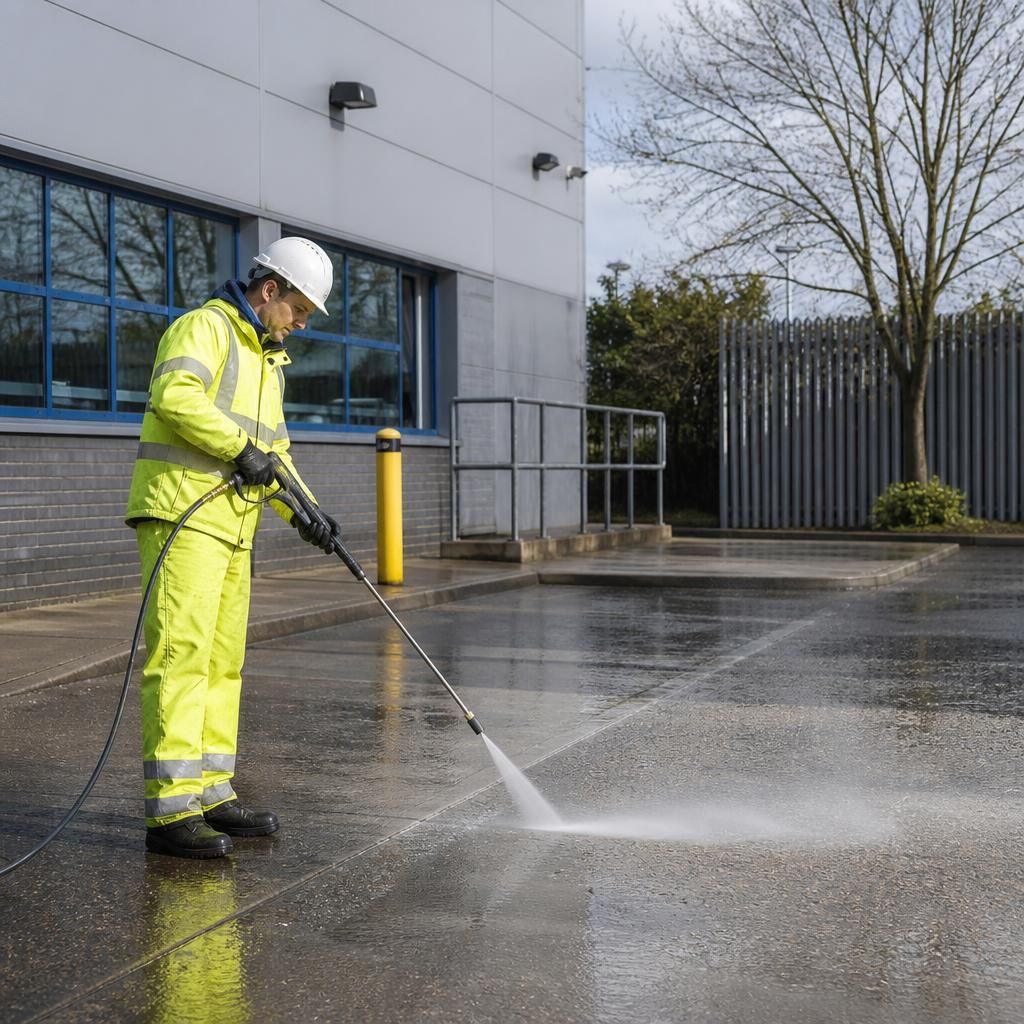
Commercial outdoor pressure washing is most effective on sound, durable surfaces such as concrete, paving, tarmac, brickwork and hard-standing areas. The pressure, water temperature and cleaning solution should be adjusted to suit the material and the type of contamination.
Delicate or damaged surfaces, including soft brick, historic masonry, weathered render, natural stone and fragile roof coverings, may require low-pressure washing, steam cleaning or soft washing instead. A site assessment and test patch can help prevent damage to coatings, joints and waterproofing while achieving a consistent clean.