
What safety precautions should be taken during commercial pressure washing?
Commercial pressure washing should be carried out using a documented risk assessment, trained operators, suitable PPE, controlled work zones and equipment checks. Operators must also manage water, chemicals, electrical hazards, traffic and work at height to protect people, property and the environment, in line with UK health and safety requirements.
Commercial pressure washing should be controlled through a documented risk assessment and method statement, trained operators, suitable personal protective equipment (PPE), inspected equipment and a clearly managed work area. The precautions must address high-pressure water, chemicals, electrical equipment, vehicle movements, work at height, contaminated runoff, slip hazards and the protection of employees, visitors, the public and the building itself.
Plan the work before equipment arrives
Every site should be assessed before cleaning begins. The assessment should identify the surfaces to be treated, access arrangements, drainage, nearby electrical installations, fragile materials, vehicle routes, pedestrian routes, potential contaminants and any work-at-height requirements. A method statement should then set out the cleaning sequence, equipment, controls, emergency arrangements and responsibilities.
Site-specific controls are particularly important for commercial premises because conditions can change during the job. Deliveries, tenant access, construction activity, public footfall and changing weather may require the exclusion zone or cleaning method to be adjusted. The site contact should understand what areas will be closed and when they can safely be reopened.
Use trained and competent operators
Pressure washing is not simply a matter of directing a lance at a surface. Operators should understand the equipment’s operating limits, the effects of pressure and temperature on different materials, safe chemical handling, electrical risks, access equipment and the consequences of uncontrolled spray. They should also be able to recognise unstable surfaces, damaged coatings, asbestos-related concerns and contaminated water that requires specialist handling.
Operators should receive suitable instruction for the specific machinery and task. Supervisors should check that the agreed method is being followed, particularly on large sites or where several teams, machines or contractors are working at the same time.
Wear appropriate PPE
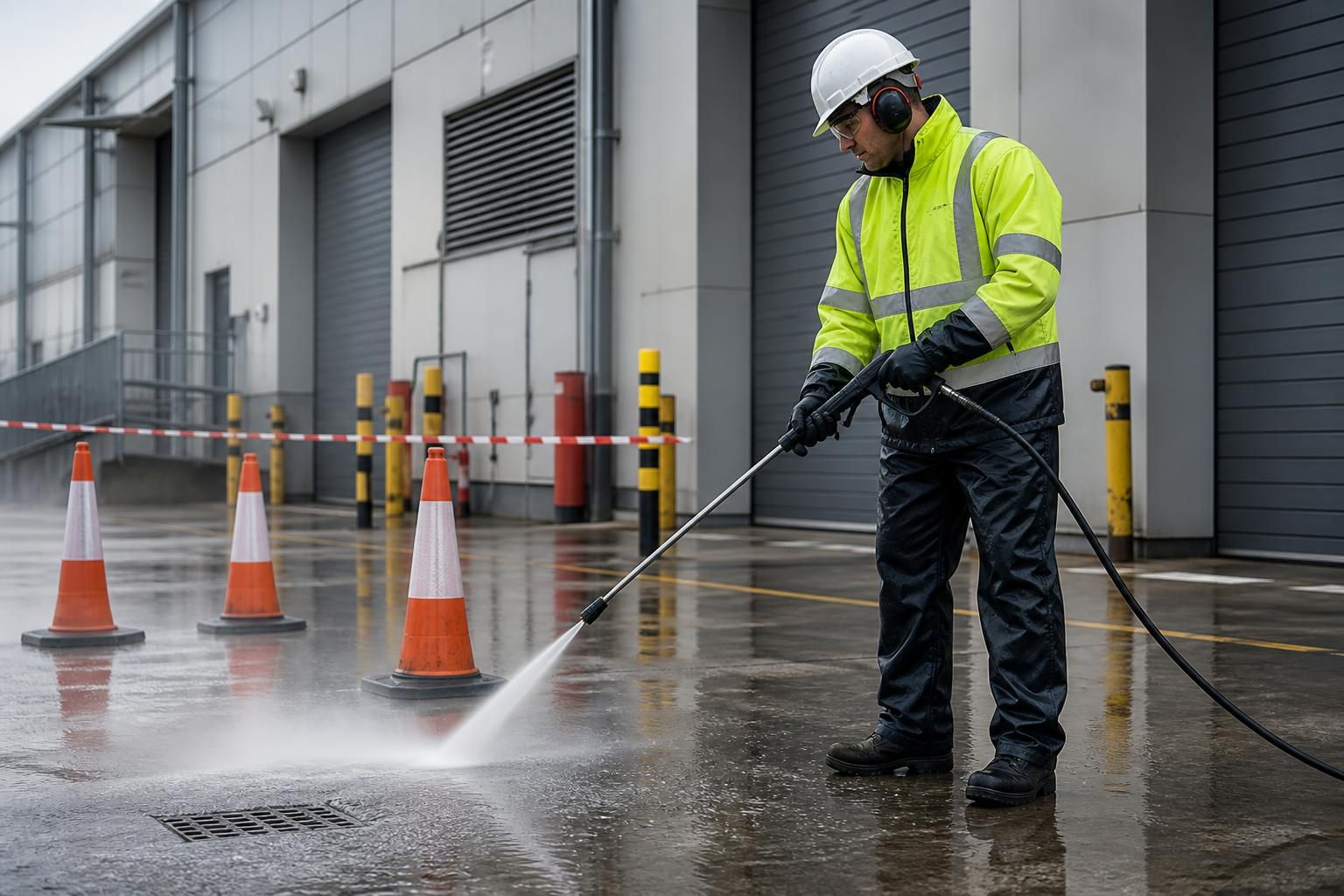
PPE should be selected from the risk assessment rather than treated as a substitute for other controls. Depending on the work, this may include:
- Water-resistant protective clothing and suitable gloves to protect against spray, contamination and cleaning chemicals.
- Safety footwear with effective slip-resistant soles and protection appropriate to the site conditions.
- Eye protection or a full face shield to guard against high-pressure spray, debris and chemical splashes.
- Hearing protection where noise from pumps, engines or enclosed spaces creates a significant exposure.
- Suitable respiratory protection where the assessment identifies airborne mist, dust or hazardous substances that cannot be adequately controlled by other means.
- Head protection and high-visibility clothing where there is a risk from overhead objects or moving vehicles.
- Fall-arrest or restraint equipment only where required and with a suitable, properly planned system for working at height.
Wet or contaminated PPE should be cleaned, inspected and stored correctly. Damaged gloves, footwear, eye protection, hoses or harness components should be taken out of use.
Inspect and control the equipment
Before use, operators should check the pressure washer, hoses, couplings, lance, trigger, safety devices, fuel system, electrical leads and water connections. Hoses should be routed so they cannot be crushed, cut, caught on vehicles or create a trip hazard. Couplings must be secure, and the trigger should not be tied or otherwise prevented from returning to its safe position.
Equipment should be maintained in line with the manufacturer’s instructions, with defects reported and repaired by a competent person. Electrical equipment, extension leads and portable distribution systems need particular care in wet environments. Where electrical equipment is used, it should be suitable for the conditions, protected by appropriate residual current protection and positioned to prevent water ingress. Operators should never handle plugs, connections or electrical controls with wet hands, and damaged cables should not be used.
Pressure should be set to the lowest effective level for the material being cleaned. Excessive pressure or heat can damage pointing, mortar, render, coatings, timber, seals, roof coverings, cladding, glazing and delicate stone. A test area should be completed where the surface, coating or previous repair is uncertain.
Keep people away from the work area
A clearly marked exclusion zone should separate the cleaning operation from employees, visitors, members of the public and other contractors. Barriers, cones and warning signs should be positioned far enough from the spray and possible flying debris to remain effective. Tape alone may be inadequate where people could walk into the area or vehicles could pass through it.
Access points, doorways and emergency routes should be managed rather than obstructed. If an entrance must remain available, a safe alternative route or a controlled banksman arrangement may be needed. Operators should stop work if a person enters the exclusion zone unexpectedly. On public-facing or occupied premises, cleaning may need to be scheduled during quieter periods, but timing does not remove the need for physical controls.
Control traffic and plant movements
Commercial cleaning frequently takes place in car parks, loading areas and service yards. A traffic management plan should identify vehicle routes, reversing risks, parking restrictions and safe locations for the pressure-washing unit, water bowser, hoses and waste containers. Vehicles and mobile plant should be kept away from hoses and wet surfaces wherever possible.
A trained banksman may be required for reversing or for movements close to pedestrians and buildings. High-visibility clothing, barriers and clear communication help prevent collisions, but operators should not rely on hand signals where the driver’s view or hearing is obstructed.
Manage work at height and fragile areas
Cleaning façades, roofs, canopies and high-level cladding requires a planned access solution. Suitable equipment may include a properly selected mobile elevating work platform, scaffold, tower or other access system. It should be used by trained personnel, positioned on stable ground and inspected as required. Ladders should not be used as a general work platform for prolonged pressure washing or where both hands are needed to control the lance.
Roof work requires checks for fragile roof lights, weak coverings, unprotected edges, openings and falling-object risks. Pressure washing from a position that causes unstable footing or forces the operator to overreach should not take place. Tools and hoses should be secured or managed to prevent them falling onto people below, and the area underneath should be excluded from access.
Prevent slips, trips and falls
Water, detergent, algae, oil and loosened dirt can make floors and paving highly slippery. Hoses should be routed away from walkways or protected with suitable cable ramps where crossings are unavoidable. Wet areas should be cordoned off, and warning signs should remain in place until the surface is safe for normal use.
Operators should work methodically to avoid standing in pooled water or directing runoff towards entrances, stairs, ramps, electrical installations or pedestrian routes. At the end of each stage, standing water, sludge and displaced debris should be removed or controlled rather than left for others to encounter.
Handle chemicals safely
Detergents, biocides, degreasers and graffiti-removal products should be selected for the surface and contamination involved. The product label and safety data sheet should be followed, including requirements for dilution, ventilation, storage, PPE, first aid and disposal. A COSHH assessment is needed where substances could harm people through skin contact, inhalation, ingestion or eye exposure.
Chemicals should never be mixed unless the manufacturer specifically permits it. In particular, combining products can produce dangerous gases or unexpected reactions. Containers should be labelled, secured against tipping, kept away from incompatible substances and stored so that leaks cannot reach drains or watercourses. Operators should use controlled application methods to minimise mist, overspray and unnecessary chemical use.
Protect electrical systems and building services
Before washing, identify external sockets, lighting, alarm systems, ventilation openings, data connections, vehicle charging equipment and other services. These should be isolated, covered or kept outside the spray area using a method agreed with the responsible building manager. Water should not be directed into vents, joints, seals, switchgear, open windows or other openings.
Where isolation is necessary, it should be completed by an authorised person. The cleaning team should not assume that a fitting is safe simply because it is outdoors or appears weatherproof. Any equipment affected by water should remain isolated until it has been checked and declared safe by a competent person.
Control spray, debris and contamination
High-pressure spray can dislodge masonry, paint, rust, glass fragments, nesting material, bird fouling and other debris. The surface and surrounding area should be checked first, with loose items removed or secured where possible. Spray should be directed away from people, glazing, vehicles, vents and neighbouring property.
Bird fouling, mould, oils, industrial residues and other contaminants may present health risks. The cleaning method should prevent unnecessary aerosol formation, and contaminated waste should be collected and handled in accordance with the relevant site and waste requirements. Operators should not disturb suspected asbestos-containing materials. Work should stop if asbestos, unknown hazardous residues or unusual contamination is identified until the material has been assessed by a suitably competent person.
Manage water and runoff
Runoff should be planned before washing starts. Drain covers, bunds, wet vacuums, sump pumps or temporary containment may be needed to prevent dirty water, detergents, oils, paint particles or biocides entering surface-water drains, watercourses or neighbouring land. Surface-water drains should not be used for contaminated discharge unless the discharge is permitted and appropriately controlled.
The team should know where wastewater will be collected, treated or disposed of and should follow the site’s environmental requirements. If runoff cannot be contained safely, the cleaning method should be changed or the work postponed. This is both an environmental precaution and a safety control, because uncontrolled water can create flooding, contamination and serious slip hazards.
Account for weather and operating conditions
Wind can carry spray and chemicals beyond the planned work zone, while rain can increase runoff and make access surfaces unsafe. Ice, extreme cold, poor visibility and lightning can also affect equipment and operator safety. Work should be paused when weather makes the controls ineffective, particularly for high-level cleaning, chemical application or operations near electrical systems.
Noise, exhaust fumes and heat should also be considered. Petrol or diesel-powered equipment must not be operated in poorly ventilated or enclosed areas unless suitable controls are in place. Breaks, ventilation and hearing protection should be provided where the working conditions require them.
Have emergency arrangements in place
Before starting, the team should know how to stop the equipment, isolate power and water, raise an alarm, contact the site representative and obtain first aid. Access for emergency services must remain clear. Suitable arrangements should cover high-pressure injection injuries, chemical splashes, electric shock, falls, slips, fire, uncontrolled spills and contact with contaminated material.
High-pressure injection injuries can appear minor while causing serious internal damage, so they require urgent medical assessment. Chemical exposure should be dealt with using the product safety data sheet and site first-aid arrangements. Incidents, near misses, equipment failures and environmental releases should be recorded, investigated and used to improve the method statement.
Complete the area handover safely
On completion, the operator should isolate and depressurise the equipment before disconnecting hoses or changing attachments. The work area should be checked for pooled water, loose debris, chemical residue, damaged surfaces, exposed services and displaced drain covers. Barriers and warning signs should remain until the area is safe for normal use.
The site contact should be told about any defects revealed or caused during cleaning, including failed sealants, loose pointing, damaged coatings or blocked drainage. A properly documented handover provides a clear record of the controls applied and any follow-up action required.
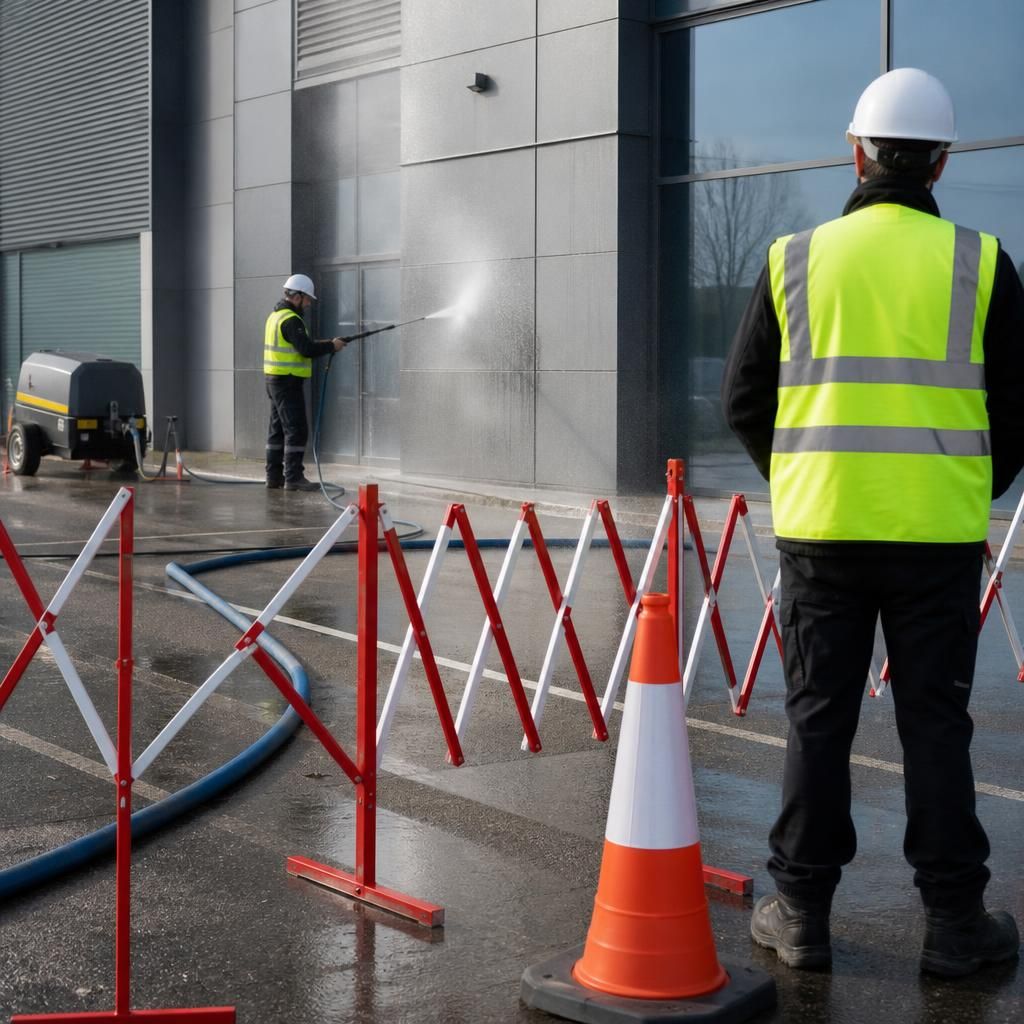
A controlled exclusion zone is one of the most important safety precautions during commercial pressure washing. It keeps employees, visitors, vehicles and members of the public away from high-pressure spray, flying debris, chemical mist, hoses and slippery surfaces.
Barriers and clear warning signs should be positioned around the full work area, including likely spray and runoff paths. Hoses should be routed away from walkways or protected where crossings are unavoidable, while entrances, emergency routes and vehicle movements must be managed separately. If someone enters the exclusion zone unexpectedly, the operator should stop work until the area is secure again.