
What safety measures should be implemented during commercial outdoor cleaning to ensure the well-being of workers and property?
Commercial outdoor cleaning should be controlled through a documented risk assessment, suitable training and PPE, safe exclusion zones, secure access equipment, and procedures for water, chemicals, traffic and electrical hazards. Protecting property also requires checking surfaces and building systems beforehand, controlling run-off, and using equipment at pressures and temperatures appropriate to the material being cleaned.
Safe commercial outdoor cleaning depends on a documented risk assessment, competent operatives, suitable personal protective equipment, controlled work areas and equipment that is appropriate for the surface and task. Effective planning must protect workers, members of the public, clients’ buildings, vehicles, landscaping, drainage systems and nearby businesses throughout preparation, cleaning and site clearance.
Start with a site-specific risk assessment. Before work begins, the contractor should inspect the site and prepare suitable risk assessments and method statements. These should identify hazards such as work at height, vehicle movements, fragile surfaces, overhead or buried services, electrical equipment, chemical exposure, contaminated deposits, high-pressure water, steam, noise, slips, falling objects and changing weather conditions. The assessment should take account of the building’s construction, the cleaning method, access requirements and the presence of staff, residents, visitors or members of the public.
Operatives should receive a site briefing covering the agreed method, exclusion zones, emergency arrangements, welfare facilities, communication procedures and any client-specific requirements. Conditions should be reviewed if the scope changes, equipment is altered or weather makes the original method unsafe. A written method statement is not a substitute for competent supervision and active monitoring during the work.
Use trained and competent workers. Anyone operating pressure washers, steam-cleaning equipment, access platforms, lifting equipment or chemical systems should be trained for the relevant task and able to recognise when conditions are unsafe. Training should cover equipment controls, hose management, chemical handling, surface identification, safe access, emergency isolation and first aid arrangements. Where work at height is required, workers must be competent to use the selected access system and understand the limitations of ladders, towers, mobile elevating work platforms and fall-protection equipment.
Equipment should be selected, inspected and maintained in line with the manufacturer’s instructions and applicable UK requirements. Pressure systems, electrical tools, lifting equipment and work equipment should be subject to appropriate inspection, servicing and records. Damaged hoses, exposed electrical cables, defective guards, leaking connections or unstable access equipment should be removed from service rather than used temporarily.
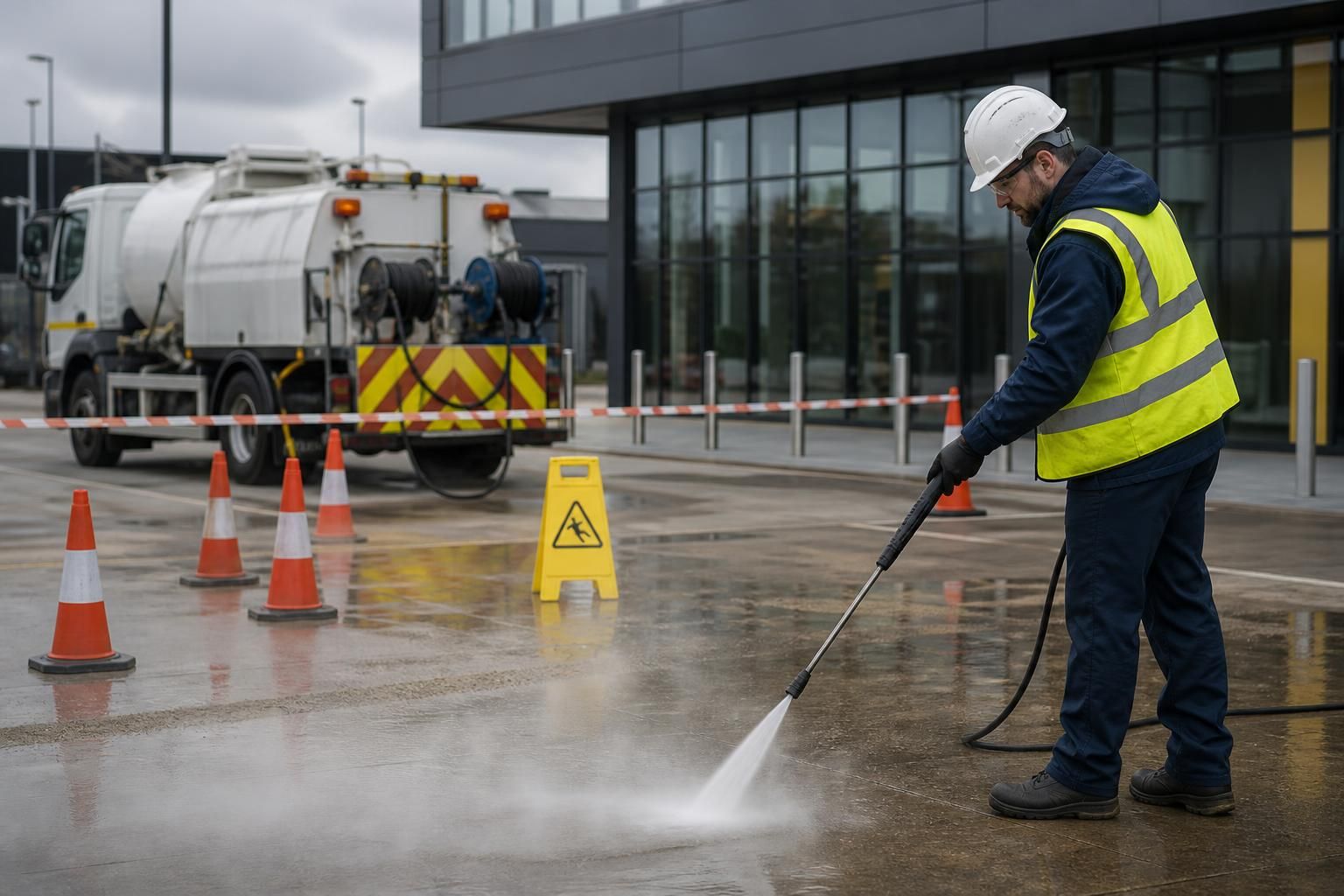
Control access and protect other people. The cleaning area should be separated from pedestrians, vehicles and building occupants using barriers, cones, signs and, where necessary, a banksman or site marshal. Exclusion zones must be large enough to contain spray, debris, displaced dirt and falling materials; they should not be based solely on the immediate position of the operator. Entrances, pavements, fire exits and emergency routes must remain usable or be managed through an agreed temporary arrangement.
Where cleaning takes place beside roads, loading areas or car parks, a traffic management plan may be needed. Vehicles and plant should be positioned securely, with reversing movements controlled and hoses routed so they do not create trip hazards. Work may need to be scheduled outside busy periods, but quieter times do not remove the need for barriers and supervision.
Manage pressure, temperature and spray hazards. High-pressure water can cut skin, cause injection injuries, dislodge masonry and propel debris. Operators should never direct the lance towards people, animals, glazing, electrical components or unprotected building openings. They should maintain a stable stance, use the correct lance and nozzle, keep both hands on the equipment where required and isolate the system before changing attachments or clearing blockages.
Pressure and flow should be set according to the substrate and its condition. Fragile masonry, pointing, render, timber, roof coverings and painted finishes may be damaged by excessive pressure or prolonged cleaning in one area. Hot-water and steam systems add burn and scald risks, so hoses, couplings and surfaces should be treated as hot until confirmed otherwise. Suitable gloves, protective clothing, eye or face protection and footwear should be worn, with hearing protection where noise levels require it.
Plan work at height carefully. Work at height should be avoided where a safe ground-level method is reasonably practicable. If it cannot be avoided, the safest suitable access equipment should be selected after considering the duration, reach, surface, ground conditions and need to handle hoses. Access equipment must be positioned on stable ground, secured against movement and inspected before use. Mobile elevating work platforms should be operated by trained personnel, with attention to overhead obstructions, wind limits, entrapment risks and rescue procedures.
Tools, hoses and attachments should be secured so they cannot fall onto people or property. The area below must be isolated, and workers should not work beneath an active elevated operation unless the risk has been specifically controlled. Roof cleaning requires additional checks for fragile rooflights, unprotected edges, steep slopes and load-bearing limitations; operatives should not assume that a roof can support their weight.
Control chemicals and contaminated materials. Cleaning chemicals must be assessed under the Control of Substances Hazardous to Health requirements. Operatives should follow the product safety data sheet, use the least hazardous effective product and understand dilution, storage, ventilation, contact-time and disposal requirements. Chemicals must not be mixed unless the manufacturer expressly permits it, as incompatible products can create toxic gases or dangerous reactions.
Appropriate chemical-resistant gloves, eye protection, footwear, coveralls and respiratory protection should be selected based on the substance and exposure risk. Skin and eye wash facilities should be available where needed, and spills should be contained promptly. Bird droppings, mould, biological growth, oil residues, waste deposits and other contaminants may require additional hygiene controls, careful handling and suitable waste disposal. Workers should not eat, drink or smoke while handling chemicals or contaminated material.
Protect electrical systems, services and building features. Before washing, identify external sockets, lighting, alarms, CCTV, ventilation openings, door controls, sensors, charging equipment and other vulnerable systems. Isolate or protect them in accordance with the manufacturer’s or building manager’s instructions. Water should never be directed into electrical equipment, roof voids, vents, joints or openings where it could cause hidden damage. Cable routes, underground services and nearby overhead lines should be considered when positioning equipment and access plant.
Windows, doors, seals, vents, roof membranes, painted surfaces, signage, soft landscaping and vulnerable stored goods should be protected from spray, chemical contact and impact. A small test area should be completed where the surface, coating or stain response is uncertain. The cleaning method should then be adjusted if there is etching, colour change, surface loss, water penetration or other adverse reaction.
Prevent slips, flooding and pollution. Water, slurry and loosened deposits should be controlled so they do not enter occupied areas, public walkways or unsuitable drains. Temporary bunding, drain covers, wet vacuums, collection systems or controlled discharge may be required. Run-off should be assessed before work begins, particularly where it may contain detergents, oils, paint residues, algae, heavy sediment or other pollutants. Wastewater must be handled in accordance with the site’s drainage arrangements and applicable environmental requirements; it should not be allowed to enter surface-water systems without appropriate authorisation.
Hoses should be routed away from walkways or covered with suitable ramps. Wet surfaces should be clearly marked and dried or left safely isolated before the area is handed back. Cleaning should be paused during lightning, unsafe wind, freezing conditions or heavy rain where visibility, footing, access equipment or run-off control cannot be maintained.
Maintain emergency and welfare arrangements. The site should have clear procedures for stopping equipment, dealing with chemical splashes, pressure-injection injuries, falls, burns, electrical incidents, spills and public access breaches. First-aid provision, emergency contact details and the precise site location should be known to the team. Any high-pressure injection injury should receive urgent medical assessment, even if the skin wound appears minor.
On completion, the contractor should inspect the area with the client or site representative, remove barriers only when safe, clear equipment and waste, check drainage and confirm that entrances, walkways and fire routes are unobstructed. Records of inspections, defects, incidents, chemical use and any changes to the method provide useful evidence that the work was controlled properly and help improve future cleaning plans.
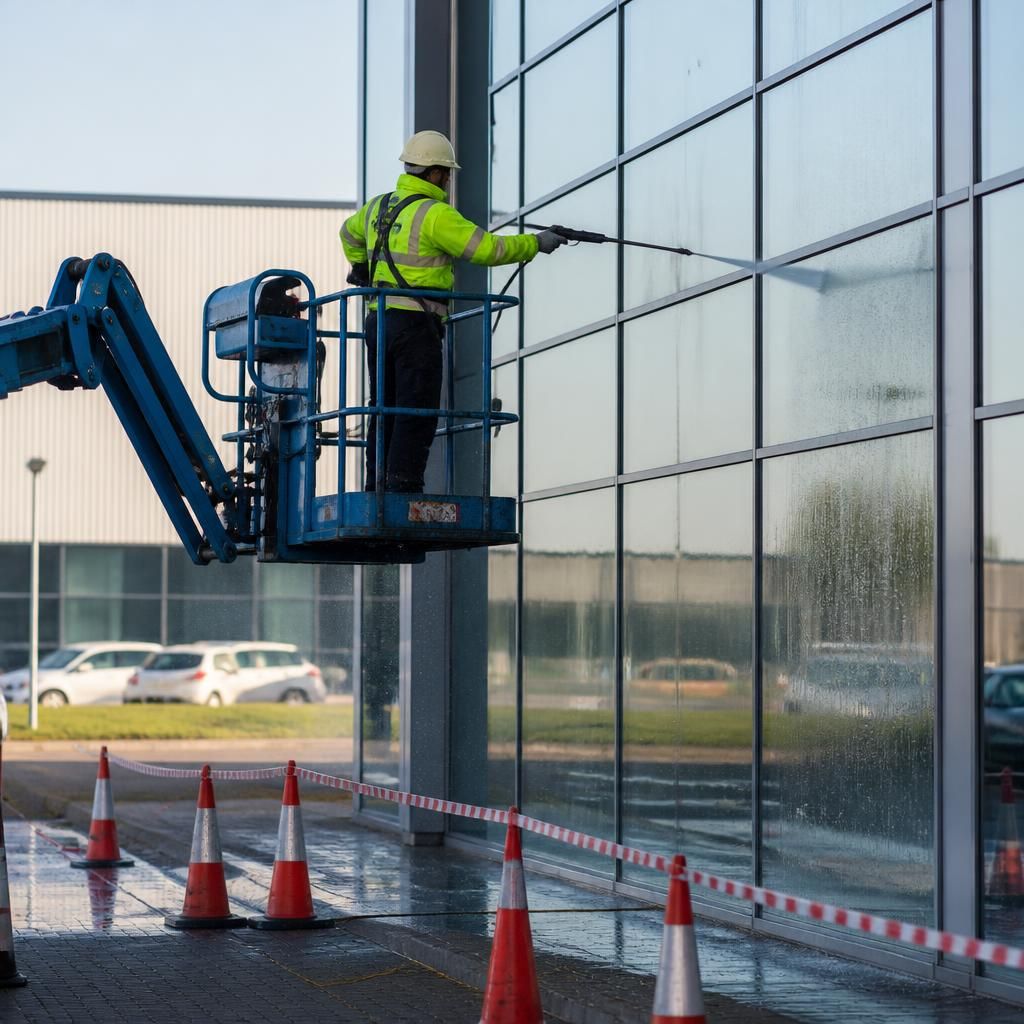
Safe work at height during commercial outdoor cleaning requires selecting suitable access equipment, securing the work area and preventing falls or falling objects. Operatives should avoid working at height where a safe ground-level method is reasonably practicable. Where elevated access is necessary, the equipment must suit the building, ground conditions, reach, duration of the task and weight of hoses and tools.
Access platforms, towers and other equipment should be inspected before use, positioned on stable ground and operated only by competent workers. Roof cleaning requires additional checks for fragile rooflights, steep slopes, unprotected edges and surfaces that may not support a person’s weight. Barriers and exclusion zones below the work area should remain in place until tools, hoses, debris and equipment have been safely removed.