
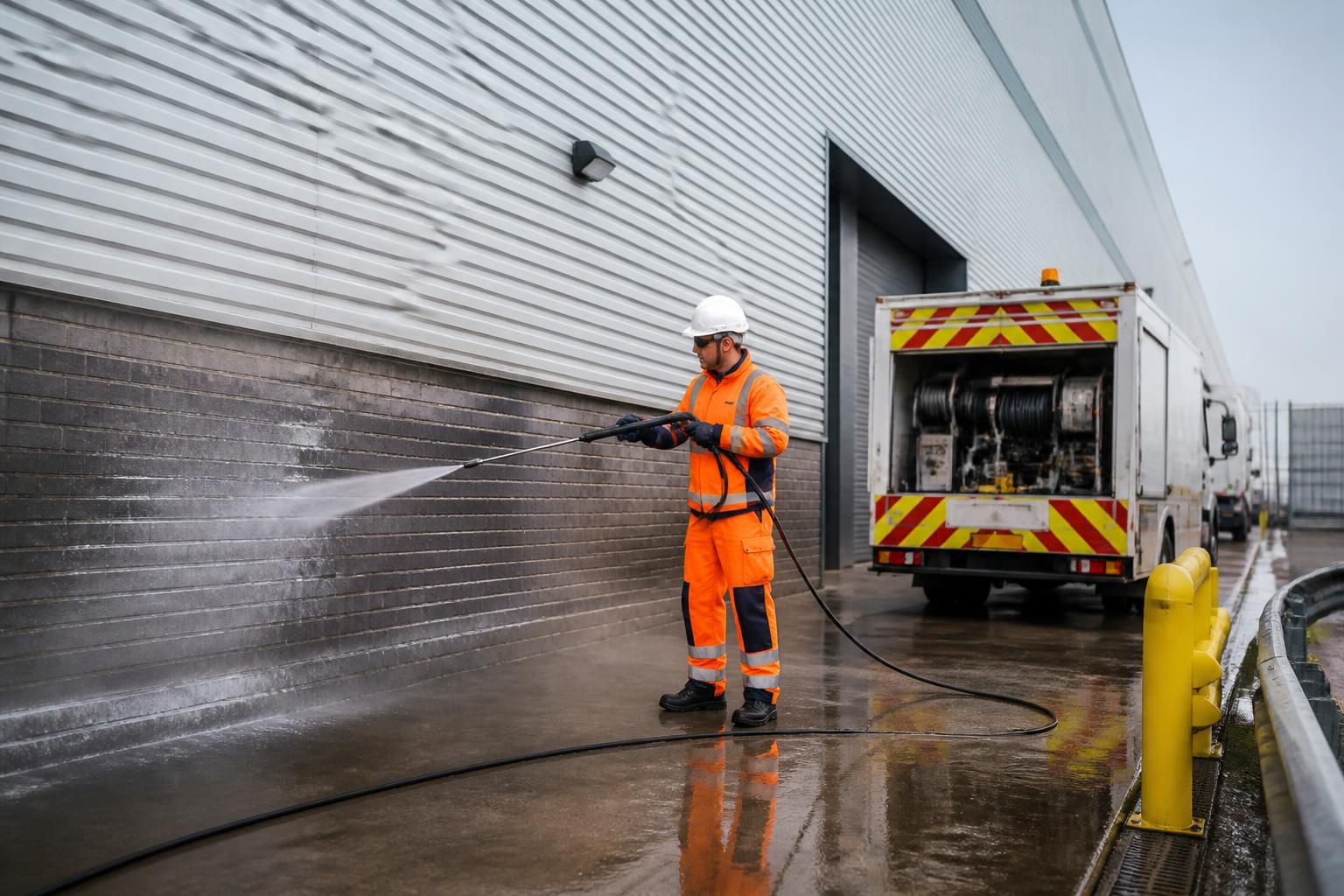
What factors impact the cost of commercial outdoor pressure washing services?
The cost of commercial outdoor pressure washing depends mainly on the surface area, cleaning method, level and type of contamination, access requirements, and the condition of the building or external area. Additional costs may apply for specialist equipment, traffic management, wastewater control, difficult access, or out-of-hours work, so a site assessment is usually needed for an accurate quotation.
The cost of commercial outdoor pressure washing is mainly determined by the area to be cleaned, the surface material, the type and severity of contamination, site access, the equipment and cleaning method required, and the controls needed to protect people, property and the environment. A straightforward, accessible hard-surface clean will usually cost less than a project involving fragile materials, heavy staining, specialist access, wastewater recovery or out-of-hours working.
Surface area and layout are usually the starting points for a quotation. Larger façades, roofs, car parks, yards and paved areas require more operative time, water, fuel and equipment use. However, total area alone does not determine the price. A large, open car park may be relatively efficient to clean, whereas a smaller site divided into courtyards, loading bays, walkways and restricted sections may take longer because equipment must be repeatedly repositioned.
The shape and layout of the premises can also affect productivity. Obstacles such as parked vehicles, street furniture, planters, signage, barriers and external plant may need to be moved or protected. Areas that cannot be cleaned continuously, or that require work around an active business, generally involve more preparation and a longer on-site period.
The surface type and its condition affect both the cleaning technique and the level of care required. Concrete, block paving, tarmac, brickwork, cladding, render, stone and painted surfaces each have different pressure, temperature and chemical tolerances. A heavily weathered or deteriorated surface may need a gentler process to avoid loosening coatings, damaging joints or exposing existing defects.
Before work begins, the condition of the surface should be considered separately from the dirt on it. Cracked paving, failed pointing, loose coatings, damaged membranes and unstable render can increase preparation time and may require the cleaning method to be adapted. Cleaning can reveal pre-existing defects, but it cannot repair them. A responsible quotation should identify these risks rather than assume that every surface can be treated in the same way.
Contamination is another major cost factor. Light dust and general atmospheric soiling may be removed efficiently with pressure washing, while oil, grease, chewing gum, algae, moss, bird fouling, traffic film, rust staining, paint and biological growth may require pre-treatment, hot water, steam cleaning, agitation or more than one cleaning pass. Some contaminants also need controlled collection and disposal rather than being rinsed into surface water drainage.
The age of the contamination matters as well. Embedded staining and neglected growth normally take longer to remove than recent deposits. Where complete removal is not technically or safely achievable, the quotation should explain the expected result and distinguish between cleaning, stain reduction and restoration.
Access and working conditions can have a substantial effect on the price. Ground-level areas with clear vehicle access are generally simpler to service than elevated façades, roofs, canopies or enclosed service yards. Depending on the site, the work may require access platforms, mobile elevating work platforms, scaffold towers, water-fed equipment, long hose runs or specialist lifting arrangements.
Restricted access, narrow entrances, uneven ground, security-controlled premises and the need to work around deliveries can increase set-up and dismantling time. If access equipment is required, the quotation may include delivery, operation, inspection and relocation costs. The height of a surface is not the only consideration; safe positioning, ground conditions and the ability to maintain exclusion zones are equally important.
Water, power and wastewater management may also influence the quotation. If suitable water or electrical supplies are unavailable, equipment may need to be brought to site. Long distances between the service point and the work area can reduce efficiency. Where dirty water, detergents, oil or other contaminants could enter drainage systems, additional measures may be needed, such as drain protection, collection, filtration, recovery or approved disposal.
Traffic and pedestrian management is relevant for retail parks, public areas, car parks, industrial estates, transport locations and premises next to busy roads. Cones and barriers may be sufficient for some areas, while others require phased working, signed diversions, a banksman, temporary closures or a formal traffic-management arrangement. These measures protect the public and allow the cleaning team to work without avoidable interruption.
Timing and operating restrictions can change the labour requirement. Cleaning during normal business hours may be practical for a vacant yard but unsuitable for a customer-facing entrance or an active loading area. Early-morning, evening or weekend work may be requested to minimise disruption, although it can involve additional staffing, access coordination and mobilisation costs. Weather-sensitive work may also need to be scheduled around conditions that affect safety, drying times or the performance of cleaning products.
Project scope and frequency should be considered together. A one-off deep clean may involve more intensive preparation than routine maintenance. Planned repeat cleaning can help prevent heavy build-up and may make each visit more efficient, but the appropriate interval depends on the surface, exposure, use of the site and type of contamination. Combining compatible areas during one mobilisation may also reduce duplicated set-up time.
For a useful quotation, provide the site address, approximate areas, surface types, photographs where available, known contamination, access restrictions, preferred working times and any requirements for traffic or wastewater control. A site survey is advisable where the work involves height, delicate materials, heavy staining, public access or uncertain drainage arrangements.
A clear commercial quotation should explain what is included, the proposed method, preparation and protection measures, access equipment, wastewater controls, exclusions, programme, reinstatement responsibilities and whether prices are stated inclusive or exclusive of VAT. Comparing quotations on price alone can be misleading if one contractor has allowed for safer access, proper wastewater management or the additional time needed to achieve an appropriate result.
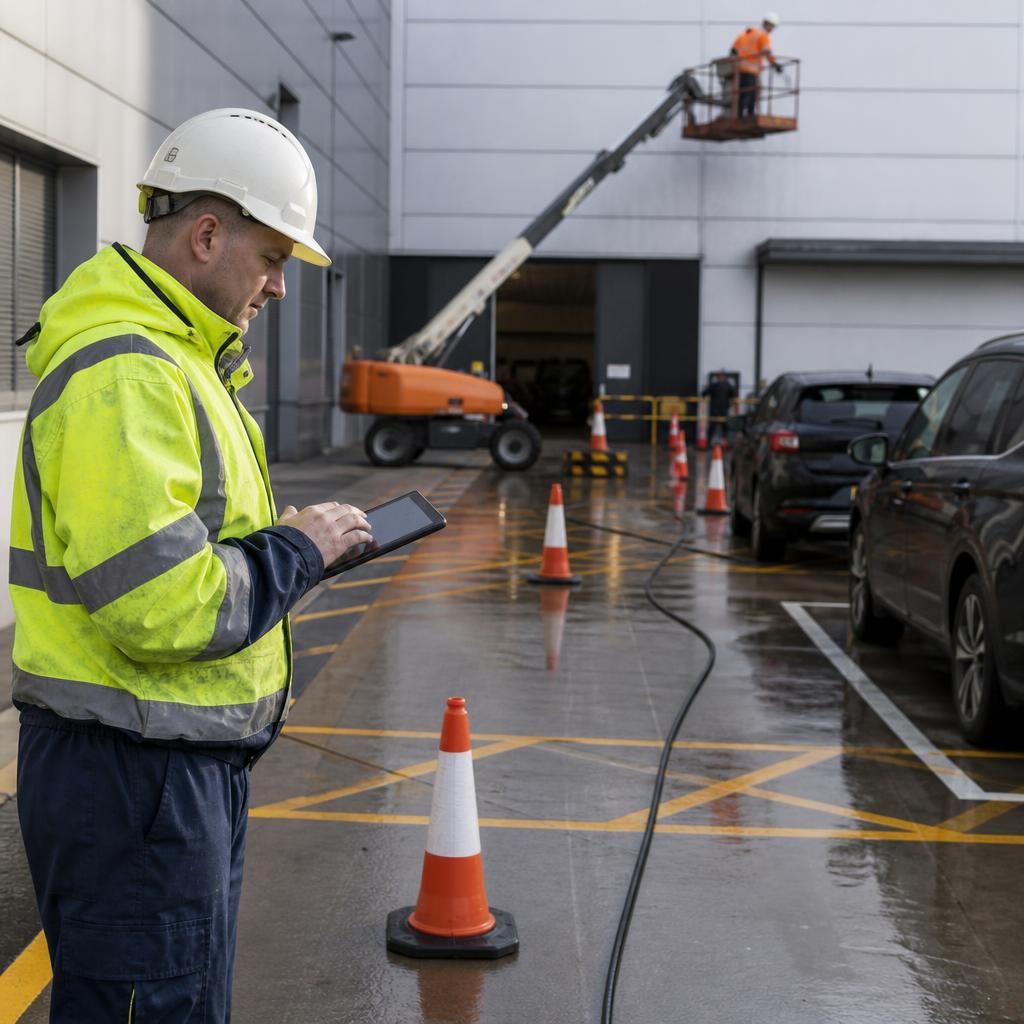
Commercial outdoor pressure washing costs are often affected by site access and preparation as much as by the cleaning itself. Restricted entrances, elevated surfaces, parked vehicles, public footfall, loading activity and uneven ground can increase the time and equipment needed to complete the work safely.
A reliable quotation should therefore identify access equipment, protection measures, traffic management and wastewater controls separately from the basic cleaning work. Providing photographs, surface details, contamination information and any operating restrictions helps the contractor assess the site accurately and reduces the risk of unexpected costs.
Request a tailored commercial pressure washing quotation
Contact Encanto Exterior Cleaning to request a tailored commercial pressure washing quotation based on your site, surfaces, contamination and access requirements. Share photographs or arrange a site assessment so we can recommend the appropriate method and identify any traffic management, access or wastewater controls needed.