
What environmental considerations should be taken into account when performing commercial outdoor pressure washing?
Commercial outdoor pressure washing should minimise water and chemical use while preventing dirty runoff, oil, detergents and debris from entering drains, soil or watercourses. Effective planning includes selecting suitable low-impact methods, controlling and collecting wastewater, protecting surrounding landscaping and wildlife, and disposing of recovered contaminants in line with UK environmental requirements.
Commercial outdoor pressure washing should be planned to minimise water and chemical use, prevent contaminated runoff, and protect drains, soil, buildings and surrounding habitats. The main environmental risk is not the clean water applied to a surface, but the material it removes. Oil, fuel, silt, detergents, paint particles, heavy metals, organic matter and construction residues can be carried into surface-water drains, watercourses or the ground if wastewater is not controlled.
Assess the site before work starts. Identify surface-water and foul-water drains, inspection chambers, gullies, nearby watercourses, permeable ground, planted areas and sensitive habitats. Establish what contaminants are likely to be present and whether the work could disturb hazardous coatings, fuel residues, biological growth or fine dust. The method statement should explain how water will be contained, recovered, filtered, stored and disposed of, rather than treating runoff control as an afterthought.
Use the least intensive effective cleaning method. Pressure washing is not always the best option for every surface or contaminant. Where suitable, dry brushing, scraping, vacuuming, low-pressure washing, steam cleaning or targeted spot treatment may reduce water use and limit the spread of pollutants. Pressure, temperature, nozzle selection and cleaning distance should be matched to the surface so that dirt is removed without stripping coatings, dislodging masonry or creating unnecessary wastewater.
Control water consumption. Operators should use equipment that delivers the required cleaning performance without excessive flow, and avoid leaving machines running while repositioning or preparing the work area. Trigger-controlled equipment, adjustable flow rates and targeted cleaning can reduce wastage. Water should be used only where it contributes to the cleaning process; pre-sweeping loose debris and removing dry deposits first can reduce the volume of contaminated water produced.
Select cleaning products carefully. Detergents, degreasers, biocides and other treatments should be used only when necessary and at the correct dilution. Product information should be checked for environmental hazards, aquatic toxicity, biodegradability, compatibility with the surface and disposal requirements. A biodegradable product is not automatically safe to discharge, particularly when it has mixed with oil, metals or other contaminants. Chemicals should be stored securely, labelled clearly and kept away from drains and areas where a spill could reach soil or water.
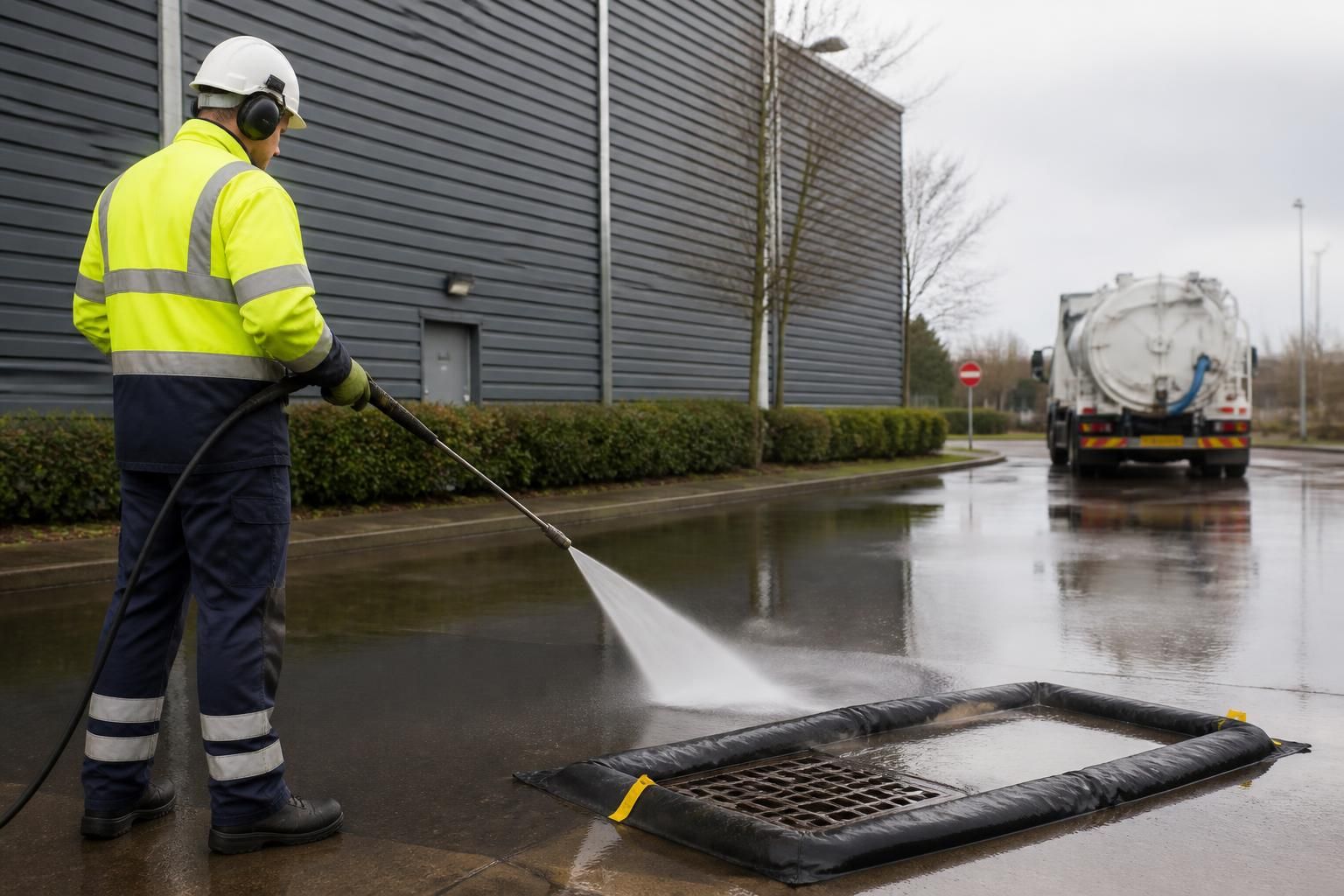
Prevent dirty water entering surface-water drainage. Surface-water systems commonly discharge to rivers, streams or other receiving environments without the treatment provided by a sewage works. Drain covers, drain mats, bunds, temporary plugs, sandless barriers and other suitable containment methods can be used to isolate gullies and guide wastewater towards a collection point. These controls must be appropriate for the site and checked during the work, as high-flow water can bypass poorly positioned barriers.
Wastewater should be collected using wet vacuums, recovery systems, pumps or other suitable equipment where runoff could be contaminated. It should not be swept into a different drain, released onto surrounding ground or allowed to pond beside foundations. If discharge to a foul sewer is proposed, the sewerage provider may require consent or impose conditions under trade-effluent arrangements. Discharging to a surface-water drain, watercourse or land may require separate permission and should not be assumed to be acceptable.
Handle recovered waste responsibly. Sludge, silt, oil-impacted water, paint residues, used filters, absorbent materials and contaminated debris should be kept contained and assessed before disposal. Waste must be transferred using the appropriate documentation and to a suitably authorised facility. Where the waste may be hazardous, its classification and handling requirements should be confirmed rather than relying on its appearance. Waste transfer notes and records of disposal should be retained as part of the project file.
Protect soil, landscaping and buildings. Plants, lawns, beds, trees and unsealed ground can be damaged by pressure, heat, detergent, dirty water and concentrated pollutants. Cover or isolate vulnerable areas where necessary, and prevent wastewater from flowing towards roots or permeable surfaces. Building entrances, ventilation points, loading bays and stored materials should also be protected from overspray and contaminated water. Any temporary sheeting or containment should allow safe drainage into the recovery system and should not create a trip or flooding risk.
Consider wildlife and weather conditions. Work should be postponed or adapted during heavy rain, strong winds, freezing conditions or circumstances where runoff cannot be contained. Rain can overwhelm temporary controls and spread contaminants beyond the work area, while wind can carry spray and cleaning chemicals onto vegetation, neighbouring property or water. Areas used by nesting birds, bats or other protected species may need an ecological check before façade, roof or vegetation-adjacent cleaning. Wildlife, nests and habitats should not be disturbed, and specialist advice may be needed where protected species or sensitive environments are present.
Manage oil, fuel and other high-risk contaminants separately. Car parks, service yards, workshops and industrial areas may contain hydrocarbons, heavy metals and other substances that require more than ordinary pressure washing. Loose oil and solids should be removed where practicable before washing, and suitable absorbents or temporary bunding should be available. Oil separators must be maintained and must not be treated as a substitute for collecting contaminated wastewater. If the substance or coating is unknown, work should pause until its risks and disposal route have been established.
Reduce secondary environmental impacts. Equipment should be maintained to prevent leaks of fuel, hydraulic fluid and cleaning chemicals. Electric or lower-emission equipment may be suitable where access to power and the required performance allow, while petrol or diesel equipment should be operated only in well-ventilated areas and kept away from drains and water. Noise, exhaust fumes and overspray should be considered when work is near residents, schools, hospitals, offices or other occupied premises. Responsible scheduling and well-maintained machinery can reduce disruption without compromising cleaning quality.
Keep an auditable environmental record. For larger or higher-risk projects, records should cover the site assessment, products used, drainage arrangements, wastewater volumes where relevant, incidents, waste transfer documentation and any discharge permissions or instructions. Staff should know how to stop the work, contain a spill and report an incident. Spill kits and emergency contact details should be available, and any release to a drain, watercourse or ground should be dealt with promptly and reported to the appropriate site contact or authority.
In practice, the correct approach depends on the surface, the contaminant, the drainage layout and the sensitivity of the surrounding area. A competent commercial cleaning contractor should explain the proposed cleaning method, chemical controls, runoff arrangements and waste route before work begins. This gives the client a clear basis for approving the method and helps ensure that a clean surface is not achieved at the expense of polluted water, damaged landscaping or avoidable environmental harm.
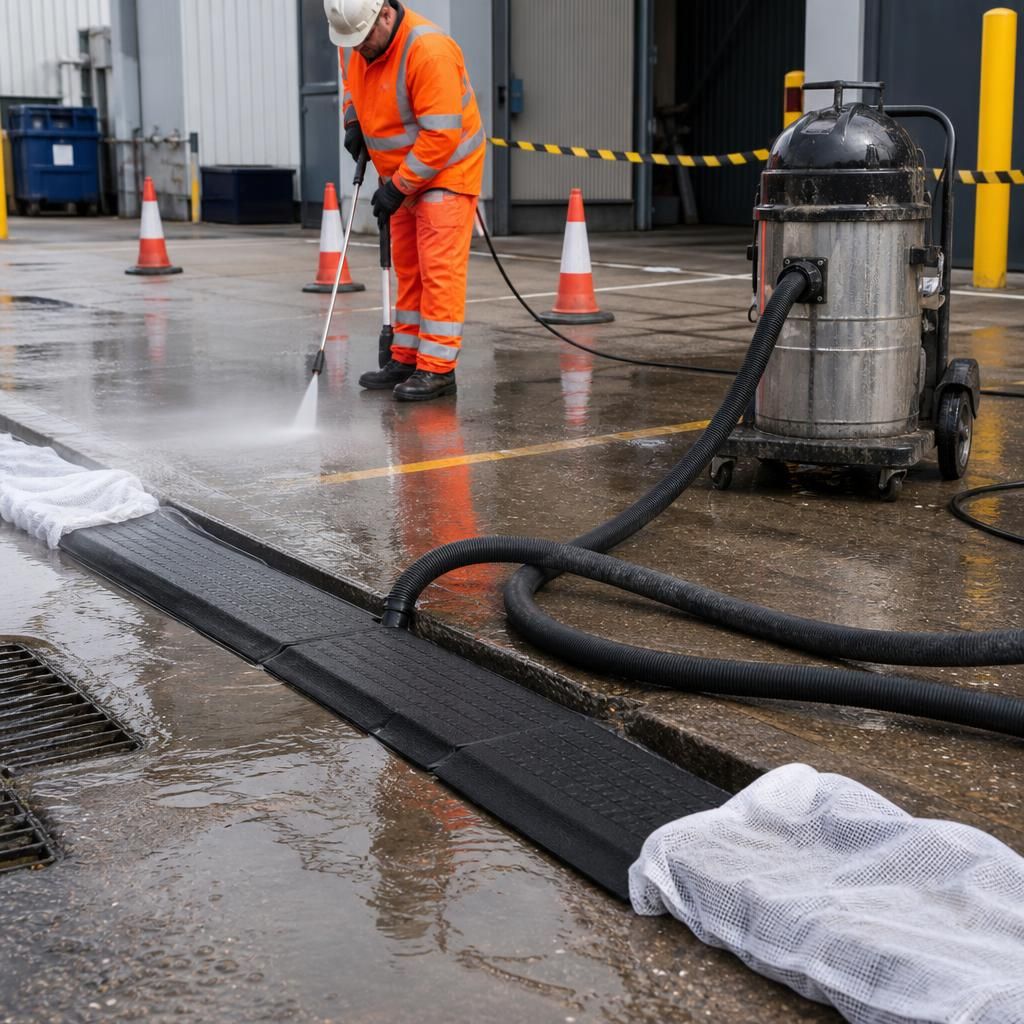
Controlling dirty runoff is one of the most important environmental considerations in commercial outdoor pressure washing. Water used on car parks, service yards, façades and industrial surfaces can collect oil, detergents, silt, paint residues and heavy metals. If this water enters a surface-water drain, it may reach a river or stream without treatment.
Before cleaning begins, the drainage layout should be checked and vulnerable gullies isolated with suitable drain mats, covers, bunds or temporary plugs. Contaminated water should then be directed to a controlled collection point and recovered using wet vacuums, pumps or similar equipment. It must not be swept onto soil, landscaping or another drain. Any discharge to a foul sewer should be agreed with the relevant sewerage provider, while recovered sludge, oil-impacted water and contaminated debris should be assessed and transferred to an authorised disposal facility.