
What environmental considerations should be taken into account when choosing commercial outdoor cleaning methods?
When choosing commercial outdoor cleaning methods, consider water consumption, chemical use, wastewater and surface-runoff controls, noise, energy use and emissions. The most suitable approach is one that achieves the required standard while using efficient equipment, environmentally appropriate products and effective containment or recovery measures.
The best commercial outdoor cleaning method is the one that meets the required cleaning standard with the least avoidable use of water, chemicals and energy, while keeping contaminated water and waste under control. Environmental considerations should therefore be assessed alongside surface type, contamination, access requirements, health and safety, and the condition of the site. A method that appears efficient at the point of cleaning may not be suitable if it creates uncontrolled runoff, damages a surface or requires excessive chemical treatment.
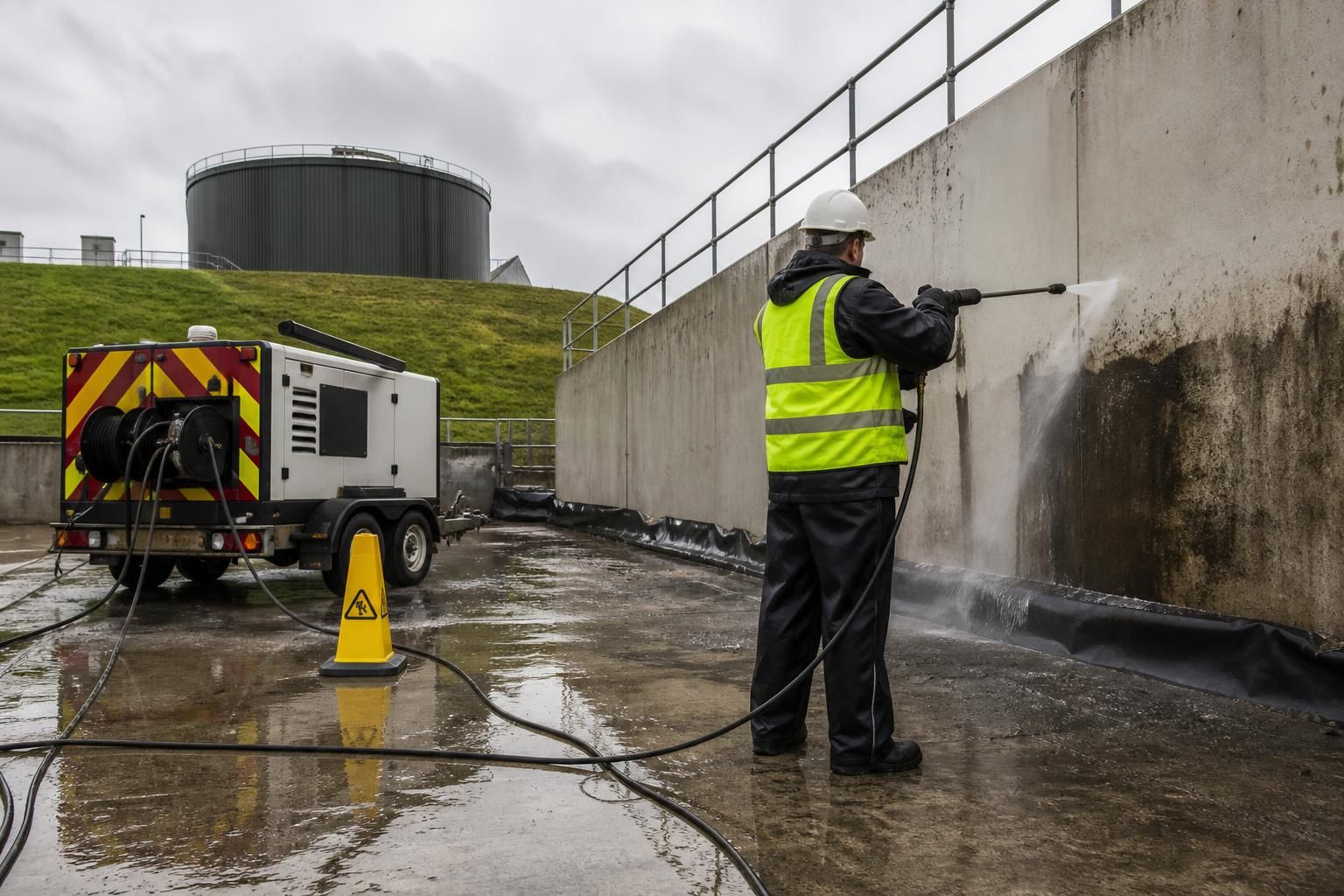
Water consumption and recovery should be considered before work begins. Pressure washing can be appropriate for large hard surfaces, but the volume of water used depends on the equipment, pressure, flow rate, cleaning duration and condition of the surface. Efficient equipment, targeted application and pre-treatment can reduce unnecessary water use. Low-pressure washing, steam cleaning or carefully controlled soft washing may be more suitable where high-flow rinsing is not needed.
Water use is only part of the assessment. The cleaning plan should explain how wastewater will be collected, contained, filtered, recovered or disposed of. Sweep-up and dry removal of loose dirt before washing can reduce the quantity of contaminated water produced. Vacuum recovery, drain covers, bunding and temporary barriers may be needed where runoff could enter surface-water drains, soil, watercourses or neighbouring property.
Chemical selection is another important consideration. Products should be chosen for the specific contaminant and surface rather than applying a stronger treatment than necessary. The contractor should assess whether a detergent, biocide, degreaser, solvent or other treatment is genuinely required, and whether a less hazardous or readily biodegradable alternative is suitable. Biodegradability alone does not make a product safe for unrestricted discharge; the product’s full environmental and handling requirements still need to be followed.
Cleaning products should be stored, diluted and applied in accordance with the manufacturer’s instructions and the relevant COSHH assessment. Correct dilution and controlled application reduce chemical waste and the risk of damage to plants, coatings, metals and drainage systems. Particular care is needed with oil, fuel, traffic-film residue, algae treatments, paint residues and other contaminants that may make the wastewater hazardous or unsuitable for ordinary drainage.
Runoff and wastewater disposal must be planned before cleaning starts. Wastewater should not be allowed to flow into a surface-water drain, watercourse or onto unprotected ground simply because it is out of sight. The correct disposal route depends on the substances present, the drainage arrangement and the requirements of the relevant water authority or site operator. In some circumstances, written consent or a trade effluent arrangement may be required before wastewater is discharged to the foul sewer. Where discharge is not appropriate, the water may need to be contained and removed by an authorised waste contractor.
A site assessment should identify drain locations, drainage type, nearby watercourses, planted areas, ponds, protected habitats and any sensitive neighbouring premises. Where the origin of a drain is uncertain, it should be treated cautiously until confirmed. Spill kits, drain protection and an agreed response procedure should be available when oils, fuels, graffiti coatings or other pollutants are present.
Energy use and emissions also influence the environmental impact of commercial cleaning. Equipment should be selected according to the work rather than using a larger machine than necessary. Efficient pumps, well-maintained machinery and sensible operating times can reduce fuel or electricity consumption. Where practical, electrically powered equipment may reduce on-site exhaust emissions and noise, although the wider environmental impact depends on how the electricity is generated and whether the equipment can deliver the required performance.
Vehicle movements, access equipment and water delivery should be considered as part of the overall method. Planning work in logical stages can reduce unnecessary travel, repositioning and idling. Equipment maintenance is important because blocked nozzles, worn seals, poor combustion and inefficient pumps can increase energy use, emissions and water consumption.
Noise, spray and airborne material may be environmental issues as well as safety concerns. High-pressure equipment, generators, compressors and access machinery can disturb occupants, neighbours and wildlife. The method and working hours should reflect the location, particularly around hospitals, schools, residential areas, offices and sites close to animals. Controlled pressure, suitable nozzles, screening and localised application can help limit overspray and the spread of dust, mould fragments, paint particles or cleaning mist.
Surface condition and durability should be included in the environmental decision. Excessive pressure, heat or aggressive chemicals can strip coatings, erode masonry, open joints or damage cladding. This can create additional waste and lead to replacement or remedial work with a greater environmental impact than the original cleaning. A competent contractor should inspect the surface, carry out a suitable test area where necessary, and select pressure, temperature, dwell time and chemical strength accordingly.
The most appropriate method will vary by surface and contamination:
- Hard-standing and car parks: pressure washing can be effective, but oil, fuel and traffic-film residues require careful containment and appropriate wastewater management.
- Masonry and façades: low-pressure washing or steam cleaning may be preferable to aggressive pressure that could remove the face of the material or damage pointing.
- Cladding: controlled washing with a compatible detergent can help prevent coating damage and reduce the need for repeated cleaning.
- Roofs: the method should prevent contaminated water, treatment products and loosened debris from entering gutters, soil or surface-water drainage.
- Graffiti removal: the paint type, substrate and removal product should be assessed together, with overspray and paint-contaminated wastewater contained.
Waste and packaging should not be overlooked. Removed paint, sludge, absorbent materials, contaminated filters, disposable protective materials and empty chemical containers should be segregated and handled through the appropriate waste route. Reusable equipment and washable protective items may reduce waste where they can be used safely and hygienically. Waste classifications should be based on the material’s actual contamination rather than assumed to be harmless.
Timing and site ecology can affect the choice of method. Cleaning should be planned to avoid heavy rainfall where this could overwhelm containment or spread pollutants. Work near planted areas, nesting sites, watercourses or other sensitive habitats may require additional controls and, where relevant, advice from the site manager or an appropriately qualified environmental professional. Treatments designed to remove algae, moss or biological growth should be used selectively because overspray and runoff can affect vegetation and aquatic environments.
Environmental controls should be recorded in the method statement or site plan. Useful details include the selected cleaning system, expected water and chemical use, drain protection, wastewater collection and disposal arrangements, weather limits, spill response, waste handling and any restrictions imposed by the site or its landlord. Before work begins, the cleaning team should understand these controls and know who is responsible for monitoring them.
For ongoing maintenance, environmental performance can be improved by reviewing the results after each visit. If a surface remains clean for longer after a particular treatment, the cleaning interval may be adjusted rather than relying on repeated intensive washing. Records of products, quantities, wastewater incidents, equipment problems and areas requiring repeat work can help identify a lower-impact method for future visits.
In practice, environmental suitability should be judged on the whole process: preparation, cleaning, rinsing, runoff control, waste disposal, equipment use and future maintenance. A commercial cleaning plan is environmentally responsible when it uses no more water, chemical treatment or energy than necessary, protects drainage and surrounding areas, and provides a clear, lawful route for all contaminated water and waste.
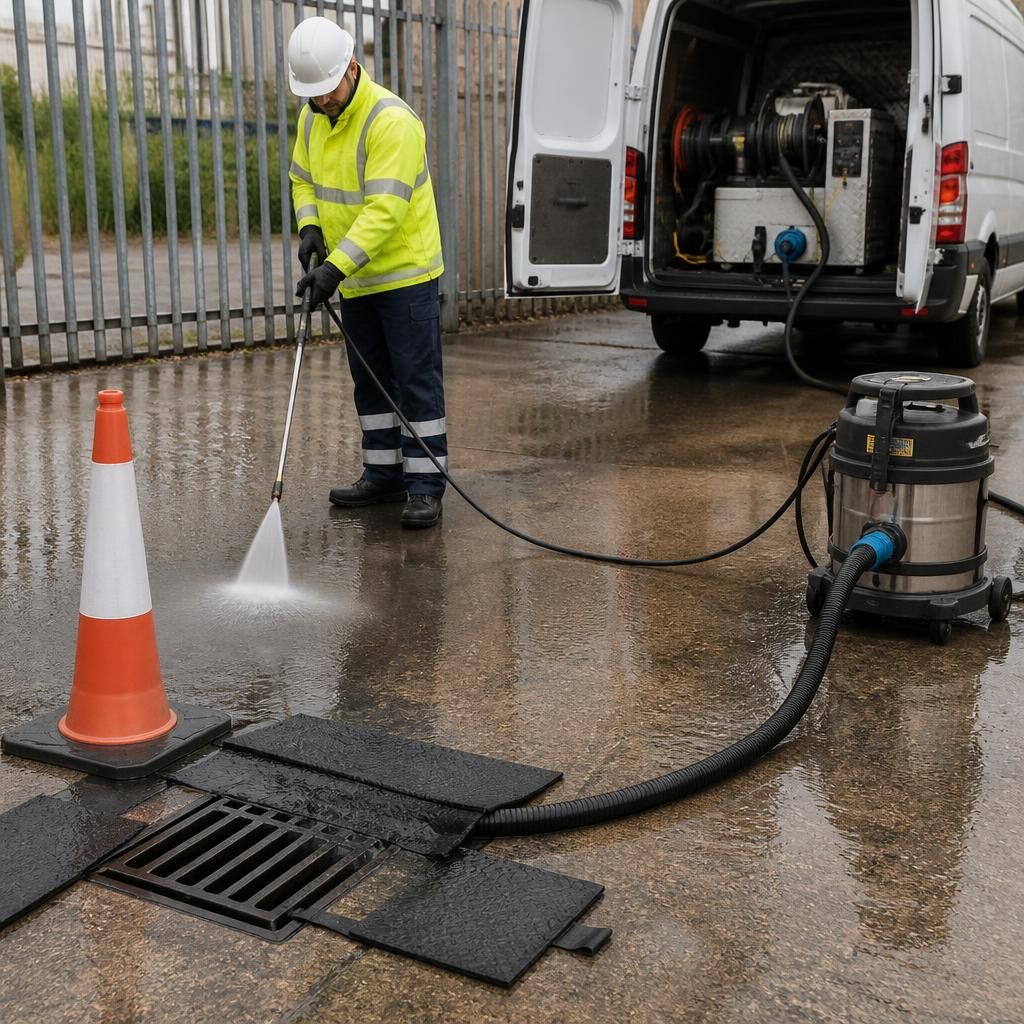
Wastewater control is a key environmental consideration when selecting a commercial outdoor cleaning method. Water from pressure washing, steam cleaning or chemical treatments can carry oil, fuel, paint residue, detergents, silt and biological contaminants, so it must be prevented from entering surface-water drains, watercourses, soil or neighbouring property.
Before cleaning begins, identify the drainage layout and decide how runoff will be managed. Depending on the site and contaminants, suitable controls may include:
- Using drain covers, bunding or temporary barriers to contain runoff.
- Collecting wastewater with vacuum recovery equipment where discharge cannot be permitted.
- Filtering or settling solids before sending water to an approved disposal route.
- Arranging trade effluent consent or authorised waste removal where required.
Dry removal of loose dirt and careful, targeted application can reduce the volume of contaminated water produced. Environmental controls should be included in the method statement, with the cleaning team clear about who will monitor drains, respond to spills and confirm that wastewater has been handled lawfully.