
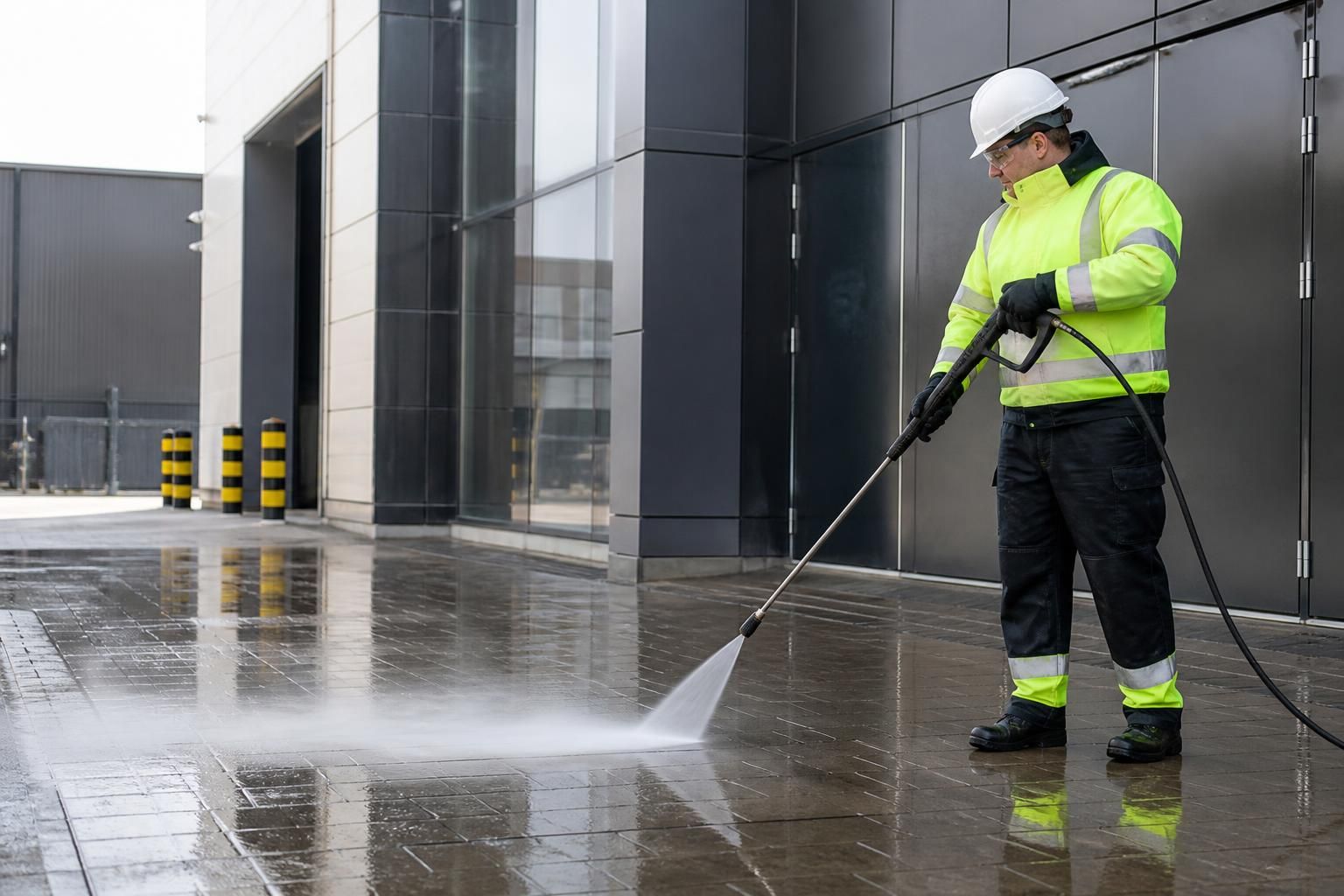
What are the most effective methods for removing specific types of stains or contaminants in commercial outdoor cleaning?
The most effective method depends on the contaminant and surface: hot-water pressure washing or steam cleaning works well for oil and grease, targeted detergents help remove organic growth such as algae and moss, and low-pressure cleaning with suitable graffiti removers is appropriate for painted markings. Rust, efflorescence and embedded dirt require surface-specific treatments, controlled pressure and thorough rinsing to avoid damage or spreading contamination.
The most effective stain-removal method depends on the contaminant, the surface beneath it and the risk of damaging surrounding materials. Hot-water pressure washing or steam cleaning is generally effective for oil and grease; specialist detergents help break down algae, moss and other organic growth; and controlled low-pressure cleaning with a suitable remover is usually appropriate for graffiti. Rust, efflorescence, chewing gum, tyre marks, cement residue and deeply embedded dirt require more targeted treatments, careful testing and effective containment of wash water.
Before cleaning, the area should be assessed rather than treated with the same pressure and chemical on every surface. The cleaning plan should identify the contaminant, establish whether it is bonded to or absorbed by the material, and check for defects such as cracked joints, failed coatings, loose render or damaged sealant. A small test area is important, particularly on painted façades, natural stone, historic brickwork and coated cladding. It confirms whether the chosen method removes the stain without changing the colour, texture or finish.
Oil, grease and fuel residues
Oil-based contamination is best treated using hot-water pressure washing, steam cleaning or a suitable degreasing agent. Heat softens the residue and helps lift it from porous concrete, block paving and tarmac, while a commercial degreaser breaks the bond between the oil and the surface. The usual process is to apply the product for the recommended dwell time, agitate heavily soiled areas where appropriate, rinse using controlled pressure and recover contaminated run-off.
Cold water alone may move surface oil without removing the residue held in pores. Excessive pressure can also drive contamination further into concrete or damage the aggregate. On car parks, loading bays and service yards, cleaning should be planned around drainage routes so oil, detergent and suspended solids do not enter surface-water drains. Where staining has penetrated deeply, more than one treatment may be required and complete colour uniformity cannot always be restored.
Algae, moss, mould and lichen
Organic growth is normally removed through a combination of mechanical cleaning and a surface-compatible biocidal or fungicidal treatment. Low- to medium-pressure washing can remove loose growth from paving, walls, roofs and paths, while the treatment helps address spores and remaining organic matter. On delicate render, roof coverings, painted surfaces and older masonry, a soft-washing approach may be safer than high-pressure cleaning.
The surface should be allowed to remain treated for the product’s specified contact time, followed by thorough rinsing where required. Simply blasting growth away may leave spores behind and can roughen joints or dislodge fragile material. Vegetation should be removed carefully, and nearby plants, soil, ponds and drainage systems should be protected from chemical overspray and run-off. Recurrence is more likely where surfaces remain shaded, damp or poorly drained, so clearing gutters and improving water flow can form part of the maintenance solution.
Graffiti, paint and marker pen
Graffiti removal requires a remover selected for both the paint or ink and the underlying surface. Specialist gel or liquid products can soften the marking so it can be lifted with low-pressure hot-water cleaning, steam or controlled agitation. Using the highest available pressure is rarely the best approach: it can spread pigment, scar masonry, strip existing coatings and create a visible patch around the original graffiti.
Porous brick, stone and unsealed concrete may retain pigment after the surface marking has been removed. Several controlled applications may be safer than one aggressive treatment. On painted façades, the remover must not dissolve the original coating, and a protective coating may be considered only after the substrate has been cleaned, dried and assessed. Removed paint, solvent residues and rinse water should be contained and disposed of in accordance with applicable waste and drainage requirements.
Rust and iron staining
Rust marks are usually treated with a suitable acidic or chelating rust remover rather than by pressure alone. The product must be compatible with the substrate because strong acids can etch concrete, attack certain metals, damage natural stone and affect mortar joints. Application should be precise, with surrounding surfaces protected and the treatment neutralised or rinsed as directed by the product manufacturer.
The source of the rust should also be investigated. Run-off from corroding railings, fixings, skips, plant or roof components can cause staining to reappear after cleaning. Removing or repairing the source is often more effective than repeatedly treating the visible mark. Rust removal on decorative or historic stone requires particularly cautious testing because the original finish may be easily altered.
Efflorescence and mineral deposits
Efflorescence appears as a white, powdery deposit when soluble salts migrate through masonry or concrete. Dry deposits can sometimes be removed with a soft brush or low-pressure rinse, but persistent mineral build-up may require a carefully selected acidic cleaner. The cause of moisture movement should be addressed where possible, otherwise the deposits may return.
Acidic treatments are unsuitable for some limestone, marble, polished stone, sensitive metalwork and certain jointing materials. They should never be applied without a test patch and a plan for protecting adjacent surfaces. Limescale and hard-water marks on glazed or metal surfaces also need a product suited to that finish; abrasive pads and uncontrolled pressure may create permanent scratches.
Tyre marks, rubber and chewing gum
Tyre marks on concrete, resin-bound paving and car park coatings are usually loosened with a compatible alkaline cleaner, degreaser or hot-water treatment. The pressure and temperature must be adjusted to avoid lifting resin, removing line markings or disturbing the surface aggregate. Chewing gum is often most efficiently removed by targeted steam or hot-water treatment, sometimes combined with a product that softens the gum. Localised treatment reduces water use and avoids unnecessarily washing the whole area.
Cement, mortar, paint and construction residue
Fresh cement splashes and mortar residue should be removed promptly using non-abrasive methods where possible. Once hardened, a suitable cement or mortar remover may be needed, but acidic products can damage brick faces, concrete, stone, metal and nearby landscaping. Mechanical scraping should use tools that will not gouge the substrate, followed by controlled rinsing and collection of loosened material. On new construction projects, the cleaning sequence should be agreed with the principal contractor so completed finishes, sealants and coatings are not damaged.
Embedded dirt and general atmospheric soiling
Dust, traffic film, soot and general grime can often be removed with detergent-assisted pressure washing. The operator should begin with the lowest effective pressure and increase it only where the surface permits. Hot water is useful for greasy traffic film, while steam or low-pressure detergent cleaning is more appropriate for delicate façades, painted cladding and older masonry. Even coverage is important because inconsistent pressure or dwell time can leave cleaning bands and patches.
Important controls during stain removal
- Identify the surface, finish and condition before selecting pressure, temperature, chemical and nozzle type.
- Carry out a discreet test patch and record the approved method for larger areas.
- Protect windows, doors, vents, electrical equipment, vehicles, planting and pedestrian routes from water, chemicals and dislodged debris.
- Prevent contaminated water from entering surface-water drains and arrange recovery, filtration or disposal where necessary.
- Use the correct safety data, personal protective equipment and ventilation controls for any cleaning chemical.
- Rinse thoroughly where the product requires it, while avoiding unnecessary water use or damage to joints and coatings.
- Inspect the cleaned area after drying, because some staining and colour variation become clearer once the surface is fully dry.
For commercial premises, the best result is therefore a controlled, surface-specific process rather than maximum pressure. Matching hot-water cleaning, steam, soft washing, detergents, specialist stain removers and localised treatments to the contaminant reduces the risk of substrate damage and improves the consistency of the finished area. Where the stain may be hazardous, chemically sensitive or connected to drainage, roofing or façade defects, the cleaning method should be confirmed through a site assessment before work begins.
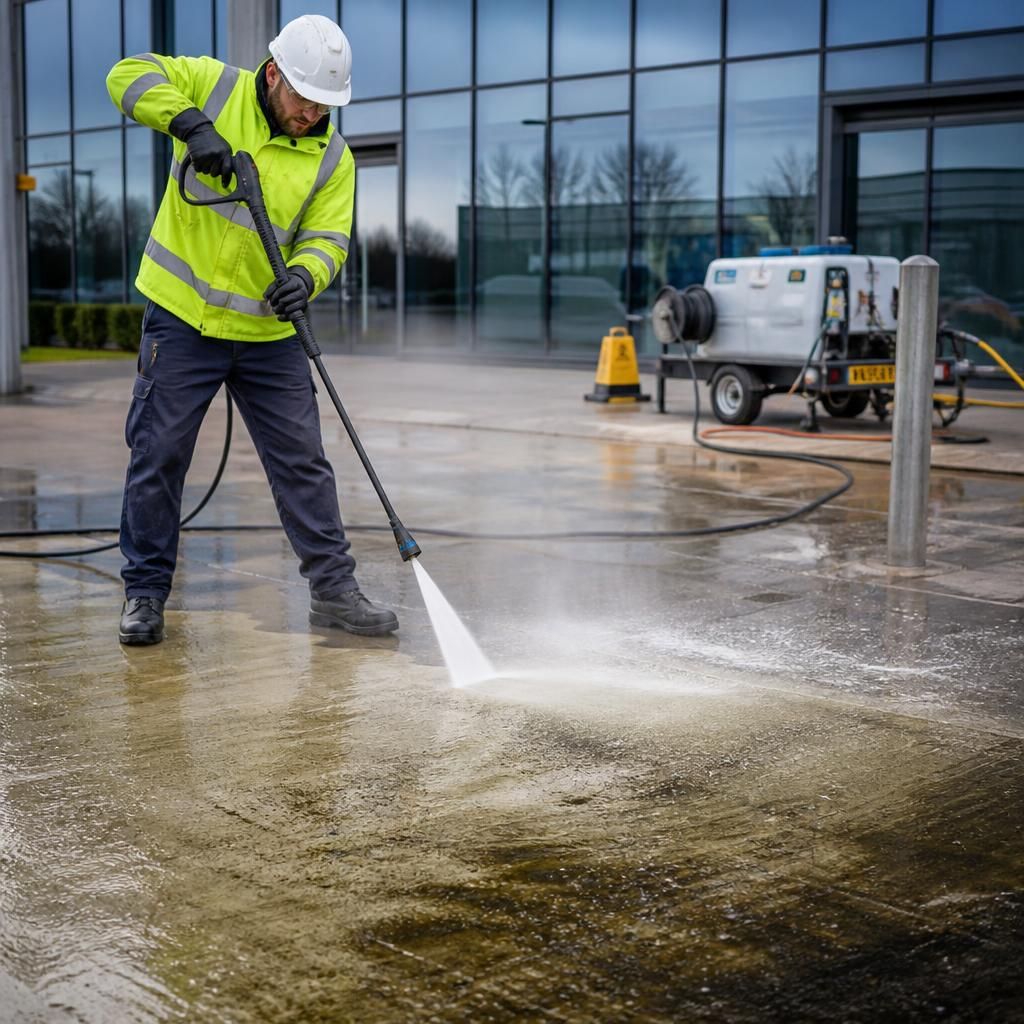
Effective commercial stain removal starts with identifying the contaminant and the surface beneath it. A method that removes oil from concrete may damage painted cladding, natural stone, coated paving or older brickwork, so pressure, temperature, detergent and dwell time must be matched to the material.
A discreet test patch should be completed before treating the full area. This confirms that the chosen process removes the stain without causing etching, colour change, coating failure or visible cleaning marks. It is particularly important when removing graffiti, rust, cement residue or organic growth from delicate or previously treated surfaces.
- Use hot water or steam for many oil, grease, chewing gum and tyre-mark deposits.
- Use suitable biocidal treatments for algae, moss, mould and lichen where the surface allows.
- Use specialist removers and controlled low-pressure cleaning for graffiti, rust, efflorescence and construction residue.
- Contain contaminated wash water and protect drains, planting, vehicles and nearby building components.