How often should businesses schedule exterior power washing for optimal results?
Most businesses should schedule exterior power washing at least annually, with high-traffic, exposed or contamination-prone sites requiring cleaning every six months or more often. The correct interval depends on surface condition, footfall, weather exposure, pollution, algae growth and safety requirements, so regular inspections should guide the programme.
Most businesses should schedule exterior power washing at least annually, while high-traffic, heavily exposed or contamination-prone sites may need cleaning twice a year or more often. The appropriate interval depends on the building’s location, materials, usage, weather exposure, pollution levels, biological growth, staining and safety requirements. A planned inspection programme is more reliable than waiting until surfaces appear heavily soiled.
Exterior power washing is not simply a cosmetic service. Accumulated dirt, traffic film, algae, moss, bird fouling, oil and atmospheric pollution can affect the appearance and condition of façades, paving, cladding, roofs, entrances and car parks. Organic growth may make surfaces slippery, while oil and other contaminants can create hazards in loading areas, walkways and parking facilities. Regular cleaning helps businesses manage these risks and maintain a consistent standard across the site.
A practical starting point is an annual clean. This is generally suitable for commercial premises with moderate footfall, limited contamination and surfaces that remain in reasonable condition between visits. An annual visit can often be planned after the wetter winter period or during another quieter operating period, depending on the site and the work required. It should be supported by routine visual inspections so that emerging problems are addressed before the next scheduled clean.
More frequent cleaning may be appropriate where:
- the premises are beside busy roads, industrial activity, construction work or areas with high airborne pollution;
- there is heavy pedestrian or vehicle traffic, particularly around entrances, walkways, car parks and loading bays;
- the site is shaded, damp or surrounded by vegetation, encouraging algae, moss or lichen growth;
- food, oils, chemicals, dust or other operational contaminants are regularly deposited on external surfaces;
- the building has a highly visible façade or serves customers from a busy public-facing location;
- the property is subject to strict presentation, hygiene, access or facilities-management requirements;
- graffiti, bird fouling or spillages need to be removed promptly; or
- surface contamination is creating a slip, trip, drainage or access concern.
Sites with several of these conditions may benefit from cleaning every six months, with targeted maintenance between full external cleans. Some areas, such as entrances, service yards and car parks, may need a different frequency from the main façade. A site-wide programme does not have to treat every surface at the same interval.
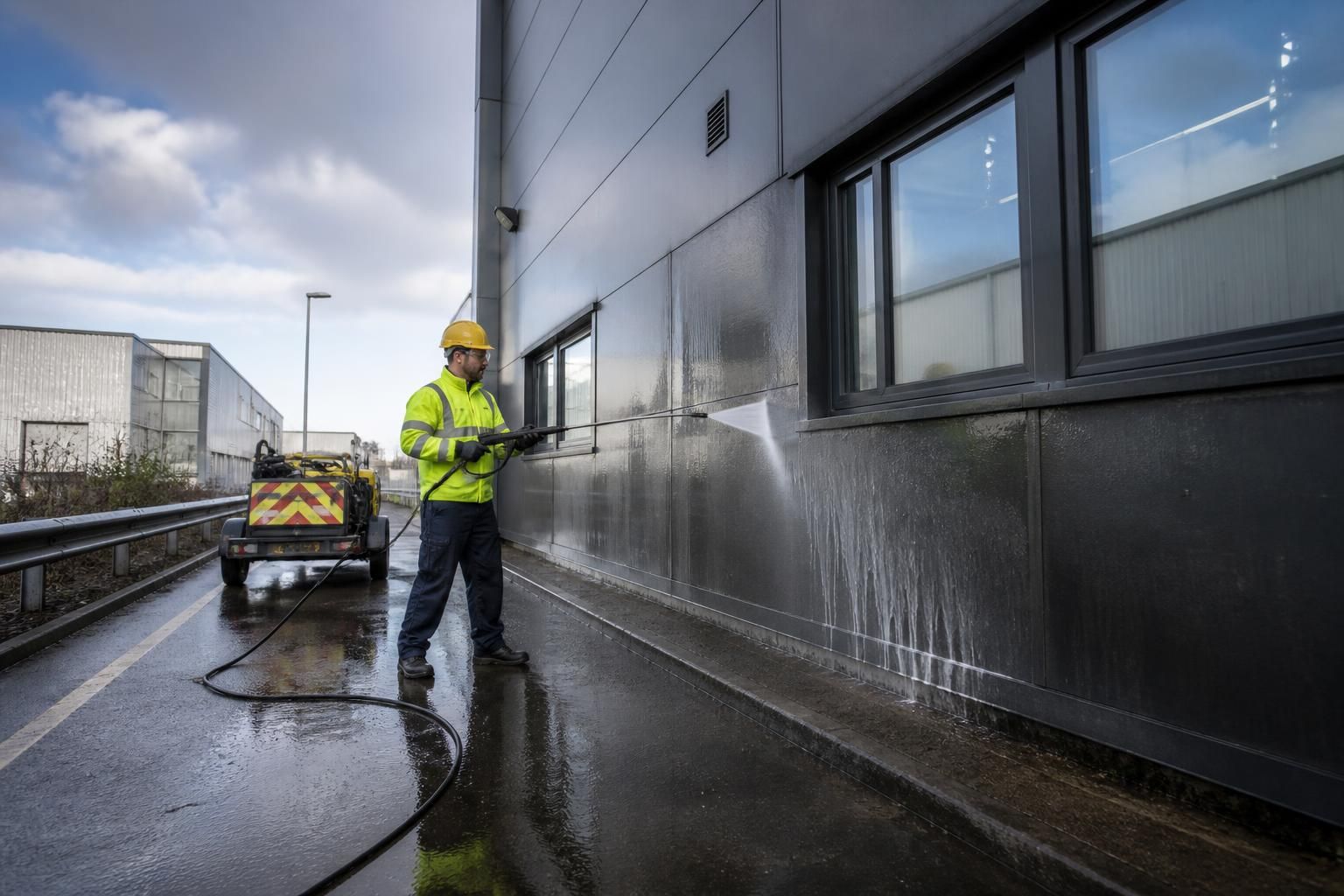
Consider the surface before setting the frequency. Render, brick, concrete, natural stone, coated metal, cladding and roofing materials each collect and respond to contamination differently. Smooth coated cladding may show traffic film quickly but can often be cleaned with a controlled low-pressure method. Concrete paving may tolerate a different approach but can retain oil, chewing gum and embedded dirt. Delicate masonry, painted finishes and jointed surfaces require careful pressure selection and suitable cleaning agents to prevent etching, water penetration or coating damage.
Power washing should therefore be treated as part of a surface-maintenance plan rather than an automatic high-pressure treatment. The method may involve controlled pressure washing, steam cleaning, soft washing or specialist treatment, depending on the material and contaminant. Using excessive pressure can cause damage and may shorten the life of coatings, mortar joints and surface finishes. A competent contractor should assess the substrate and test the proposed method in an inconspicuous area where necessary.
Weather and seasonal conditions also affect scheduling. Wet and shaded conditions can accelerate organic growth, while winter weather may leave salt, grit and road film on external areas. Spring is often a suitable time to assess the impact of winter and remove accumulated contamination, although the best timing depends on access, rainfall, temperature and the type of work. Cleaning should be planned when conditions allow surfaces to be treated safely and, where required, to dry properly. Sudden heavy rain can reduce the effectiveness of some treatments and carry loosened contaminants into drainage systems.
Businesses should also consider operational factors when choosing an interval. Cleaning may need to take place outside trading hours, during a planned shutdown or in stages to keep entrances, pedestrian routes and vehicle movements managed. Large façades, car parks and industrial yards are often more efficiently maintained through a rolling programme, with the most heavily used or visible areas prioritised. Planned work can also be coordinated with façade inspections, roof maintenance, repainting, building repairs and other access requirements.
Use inspections to adjust the programme. A useful inspection should record the condition of each external area, the type and location of contamination, any slip or access risks, previous cleaning methods and changes in the surrounding environment. Compare the rate at which dirt or biological growth returns rather than relying only on calendar dates. If surfaces remain clean and safe between visits, the interval may be suitable. If contamination returns quickly or causes operational problems, targeted or more frequent cleaning may be justified.
Reactive cleaning is still necessary for graffiti, oil spills, bird fouling, construction residue and other sudden contamination. These issues should not be left until the next routine visit, particularly where they affect public areas, safety, drainage or the condition of the surface. Graffiti removal is usually most effective when dealt with promptly, as some paints and coatings become more difficult to remove after prolonged exposure.
Cleaning plans should include appropriate controls for pedestrians, vehicles, nearby property and drainage. The work may require barriers, temporary access changes, signage, controlled water use, collection of contaminated run-off or specific treatment of waste water. For industrial and construction sites, the cleaning method should take account of the substances present and any site-specific environmental requirements. These considerations can affect both the timing and the equipment used.
A sensible commercial programme usually combines an annual full-site assessment and clean where appropriate, more regular treatment of heavily used areas, routine inspections by site staff and prompt response to isolated contamination. The final interval should be reviewed after each visit based on the actual condition of the surfaces, the effectiveness of the method and any changes in site use or surrounding conditions.
For a new site or one that has not been cleaned for some time, an initial condition survey is preferable to selecting a frequency without inspection. This allows the cleaning areas, access requirements, surface risks, likely methods and maintenance priorities to be identified before work begins. The resulting schedule can then be adjusted as part of ongoing facilities management, helping to maintain safe, presentable exteriors without cleaning surfaces more aggressively or more often than necessary.

The most reliable way to set an exterior power washing schedule is to adjust the cleaning interval according to how quickly contamination returns. An annual clean may suit a moderately used premises, but entrances, service yards, car parks and shaded areas often need more frequent attention where traffic film, oil, algae or moss builds up quickly.
Routine inspections should record surface condition, recurring contaminants, slip risks and any changes in site use or surrounding pollution. This allows cleaning to be planned before deposits become difficult to remove, while avoiding unnecessary pressure washing of areas that remain clean and safe. Prompt treatment should still be arranged for graffiti, spillages, bird fouling or construction residue rather than waiting for the next scheduled visit.
Plan Your Exterior Power Washing Schedule
Contact Encanto Exterior Cleaning to review your site conditions and agree an exterior power washing schedule suited to your surfaces, usage and operational requirements.

For a free quote & consultation
Contact usAccreditations