
What type of equipment and technology does your company use for masonry and paving cleaning?
We use adjustable pressure-washing systems, low-pressure and steam-cleaning equipment, rotary surface cleaners, specialist attachments and wet-vacuum recovery equipment for masonry and paving cleaning. The method and settings are selected for the surface, condition and contamination, helping remove dirt, moss, algae, oil and staining without unnecessary damage or uncontrolled run-off.
For masonry and paving cleaning, we use adjustable pressure-washing systems, low-pressure and steam-cleaning equipment, rotary surface cleaners, specialist nozzles and attachments, and wet-vacuum recovery equipment. The equipment is selected and adjusted according to the material, its condition, the type of contamination and the surrounding site, rather than applying the same pressure or cleaning process to every surface.
Our main equipment and technology includes:
- Adjustable pressure-washing systems: These provide controlled water pressure for removing general dirt, traffic film, soil, algae and other surface contamination from robust paving and masonry. Pressure, flow and nozzle selection can be adjusted during the work to avoid using more force than the surface requires.
- Low-pressure cleaning equipment: Lower-pressure systems are used where the substrate, joints or surface finish could be affected by aggressive cleaning. This is particularly useful for older brickwork, weathered masonry, decorative paving and surfaces with friable or deteriorated areas.
- Steam-cleaning equipment: Steam and heated-water cleaning can help loosen ingrained dirt, organic growth, grease and some staining while reducing the need for high mechanical pressure. It is often considered for sensitive surfaces or locations where controlled cleaning is more important than maximum water force.
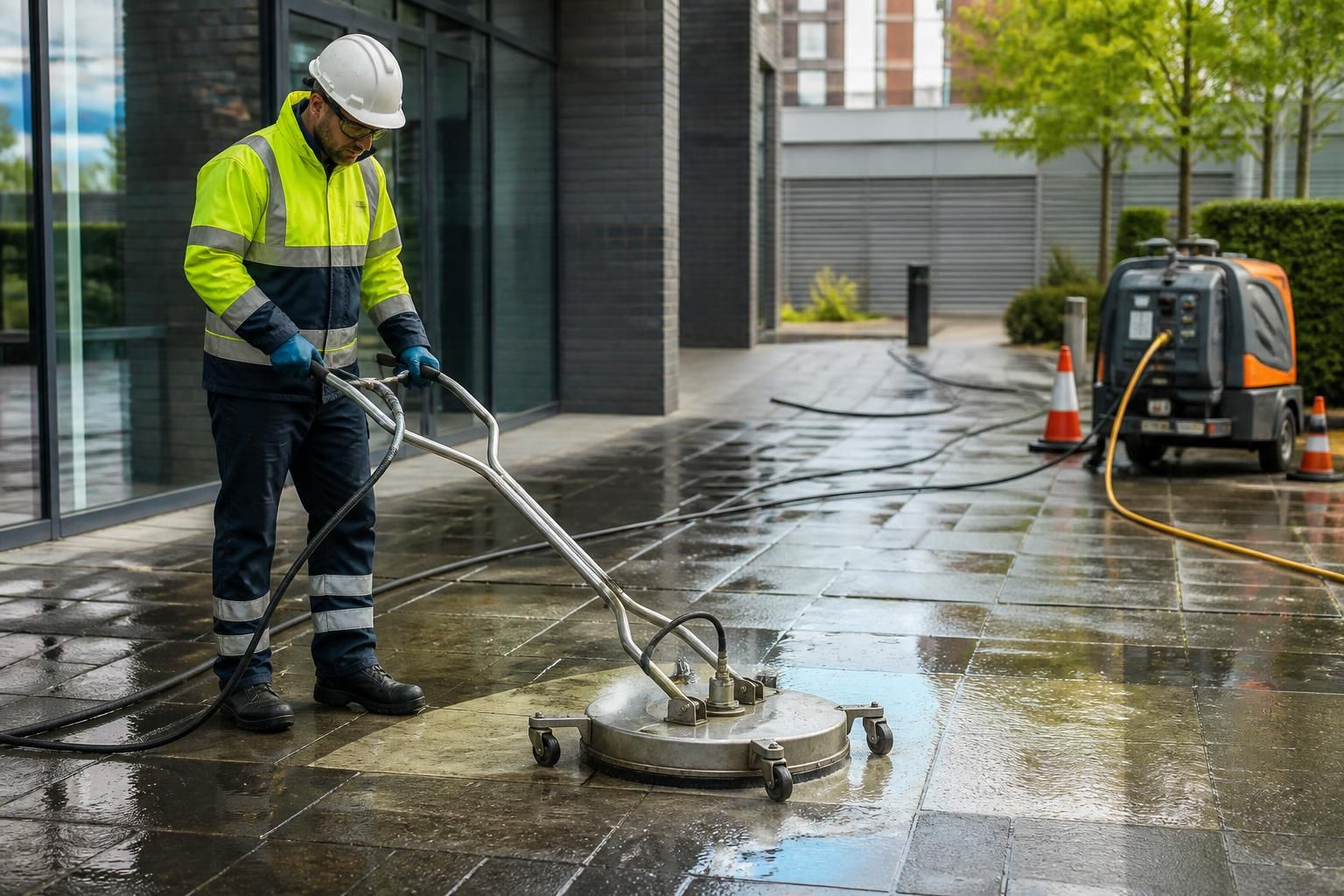
- Rotary surface cleaners: These enclosed attachments clean larger areas of paving with rotating jets beneath a protective housing. They help produce a more even finish than repeatedly using a hand-held lance and can reduce spray, splash and uncontrolled overspray around the work area.
- Specialist lances, nozzles and brushes: Different nozzle patterns and attachments control the spread and impact of the water. Brushes and manual tools may be used for joints, edges, textured paving, recesses and areas where a lance would be unsuitable.
- Chemical application equipment: Where appropriate, we use controlled application methods for detergents, biocidal treatments, degreasers or stain-specific products. The product and concentration are chosen for the contamination and substrate, and treatments are rinsed or allowed to work in accordance with the product requirements.
- Wet-vacuum and water-recovery equipment: Wet vacuums and recovery tools collect slurry, dirty water and loosened contaminants. This helps prevent polluted run-off entering drains, protects adjacent surfaces and keeps busy commercial sites more manageable during cleaning.
- Access and safety equipment: For difficult areas, we may use suitable access equipment, barriers, warning signage, hose management and personal protective equipment. The access method is determined by the height, layout and risks of the site, with the aim of keeping operatives, visitors and other contractors protected.
Before cleaning, we inspect the masonry or paving to identify the material, surface finish, joint condition, previous repairs, drainage arrangements and likely cause of the staining. Brick, concrete, natural stone, block paving and paving slabs do not respond identically to water pressure or chemical treatment. We also look for loose areas, cracked units, open joints, damaged pointing, delamination and existing coatings that may require a different approach.
We then test the proposed method in a discreet area. This allows us to assess whether the chosen pressure, temperature, nozzle, dwell time or treatment is producing the required result without causing excessive surface erosion, colour change, dislodged jointing or water penetration. The working settings can be refined before cleaning the wider area.
For robust concrete or heavily soiled hard paving, a rotary cleaner may be used with a suitable pressure-washing system. For older brick, sandstone or other more delicate masonry, we may use a gentler combination of low-pressure rinsing, controlled steam, soft brushing and an appropriate cleaning treatment. Oil, rust, efflorescence, algae and moss each require different considerations; equipment alone cannot safely remove every type of staining.
Water management is an important part of the technology used on commercial and industrial sites. We plan hose routes, protect vulnerable openings and use recovery equipment where dirty water could affect buildings, landscaped areas or drainage systems. Collected slurry and contaminated water are handled in line with the site requirements and applicable environmental controls rather than being allowed to spread across the property.
The equipment does not replace operator judgement. Excessive pressure, an unsuitable nozzle, prolonged heat or incorrect chemical use can mark masonry, remove the face of brick, damage paving joints or drive water into the structure. Our operatives therefore control the equipment from the initial test patch through to the final rinse, adapting the process where the surface condition changes.
After cleaning, we inspect the finished area for remaining contamination, residue, run-off and any areas requiring further attention. If sealing, joint repairs or a separate treatment is being considered, the surface must first be sufficiently clean and dry, and the suitability of the proposed product should be checked against the paving or masonry specification. This equipment-led but condition-based approach provides a safer and more consistent method for maintaining commercial paths, courtyards, façades, service yards, car parks and other paved areas.
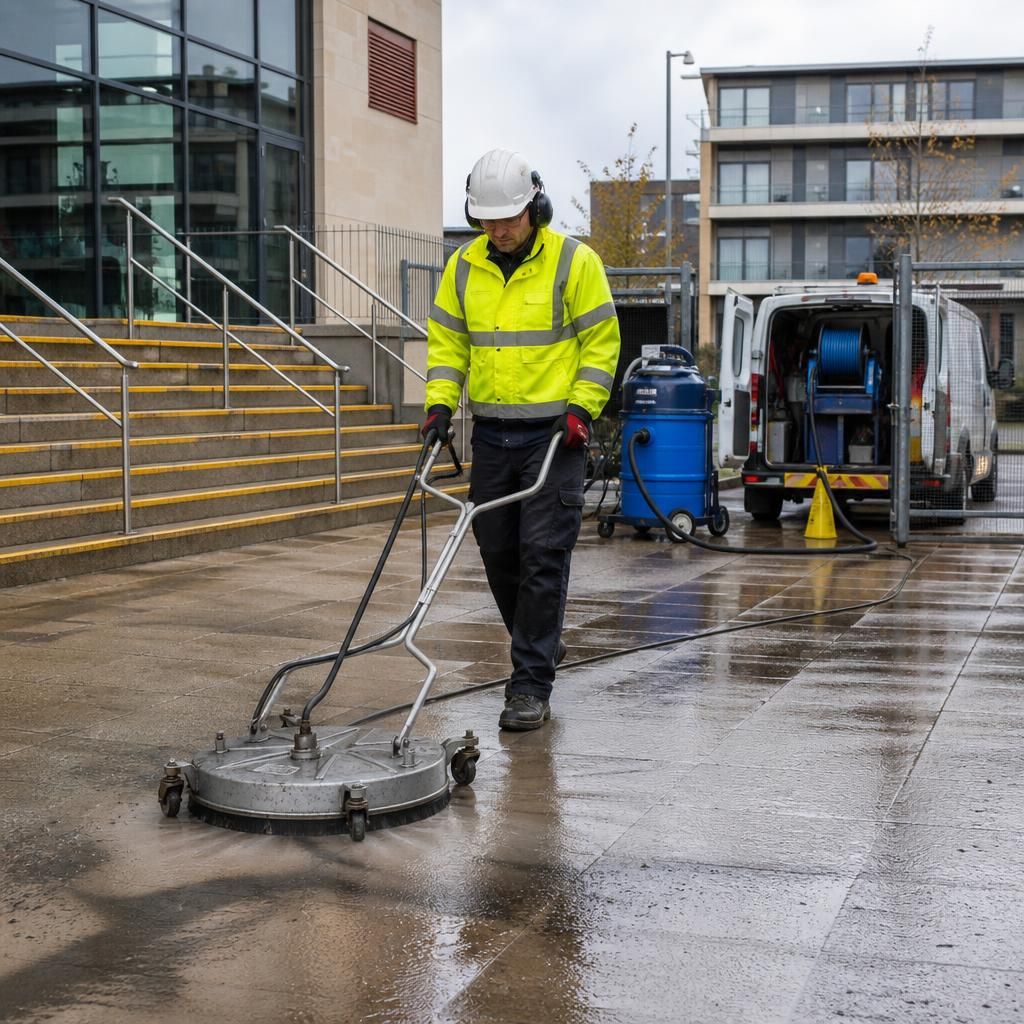
The equipment used for masonry and paving cleaning is selected according to the surface material, its condition and the type of contamination present. Adjustable pressure-washing systems, low-pressure equipment, steam cleaners, rotary surface cleaners, specialist brushes and wet-vacuum recovery tools allow the cleaning process to be controlled rather than applying the same treatment to every surface.
Before work begins, we inspect the masonry or paving and test the proposed pressure, temperature, nozzle and cleaning treatment in a discreet area. Robust concrete or heavily soiled paving may be suitable for a rotary surface cleaner, while older brick, sandstone or deteriorated joints may require low-pressure rinsing, controlled steam and soft brushing. Where run-off could affect drains, buildings or landscaping, recovery equipment can collect slurry and dirty water during the clean.