
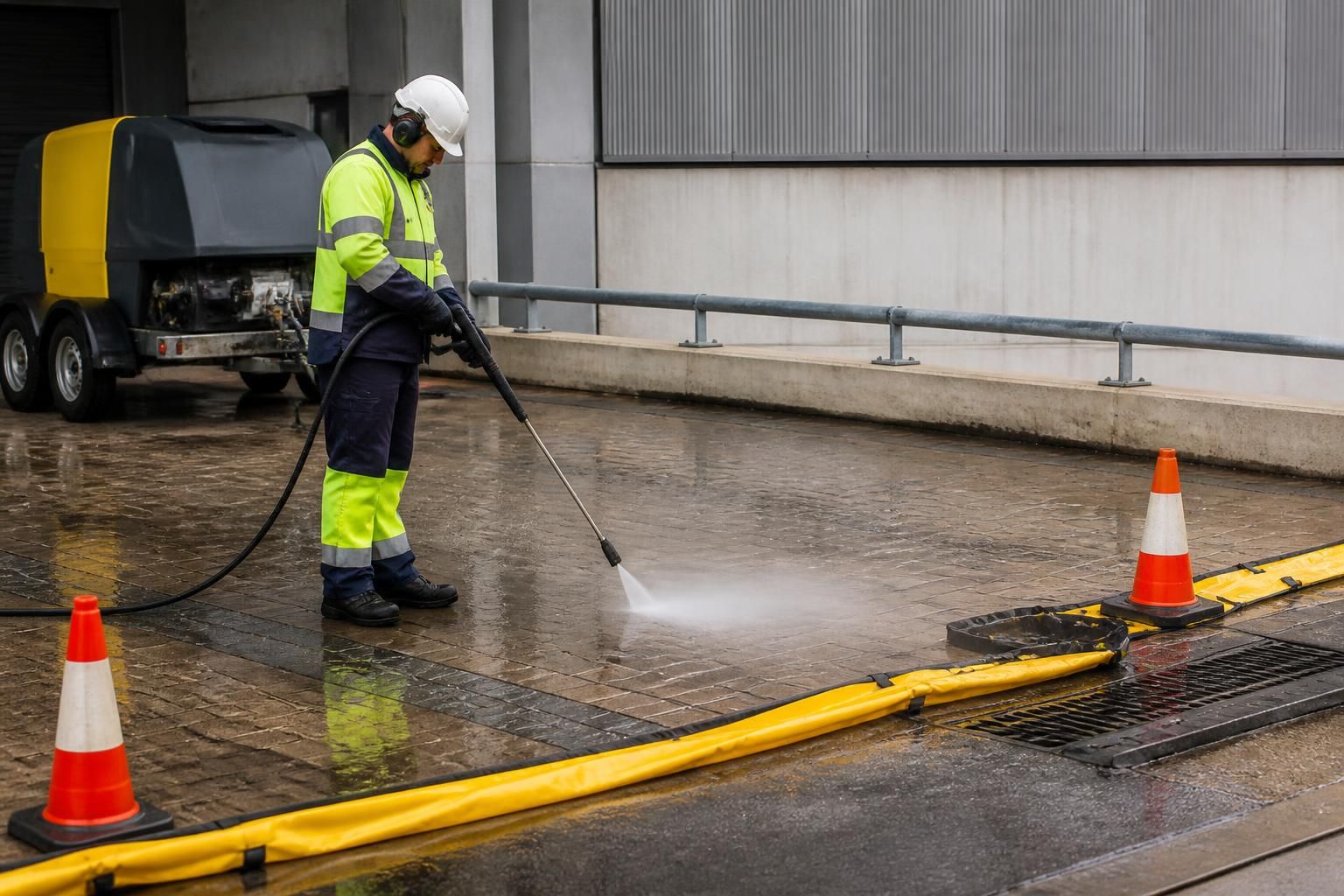
What safety measures do you implement to protect my property and surroundings during the cleaning process?
We protect your property and its surroundings by assessing the site first, selecting controlled pressure, steam or chemical cleaning methods, and shielding vulnerable areas before work begins. Our trained operatives manage water, access equipment, runoff and public safety throughout the clean to minimise the risk of damage, contamination or disruption.
We protect your property and its surroundings through a planned, risk-controlled process covering the masonry or paving, nearby structures, people, vehicles, drainage and the wider site. Before cleaning starts, our operatives assess the surface condition, identify vulnerable areas and choose the least aggressive method that will achieve the required result. This may involve controlled pressure washing, steam cleaning, soft washing or a suitable treatment rather than applying high pressure by default.
Pre-start site assessment
We inspect the material for cracks, loose joints, spalled brick, failing pointing, damaged sealants, unstable paving and existing staining. We also check for features that could be affected by water or cleaning products, including doors, windows, vents, air-conditioning equipment, external lighting, signage, painted surfaces and adjoining façades. Pre-existing defects are recorded and discussed so that cleaning is not mistaken for the cause of damage that was already present.
The assessment also considers access, ground conditions, overhead obstructions, pedestrian routes, vehicle movements, drainage points and the location of sensitive neighbouring areas. Where a surface is particularly old, friable or porous, we can carry out a small test clean first. This helps confirm the appropriate pressure, temperature, nozzle, dwell time and treatment strength before work proceeds across the full area.
Controlled cleaning methods
Pressure is adjusted to suit the substrate rather than using one setting for every surface. We control the distance and angle of the lance, select appropriate nozzles and work progressively so that the surface can be checked as cleaning develops. Sandstone, aged brick, soft mortar and some paving materials may require lower pressure, wider spray patterns or steam cleaning to reduce the risk of etching, discolouration, joint loss and water penetration.
Chemical products are selected for the contaminant and the surface, used in accordance with the product safety information, and applied only where appropriate. We protect surrounding materials from overspray, observe the required dwell time and rinse or neutralise the area as necessary. Operatives use suitable personal protective equipment and follow the relevant control measures when handling cleaning agents.
Protection of buildings and nearby assets
Vulnerable openings and fittings are covered or shielded before cleaning. This can include doors, windows, vents, sockets, electrical equipment, cameras, signage, planting, furniture and stored materials. Covers are secured so they do not create additional hazards, while access points and ventilation requirements are kept in mind. We avoid directing water or steam into joints, openings and interfaces where it could enter the building.
Where cleaning is close to vehicles, public areas or neighbouring property, we establish a practical exclusion zone and use barriers, warning signs or a banksman where required. Items that could be damaged by spray, falling debris or run-off are moved or protected in advance. We also coordinate with the site contact about access arrangements, delivery routes and any operational restrictions.
Water, runoff and environmental controls
Runoff is managed rather than allowed to travel uncontrolled across the site. We use suitable collection, containment or diversion measures where necessary and prevent dirty water, sediment, chemical residue and removed contaminants from entering inappropriate drains or neighbouring land. Drainage arrangements are considered before work begins, particularly on commercial sites, car parks and areas connected to surface-water systems.
Wastewater and debris are handled in line with the site requirements and applicable environmental controls. We take care not to spread oil, algae, moss, efflorescence or other contaminants onto clean surfaces. If the work could affect planted areas, water features or sensitive landscaping, these are protected and the cleaning approach is adapted accordingly.
Safe access and equipment operation
Access equipment is selected according to the height, reach, surface and ground conditions. Before use, equipment is checked, positioned on suitable ground and operated by trained personnel. Exclusion zones help protect people below from equipment, hoses, tools, dislodged material and spray. Hoses and cables are routed to reduce trip hazards, and equipment is kept clear of entrances, emergency routes and vehicle paths.
Operatives wear task-appropriate PPE, which may include eye and face protection, gloves, protective clothing, hearing protection and slip-resistant footwear. They follow site rules and stop work if conditions become unsafe, such as unexpected public access, unstable ground, electrical risk, poor visibility or a change in weather that affects control of water or equipment.
Checks during and after cleaning
The working area is monitored throughout the clean for changes in the surface, joints, runoff, overspray and surrounding conditions. We work in manageable sections, inspect the results and adjust the method if the material responds differently than expected. On completion, we check the cleaned areas, remove protective coverings, clear debris and leave access routes as safe and clean as the site conditions allow.
For larger commercial or industrial projects, these controls are supported by a site-specific method statement and risk assessment where required. We also maintain communication with the nominated site contact so that any concern about access, drainage, surface condition or nearby operations can be addressed before it becomes a problem.
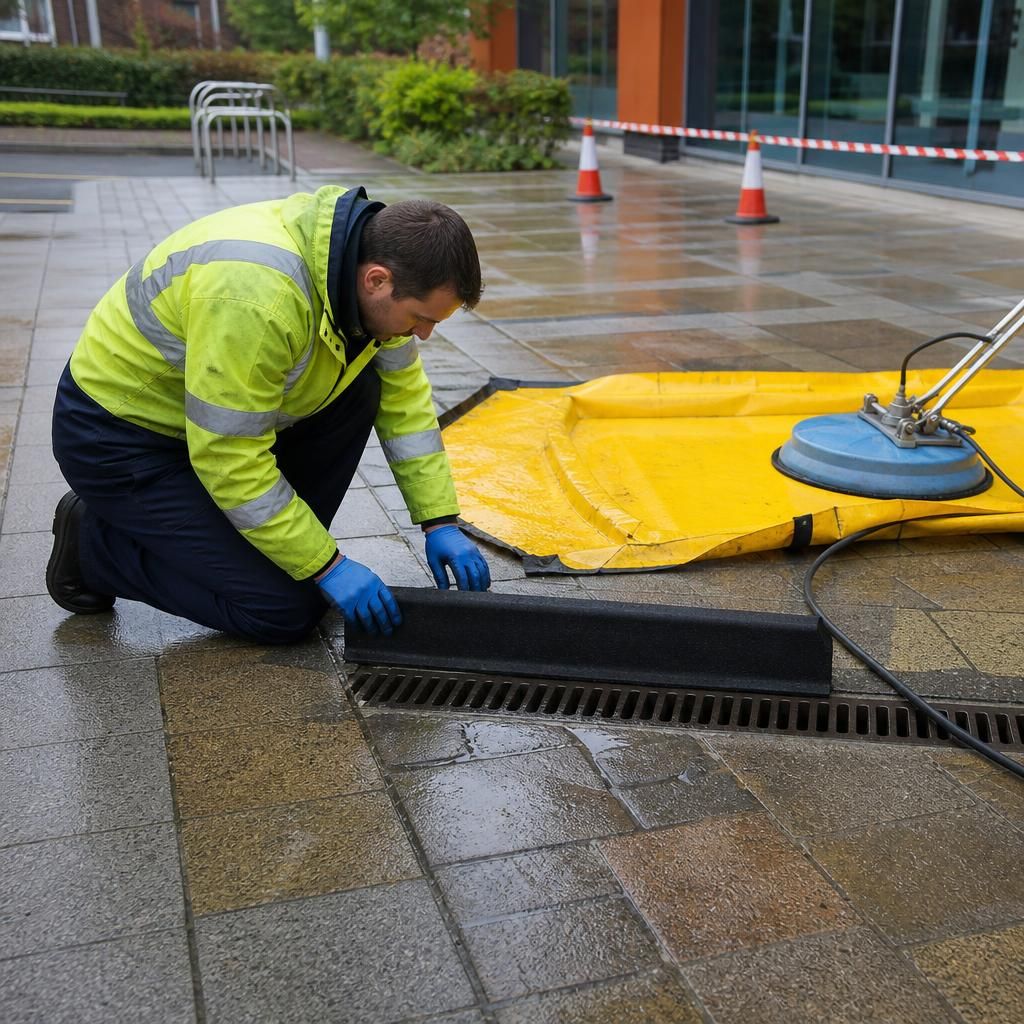
Protecting drainage systems and controlling dirty water is a key safety measure during masonry and paving cleaning. Before work begins, we identify nearby drains, surface-water routes, planted areas and neighbouring properties, then plan how water, sediment, chemicals and removed contaminants will be contained or diverted.
Where required, we use suitable barriers, drain protection, collection or controlled rinsing to prevent runoff spreading across clean surfaces or entering inappropriate drainage. Oil, algae, moss, efflorescence and loose debris are managed carefully rather than being washed into surrounding areas. The approach is adapted to the site, particularly on commercial premises, car parks and areas connected to sensitive surface-water systems.
We also protect landscaping, water features, vehicles, entrances and stored materials from spray and overspill. The work area is monitored throughout the clean, and the site is checked afterwards so that protective coverings, debris and access hazards are removed before the area is handed back.