
What methods are best for removing algae and moss from brick and paving surfaces?
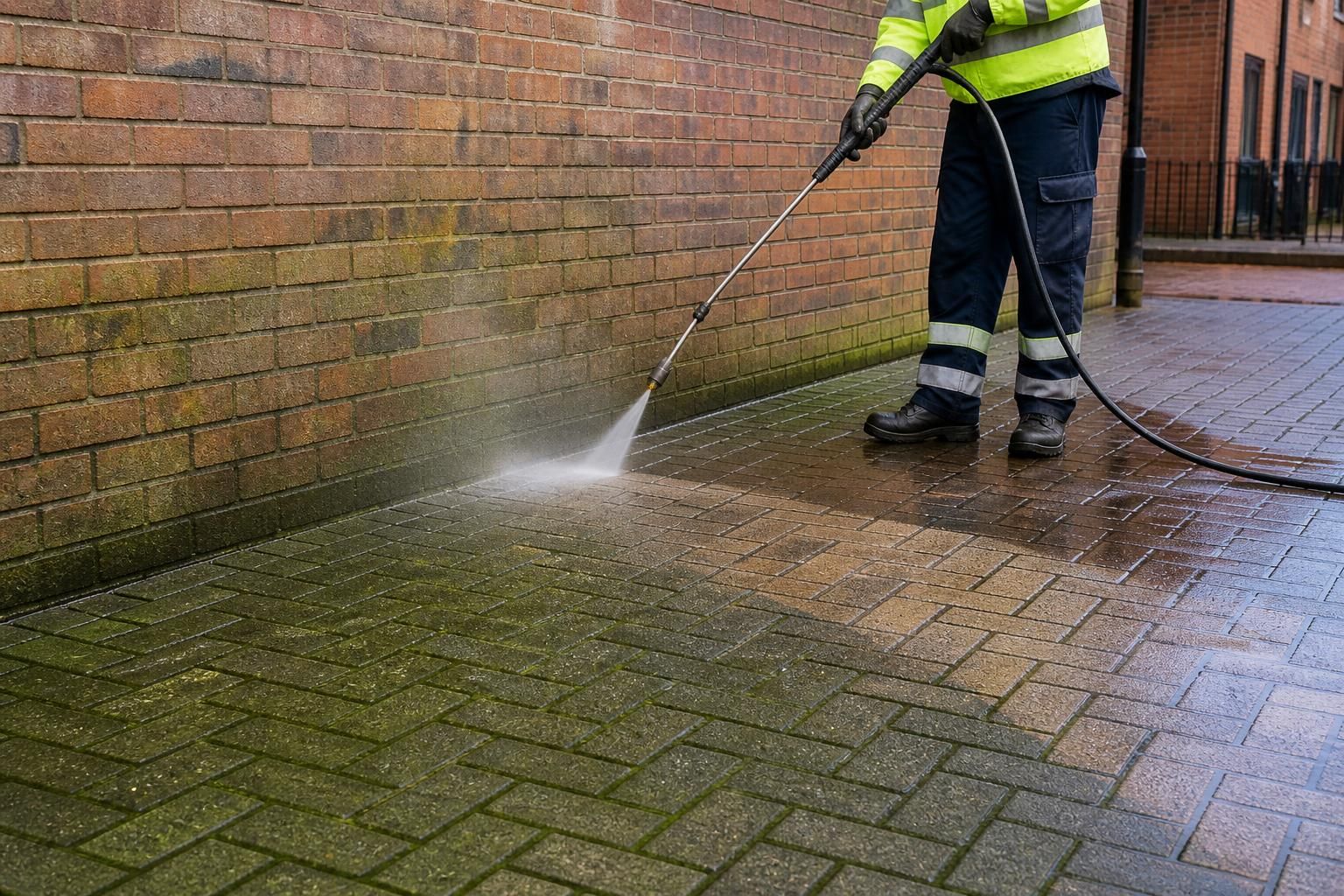
The most effective approach is usually a surface-appropriate biocidal treatment followed by controlled low-pressure washing or steam cleaning to remove loosened algae and moss without damaging brick or paving. The method should be selected after assessing the material, jointing, age and level of growth, as excessive pressure can erode faces, dislodge mortar or remove jointing sand.
The best method for removing algae and moss from brick and paving is usually a surface-appropriate biocidal treatment followed by controlled low-pressure cleaning, steam cleaning or careful mechanical removal. This combination kills or suppresses organic growth, loosens its attachment and removes the remaining residue without relying on excessive pressure that could erode brick faces, disturb mortar or wash jointing sand from paving.
The correct approach depends on the material, the condition of the surface, the type and extent of growth, the strength of the joints and the surrounding environment. A method that is suitable for robust concrete paving may be inappropriate for old brick, clay pavers, sandstone or a weathered masonry façade.
Biocidal treatment for algae and moss
Biocidal treatment is often the most important part of the process because it addresses the organic growth rather than simply removing its visible surface layer. Algae can form a slippery film across paving, while moss develops roots and holds moisture against brickwork and joints. Applying a suitable treatment helps break down this growth and makes subsequent cleaning more controlled.
The product must be selected and used according to the surface and the manufacturer’s instructions. Professional application includes controlling overspray, protecting nearby planting and managing any run-off. Treatment is not a substitute for physical cleaning where thick moss, staining or embedded debris is present, but it can reduce the pressure and agitation needed to achieve a clean result.
Low-pressure washing
Controlled low-pressure washing is suitable for many sound brick and paving surfaces once loose growth has been treated. The operator adjusts the pressure, nozzle, water flow and working distance to the material rather than using a high-pressure setting by default. This is particularly important around eroded mortar, open joints, damaged brick faces and paving that has already begun to delaminate.
Cleaning should normally begin with a test area in an inconspicuous location. This confirms how the brick, paving, jointing material and any existing sealant respond before the full area is treated. The operator can then alter the method if the surface begins to shed its face, lose colour or release jointing material.
Pressure washing can be effective on concrete paving, block paving and robust modern brick, but the pressure must still be controlled. Excessive pressure can remove jointing sand, widen defects, drive water into vulnerable masonry and leave visible striping or uneven cleaning. Re-sanding may be required after block paving has been washed, depending on the condition of the joints and the cleaning process used.
Steam cleaning
Steam cleaning uses high-temperature water vapour or low-volume heated water to soften and remove algae, moss and associated staining with comparatively little water. It can be useful where low water consumption is important, where run-off must be limited or where a more delicate cleaning action is required.
Steam is not automatically suitable for every surface. Heat can affect some coatings, sealants and repairs, and rapid temperature changes may be unsuitable for fragile or already damaged masonry. The method should therefore be tested and selected as part of a condition assessment rather than treated as a universal alternative to pressure washing.
Manual and mechanical removal
Thick moss is often removed first with hand tools or controlled brushing. This prevents the operator from using unnecessary water pressure to dislodge heavy growth. Brushes should be appropriate for the surface: overly aggressive wire brushing can scratch some paving, remove the face of softer brick or expose fresh areas to further weathering.
Manual removal is also useful around delicate edges, drainage channels, steps, wall bases and areas close to doors or services. It allows growth to be lifted from joints without directing a concentrated jet at vulnerable locations.
Choosing the method for different surfaces
- Concrete paving: controlled pressure washing with suitable pre-treatment is often effective, provided cracks, surface wear and joint condition are checked first.
- Block paving: algae and moss can be treated and washed carefully, with attention to jointing sand and the possibility of re-sanding afterwards.
- Clay or handmade brick: lower-pressure cleaning, steam or gentle chemical treatment may be preferable because the surface can be more porous, uneven or vulnerable to face loss.
- Old brickwork: the condition of the brick and mortar is more important than the age alone. Gentle treatment and low-pressure rinsing are generally safer than aggressive jetting.
- Sandstone and other porous stone: testing is essential because the stone may absorb treatment, hold moisture or suffer surface damage from excessive pressure and abrasion.
- Concrete slabs and manufactured paving: the finish, pigment, aggregate exposure and existing sealant should be checked before using chemicals, heat or mechanical agitation.
A typical professional cleaning process
- Inspect the surface to identify the masonry or paving type, condition, drainage, joints and areas of biological growth.
- Check for loose bricks, damaged mortar, open cracks, unstable slabs, failed sealant and possible water entry points.
- Remove loose moss and debris manually where this reduces the need for pressure.
- Apply an appropriate biocidal or cleaning treatment while protecting adjacent surfaces, plants, vehicles and drainage routes.
- Allow the treatment to work for the appropriate period, following the product requirements and site conditions.
- Clean using controlled pressure, steam or another agreed method, working in manageable sections and avoiding unnecessary impact on the surface.
- Rinse and recover run-off where required, then inspect for remaining growth, staining or damaged areas.
- Replace or redistribute jointing material where appropriate and advise on sealing or ongoing maintenance if this is suitable for the surface.
Why surface assessment matters
Moss and algae are often linked to persistent shade, poor drainage, leaking gutters, overhanging vegetation or moisture retained in open joints. Cleaning removes the growth, but it may return if the underlying moisture source remains. Identifying these conditions helps determine whether cleaning alone is sufficient or whether drainage, guttering, vegetation management or joint repairs should also be considered.
It is also important to distinguish biological growth from other marks. Black spotting may be lichen or atmospheric soiling rather than algae, while white deposits may be efflorescence. Oil, rust and cement contamination require different treatments. Applying the wrong chemical or using excessive pressure can spread staining or permanently alter the surface.
Preventing damage during cleaning
Safe removal depends on using the least aggressive method that will achieve the required result. A professional assessment should consider the substrate, previous repairs, coatings, jointing, nearby electrical equipment and the risk of contaminated run-off. Plants, doors, vents, vehicles and vulnerable adjoining materials should be protected before treatment begins.
After cleaning, keeping the area free from standing water and removing leaves and organic debris can help slow regrowth. Where appropriate, a compatible sealer may reduce water and dirt absorption, but sealers are not suitable for every brick or paving surface and should only be applied to clean, sufficiently dry material.
For most commercial and industrial sites, the most reliable specification is a planned combination of treatment, gentle physical removal and controlled rinsing, supported by periodic inspections. This produces a safer, cleaner surface while reducing the risk of damage associated with aggressive pressure washing.
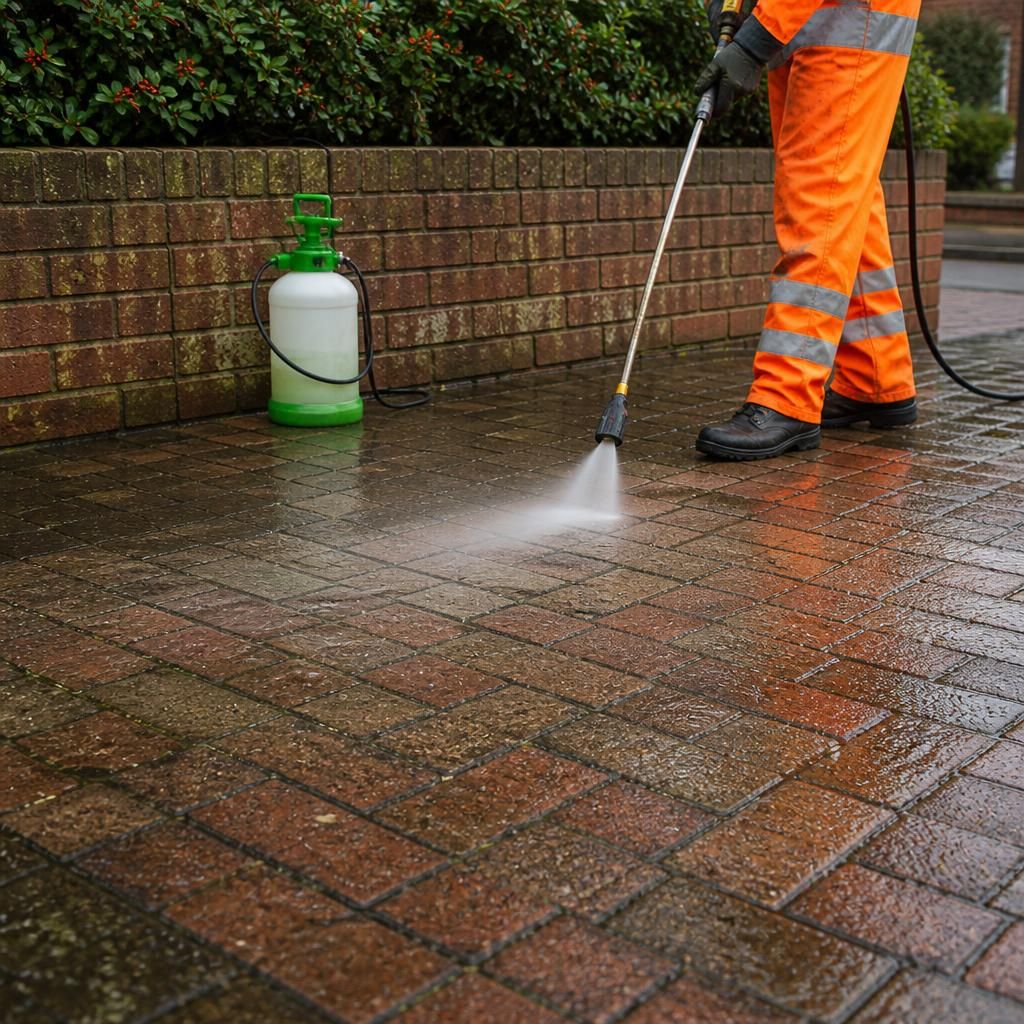
A biocidal pre-treatment followed by controlled low-pressure cleaning is often the safest method for removing algae and moss from sound brick and paving. The treatment breaks down organic growth before rinsing, reducing the need for aggressive pressure that can erode brick faces, disturb mortar or remove jointing sand.
The surface should be assessed and tested first, with nearby plants, drainage points, doors and vehicles protected from treatment and run-off. Thick moss may need careful manual removal before washing, while delicate or weathered masonry may be better suited to steam cleaning or a gentler rinse.
Arrange an Algae and Moss Removal Assessment
Arrange an algae and moss removal assessment so we can inspect your brick or paving, identify the most suitable cleaning method and check for underlying moisture or drainage issues. We will recommend a practical approach that removes the growth while protecting the surface, joints and surrounding areas.