
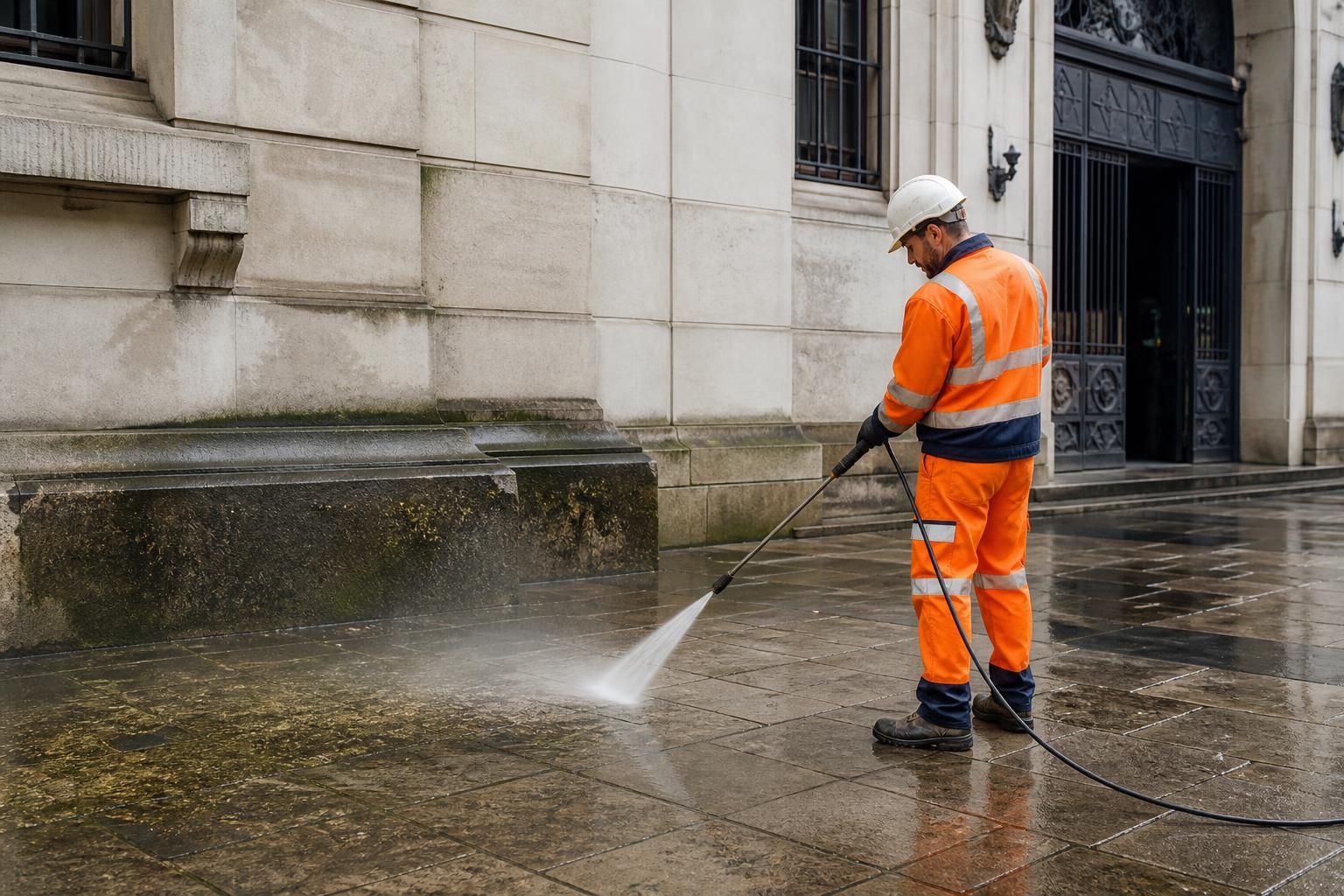
What kind of cleaning methods are suitable for my specific masonry or paving surfaces?
The suitable method depends on the material, age, condition and type of contamination: low-pressure washing or steam cleaning is often appropriate for sound concrete, paving slabs and brick, while delicate sandstone, weathered brick and aged mortar may require gentler steam, soft washing or manual cleaning. We assess the surface first and select the lowest effective pressure, temperature and treatment to remove dirt, algae, staining or efflorescence without eroding the masonry or damaging joints.
The most suitable cleaning method depends on the masonry or paving material, its age and condition, the strength of its joints, and the type of contamination present. Sound concrete, modern paving slabs and robust block paving can often be cleaned with controlled pressure washing, whereas sandstone, historic brick, weathered mortar and other porous surfaces usually need lower-pressure steam cleaning, soft washing or careful manual treatment. The method should always be selected after inspecting and testing the surface rather than applying the same pressure or chemical treatment to every area.
Concrete and paving slabs
Sound concrete is generally durable enough for pressure washing when the operator uses an appropriate nozzle, pressure, distance and working pattern. This can remove ground-in dirt, traffic film, algae, moss and some organic staining from paths, yards, forecourts and other hard surfaces. Rotary surface-cleaning equipment can help produce an even finish on suitable areas, while controlled edge cleaning is used around walls, drainage channels and other vulnerable features.
Concrete slabs require more care where the surface is ageing, spalled, cracked or manufactured with a decorative finish. Excessive pressure can expose aggregate, mark the surface or loosen weak sections. Where dirt is relatively light, low-pressure rinsing combined with a suitable detergent may be preferable to aggressive cleaning. Oil, rust, paint and efflorescence require separate treatments because water pressure alone may not remove them effectively.
Block paving
Block paving can normally be cleaned using pressure washing, provided the blocks and joints are sound. The cleaning process removes surface dirt, organic growth and some staining, but it can also disturb jointing sand, particularly where the joints are already open or degraded. Water must therefore be directed and controlled carefully, and the condition of the edging, joints and underlying surface should be considered before work begins.
Where appropriate, the joints may need to be re-sanded after cleaning. This is not an automatic part of every clean: the correct approach depends on the original joint material, the stability of the blocks and the condition of the surrounding surface. Areas with oil or chemical contamination may need a targeted pre-treatment rather than repeated high-pressure washing.
Brickwork and older masonry
Sound modern brick can often tolerate a carefully controlled low- or medium-pressure clean, but brick faces and mortar joints may have different levels of durability. Older, handmade, soft or weathered bricks can be damaged by excessive pressure, abrasive methods or unsuitable chemicals. Cleaning can remove the weathered surface, widen existing defects or erode mortar joints if the method is too harsh.
For older or vulnerable brickwork, steam cleaning, low-pressure soft washing and manual brushing are often more appropriate. Steam can soften organic deposits and surface grime while reducing the mechanical force applied to the masonry. Where mortar is loose, cracked or missing, cleaning should be planned alongside any necessary repair, as washing a failing joint can make the defect more apparent or worsen its condition.
Sandstone, limestone and other porous stone
Natural stone must be assessed individually because hardness, porosity, finish and previous repairs vary considerably. Sandstone is often relatively porous and may contain friable or weathered areas. Limestone can also react adversely to inappropriate acidic products. High pressure, abrasive blasting and strong chemicals can cause etching, colour change, surface loss or damage to pointing.
Low-pressure steam, soft washing with a compatible product, gentle brushing and controlled rinsing are commonly considered for delicate stone. The objective is to remove the deposit while retaining the stone’s surface and natural appearance. Any chemical treatment should be selected for the specific stone and contamination, diluted as required and thoroughly controlled so that it does not remain on the surface or reach sensitive planting, drainage systems or adjacent materials.
Moss, algae and green growth
Organic growth is usually treated according to how firmly it is attached and how vulnerable the underlying surface is. On robust paving, pressure washing can remove much of the visible growth. On older brick, sandstone or weak joints, a biocidal or soft-wash treatment followed by gentle rinsing may reduce the need for mechanical force. Manual removal may be necessary where growth is established in joints or around delicate details.
Cleaning removes existing growth, but it does not by itself prevent recurrence. Shade, standing water, blocked drainage, overhanging vegetation and persistently damp joints can all contribute to regrowth. These conditions should be considered when recommending follow-up maintenance or remedial work.
Oil, rust, paint and efflorescence
Different stains need different treatments. Oil and grease may require an alkaline degreaser and controlled dwell time before rinsing. Rust marks may need a carefully selected rust treatment, although acidic products can harm certain stone, concrete finishes and nearby metals. Paint, mortar and other bonded deposits may require mechanical or specialist treatment, with particular care taken not to scar the substrate.
Efflorescence is a powdery salt deposit caused by moisture moving through masonry or paving. Light deposits can sometimes be removed by dry brushing or gentle washing. Repeated heavy washing will not address the source if water continues to move through the structure, and aggressive acid treatment can damage the surface or joints. The likely cause, such as moisture ingress, poor drainage or recent installation, should be considered before treatment.
How the method is selected
- The material is identified, including whether it is concrete, clay brick, natural stone, resin-bound material, paving block or a coated surface.
- The condition is checked for cracks, friable areas, spalling, loose pointing, unstable blocks, previous repairs and failed sealants.
- The deposit is identified so that organic growth, oil, rust, efflorescence and general dirt are not treated in the same way.
- Drainage, nearby walls, windows, vehicles, planting, electrical equipment and public access routes are considered before water or chemicals are used.
- A small inconspicuous test area is used where the surface or stain is uncertain. The result is checked for cleaning effectiveness, colour change, surface marking and any effect on joints.
- The lowest effective pressure, temperature, chemical strength and dwell time are selected, with the equipment adjusted as the work progresses.
Pressure washing is therefore a useful method, but it is not automatically the correct method. Steam cleaning is often better where heat and low mechanical force can loosen deposits from vulnerable masonry. Soft washing can be suitable for organic contamination when the product is compatible with the substrate and carefully contained. Manual brushing and localised treatment are appropriate where precision matters more than speed.
Before cleaning begins, vulnerable areas should be protected and run-off managed. Windows, vents, doors, lighting, vehicles, planted areas and drainage points may need shielding or isolation. Any chemical used should be handled according to its product guidance, and rinse water should not be allowed to enter unsuitable drains or watercourses. After cleaning, the surface should be inspected for remaining deposits, exposed defects and any areas requiring repairs, re-sanding, repointing or further treatment.
For a mixed site, different methods may be used in different locations. A concrete service yard may need controlled pressure washing, adjoining historic brick may need low-pressure steam, and sandstone paving may need a gentler soft-wash or manual approach. Treating each surface according to its material and condition provides a more consistent result and reduces the risk of erosion, staining, joint loss and avoidable repair work.
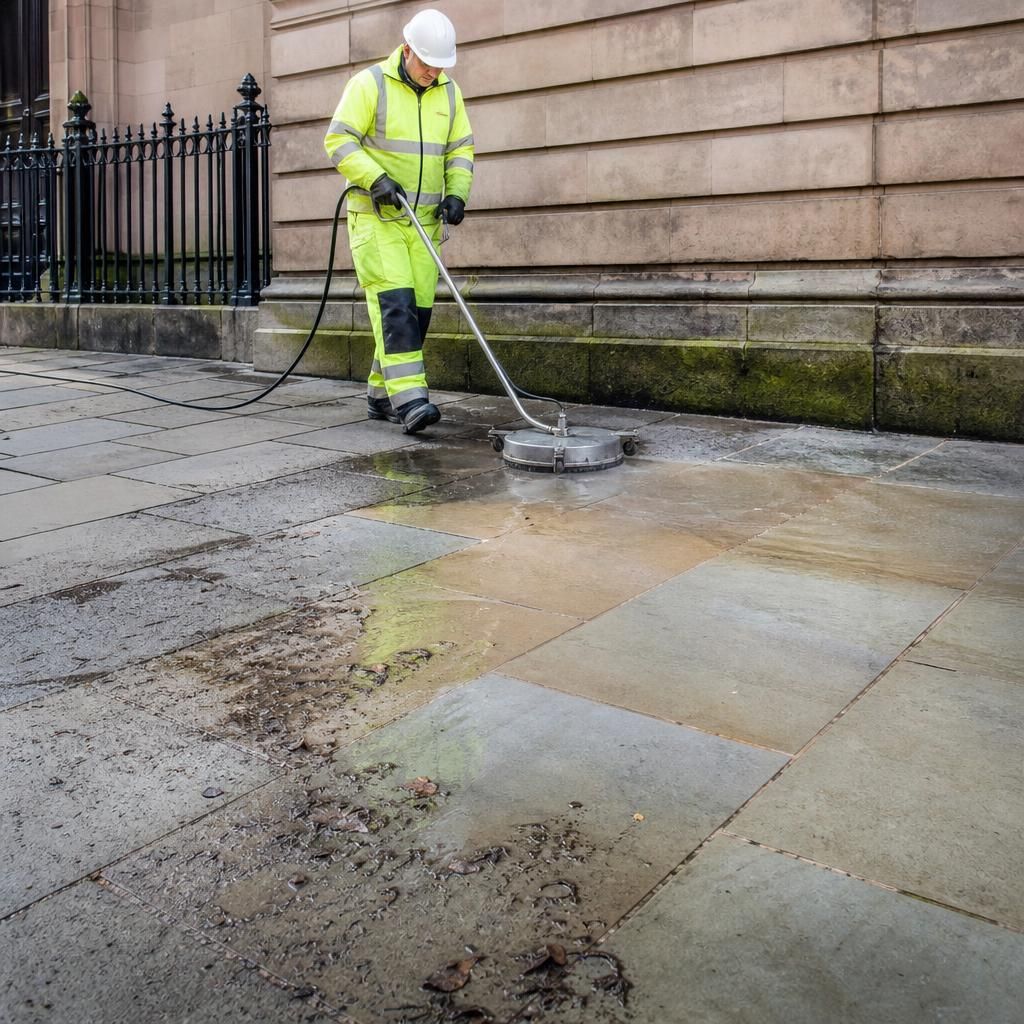
The correct masonry or paving cleaning method is selected by matching the equipment and treatment to the surface material, its condition and the type of contamination. A sound concrete yard may tolerate controlled pressure washing, while weathered brick, sandstone or weak pointing may require low-pressure steam, soft washing or gentle manual brushing.
Before cleaning, the surface is inspected for cracks, spalling, loose joints, previous repairs and coating failure. A small test area can then confirm whether the proposed method removes the deposit without causing colour change, marking, erosion or joint loss. This assessment is particularly important where different materials meet, as one section of a site may need pressure washing while an adjoining historic wall requires a gentler approach.