
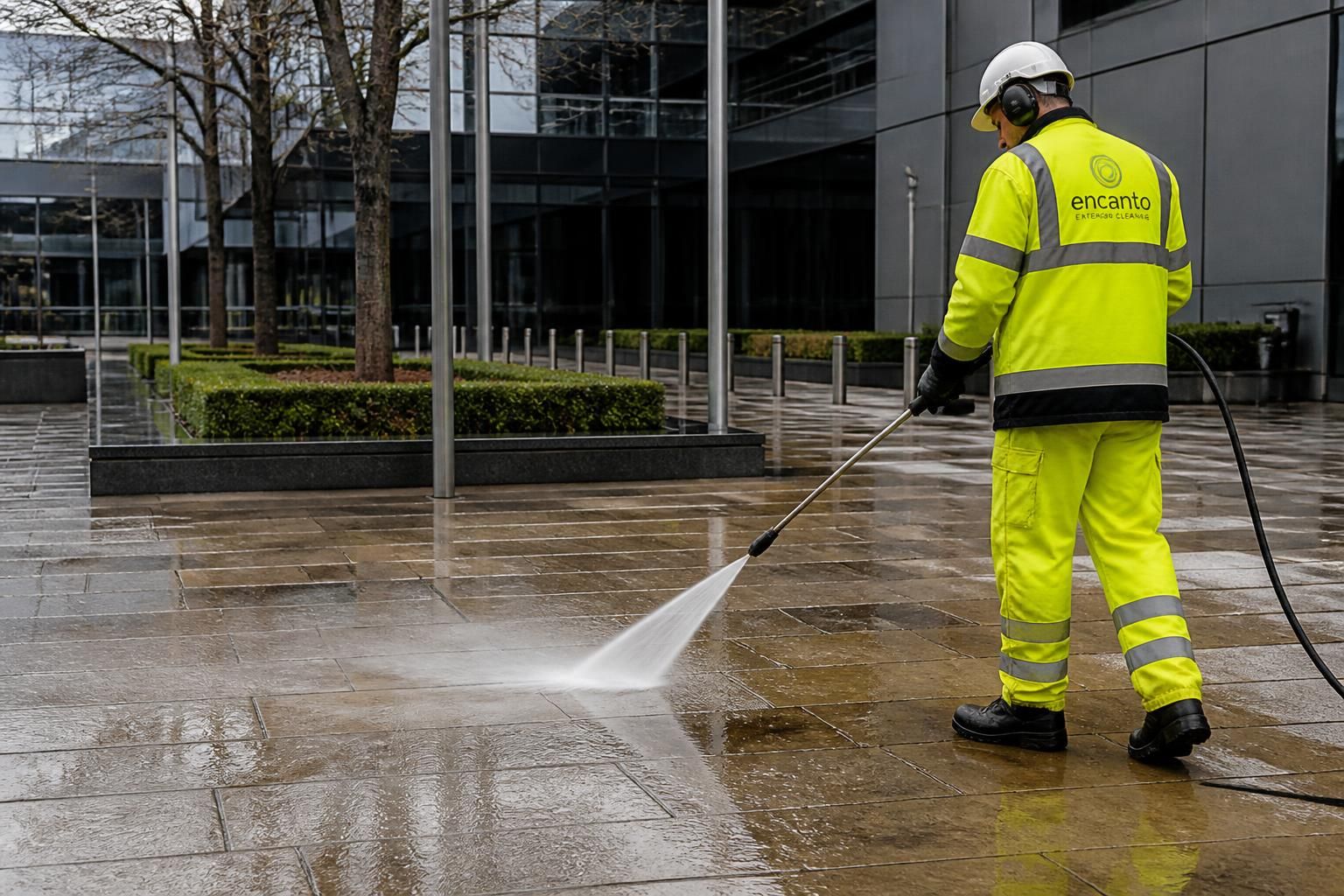
What is the expected timeframe for completing masonry and paving cleaning projects on my property?
Masonry and paving cleaning projects are typically completed within a day for straightforward areas, while larger properties, heavy staining, delicate surfaces or restricted access may require additional time or phased work. We confirm the expected schedule after assessing the surface condition, area size, access requirements, cleaning method and weather conditions.
Masonry and paving cleaning projects are often completed within a day when the area is straightforward, accessible and in reasonable condition. Larger commercial or industrial sites, heavily soiled surfaces, delicate masonry, restricted access and poor weather can extend the programme to several working days or require the work to be divided into phases. We confirm the expected timeframe after assessing the property rather than relying on the surface area alone.
The main factors affecting the schedule include:
- Size and layout: A compact paved area can usually be cleaned more quickly than a large car park, courtyard, façade or network of paths. Multiple elevations, separate work zones and long travel distances across a site add preparation and cleaning time.
- Surface condition: Heavy moss, algae, oil, embedded dirt, paint, efflorescence and other staining may need pre-treatment, repeated passes or specialist spot cleaning. Loose pointing, damaged paving or friable brickwork also requires slower, lower-impact methods.
- Material and cleaning method: Robust concrete or suitable block paving may be cleaned efficiently with controlled pressure washing. Older brick, sandstone and other sensitive masonry may need steam cleaning, soft washing or carefully selected chemical treatments, followed by controlled rinsing. These methods can take longer but help reduce the risk of etching, spalling or joint loss.
- Access and site restrictions: Locked areas, narrow entrances, height restrictions, parked vehicles, pedestrian routes, traffic management and the need to protect adjoining buildings can affect how equipment and water are brought to the work area.
- Drainage and water management: We may need to protect drains, collect contaminated runoff or work in sections where water cannot be discharged freely. This is particularly relevant on commercial sites, near watercourses and where oil or chemical residues are present.
- Weather and drying conditions: Rain, freezing temperatures, strong winds and poor drying conditions can delay external cleaning or prevent treatments from working correctly. Weather can also affect when an area is safe to reopen.
Typical project planning
During the initial assessment, we review the surfaces, measure or estimate the work areas, identify staining and check the access, drainage and surrounding risks. We then recommend the appropriate cleaning process and explain whether pre-treatment, stain removal, jointing repairs or protective treatment should be included. The quotation or work plan will set out the anticipated duration, any exclusions and the conditions that could affect the schedule.
For a small, uncomplicated paved area with clear access, cleaning may be completed during one visit. A larger paved estate, commercial courtyard or extensive masonry elevation may need more than one working day, particularly where different surfaces require different methods. Extensive algae or moss removal, oil treatment, graffiti removal and restoration of old brickwork may be scheduled separately so that each stage can be completed safely and checked before the next begins.
Preparation can help keep the work on schedule. Where possible, vehicles, planters, outdoor furniture, waste and other movable items should be removed before arrival. The site contact should also identify underground services, access arrangements, restricted areas and any sensitive landscaping or neighbouring property that requires protection. On commercial premises, agreeing pedestrian diversions, delivery times and reopening arrangements in advance can prevent avoidable interruptions.
After cleaning, some surfaces need time to drain and dry before they can be inspected, resealed or returned to normal use. Sand joints may need replenishing after block paving is cleaned, while chemical treatments may require a controlled dwell time and thorough rinsing. We do not treat the job as complete simply because the visible cleaning has finished; the area must also be left safe, suitably managed and free from avoidable runoff or slip hazards.
We provide a realistic programme once the property has been assessed and keep the site contact informed if conditions change. If the work is weather-sensitive, involves several surface types or must be carried out without disrupting operations, a phased schedule is usually more practical than attempting to clean the entire property in one visit.
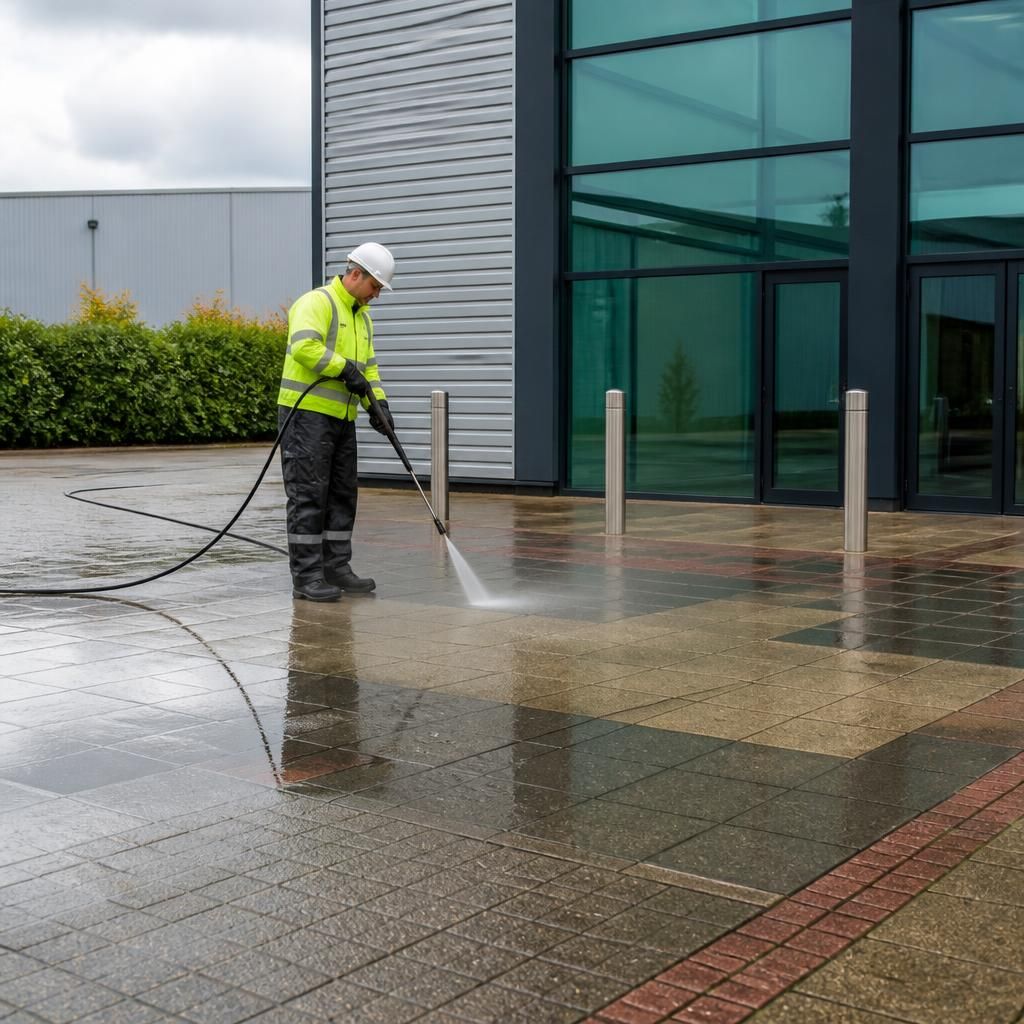
The expected timeframe for masonry and paving cleaning depends on the area to be cleaned, the condition of the surface, the selected method and how easily the work area can be accessed. A clear, unobstructed site allows the cleaning team to work continuously, while parked vehicles, restricted entrances, pedestrian routes or poor drainage may require the work to be completed in sections.
Preparing the property before arrival can help keep the agreed programme on track. Where possible, remove vehicles, planters, furniture and other movable items, and ensure the site contact has arranged access to locked areas. We will also consider surface drying, runoff control and any treatments or jointing work needed after cleaning before confirming when the area can safely return to normal use.