
What factors should be considered when choosing the right cleaning method for masonry and paving surfaces?
Choosing the right cleaning method for masonry and paving depends on the material, its age and condition, the type of contamination, and the risk of damage to joints, coatings or surrounding surfaces. The cleaning approach should then balance pressure, temperature, steam or chemical treatment, water use, access requirements and environmental controls to achieve a thorough result safely.
The right cleaning method for masonry and paving is determined by the surface material, its age and condition, the type of contamination, and the risk of affecting joints, coatings or nearby property. A suitable specification should balance cleaning effectiveness with controlled pressure, temperature, water use, chemical treatment and access requirements, rather than relying on one method for every surface.
Identify the surface material first
Brick, natural stone, concrete, block paving and paving slabs each respond differently to cleaning. The hardness, porosity, texture and construction of the material influence how much pressure and heat it can safely tolerate. For example, dense concrete may accept a more vigorous approach than weathered sandstone, while old brick can have soft faces or friable mortar that are easily eroded.
Natural stone also varies considerably. Sandstone, limestone and other porous stones can absorb water and chemicals, making dwell time, rinsing and drying important considerations. Concrete surfaces may have exposed aggregate, a surface coating or a previously sealed finish that needs to be preserved. Block paving requires particular care around jointing material, as excessive pressure can remove or displace the sand between blocks.
Assess age, condition and previous repairs
A surface inspection should identify cracks, spalling, loose pointing, open joints, damaged slabs, unstable blocks, flaking coatings and areas of previous repair. Cleaning can reveal defects that were obscured by dirt, moss or staining, but it should not be used to compensate for structural or maintenance problems.
Older masonry often has a softer surface than newer materials. Repeated cleaning, weathering and frost damage may have weakened the face of the brick or stone. Areas that are already deteriorating may require a gentler method, localised treatment or repair before cleaning proceeds. Previously painted, sealed or chemically treated surfaces should also be assessed because the proposed method may affect adhesion, colour or gloss.
Match the method to the contamination
Different deposits require different treatment. Surface dust, mud and loose debris may be removed with controlled low-pressure washing, whereas oil, grease, traffic film, rust, efflorescence, paint and organic growth require more specific processes.
- Moss, algae and other green growth: controlled washing, suitable biocidal treatment or a combination of both may be appropriate. Removing visible growth without addressing its roots or spores may lead to premature regrowth.
- Oil and grease: usually require a degreasing product, sufficient dwell time and careful recovery or rinsing of the contaminated water. Pressure alone may spread the stain rather than remove it.
- Efflorescence: requires an approach that considers the source of soluble salts and the porosity of the masonry. Aggressive abrasion can mark the surface or expose more pores.
- Paint, adhesive and graffiti: may need a selected chemical system, steam, controlled pressure or localised mechanical treatment. A test area is essential because coatings and masonry can react differently.
- Rust and mineral staining: should be treated with a product compatible with the particular stone or concrete. Acidic products can damage acid-sensitive materials such as limestone and some cement-based surfaces.
Choose between pressure, steam and chemical cleaning
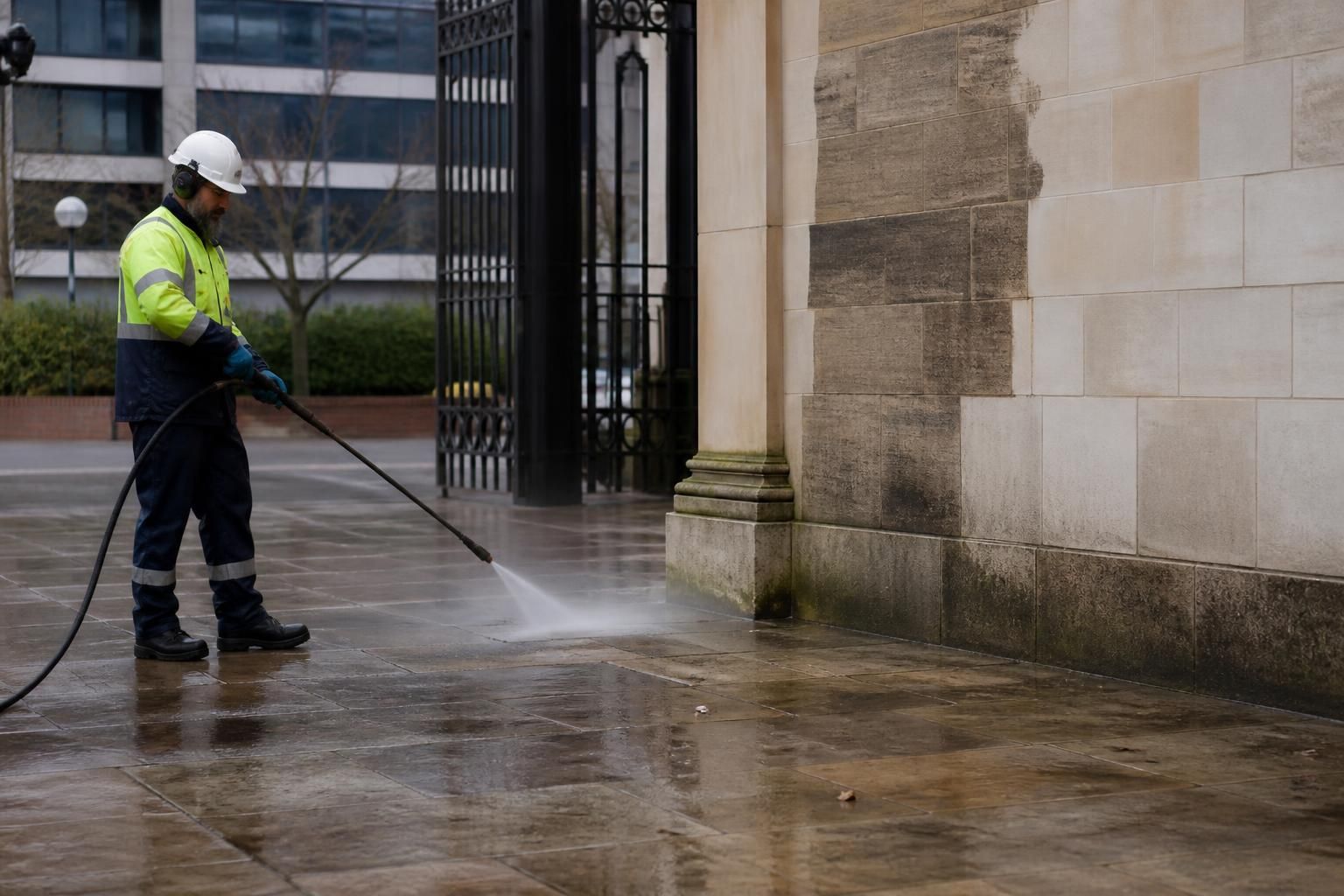
Pressure washing uses water delivered at a controlled pressure and flow rate to lift and rinse away contamination. It can be effective on robust paving and heavily soiled areas, but the pressure must be selected for the surface rather than maximised. Excessive pressure can erode mortar, remove jointing sand, open pores, mark concrete or drive water into vulnerable areas.
Steam cleaning uses heat with comparatively controlled pressure and can be useful for organic growth, grease, chewing gum, certain coatings and sensitive masonry where abrasive force should be limited. It may also reduce the need for chemical products in some applications. Steam is not automatically suitable for every surface, however; heat can affect coatings, sealants or previously repaired areas.
Chemical treatment can break down contamination that water alone cannot remove. The product must be selected for the material and stain, applied for the correct contact time and thoroughly rinsed or recovered as required. Chemical use should include controls for run-off, nearby planting, drainage, occupants and surrounding finishes. In many projects, the safest result comes from combining a mild treatment with low-pressure washing rather than using a single aggressive process.
Consider joints, edges and surrounding features
Cleaning should account for more than the exposed face of the paving or masonry. Joints, pointing, drainage channels, kerbs, thresholds, wall bases, sealants and adjacent façades can all be affected by water or chemicals. Block paving may need jointing sand to be reinstated after cleaning, while loose pointing may require repair before washing.
Windows, doors, painted surfaces, signage, electrical equipment, landscaping and vehicles should be protected from spray, splashes and run-off. Where cleaning takes place near occupied premises, pedestrian routes or vehicle areas, the work method should include suitable segregation, access control and communication with the site team.
Account for water management and environmental controls
The volume of water, drainage arrangements and contamination present on the surface all affect the appropriate method. Oil, chemical residues, silt and dirty wash water should not be allowed to enter surface-water drains without suitable controls. Depending on the site, this may involve drain protection, collection, filtration, controlled discharge or off-site disposal.
Water use can also influence the choice between pressure washing, steam cleaning and low-moisture treatments. On busy commercial sites or locations with restricted drainage, a method that limits run-off may be more practical. Noise, overspray, access equipment and working hours should be considered where cleaning is carried out beside offices, retail premises, residential areas or public routes.
Use test areas before full-scale cleaning
A small, representative test area helps confirm whether the selected pressure, temperature, chemical strength and dwell time are suitable. It should include the relevant material, contamination and joint condition, because a clean, sound section may not respond in the same way as a weathered or heavily stained area.
The test should be checked for colour change, etching, surface marking, mortar loss, joint disturbance, coating failure and the effectiveness of stain removal. It can also establish whether the desired finish is achievable without damaging the substrate. For larger commercial or industrial projects, agreeing the test result and cleaning standard before the main works helps maintain consistency across different elevations or paving areas.
Define the required finish and maintenance plan
The correct method depends partly on the intended outcome. Removing loose dirt from a service yard is different from preparing a façade for repair, improving the appearance of a public entrance or removing contamination before applying a protective treatment. The specification should distinguish between general cleaning, stain reduction, coating removal, biological treatment and preparation for repair or sealing.
Future maintenance should also be considered. A surface that is regularly inspected and treated before contamination becomes deeply established may need less aggressive cleaning over time. Cleaning schedules should reflect footfall, vehicle traffic, shade, moisture, nearby vegetation, drainage and the material’s susceptibility to organic growth.
In practice, the most reliable selection process combines a site survey, material and contamination assessment, a controlled test area, protection and run-off measures, and a clearly defined finish. This allows pressure washing, steam cleaning, chemical treatment or a combination of methods to be chosen for the actual conditions on the property, reducing the risk of avoidable damage while delivering a consistent, maintainable result.
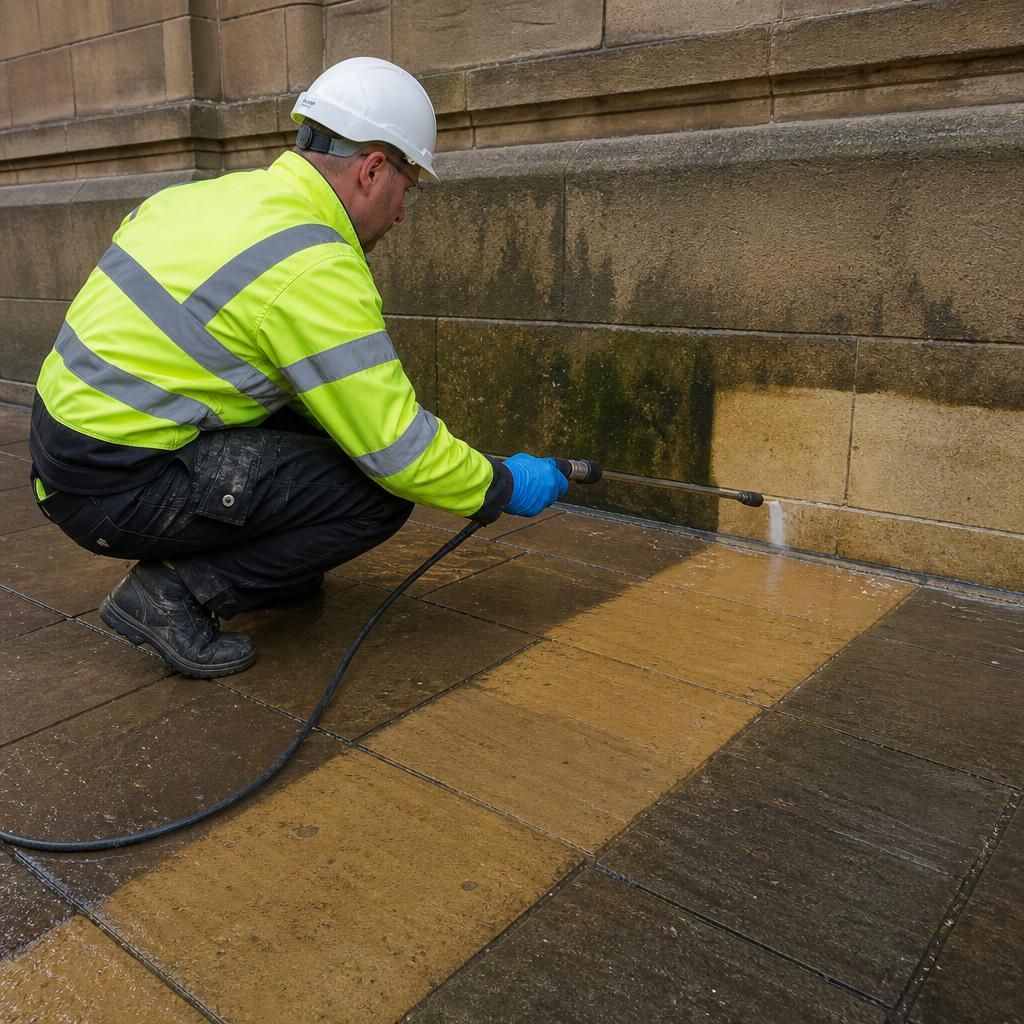
A representative test area is the most reliable way to confirm that a proposed cleaning method is suitable for the masonry or paving before full-scale work begins. It allows the pressure, temperature, chemical strength and dwell time to be adjusted to the actual surface and contamination, rather than relying solely on general assumptions about the material.
The test should include typical areas of weathering, staining and joint condition. After cleaning, the surface is checked for colour change, etching, mortar loss, disturbed jointing sand, coating failure and any remaining contamination. This is particularly important for old brick, sandstone, porous paving, painted surfaces and areas with previous repairs.
Once the result has been assessed, the agreed cleaning standard can be applied consistently across the wider project. If the test shows that the chosen approach is too aggressive or does not remove the contamination effectively, the method can be changed before it affects a larger area. Test areas also help identify requirements for protection, rinsing, run-off control and reinstatement of paving joints.