
What are the benefits of using chemical treatments for cleaning masonry and paving?
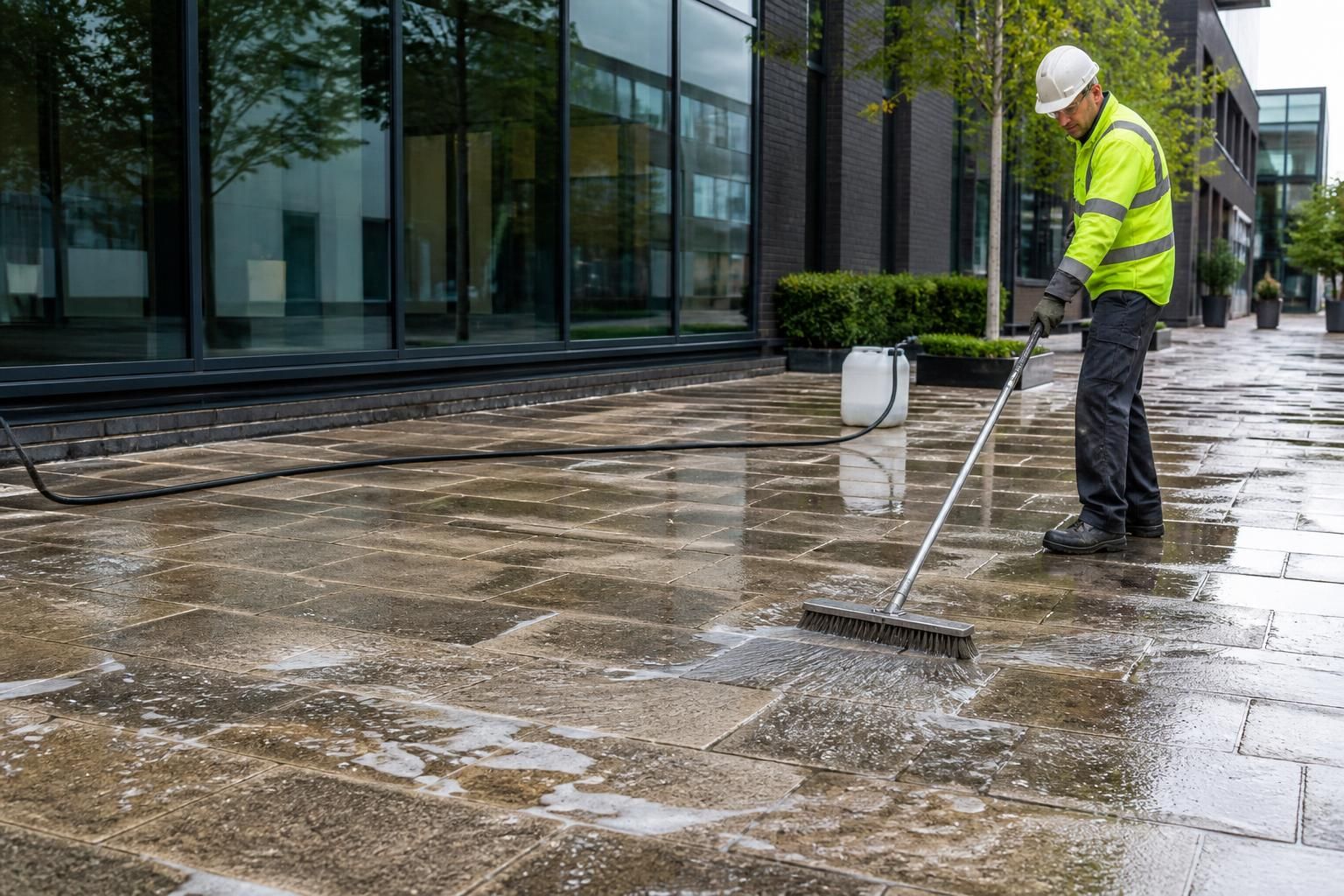
Chemical treatments help loosen ingrained dirt, oil, algae, moss, efflorescence and biological growth from masonry and paving, allowing effective cleaning at lower pressure and reducing the risk of surface damage. When selected and applied correctly for the material, they can also improve the cleanliness and longevity of the finished surface by slowing the return of organic growth.
Chemical treatments improve masonry and paving cleaning by breaking down contaminants before rinsing or pressure washing. They can loosen algae, moss, lichen, oil, grease, atmospheric staining, efflorescence and ingrained dirt, allowing the surface to be cleaned effectively with less mechanical force. When the treatment is selected for the specific material and used under controlled conditions, the main benefits are deeper cleaning, reduced risk of surface damage and longer-lasting results.
They reduce the need for high-pressure cleaning. Pressure alone may remove surface dirt, but it can be less suitable for weathered brick, sandstone, aged concrete, pointing, jointing compounds and other vulnerable surfaces. A compatible chemical pre-treatment softens or dissolves the contamination so that lower pressure, controlled rinsing or steam cleaning can complete the process. This helps reduce the risk of:
- Surface erosion and pitting
- Damage to mortar joints or pointing
- Loss of the surface texture on concrete and paving
- Displacement of jointing sand
- Water being forced into cracks, joints and porous masonry
They target different types of contamination. Masonry and paving rarely have just one form of dirt. A car park may have oil and traffic film, while a courtyard may have algae, moss, leaf staining and soil deposits. Chemical products are formulated for particular problems rather than treating every surface in the same way. For example, an appropriate biocidal or fungicidal treatment can help control organic growth, while a degreasing product is more suitable for oil and grease. An acidic treatment may be considered for certain mineral deposits, but only after assessing the material, because acids can damage acid-sensitive stone, concrete components, metal fittings and nearby vegetation.
They can improve the depth and consistency of the clean. Organic growth and oily deposits can sit within the texture and pores of paving, rather than only on the surface. Chemical treatment helps separate these contaminants from the substrate, making it easier to rinse them away evenly. This can reduce patchiness and prevent the need to repeatedly pass over the same area with a pressure washer. On larger commercial sites, a controlled treatment process also helps produce a more consistent finish across walkways, loading areas, courtyards and other connected surfaces.
They can slow the return of biological growth. Cleaning removes visible moss, algae and lichen, but spores and organic residues may remain in a porous surface. Where the material and site conditions allow, a suitable biocidal treatment can help reduce residual biological contamination after the physical cleaning stage. It is not a permanent barrier: shaded areas, persistent damp, poor drainage, overhanging vegetation and heavy foot traffic can all encourage regrowth. Planned maintenance and correcting underlying moisture or drainage issues remain important.
They help protect the appearance and serviceability of paved areas. Removing oil, organic matter and other deposits can improve the appearance of entrances, paths, service yards and car parks. It may also reduce slip risks associated with slimy algae, moss or greasy contamination, although cleaning does not replace a formal slip-resistance assessment. Removing contamination promptly can also help prevent staining from becoming more firmly embedded, particularly on porous concrete, brick and natural stone.
The treatment must be matched to the surface. There is no universal masonry and paving chemical. Before application, the surface should be identified and assessed for porosity, age, previous coatings, sealants, joint condition, staining and nearby sensitive materials. Sandstone, limestone and other acid-sensitive stones require different considerations from clay brick, concrete or dense porcelain paving. Old brick and weak mortar may require a gentle, neutral or near-neutral approach, while a strongly alkaline degreaser may be appropriate for a suitable concrete service area but unsuitable for adjacent aluminium, painted surfaces or delicate landscaping.
A responsible treatment process normally includes a small test area. This checks the chemical response, contact time, likely colour change and rinsing requirements without committing the whole surface to an unsuitable method. The results are reviewed before proceeding, particularly where the paving is old, stained unevenly or made from mixed materials.
Application and rinsing are as important as product selection. The operative should apply the product at a controlled dilution, keep it within the intended contact time and prevent it drying on the surface. Dwell time allows the treatment to work, but excessive exposure can cause discolouration or damage. The area is then agitated, rinsed or cleaned using the least aggressive method that achieves the required result. Residues should not be left in joints, drainage channels or porous materials.
Site protection is essential. Chemical treatments can affect plants, lawns, fish ponds, drainage systems, painted surfaces, glass, metalwork and vehicles if they are allowed to contact them. Appropriate controls can include protecting adjacent materials, wetting or covering vulnerable vegetation, isolating drainage where necessary, managing runoff and collecting or neutralising wastewater in accordance with the site requirements. The correct controls depend on the product, the location and the local drainage arrangements. Safety data and product instructions must be followed throughout the work.
Chemical cleaning is not always the best option. Some contamination can be removed with steam cleaning, hot water, soft washing or carefully controlled pressure washing alone. Chemical treatment may also be inappropriate where the surface is unstable, the substrate cannot be identified, runoff cannot be controlled or sensitive occupants and surroundings cannot be adequately protected. On delicate masonry, the safest approach may be a combination of testing, low-pressure rinsing and manual or steam cleaning rather than a strong chemical process.
For commercial and industrial properties, the correct treatment can make cleaning more efficient by reducing repeated passes, limiting mechanical wear and addressing the cause of the staining rather than only its visible surface. The chosen method should still be based on a site assessment, not on the severity of the appearance alone. Material type, contamination, drainage, access, weather, surrounding assets and the required finish all influence the specification.
In summary, chemical treatments are valuable because they loosen difficult contamination, support lower-pressure cleaning, improve consistency and can help delay the return of organic growth. Their benefits depend on accurate diagnosis, a compatible product, controlled application, thorough rinsing and effective protection of the surrounding property. Used as part of a planned masonry and paving cleaning system, rather than as a substitute for professional assessment, they can provide a safer and more durable result.
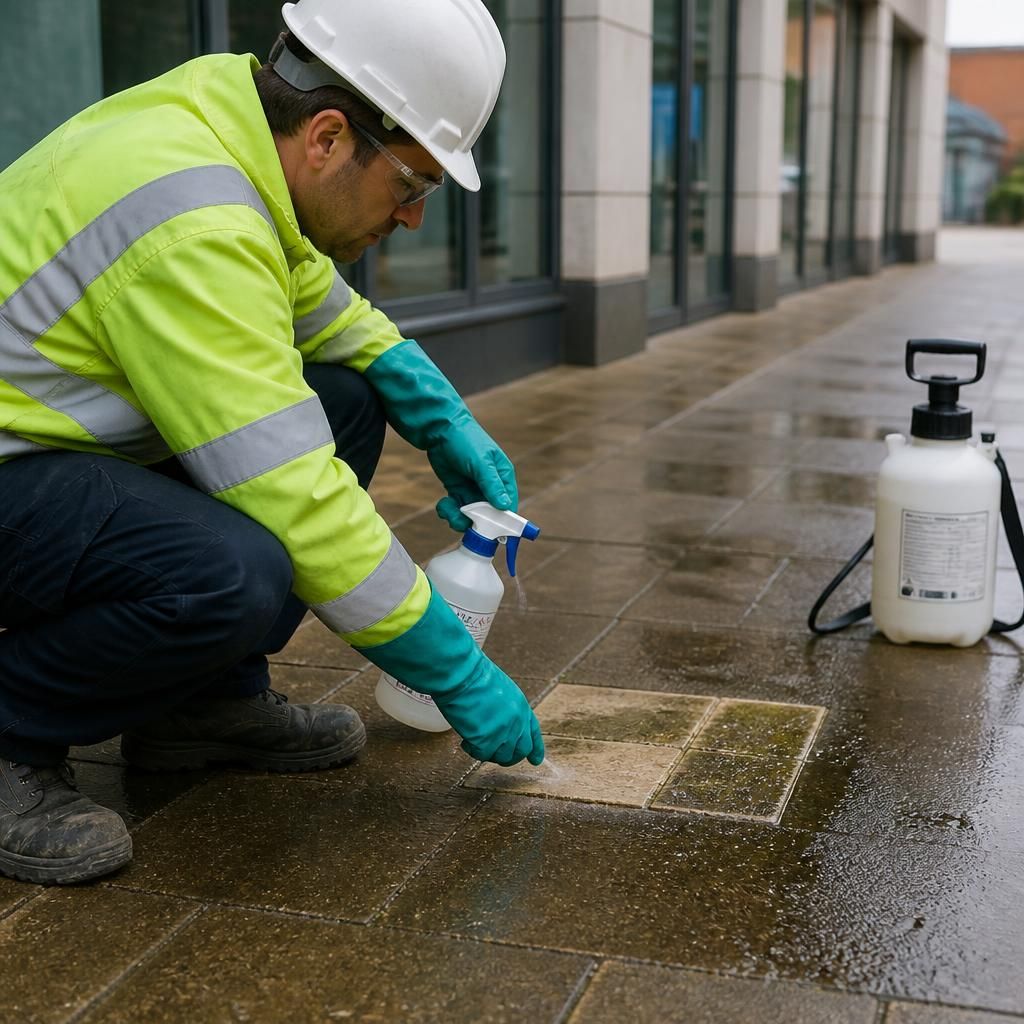
Chemical treatments must be matched to the masonry or paving material, because a product that removes oil or biological growth from one surface may stain, weaken or etch another. The surface’s porosity, age, existing coatings, joint condition and sensitivity to acids or alkalis should be assessed before treatment.
A small test area helps confirm the product’s suitability, dilution, contact time and rinsing requirements. This is particularly important for sandstone, limestone, old brick, weathered concrete and surfaces made from mixed materials. Once the response has been checked, the treatment can be applied in a controlled manner and followed by the least aggressive effective cleaning method.
Protecting nearby vegetation, metalwork, glazing, vehicles and drainage is equally important. Chemical residue should not be allowed to dry on the surface or collect in joints and channels. Correct product selection, controlled application and thorough rinsing are what make chemical cleaning safer and more consistent—not the chemical alone.