
What specific techniques and treatments are employed in the removal of oil stains and efflorescence from paved surfaces?
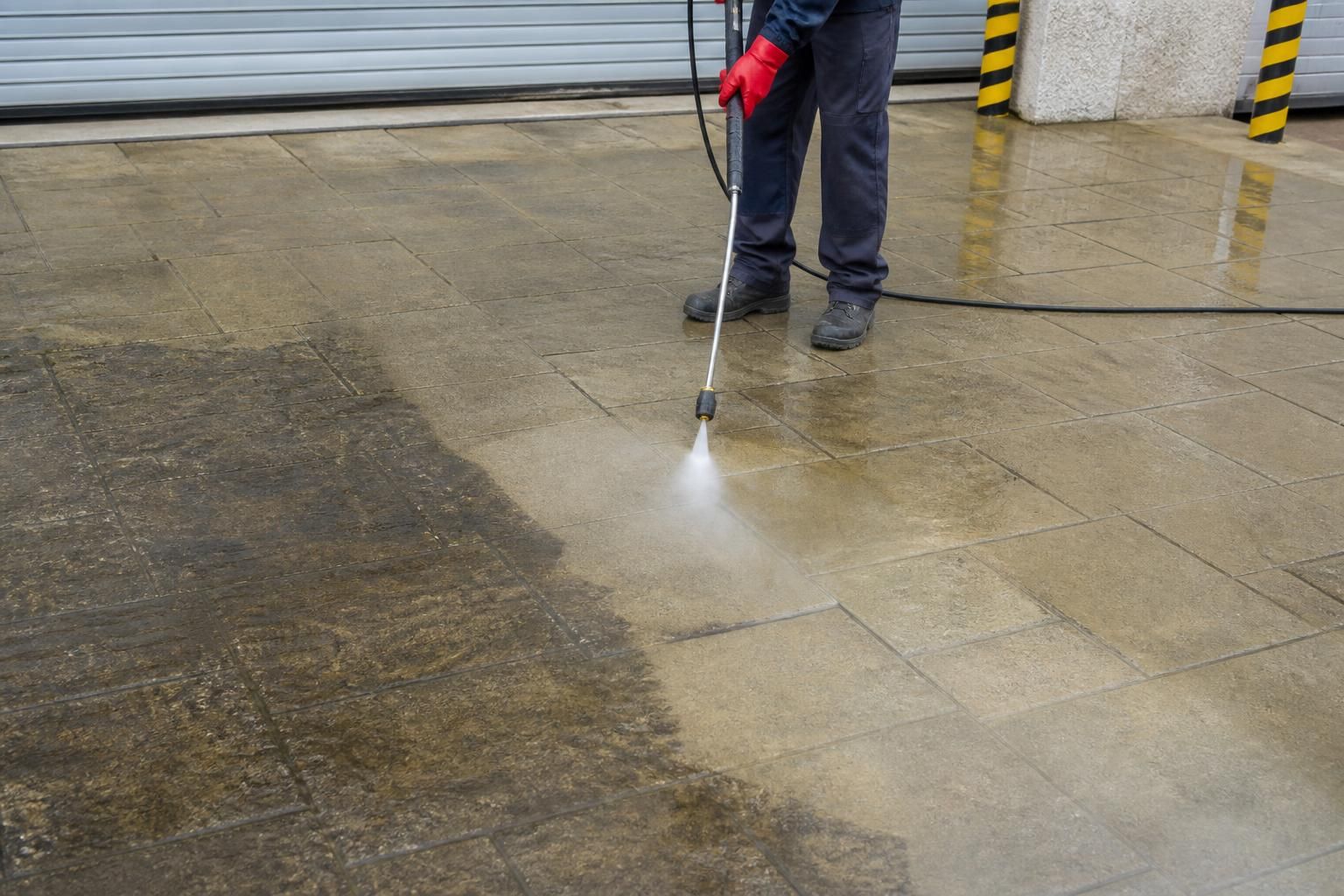
Oil stains are treated with absorbent materials, alkaline or solvent-based degreasers, agitation and controlled pressure or hot-water cleaning, while efflorescence is removed using dry brushing, low-pressure rinsing and, where appropriate, a carefully selected acidic treatment. The method is adjusted to the paving material and stain severity, with pre-testing and thorough rinsing used to prevent surface damage, etching or residue.
Oil stains and efflorescence require different treatments because they are caused by different contaminants. Oil is an organic, water-repellent deposit that penetrates pores in concrete, block paving and other absorbent materials. Efflorescence is a surface deposit of soluble salts carried through masonry or paving by moisture and left behind as the water evaporates. Effective removal therefore combines assessment, material-appropriate chemicals, mechanical agitation, controlled pressure or steam cleaning, and thorough rinsing.
Before treatment, the paved area is inspected to identify the paving material, its condition, drainage arrangements and the likely source and age of the deposit. Loose grit, soil and surface debris are removed first so that the treatment can contact the stain directly. Existing sealers, jointing sand, damaged edges, mortar contamination and nearby surfaces are also considered. A small, inconspicuous test area is treated before wider application to check cleaning performance, colour stability, surface texture and the possibility of etching or lightening.
Oil removal normally follows a staged process:
- Absorption: Fresh spills are covered with an appropriate absorbent such as clay-based granules or another suitable absorbent medium. This draws out free oil before liquid cleaning products are introduced. The material is left to work as directed, collected carefully and disposed of in accordance with waste requirements.
- Degreasing: A specialist alkaline degreaser is commonly used to break down oils, grease and traffic film. The product is selected according to the paving type and the severity of the contamination. Solvent-based poultices or degreasers may be considered for older, deeply absorbed deposits, but they require particular care because they can affect sealers, coatings, adjacent finishes and drainage systems.
- Agitation: The cleaner is worked into the pores with a stiff, non-metallic brush or suitable mechanical agitation. This helps release contamination that cannot be removed by pressure alone. Excessive abrasion is avoided on decorative, polished or weathered paving.
- Extraction and rinsing: Loosened oil and cleaning solution are removed using controlled hot-water pressure cleaning, a wet vacuum or another suitable recovery method. The pressure, temperature, nozzle and working distance are adjusted to avoid scarring the surface or displacing jointing material. Repeated treatment may be required where oil has migrated below the surface.
Hot-water cleaning is particularly useful for greasy deposits because heat softens and mobilises oil while improving the action of the degreaser. It is not suitable for every surface or installation: excessive heat can affect some sealers, resin-bound systems, coatings and sensitive masonry. Where hot water is unsuitable, lower-temperature cleaning with longer dwell time, controlled agitation and suitable extraction can provide a safer alternative.
Efflorescence is approached more cautiously. Loose white deposits are first removed by dry brushing or gentle vacuuming. This avoids turning the salts into a slurry and prevents them being pushed further into open pores. The area may then be lightly rinsed with clean water at low pressure, provided the source of moisture and the drainage route have been considered. Strong pressure can drive water into joints and masonry, potentially encouraging further salt migration.
Where brushing and rinsing do not remove established efflorescence, a carefully selected acidic treatment may be used. Mild, paving-compatible acid cleaners dissolve mineral salts, but the correct product and dilution depend on the paving material, surface finish and surrounding construction. The treatment is applied only to the affected area, allowed to dwell for the specified period and agitated gently before being neutralised or thoroughly rinsed as required by the product instructions. Acid must not be allowed to dry on the surface.
Acidic treatments are generally unsuitable for acid-sensitive materials, including many calcareous stones such as limestone and marble. They can etch cement-based surfaces, alter the appearance of some concrete products, corrode nearby metals and damage plants or painted finishes. On these materials, dry removal, neutral cleaning products, poulticing or repeated low-impact rinsing is normally considered first. Brick, concrete, sandstone and manufactured paving each require separate testing because porosity, mineral composition and existing sealers vary considerably.
For both oil and efflorescence, the cleaning solution must be prevented from spreading onto untreated paving, façades, planted areas or watercourses. Drain covers may need protection, and contaminated wash water should be collected rather than allowed to enter surface-water drainage. Operators use appropriate gloves, eye protection, footwear and other controls indicated by the product assessment. Chemical products are never mixed, particularly acidic and alkaline cleaners, because doing so can create hazardous reactions and reduce cleaning control.
After treatment, the surface is inspected in dry and wet conditions for remaining staining, tide marks, residue, colour change and displaced jointing material. Residual oil can sometimes reappear as it migrates back towards the surface, in which case further localised degreasing or a poultice treatment may be more effective than simply increasing pressure. Residual efflorescence may also recur if moisture is entering from below, behind an adjacent wall or through defective drainage. Cleaning removes the visible deposit, but correcting the moisture source is essential for lasting results.
Once the paving is clean and fully dry, a breathable, compatible sealer may be considered where it is appropriate for the material and intended use. Sealing can reduce the absorption of future oil and simplify maintenance, but it does not correct rising damp, poor falls, leaking joints or defective drainage. The sealer must be selected and applied only after the surface is free from chemical residue and the manufacturer’s compatibility requirements have been checked.
The most reliable method is therefore not a single chemical or pressure setting. It is a controlled sequence of inspection, testing, absorption or dry removal, material-specific chemical treatment, gentle agitation, suitable pressure or steam cleaning, recovery, rinsing and post-cleaning assessment. This approach removes contamination while reducing the risks of etching, colour variation, joint damage, chemical residue and repeat efflorescence.
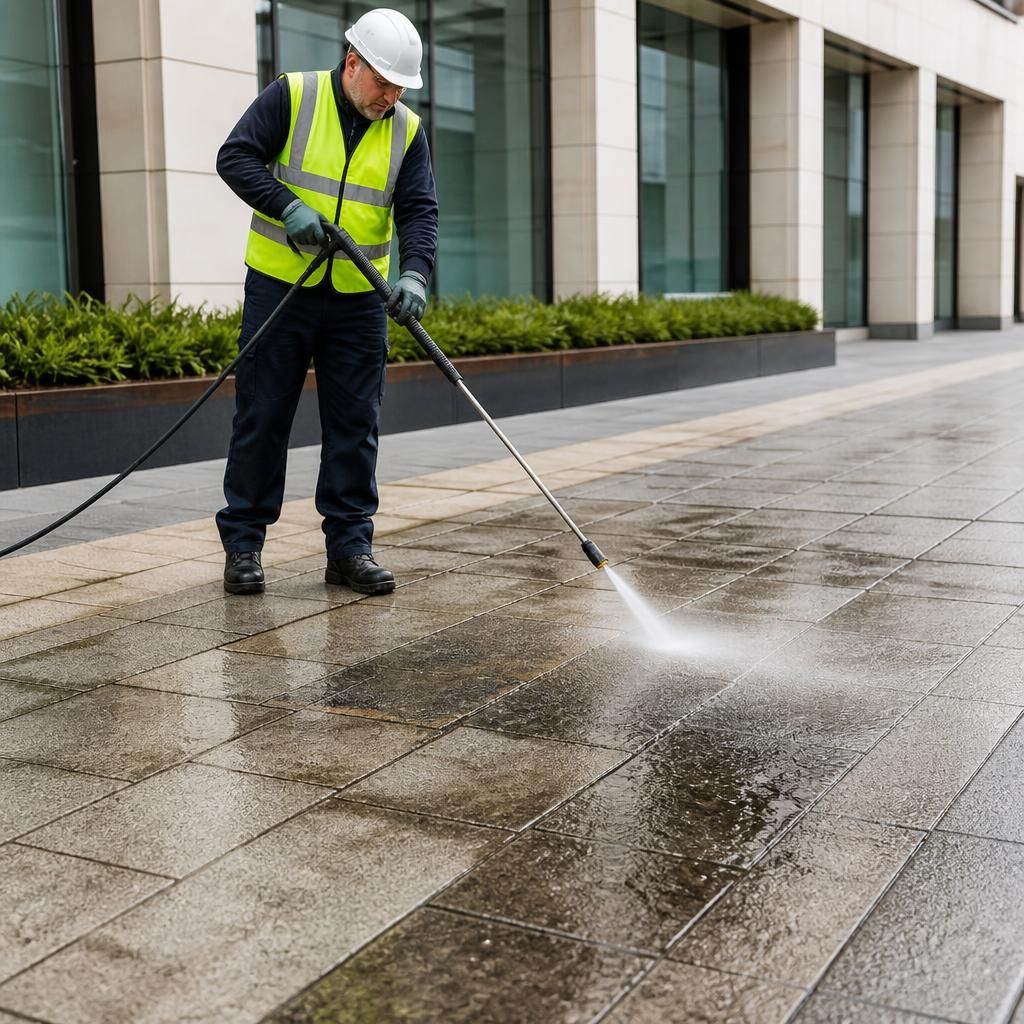
Oil stains and efflorescence need different treatments: oil is broken down and extracted, while efflorescence is a mineral deposit that is usually brushed away before cautious rinsing. Specialist cleaning therefore combines absorbent materials, paving-compatible degreasers, gentle agitation and controlled hot-water or pressure cleaning for oil, with dry brushing, low-pressure rinsing and, where suitable, a carefully tested acidic treatment for established salts.
The paving material must be checked before any chemical is applied. Acidic products can etch limestone, marble and other acid-sensitive surfaces, while excessive pressure or heat can damage jointing, sealers and decorative finishes. A small test area, protected drainage and recovery of contaminated wash water help ensure the treatment is effective without causing further staining, surface damage or environmental harm.