
What specialised techniques are recommended for removing oil stains from concrete surfaces?
Specialised concrete oil stain removal typically combines a suitable biodegradable degreaser or poultice treatment with hot-water pressure washing or steam cleaning. The method is selected according to the stain’s age and depth, the concrete’s condition and the surrounding drainage requirements, with absorbent materials used to capture contaminated runoff.
Specialised concrete oil stain removal usually combines an absorbent treatment or biodegradable degreaser with hot-water pressure washing or steam cleaning. The correct process depends on whether the oil is fresh or ingrained, how porous and weathered the concrete is, the size of the affected area, and how wash water can be contained and disposed of. The aim is to lift oil from the surface and pores without damaging the concrete or allowing contaminated runoff to enter drainage systems.
Initial assessment and preparation
Before treatment, the area should be inspected for the type and extent of contamination. Engine oil, hydraulic fluid, diesel and cooking oils can behave differently, while older deposits may have oxidised and bonded more firmly to the concrete. Cracks, open joints, weak edges, previous coatings and areas of surface scaling also affect the choice of equipment and pressure.
Loose dirt, grit and debris should be removed first. Fresh spills should be blotted or covered with an absorbent material rather than spread with a brush or hose. Suitable absorbents can include mineral granules or other materials designed for hydrocarbon spills. Once saturated, the material must be collected and handled as contaminated waste. It should not be washed into gullies or left on the surface, where rain can redistribute the oil.
Degreasing and hot-water pressure washing
A professional-grade, concrete-compatible degreaser is often applied before pressure washing. The product needs sufficient dwell time to break down the oil, but it must not be allowed to dry on the surface. Agitation with a stiff, non-damaging brush can help work the treatment into textured concrete and open pores.
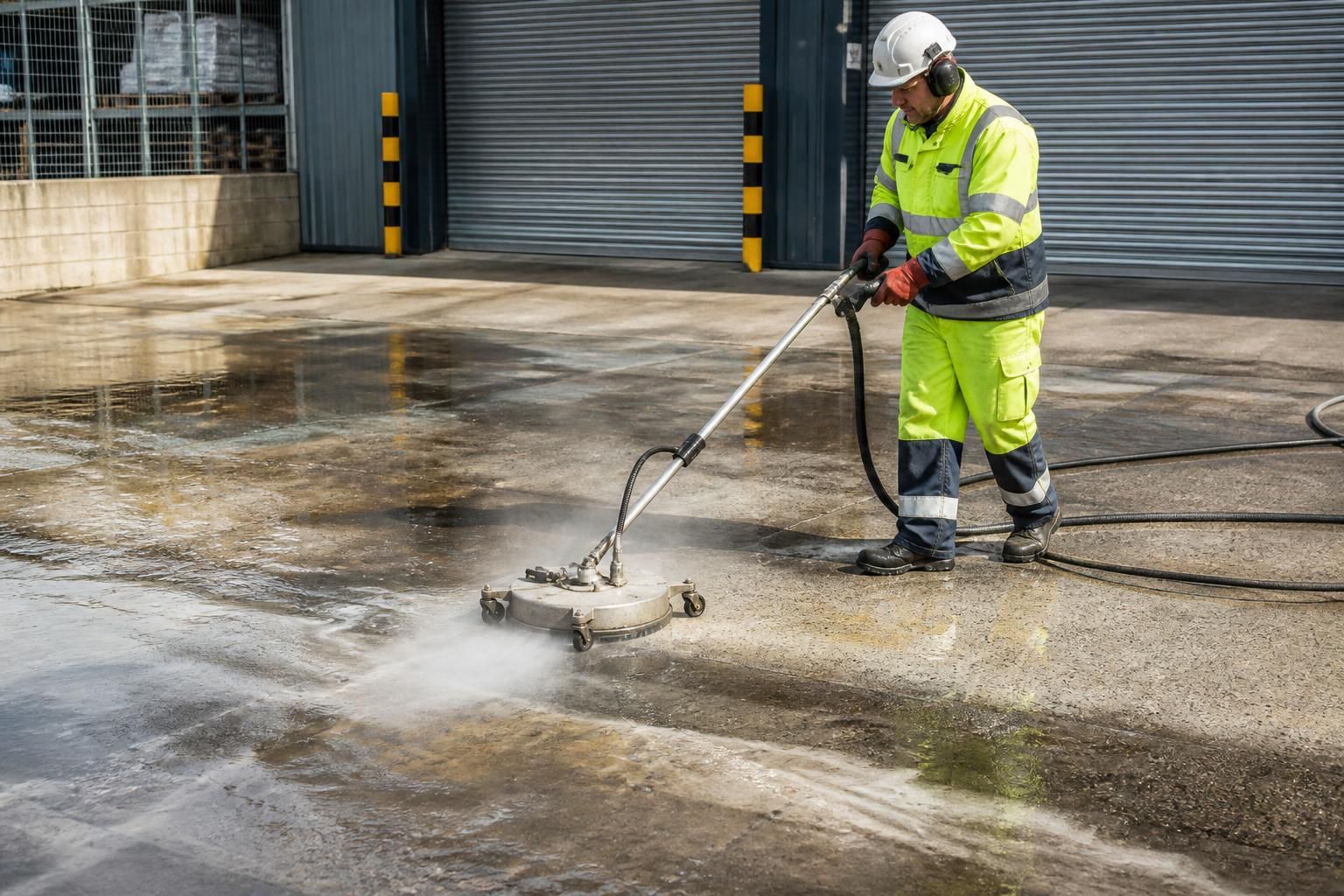
Hot-water pressure washing is generally more effective than cold water for oily deposits because heat reduces the viscosity of the oil and helps the degreaser release it from the substrate. A controlled fan nozzle or rotary surface cleaner can then remove the loosened contamination evenly. Pressure, temperature and nozzle distance should be adjusted to the concrete’s condition. Excessive pressure can strip the cement paste, expose aggregate, create visible cleaning lines or worsen existing surface defects.
Rotary surface-cleaning equipment is particularly useful on larger slabs, service yards and car parks because it distributes the cleaning action more consistently than a hand-held lance. Edges, joints, drainage channels and heavily marked patches may still require separate treatment, as these areas can retain oil after the main surface has been cleaned.
Steam cleaning for sensitive or heavily contaminated areas
Steam cleaning uses high-temperature vapour to soften and mobilise oil while limiting the amount of water introduced to the surface. It can be useful where runoff must be tightly controlled, where the concrete is adjacent to sensitive finishes, or where detailed cleaning is required around kerbs, loading bays, machinery bases and joints. Steam alone may not remove deeply absorbed oil, so it is commonly combined with a suitable degreaser, absorbent pads and wet extraction.
Steam and hot-water methods must be used with care around painted markings, sealants, membranes and vulnerable repairs. Sudden thermal changes or excessive heat can affect some coatings and previously patched areas, so a small inconspicuous test section should be completed first.
Poultice treatments for deep or established stains
When oil has penetrated beyond the readily washable surface, a poultice can draw contamination back out of the concrete. The treatment consists of an absorbent medium carrying a suitable solvent or degreasing agent. It is applied over the affected area, kept in contact for the required period and then removed once it has absorbed the released oil.
Poulticing is slower than surface washing but can be more appropriate for old stains, thick deposits and porous concrete where repeated pressure washing would provide limited improvement. Several applications may be needed, and the treated area can appear darker or uneven while it is drying. The concrete should be allowed to dry fully before the result is assessed, because residual moisture can temporarily disguise remaining oil.
Runoff recovery and environmental controls
Oil removal is not complete if contaminated water is simply pushed into a surface-water drain. Before work begins, drains should be identified and protected where necessary, with runoff directed towards a controlled collection point. Wet vacuums, recovery systems, drain covers, bunding and absorbent barriers can help prevent migration beyond the work area.
Recovered water, used absorbents and residues should be managed in accordance with the site’s waste and drainage requirements. Detergents should be selected for the substrate and the contamination, preferably with a readily biodegradable formulation where it provides the required cleaning performance. Product instructions and relevant safety data should always be followed; biodegradable does not mean that oily wastewater can be discharged without control.
Managing difficult stains and avoiding surface damage
- Fresh oil: remove free liquid with absorbent material before applying a degreaser. Early containment generally reduces penetration and prevents the spill from spreading.
- Old vehicle or plant oil: use pre-treatment, controlled agitation and hot-water cleaning, followed by further treatment if a shadow remains.
- Hydraulic fluid or diesel: assess the surrounding soil, joints and porous edges as well as the visible concrete, since thin fluids can travel beyond the original mark.
- Textured or broom-finished concrete: use equipment that reaches the profile without eroding the surface or leaving striping.
- Painted, sealed or coated concrete: test compatibility before using heat, solvents, strong alkalis or aggressive pressure. The objective may be to clean the coating rather than remove the oil through it.
- Cracked or deteriorating concrete: reduce mechanical force and consider whether cleaning could dislodge weak material. Repairs may be required after contamination has been removed.
Strong acids are not normally the first choice for oil removal. Acidic products target mineral deposits such as efflorescence rather than hydrocarbon contamination and can etch cement paste, alter the appearance of aggregate and damage nearby metals. Uncontrolled solvent use can also soften coatings, create hazardous vapours or drive oil further into porous materials. Any chemical should therefore be tested in a discreet area, applied at the recommended dilution and kept away from incompatible surfaces.
After cleaning, the concrete should be inspected in dry conditions for residual staining, odour, slipperiness and damage to the surface profile. If the area is likely to receive repeated vehicle or plant traffic, a compatible penetrating sealer may help reduce future absorption, provided the concrete is clean, dry and suitable for sealing. Sealing does not remove existing oil and should never be used to conceal contamination that remains in the substrate.
For commercial yards, car parks, loading areas and industrial slabs, the most reliable process is usually a controlled combination of absorbent recovery, targeted degreasing, hot-water or steam cleaning, mechanical agitation and wastewater collection. The treatment should be adapted to the concrete rather than relying on maximum pressure or a single chemical product. This approach improves the likelihood of removing both the visible mark and the oil retained within the surface while protecting the concrete, nearby drainage and people using the area.
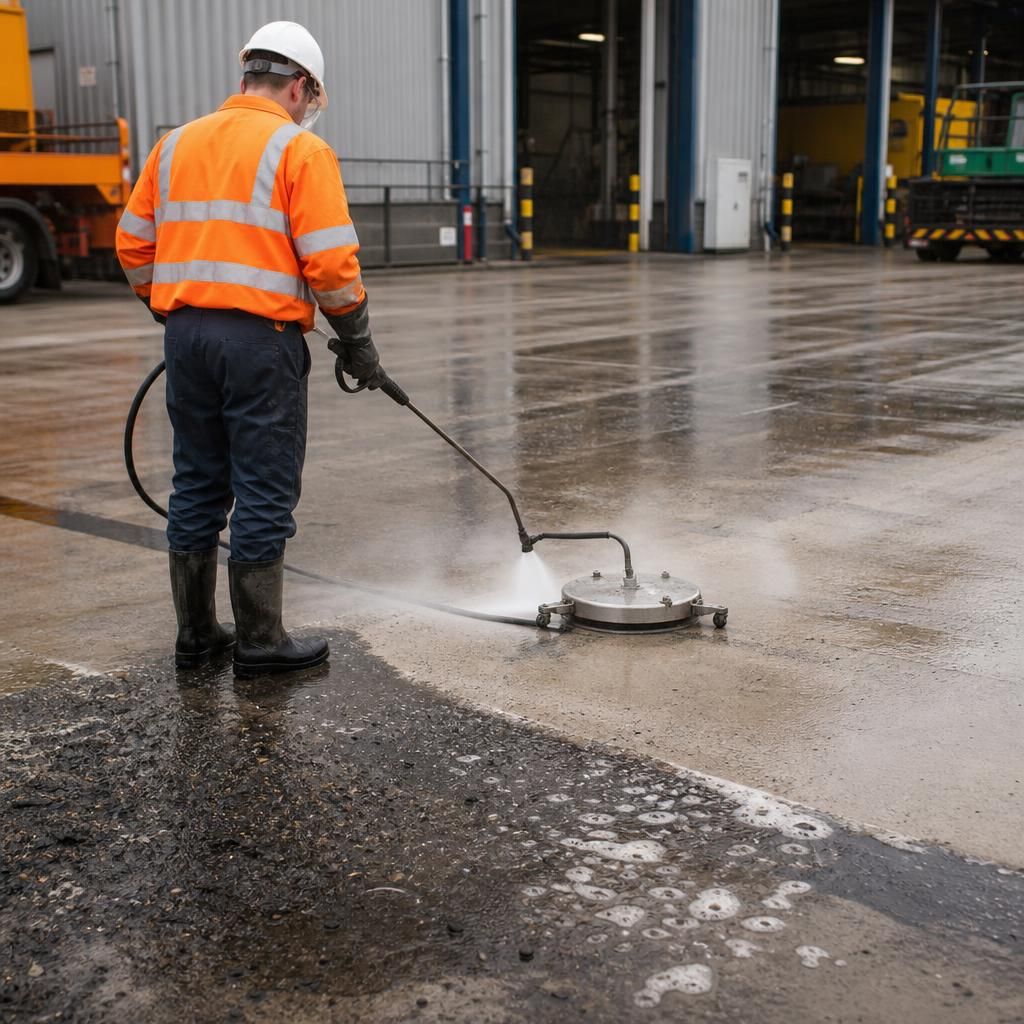
Hot-water pressure washing combined with a suitable degreaser is one of the most effective specialised techniques for removing oil stains from concrete. Heat helps loosen oily deposits, while the degreaser breaks down contamination held in the surface pores. Controlled agitation and a rotary surface cleaner can then lift the residue evenly without concentrating pressure in one area.
For older or deeply absorbed stains, a poultice treatment may be needed before washing. Any contaminated water and used absorbent material must be collected rather than allowed to enter surface-water drains. Pressure, temperature and chemical strength should always be adjusted to the concrete’s condition, particularly where the surface is cracked, coated, weathered or adjacent to sensitive finishes.
Arrange Specialist Concrete Oil Stain Removal
Arrange a site assessment for specialist concrete oil stain removal, including suitable degreasing, hot-water or steam cleaning and controlled runoff recovery. Contact Encanto Exterior Cleaning to discuss the affected area and the most appropriate treatment.