
What methods are most effective for removing oil stains from paved surfaces?
The most effective oil stain removal method for paved surfaces is usually a staged process: absorb fresh oil, apply a suitable paving-safe degreaser, then use hot-water pressure washing or steam cleaning to draw embedded residue from the surface. Porous or older stains may require repeated treatment or a poultice, with the method adjusted to the paving material and wastewater contained responsibly.
The most effective method for removing oil stains from paved surfaces is a staged treatment: absorb any fresh oil, apply a paving-compatible degreaser, agitate the contaminated area, and remove the dissolved residue with hot-water pressure washing or steam cleaning. Older or deeply embedded stains may need repeated treatment or a poultice, while the paving material, surface condition and drainage arrangements determine which method is safe and effective.
Initial assessment is essential. Oil can sit on the surface of concrete, block paving, clay pavers, natural stone or asphalt, but porous materials absorb it into their capillaries. The stain may also have spread beneath adjoining blocks or into joints. Before treatment, the affected area should be checked for loose blocks, damaged pointing, failed sealants, surface coatings and nearby drains. A small test area helps establish whether the chosen detergent, temperature and pressure will clean the stain without changing the colour or texture of the paving.
Fresh spills should be dealt with promptly. An absorbent material such as an oil-absorbing granule or suitable mineral absorbent can draw up free oil before it penetrates further. It should be applied without excessive rubbing, left to work, then swept up and disposed of in accordance with site waste procedures. Water alone is normally ineffective at this stage because oil repels water and can be spread across a larger area by untreated rinsing.
Degreasing is the main treatment for most established stains. A professional paving-safe degreaser breaks down the oil so that it can be lifted from the surface. The product must be selected according to the paving type and the nature of the contamination. It is applied at the correct dilution, allowed sufficient dwell time, and agitated with a brush or suitable mechanical equipment. Allowing the detergent to dry can leave residues or cause uneven results, so the area is kept under control throughout the treatment.
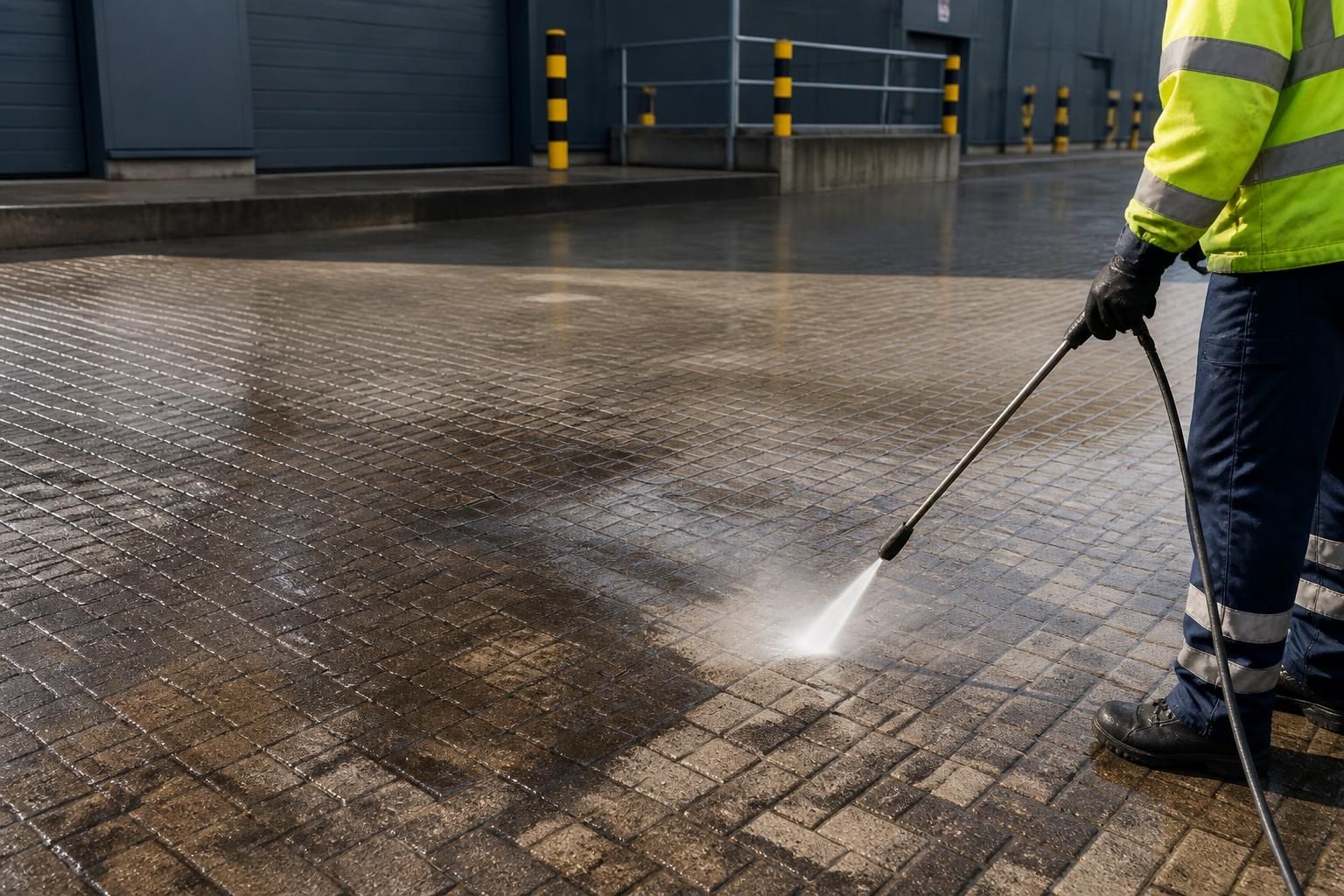
Hot-water pressure washing is often the most effective removal stage. Heated water improves the action of the degreaser and helps soften heavy oil deposits, while controlled pressure removes the loosened residue from the paving profile and joints. The pressure, nozzle type, temperature and working distance must be adjusted to the surface. Excessive pressure can erode jointing sand, damage weak concrete, strip coatings, mark natural stone or force contaminated water into surrounding areas. Cleaning should therefore proceed methodically rather than relying on the highest available pressure.
Steam cleaning is useful where controlled heat and lower water volumes are preferred. Steam can soften oily deposits and reduce the amount of rinse water required, making it suitable for detailed areas, covered locations and some sensitive surfaces. It is not automatically suitable for every material: sudden heat, prolonged application or trapped moisture may affect vulnerable stone, old pointing, sealants and surface coatings. The operator should use controlled passes and combine the steam with an appropriate detergent where the oil has penetrated deeply.
Poultice treatment may be required for porous or long-standing contamination. A poultice combines an absorbent medium with a suitable cleaning agent and is placed over the stain so that oil can be drawn out of the paving as the treatment works. This approach is particularly useful when surface washing removes the upper layer but a dark mark remains within the material. Several applications may be needed, and the area should be allowed to dry and assessed between treatments. Poultices must be matched carefully to the paving because unsuitable chemicals or absorbents can discolour stone, leave residues or affect the binder in manufactured paving.
The paving material affects the safest method:
- Concrete: Degreasing followed by hot-water pressure washing is commonly effective, although older or heavily porous concrete may need repeated treatment or a poultice. Weak, cracked or surface-scaled concrete requires reduced pressure.
- Block paving: Oil can migrate into joints and beneath individual blocks. Cleaning should protect the jointing material, and joint replenishment may be necessary after intensive washing. Blocks that remain heavily contaminated may need to be lifted and treated separately.
- Clay pavers: The surface may be durable but can have variable porosity and a finish that is altered by aggressive cleaning. A compatible detergent and controlled pressure should be tested first.
- Natural stone: Sandstone, limestone and other porous stones can absorb oil deeply and may react adversely to acidic or strongly alkaline products. Non-acidic, stone-compatible treatments, gentle agitation and careful rinsing are generally safer than aggressive chemicals.
- Asphalt: Oil can soften and weaken bituminous surfaces. Harsh solvents, excessive heat and aggressive pressure may worsen the damage, so the treatment must be conservative and focused on removing contamination without disturbing the binder.
Chemical selection requires particular care. Strong solvents or indiscriminate acids may remove oil but can damage paving, affect nearby vegetation, corrode metalwork and create hazardous runoff. A suitable product should be used in accordance with its safety data and manufacturer’s instructions, with attention to dilution, contact time, personal protective equipment and ventilation. Chemicals should never be mixed unless the manufacturer specifically confirms that combination is safe.
Runoff must be contained rather than washed into drains. Oil, detergent and contaminated sediment can pollute surface water and may breach site or environmental requirements if discharged without control. Drain covers, temporary bunding, wet vacuums, collection systems or other suitable measures can help contain wastewater. The correct approach depends on the site drainage layout and local requirements. Collected liquid and contaminated absorbents should be handled as controlled waste where applicable.
Repeat treatment is preferable to excessive force. A single aggressive pass can create permanent etching, pitting, colour variation or joint loss, while staged cleaning allows the operator to reassess the surface after each application. Residual shadowing may represent oil that has penetrated below the visible surface rather than a failure of the cleaning process. Where the paving has been chemically altered or physically damaged by the spill, complete visual restoration may not be possible without replacing affected sections.
After cleaning, the paving should be rinsed or vacuum-recovered as appropriate and allowed to dry before the result is assessed. If the surface is suitable, a compatible sealer may help reduce future oil penetration, but sealing should only take place after the paving is clean, dry and free from detergent residues. Sealers are not a substitute for spill control and may change the appearance or slip characteristics of some materials.
For commercial car parks, loading areas and service yards, the most reliable approach is to combine prompt spill response with planned maintenance. Regular removal of surface deposits prevents oil from building up in pores and joints, while inspection of vehicle bays, drainage points and high-traffic areas identifies contamination before it becomes embedded. Encanto Exterior Cleaning can assess the paving, select the appropriate combination of degreasing, steam cleaning, hot-water pressure washing or poultice treatment, and plan wastewater controls around the requirements of the site.
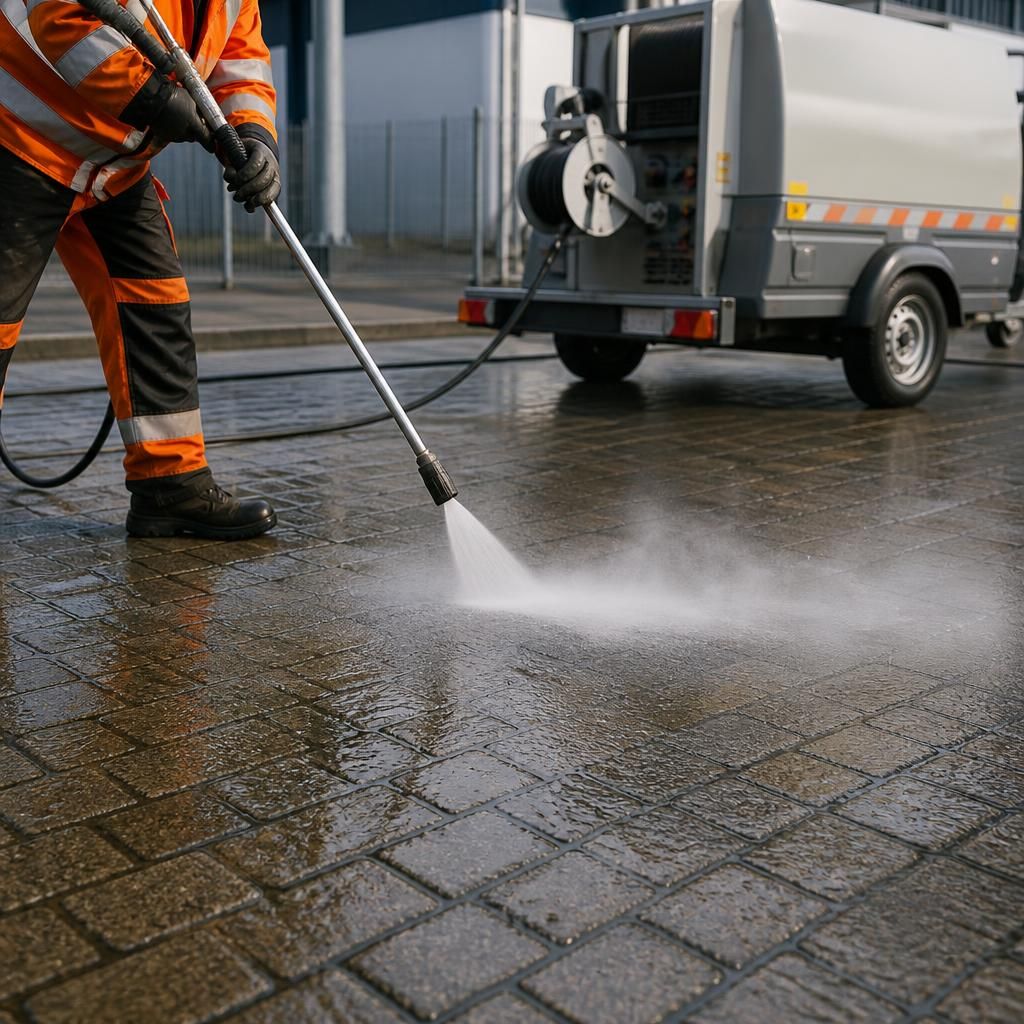
Hot-water pressure washing is usually the most effective finishing method for established oil stains on sound paved surfaces because heat softens the oil while controlled pressure removes the loosened residue from pores, joints and surface texture.
It should follow the application and agitation of a paving-compatible degreaser, rather than being used with water alone. Pressure, temperature, nozzle selection and working distance must be adjusted to the material: excessive force can strip jointing sand, damage weak concrete, mark natural stone or disturb asphalt. Wastewater should also be contained and recovered where it may carry oil, detergent or contaminated sediment towards drains.