
What environmental considerations should be taken into account when using chemical treatments for paving stain removal?
Chemical treatments for paving stain removal should be selected and applied to minimise harm to surrounding soil, plants, wildlife and watercourses. Use the least hazardous suitable product at the manufacturer’s recommended dilution, prevent contaminated runoff entering drains or surface water, protect nearby vegetation, and collect or dispose of residues in line with the product’s safety data sheet and UK environmental requirements.
Chemical treatments for paving stain removal should be chosen and used according to their environmental hazard, the paving material, the type of stain and the risk of contaminated runoff. The safest approach is to use the least hazardous effective product, at the lowest manufacturer-recommended concentration, while preventing residues from reaching soil, vegetation, drains, watercourses or nearby habitats.
Assess the site before selecting a treatment. Identify the stain first, as oil, diesel, organic growth, rust, paint and efflorescence may require different products. An unnecessary or overly aggressive treatment increases environmental risk and may damage the paving, joints or surrounding surfaces. Check whether the area drains to a surface-water system, foul sewer, soakaway, watercourse or uncontained ground. Note nearby planting, trees, ponds, wildlife habitats and areas where runoff could collect.
The paving material also affects the choice of chemical. Natural stone, concrete, clay pavers and resin-bound surfaces can react differently to acidic, alkaline or solvent-based products. An acid-based efflorescence remover, for example, may etch susceptible stone or affect cementitious joints, while a strong alkaline degreaser can alter some coatings or leave a high-pH residue. A small, inconspicuous test area should be treated first, with the result and any change in colour, texture or joint condition checked before wider application.
Review the product information before use. The label and safety data sheet should be checked for environmental hazards, aquatic toxicity, pH, transport and storage requirements, required personal protective equipment, spill response and disposal instructions. Product claims such as “biodegradable” or “eco-friendly” do not mean that unrestricted discharge is acceptable. A biodegradable product can still harm aquatic life, affect soil organisms or require controlled collection.
Where a suitable mechanical method can remove the contamination, it may reduce the quantity of chemical required. Controlled pressure washing, hot-water cleaning, steam cleaning, absorbent materials and surface agitation can often be used alongside a milder detergent. This does not remove the need to manage the resulting wastewater, but it can reduce chemical loading and the risk of damage to paving and vegetation.
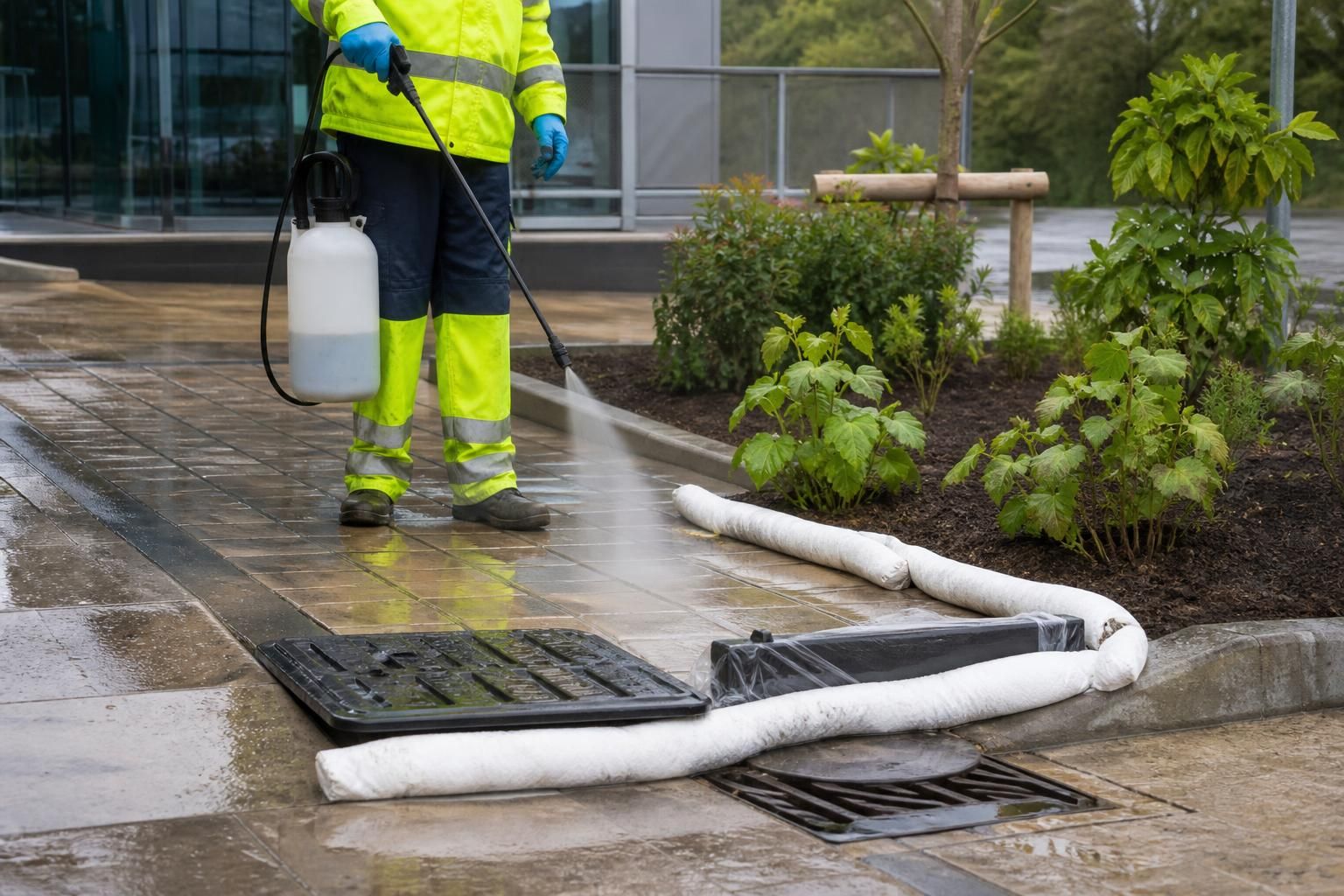
Prevent contaminated runoff. Before applying a chemical, protect or temporarily isolate nearby drains and identify where water will flow. Use drain covers, bunding, absorbent barriers, collection points or a wet vacuum where appropriate. Do not allow wash water, oil residues, acidic solutions, alkaline detergents or biocidal products to enter surface-water drains or watercourses. Surface-water systems commonly discharge with little or no treatment, so even a small-looking release can affect aquatic environments.
Any discharge to a foul sewer must also be considered carefully. Permission or trade-effluent approval may be required from the relevant sewerage provider, particularly where wastewater contains oils, elevated or low pH, solvents, suspended solids or other controlled substances. If the discharge route is uncertain, the wastewater should be contained and assessed rather than directed into the nearest drain. Local requirements and advice from the Environment Agency, the local authority and the relevant water company should be followed where applicable.
Protect soil, plants and wildlife. Chemical spray or overspill can scorch foliage, damage roots and alter soil conditions. Keep treatments away from planting beds, tree pits, grass, hedges and areas used by animals. Where practical, cover or temporarily wet and shield vulnerable vegetation, but do not allow protective coverings to trap chemical residue against plants. Avoid applying treatments in strong wind, heavy rain or when rainfall is likely to carry the product beyond the work area.
Biocidal treatments for algae, moss or other organic growth require particular care. The dead material and treated residue should be removed rather than left to wash into drains or soil. Follow the product instructions on application, contact time and rinsing, and do not use a biocide simply because organic staining is present if physical removal is sufficient.
Control the quantity and concentration. Measure dilution accurately and never mix products unless the manufacturer specifically permits it. Stronger is not necessarily more effective: excessive concentration can increase toxicity, create hazardous fumes or damage paving without improving stain removal. Chemical residues should not be left on the surface longer than instructed. Rinse using the minimum practical volume of water, directing the rinse water into the agreed containment or recovery system.
Acidic and alkaline products should not be neutralised improvisationally. Adding another chemical can generate heat, fumes or an uncontrolled reaction. If neutralisation is required, it should be carried out only by trained personnel using the method stated in the safety data sheet, with suitable monitoring and containment. The resulting material still needs to be handled and disposed of correctly.
Manage oils and collected residues as controlled waste where necessary. Oil-impacted absorbents, sludge, spent filters, contaminated soil and recovered wash water should be kept in suitable, labelled containers and prevented from entering drainage systems. Waste should be assessed and transferred through an appropriately authorised waste carrier to a suitable facility. Keep documentation such as waste transfer information, product details and disposal records for commercial work.
Storage and transport are environmental considerations as well. Containers should be sealed, clearly labelled and kept away from drains, heat, incompatible substances and areas vulnerable to impact. Store liquids within suitable secondary containment and inspect containers for leaks. A spill kit should be available, with staff knowing how to stop the source, protect drains, recover the material and report the incident.
Use a controlled method statement. For commercial and industrial sites, the work plan should record the stain and surface assessment, selected product, dilution, weather conditions, drainage controls, protection for vegetation, wastewater arrangements, emergency measures and final inspection. COSHH controls address risks to people, while the environmental assessment must also consider releases to land and water. Staff should understand the product instructions and know that work must stop if runoff cannot be controlled.
After treatment, inspect the paving, joints, adjacent surfaces and drainage protection before reopening the area. Recover visible residue, remove temporary drain controls only when there is no remaining contaminated flow, and confirm that collected wastewater and solid waste have been dealt with through the planned route. For recurring oil or staining problems, correcting the source, improving spill control and scheduling routine maintenance is usually more environmentally responsible than repeatedly applying stronger chemicals.
In practice, environmentally responsible stain removal is a combination of accurate diagnosis, minimal chemical use, protection of drainage and ecology, controlled wastewater recovery and compliant waste disposal. Where the site presents uncertain drainage, sensitive habitats or a significant spill, seek advice from the relevant regulator, water company or an appropriately qualified environmental professional before treatment begins.
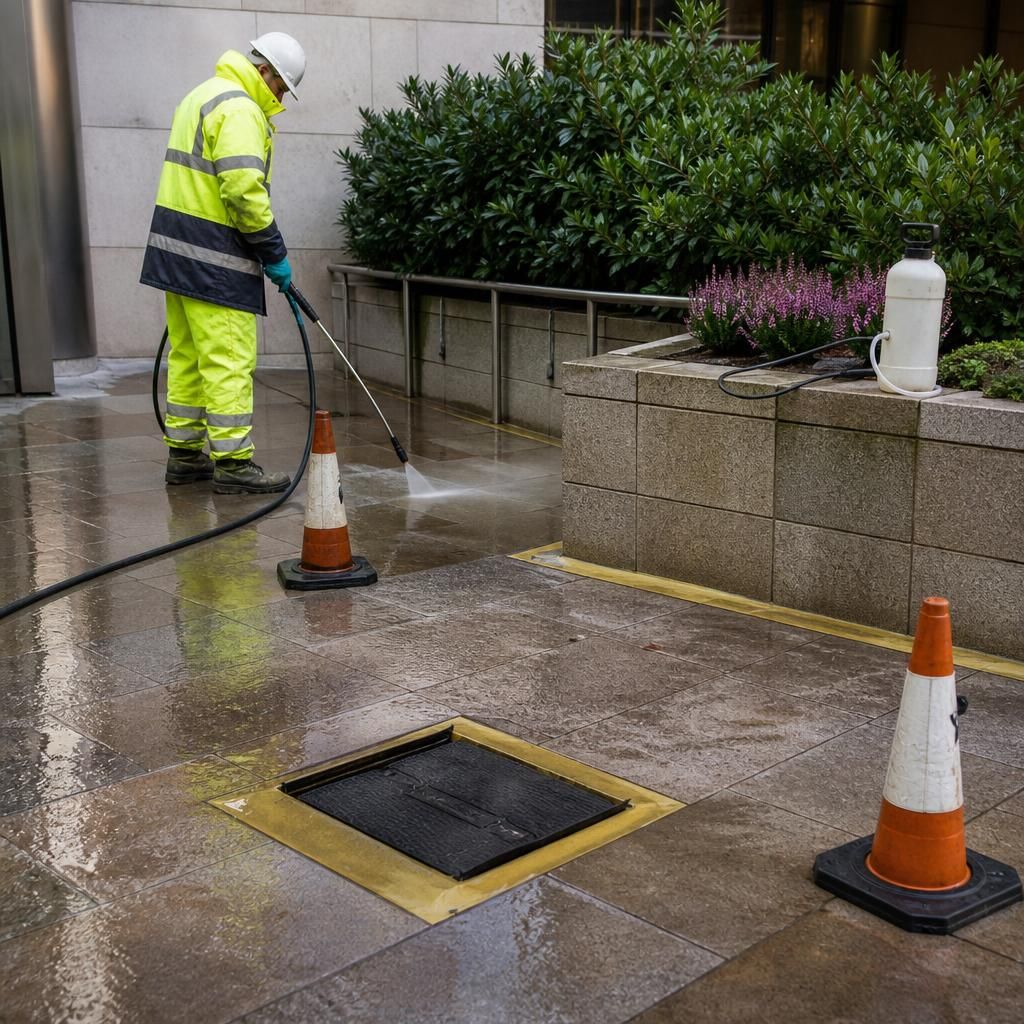
Preventing contaminated runoff is one of the most important environmental controls when using chemical treatments to remove paving stains. Before work begins, identify the drainage route and protect nearby drains, soil, planting and watercourses with suitable covers, bunding or collection equipment.
Collect used solution, rinse water, oil residues and loosened sludge rather than allowing them to flow away. Do not assume that a product labelled “biodegradable” or “eco-friendly” can be discharged without control; it may still harm aquatic life or affect soil conditions. Follow the product’s safety data sheet and the site’s agreed wastewater and waste-disposal procedures.
Discuss Environmentally Responsible Paving Stain Removal
Discuss your paving stain removal requirements with Encanto Exterior Cleaning so we can assess the surface, drainage and environmental controls before treatment begins. We can agree a practical cleaning and wastewater-management plan for your site.