
What are the potential risks and challenges involved in the removal of paving oil, stains, and efflorescence, and how can they be mitigated?
Removing paving oil, stains and efflorescence can damage the surface, spread contamination, create slip or run-off hazards, and leave visible patching if unsuitable methods are used. These risks are mitigated through material assessment, controlled pressure or steam cleaning, compatible treatments, test patches, appropriate protective equipment and responsible collection or disposal of wash water.
Removing paving oil, stains and efflorescence involves more than applying a cleaning product or increasing water pressure. The main risks are surface damage, spreading contamination, chemical incompatibility, visible patching, slip hazards and uncontrolled wash-water discharge. These risks are mitigated by identifying the paving material and stain first, carrying out a discreet test patch, selecting a compatible treatment, controlling pressure and dwell time, protecting surrounding areas, and collecting or managing run-off responsibly.
Surface damage from excessive pressure
High-pressure cleaning can erode the face of concrete, remove jointing material, fracture weak edges and create etching or tiger-striping. Sandstone and other porous natural stones are particularly vulnerable because their surface can be softer, weathered or unevenly bonded. Pressure can also drive oil deeper into porous paving rather than removing it, especially where the surface has already deteriorated.
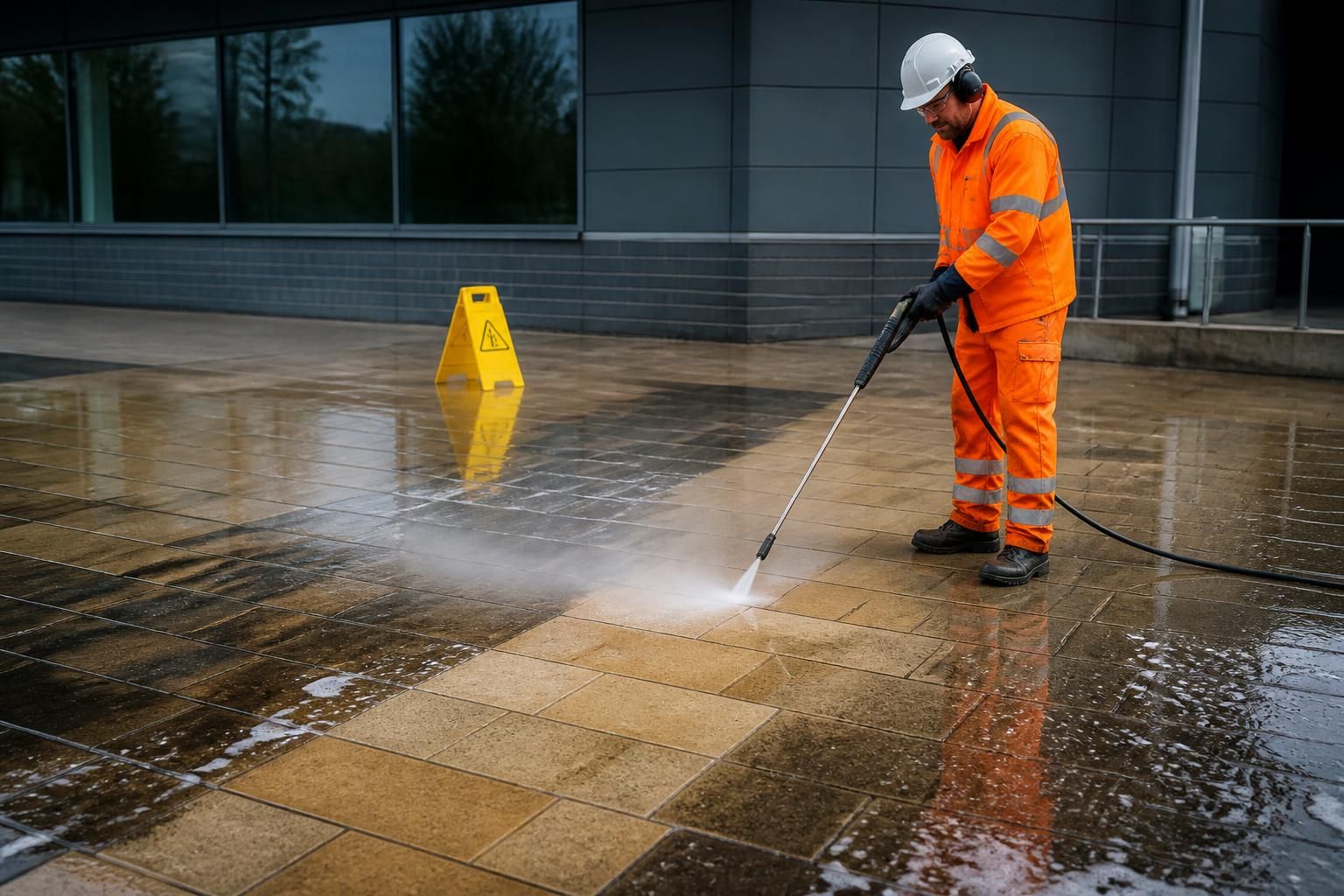
The operator should assess the paving’s condition, construction and drainage before cleaning. Pressure, nozzle selection, temperature and working distance should be adjusted to suit the surface rather than the stain alone. Fan-pattern nozzles, controlled passes and a measured pre-wetting or rinsing process can help reduce marking. Fragile, polished, painted, resin-bound or jointed surfaces may require low-pressure cleaning, steam cleaning or a carefully selected chemical treatment instead.
Chemical incompatibility and over-treatment
Oil removers, alkaline degreasers, acidic efflorescence treatments and biocidal products do not have the same purpose. An unsuitable product may bleach or darken paving, attack cement-based joints, corrode nearby metal, damage sealers or alter the texture of natural stone. Acidic products are especially unsuitable for acid-sensitive materials such as limestone, some concrete finishes and certain manufactured paving products.
Mitigation starts with identifying the material and confirming the likely source of the mark. Product instructions, safety data and manufacturer guidance should be checked before use. A small test area should be assessed for colour change, surface texture, joint stability and residue before wider application. Chemicals should be diluted accurately, kept within their recommended dwell time and prevented from drying on the surface. Combining products is unsafe unless compatibility has been confirmed; residues should be thoroughly rinsed or removed in accordance with the treatment requirements.
Misdiagnosing efflorescence
Efflorescence is a deposit of soluble salts brought to the surface by moisture movement. It commonly appears as a pale, powdery or crystalline bloom, but similar marks may be caused by cement residue, hard-water deposits, failed sealer, algae or ongoing dampness. Treating the wrong problem can leave the appearance unchanged or make the underlying issue worse.
Dry brushing or gentle removal may be appropriate for light, loose efflorescence, while more established deposits may need a compatible specialist treatment. The source of moisture should also be considered, including defective drainage, retained water, damp substrates or recent installation. Removing the visible salts without addressing continuing moisture movement may result in recurrence. Aggressive acid cleaning can damage the paving and joints, so it should never be treated as a universal solution.
Oil migration and recontamination
Oil can penetrate below the visible surface, particularly on unsealed concrete, block paving and porous stone. A superficial clean may make the area appear improved temporarily while deeper oil later returns to the surface. Pressure washing without suitable degreasing can also spread the contamination across adjoining paving, kerbs, walls and drainage channels.
Loose oil should be contained and removed where possible before wet cleaning begins. Degreasers or poultice-style treatments may be selected according to the depth and age of the contamination, with sufficient dwell time for the product to work without drying. Cleaning should proceed from less contaminated areas towards the main affected zone, using controlled agitation and extraction or recovery equipment where appropriate. Severely contaminated or repeatedly stained paving may require more than one treatment, and the expected outcome should be agreed before work starts.
Visible patching and inconsistent results
Cleaning only the centre of a stain can leave a noticeable contrast between treated and untreated paving. Over-cleaning a small area may produce a lighter patch, while uneven pressure, inconsistent chemical application or differences in weathering can create bands and marks. Removing a sealer or surface film from one section can also change its appearance relative to the surrounding area.
Where practical, the cleaning boundary should follow a natural break such as a paving edge, joint line or full bay rather than stopping in the middle of an open surface. A test patch helps establish how much improvement is achievable and whether the surrounding surface will need blending or wider cleaning. Photographs and an agreed inspection point are useful for recording the pre-existing condition and setting realistic expectations, particularly on older or colour-variation-prone paving.
Joint, edge and drainage damage
Water and chemicals can dislodge jointing sand, weaken mortar joints and expose gaps around channels, kerbs and paving edges. Open joints can allow movement, encourage weed growth and increase water penetration beneath the paving. Blocked or overwhelmed drains may cause dirty water to pond or flow onto neighbouring property.
Joints, thresholds, channel drains, expansion joints and vulnerable edges should be inspected and protected before cleaning. Run-off should be directed towards suitable collection points rather than allowed to cross clean areas or enter uncontrolled drainage. After cleaning, the surface should be checked for joint loss, standing water, displaced blocks and damage to adjacent fittings. Re-sanding or local repairs may be necessary, but these should be carried out only after the paving is suitably clean and dry.
Slip, trip and exposure hazards
Wet paving, oil residues, loose deposits, hoses and electrical equipment create immediate risks for operatives, pedestrians, vehicles and site users. Chemical splashes may harm skin and eyes, while aerosols and vapour can be problematic in enclosed or poorly ventilated areas. Commercial sites also present additional hazards around loading areas, car parks, entrances and active construction zones.
Work should be planned around pedestrian and vehicle movements, with suitable barriers, warning signs and controlled access. Operatives should use task-appropriate personal protective equipment, including gloves, eye or face protection, protective footwear and respiratory protection where the risk assessment requires it. Equipment must be used in line with its instructions, and chemical containers should remain labelled and secure. Cleaned areas should not be reopened until they are safe, excess water has been removed and any residual slipperiness has been assessed.
Environmental and run-off risks
Wash water may contain oil, suspended solids, detergent, salts and other contaminants. Discharging it to a surface-water drain, watercourse, soil or neighbouring property can cause pollution and may breach site or regulatory requirements. Chemical treatment can also affect vegetation, façade materials and drainage infrastructure if overspray or run-off is not controlled.
A site-specific method statement should identify where water will flow and how it will be contained, filtered, recovered or disposed of. Spill kits, drain covers, bunding, wet vacuums and recovery systems may be appropriate depending on the site and contamination. Chemicals should be used only where necessary and in the lowest effective concentration, with surrounding planting and finishes protected from splash and overspray. Disposal arrangements should follow the relevant site procedures and legal requirements rather than relying on dilution or uncontrolled discharge.
Weather, access and operational constraints
Rain can dilute products and increase run-off, while strong wind can carry spray or chemical mist onto vehicles, façades, planting and pedestrians. Cold conditions may slow drying or create icy surfaces, and intense sun can cause a treatment to dry before it has worked evenly. Restricted access, parked vehicles, delivery schedules and limited drainage can make a technically suitable method unsafe or impractical.
Cleaning should be scheduled for conditions that allow controlled application, safe access and adequate drying. Vehicles, stock, signage, vents and sensitive building elements should be moved or protected where possible. On occupied commercial premises, the work sequence should maintain safe routes and minimise disruption without compromising containment or treatment quality.
A controlled approach to risk mitigation
- Inspect and identify: establish the paving type, age, condition, jointing, drainage, sealer and likely cause of the mark.
- Assess the site: identify pedestrians, vehicles, nearby materials, vegetation, drainage routes, electrical hazards and areas requiring protection.
- Test the method: apply the proposed pressure, steam setting or chemical treatment to a discreet area and review the result after rinsing and drying.
- Use the least aggressive effective method: increase treatment strength only when the surface and contamination justify it.
- Control the work area: contain spray and run-off, protect adjacent surfaces, maintain exclusion zones and keep equipment and hoses organised.
- Inspect and make safe: check for remaining contamination, residue, joint loss, colour variation, standing water and slip risk before handing the area back.
Professional removal cannot guarantee that every old oil mark or salt deposit will disappear, particularly where contamination has penetrated deeply or the paving has already been chemically or mechanically damaged. A proper assessment and test patch make those limitations clear before full treatment. They also provide the best basis for choosing a method that improves appearance while preserving the paving, protecting people and controlling environmental risk.
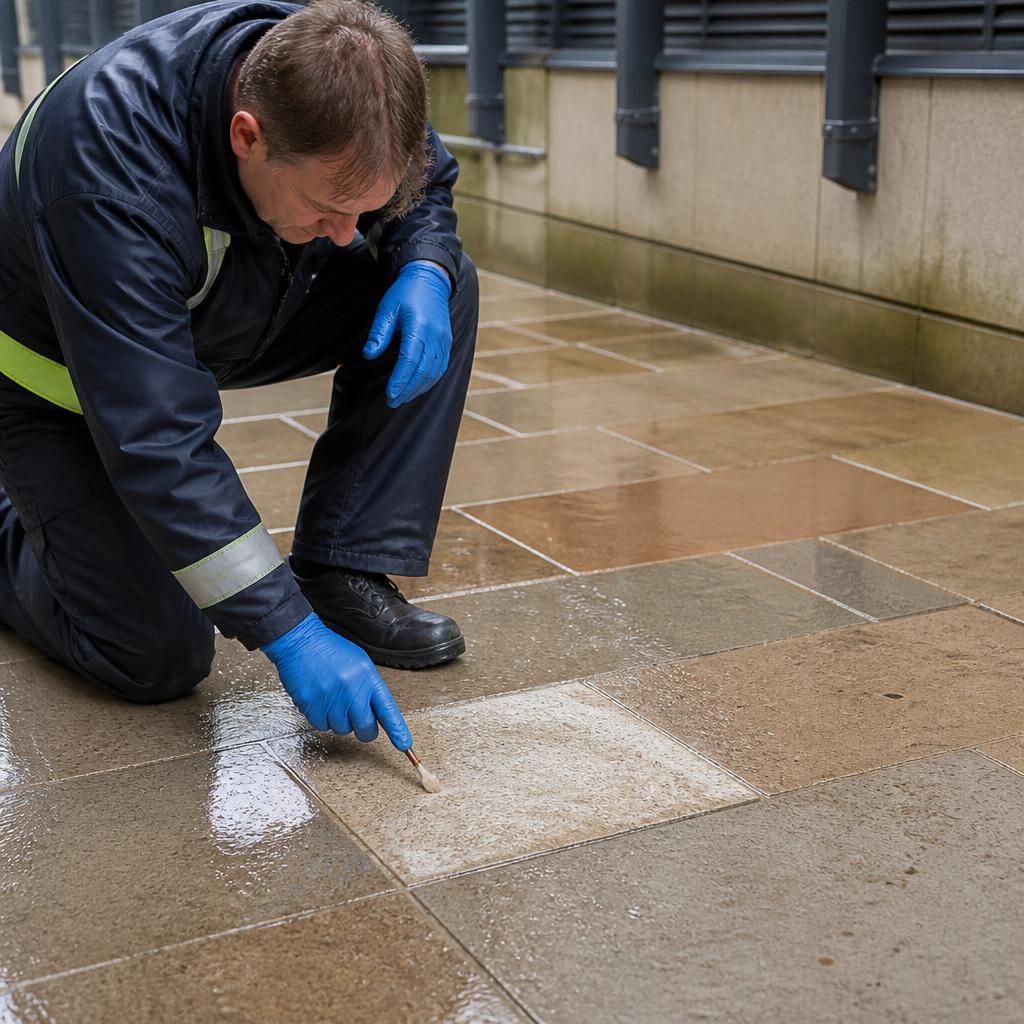
A discreet test patch is one of the most effective ways to reduce the risk of damage when removing paving oil, stains or efflorescence. It shows how the surface responds to the proposed pressure, steam setting or chemical treatment before the method is used across a larger area.
The test area should be rinsed or recovered as it would be during the main clean, then assessed after drying. Check for colour change, etching, loosened joints, residue and any visible contrast with the surrounding paving. If the result is unsuitable, the method can be adjusted or a less aggressive treatment selected without affecting the whole surface.
Arrange a Professional Paving Stain Assessment
Arrange a professional paving stain assessment to identify the paving material, contamination and potential risks before treatment begins. Encanto Exterior Cleaning can recommend a controlled removal method and confirm suitable measures for protecting surrounding surfaces and managing run-off.