
What are the environmental and safety considerations when choosing paving oil, stain, and efflorescence removal methods?
Choose paving oil, stain and efflorescence removal methods according to the surface, stain type and risk of chemical or contaminated-water run-off. Safer practice involves appropriate PPE, controlled application, protection of drains and nearby vegetation, and thorough recovery or treatment of wash water by trained professionals.
The safest and most environmentally responsible method for removing paving oil, stains and efflorescence is the least aggressive treatment that will work on the particular surface and contamination. Selection should consider the paving material, the age and depth of the stain, nearby drains and watercourses, the risk of contaminated run-off, and the people who may be exposed during the work. Effective control normally combines a site assessment, a small test area, suitable personal protective equipment (PPE), controlled use of chemicals and pressure, and proper recovery or disposal of wash water and removed residue.
Assess the surface and contamination first
Oil, organic staining, rust, paint, tyre marks and efflorescence do not respond to the same treatment. Oil may require an absorbent poultice, a water-based or solvent-based degreaser, hot-water cleaning or a combination of methods. Efflorescence is a mineral salt deposit and is usually approached with dry brushing, low-pressure rinsing or a carefully selected acidic treatment. Using a strong chemical simply because a mark is persistent can etch concrete, damage jointing material, lighten coloured paving or alter the appearance of natural stone.
The paving should be identified before treatment. Concrete, clay brick, sandstone, limestone, granite, porcelain and resin-bound surfaces differ in porosity, chemical resistance and tolerance to pressure. Some stones contain minerals that react with acids, while cement-based joints may deteriorate if they are repeatedly saturated or exposed to unsuitable cleaning products. Sealants, coatings and pointing should also be checked, as they may soften, discolour or lose adhesion.
A small, inconspicuous test area is an important safety control. It helps establish the required dwell time, pressure, dilution and rinsing method without committing the whole surface to an unsuitable treatment. The test should be allowed to dry before the finish and any colour change are assessed.
Control chemical exposure
Cleaning products should be selected for the specific contaminant and used strictly in accordance with the product information and safety data sheet. This includes observing the stated dilution, application method, contact time, ventilation requirements, storage instructions and first-aid measures. Chemicals should never be mixed unless the manufacturer expressly permits it. In particular, combining acidic products with chlorine-based products can release hazardous gases.
Acidic treatments can be effective against mineral deposits, but they may attack cement, carbonate-based stone, metal fittings, vegetation and aquatic life if they are misapplied or allowed to enter drainage systems. Alkaline degreasers can irritate or burn skin and eyes, and strong products may affect coatings or coloured surfaces. Solvent-based products create additional risks from vapour, flammability and contamination of soil or drainage. Where a lower-hazard, water-based or mechanical method can achieve the required result, it is generally preferable.
Operators should wear PPE appropriate to the product and process. This may include chemical-resistant gloves, eye or face protection, protective clothing and suitable footwear. Respiratory protection may be required for certain products or poorly ventilated areas, but it must be correctly selected, fitted and maintained. PPE is a final control rather than a substitute for safe handling, controlled application and good ventilation.
Prevent contaminated run-off
Water used to clean oil and stained paving can carry hydrocarbons, suspended solids, detergents, dissolved salts and chemical residues. It should not be allowed to flow into surface-water drains, watercourses, planted areas or neighbouring property. Before work begins, drains should be identified and protected, and the surrounding area should be checked for slopes, low points and porous ground where contaminated liquid could collect.
Suitable controls may include drain covers, bunding, temporary barriers, absorbent materials, wet vacuums, collection tanks and controlled low-volume rinsing. Removed sludge, absorbent granules and contaminated materials should be collected rather than swept into a drain. Recovered water must be handled in accordance with the site drainage arrangements and applicable environmental requirements. Discharge to a foul sewer may require permission from the relevant water company, while discharge to surface water or land is normally unsuitable for contaminated wash water.
Where collection is not practical, the cleaning method should be redesigned before work starts. This may involve using less water, applying a poultice, carrying out dry removal, using a suitable absorbent or arranging a specialist waste solution. Waste should be described accurately and transferred through an appropriate, authorised route where required. Records of the products used, waste removed and disposal arrangements help demonstrate proper control on commercial sites.
Manage pressure, heat and equipment risks
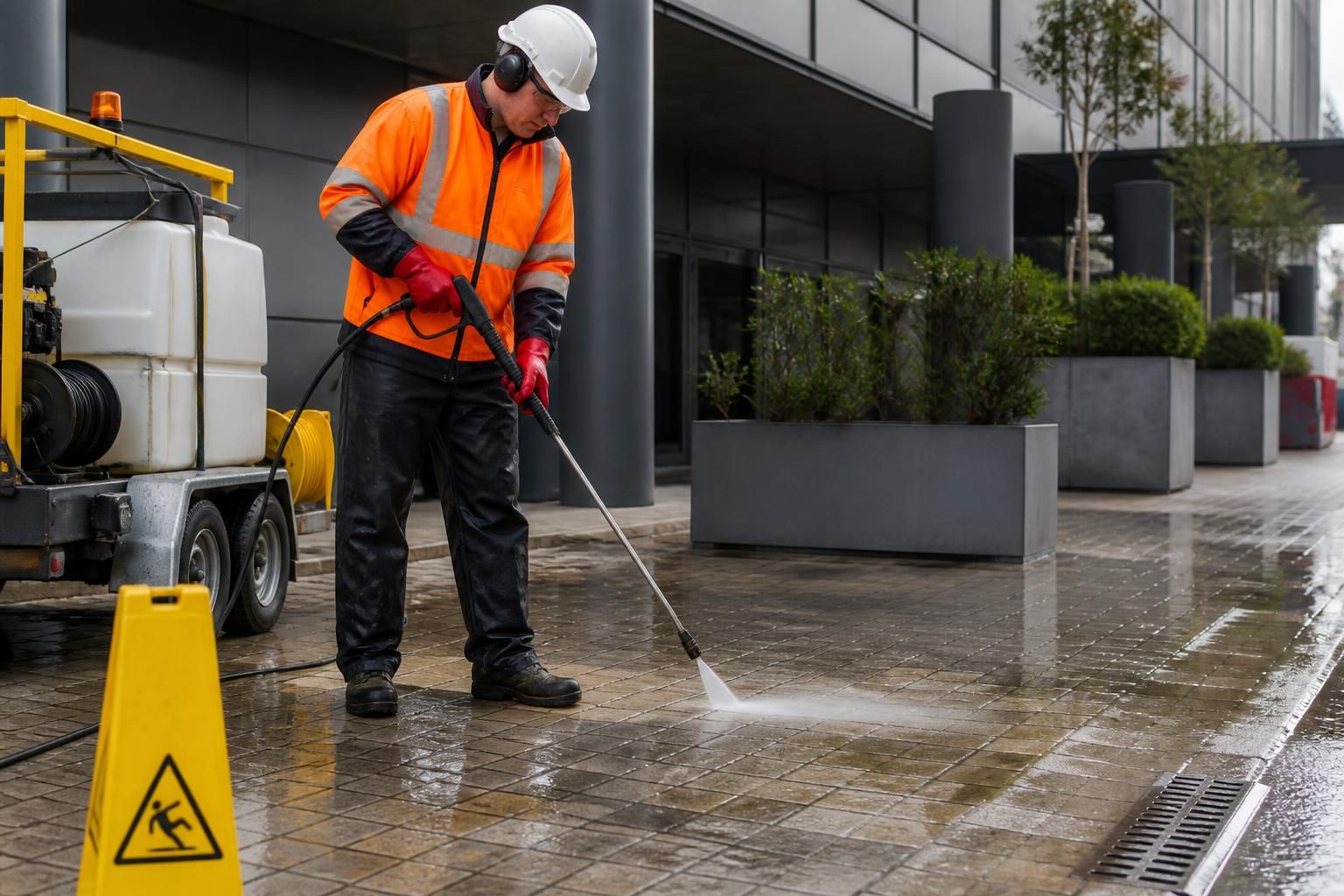
Pressure washing can remove surface dirt efficiently, but excessive pressure or an unsuitable nozzle can strip jointing, expose aggregate, damage friable brick and sandstone, drive oil deeper into porous paving or spread contamination beyond the work area. The pressure should be matched to the substrate, with the operator maintaining a safe distance and using controlled passes. High-pressure water should not be directed at people, electrical equipment, fragile pointing, vents or unprotected openings.
Steam and hot-water cleaning can improve the removal of greasy deposits while reducing the need for aggressive chemicals. However, heat can soften some coatings, damage sealants, create burn hazards and increase the risk of aerosolised contaminated material. Hoses and cables should be routed to prevent trips, equipment should be inspected before use and operators should maintain a clear exclusion zone. Work at height or around vehicle routes requires additional planning, barriers and access controls.
Appropriate signage and segregation are essential on car parks, loading areas, pavements and shared commercial premises. The area should remain closed until the surface is safe to walk or drive on, with no unacceptable residue, standing water or slip hazard. Cleaning around vehicles, pedestrians and building entrances may need to be scheduled for a quieter period.
Protect vegetation, buildings and surrounding property
Pre-wetting and shielding nearby vegetation can reduce accidental contact, but this does not make chemical overspray safe. Plants should be protected from mist, splashes and contaminated run-off, and any product that reaches foliage should be dealt with promptly in line with the product guidance. Air movement should be considered when using sprays, particularly near occupied buildings, ventilation intakes and neighbouring premises.
Windows, painted façades, door thresholds, metalwork, drainage fittings and decorative finishes may require masking or physical protection. Test rinsing should confirm that residues are not being driven into porous walls or adjacent materials. After treatment, the paving should be rinsed or neutralised only as appropriate for the product and substrate; excessive rinsing can create more contaminated water without improving the result.
Use a controlled, proportionate process
- Inspect and identify the paving, joints, coatings, drainage and nearby sensitive areas.
- Classify the contamination and determine whether dry, mechanical, thermal or chemical cleaning is most suitable.
- Review product safety information and complete a site-specific risk assessment and method statement where required.
- Test the proposed process on a discreet area and confirm the finish after drying.
- Protect drains, vegetation, building fabric, vehicles and members of the public before application.
- Apply the minimum effective amount of product at the correct dilution and contact time.
- Use controlled pressure and rinsing, preventing spray and run-off from leaving the work zone.
- Recover residues and wash water, then inspect the area for remaining contamination, damage and slip risks.
- Remove barriers only when the surface and surrounding access routes are clean, dry and safe.
For commercial and industrial sites, the method should also reflect the site’s environmental policy, drainage consents, chemical storage arrangements, emergency procedures and requirements under the Control of Substances Hazardous to Health (COSHH). A competent contractor should be able to explain why a treatment has been selected, what controls will be used and how contaminated waste will be managed, rather than relying on a standard chemical or pressure-washing routine.
Professional assessment is particularly important where oil has penetrated deeply, efflorescence is recurring, paving is historic or fragile, drainage is complex, or the work is close to a watercourse. Recurring efflorescence may indicate moisture movement or a defect behind the paving, so cleaning alone may provide only a temporary improvement. Likewise, heavily contaminated oil residues may need staged treatment to prevent spreading the pollutant. The right method protects the paving, people and surrounding environment while achieving a cleanable, maintainable surface.
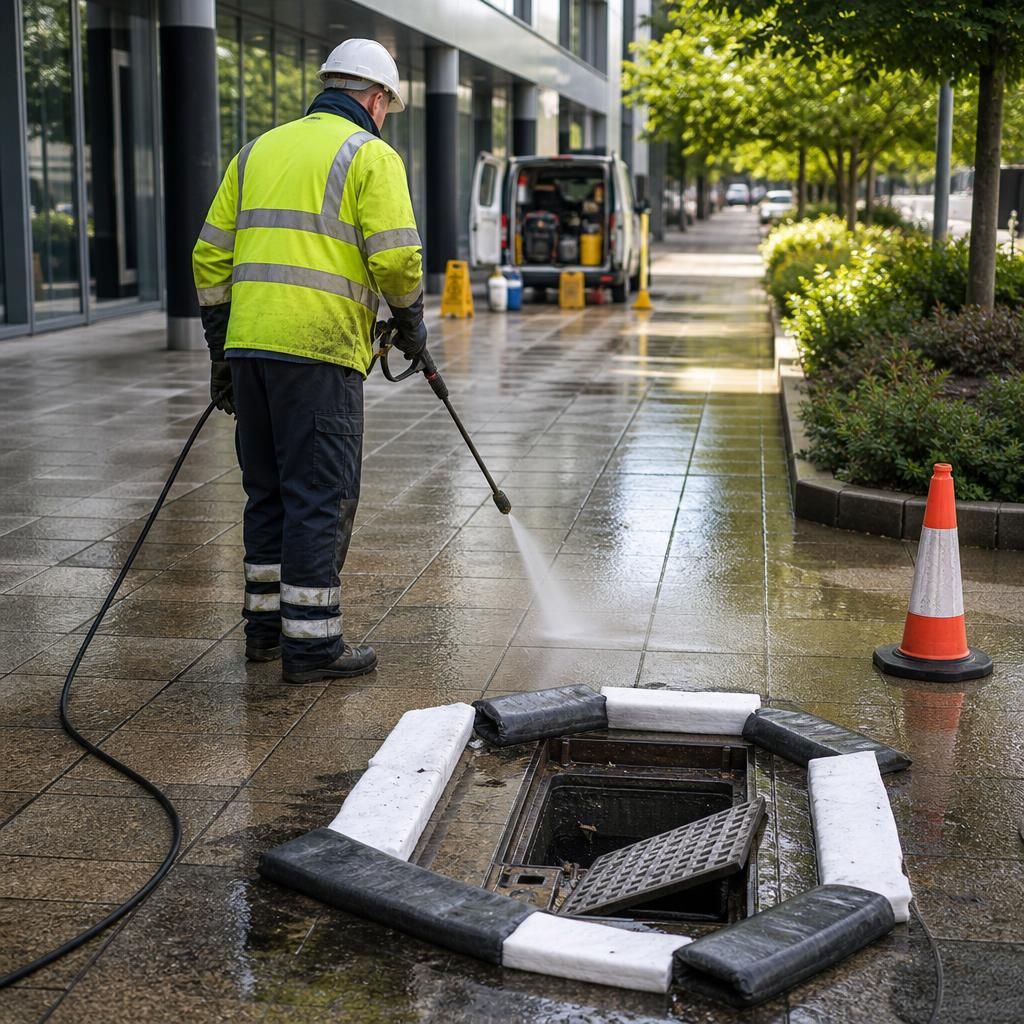
Choosing a paving oil, stain or efflorescence removal method means balancing cleaning performance with risks to people, paving and the surrounding environment. The preferred approach is the least aggressive method that will remove the contamination, supported by surface testing, suitable PPE, protected drains and controlled recovery of contaminated wash water.
Oil residues, detergents, dissolved salts and chemical cleaners must not be allowed to enter surface-water drains, planted areas or watercourses. Before work starts, identify drainage routes, isolate the cleaning area and use measures such as drain covers, bunding, absorbent materials and wet vacuums where necessary. Pressure, heat and chemical strength should be matched to the paving, as excessive force or unsuitable products can damage joints, coatings, natural stone and surrounding building materials.
Discuss Safe Paving Oil, Stain and Efflorescence Removal
Contact Encanto Exterior Cleaning to discuss a safe, proportionate method for removing paving oil, stains or efflorescence from your site. We can assess the surface, drainage and contamination risks before recommending the appropriate treatment and controls.