
What are the best practices for removing stains from sandstone pavers?
The best practice for removing stains from sandstone pavers is to identify the stain first, then use a suitable pH-neutral cleaner and gentle agitation, testing it on an inconspicuous area before treating the full surface. Avoid strong acids, abrasive methods and excessive pressure, as sandstone is porous and can be etched or damaged; ingrained oil, rust, organic staining or widespread discolouration should be assessed and treated professionally.
The best practice for removing stains from sandstone pavers is to identify the contaminant first, then use the least aggressive effective treatment. Begin with a pH-neutral or sandstone-compatible cleaner, soft agitation and controlled rinsing, testing every product on an inconspicuous area before treating the full surface. Sandstone is porous and can absorb oil, rust, organic matter and other contaminants, while strong acids, abrasive cleaning and excessive pressure may etch the surface, remove its natural finish or cause permanent colour variation.
Assess the sandstone before cleaning
Check whether the pavers are natural sandstone, sealed or previously treated, and inspect for loose particles, flaking, open joints, cracks and areas of delamination. The condition of the stone affects the cleaning method. Weathered or friable sandstone may not tolerate the same pressure or chemical treatment as dense, well-maintained paving. Identify whether the mark is a surface deposit or has penetrated the stone, and consider whether surrounding areas have faded or weathered differently.
Stain identification is important because a treatment that works on organic growth may be ineffective against oil, and an acidic product used on rust or cement residue can damage the sandstone. Common causes include cooking or vehicle oils, grease, rust, leaf tannins, moss and algae, bird deposits, paint, chewing gum, cement residue and efflorescence. Photographs, the location of the stain and its appearance when wet can help with the initial assessment, but heavily ingrained or unidentified staining should be assessed by an experienced cleaning contractor.
Use a controlled cleaning process
- Remove loose debris. Sweep the paving with a soft brush and clear organic matter from joints. Do not use wire brushes or metal scrapers, which can scratch the surface and leave metallic marks.
- Carry out a small test. Apply the proposed cleaner to a discreet area and allow the test section to dry fully. Check for colour change, whitening, roughness, etching, tide marks or joint damage before proceeding.
- Pre-wet where appropriate. Lightly dampening absorbent sandstone can reduce rapid uptake of some water-based cleaning solutions. The correct approach depends on the product and the condition of the paving, so follow the product instructions.
- Apply a compatible cleaner. Use a product specifically suitable for natural stone and the identified stain. Keep the treatment controlled rather than flooding the area, particularly near walls, drainage points and unprotected joints.
- Agitate gently. Work with a soft nylon or natural-fibre brush using overlapping strokes. Allow the cleaner to dwell only for the period recommended by the manufacturer and prevent it from drying on the stone.
- Rinse and recover the wastewater. Rinse thoroughly using controlled low-to-moderate pressure and remove suspended dirt and chemical residue. Dirty water should not be allowed to run into planted areas, watercourses or surface-water drains without suitable controls.
- Inspect after drying. Sandstone can look different while wet, and some stains become more apparent as moisture evaporates. Repeat a compatible treatment only when necessary; repeated aggressive cleaning can be more harmful than a small residual mark.
Choose the treatment according to the stain
Oil and grease: Fresh oil should be absorbed promptly with an inert absorbent material rather than rubbed into the stone. Once excess oil has been removed, use a stone-safe degreasing product or poultice designed to draw contamination from porous surfaces. Poultice treatments may need time to work and must be removed carefully. Solvent-based products should not be used without confirming that they are suitable for the sandstone, existing sealer and surrounding materials.
Organic staining: Leaves, moss, algae and bird deposits may leave brown, green or dark marks. Remove the source and use a compatible biocidal or organic-stain treatment where appropriate. Keep the solution off nearby planting, painted surfaces and metalwork, and rinse according to the product guidance. Physical removal alone may not address staining that has penetrated the pores.
Rust: Rust removal requires particular care. Some rust removers are acidic and can attack sandstone, especially where the stone contains minerals that react with acids. Use only a product expressly approved for the specific natural stone, and test it first. If the rust originates from fixings, furniture, drainage components or contaminated soil, remove or isolate the source as part of the treatment.
Paint, cement and mortar residue: Avoid chiselling, aggressive scraping and indiscriminate acid washing. Hardened deposits can take the surface of the stone with them when removed mechanically. A specialist may combine careful softening, localised mechanical work and controlled rinsing, depending on the age of the residue and the strength of the sandstone.
Efflorescence: White crystalline deposits are usually associated with soluble salts moving through masonry or bedding materials. Brush off dry, loose deposits with a soft brush and investigate moisture movement before applying chemicals. Acidic treatment is not automatically suitable for sandstone and can create etching or colour change. Persistent efflorescence may return unless the underlying water ingress, drainage or jointing issue is addressed.
Control pressure and protect the surface
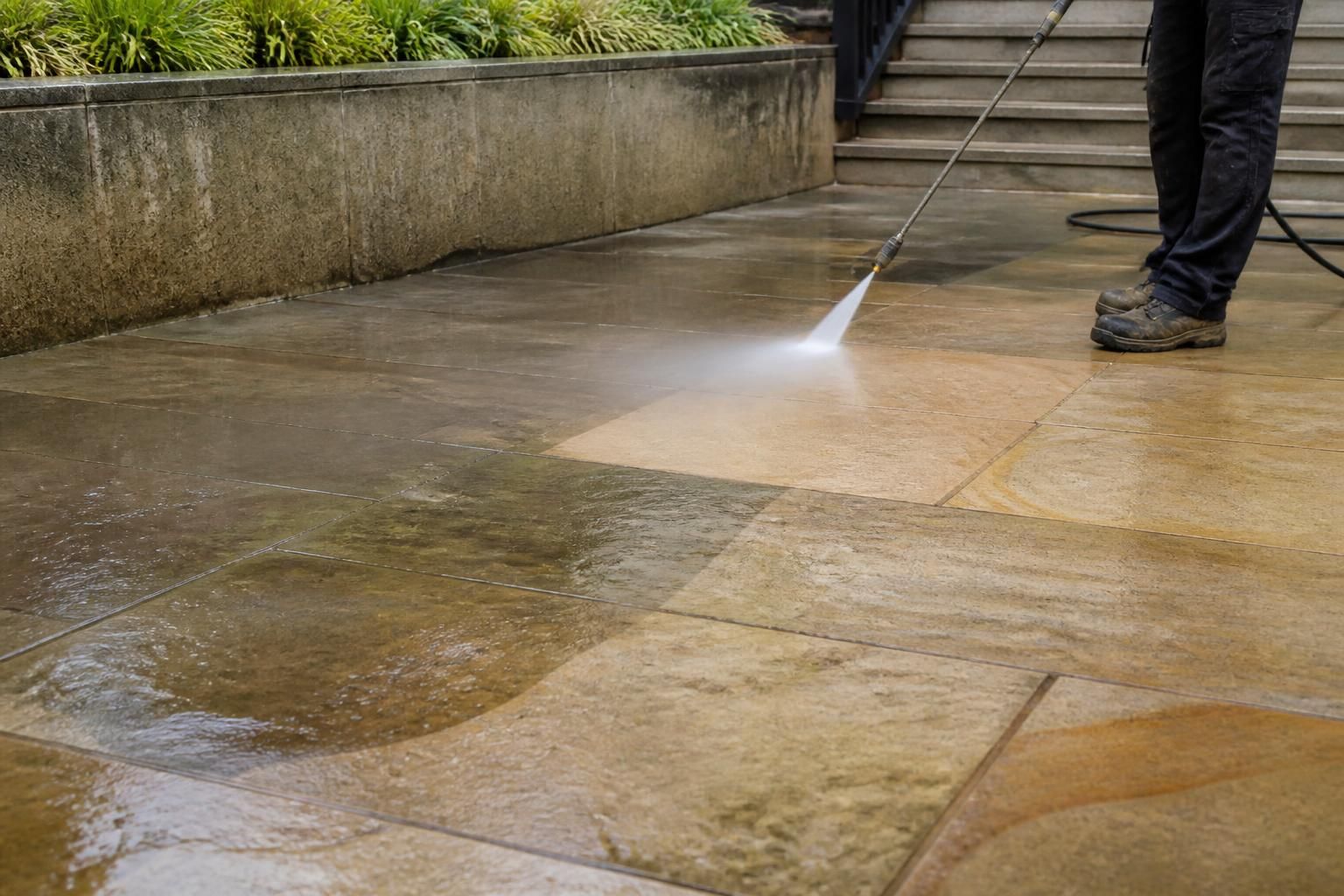
Pressure washing can be suitable for some sandstone paving, but the equipment must be adjusted to the condition and profile of the stone. Use the lowest effective pressure, maintain a consistent distance and avoid concentrating the jet on one point. A wide fan pattern is generally less aggressive than a narrow jet. Do not direct high pressure into open joints, cracks, edges or areas of friable stone, as this can dislodge jointing material and drive water deeper into the paving.
Rotary cleaning equipment should only be used where the sandstone can tolerate it and where the operator can control splash, pressure and dwell time. Abrasive blasting, grinding pads, wire brushes and harsh scouring powders are unsuitable for most decorative or weathered sandstone. These methods can create visible tracks, alter the texture and make the affected area absorb moisture and staining differently from the surrounding paving.
Consider sealing only after cleaning
A breathable, natural-stone-compatible sealer may reduce the absorption of future oil and organic staining, but it does not make sandstone stain-proof. Sealing should take place only after the paving is clean, fully dry and free from active moisture problems. Applying sealer over contamination can trap discolouration and applying an incompatible coating can cause whitening, patchiness or peeling. Always check compatibility with the sandstone, existing treatment and intended use of the area.
When professional treatment is appropriate
Professional cleaning is recommended where staining is widespread, deeply ingrained, chemically resistant or close to sensitive surfaces. It is also appropriate for large commercial areas, pavers with a delicate or weathered finish, suspected rust migration, extensive oil contamination and surfaces where wastewater must be contained. A competent contractor should inspect the paving, carry out test patches, select a stone-compatible process and explain the likely result rather than promising complete removal where the stone itself has been etched or permanently discoloured.
For commercial and industrial sites, the cleaning plan should also account for pedestrian and vehicle access, slip risk, drainage, nearby façades and safe storage of chemicals. Keep the area controlled while it is wet, remove residues promptly and record any pre-existing damage. Regular sweeping, prompt removal of spills, control of vegetation and timely repairs to drainage or joints will reduce the need for aggressive stain removal and help preserve the appearance and serviceability of sandstone pavers.
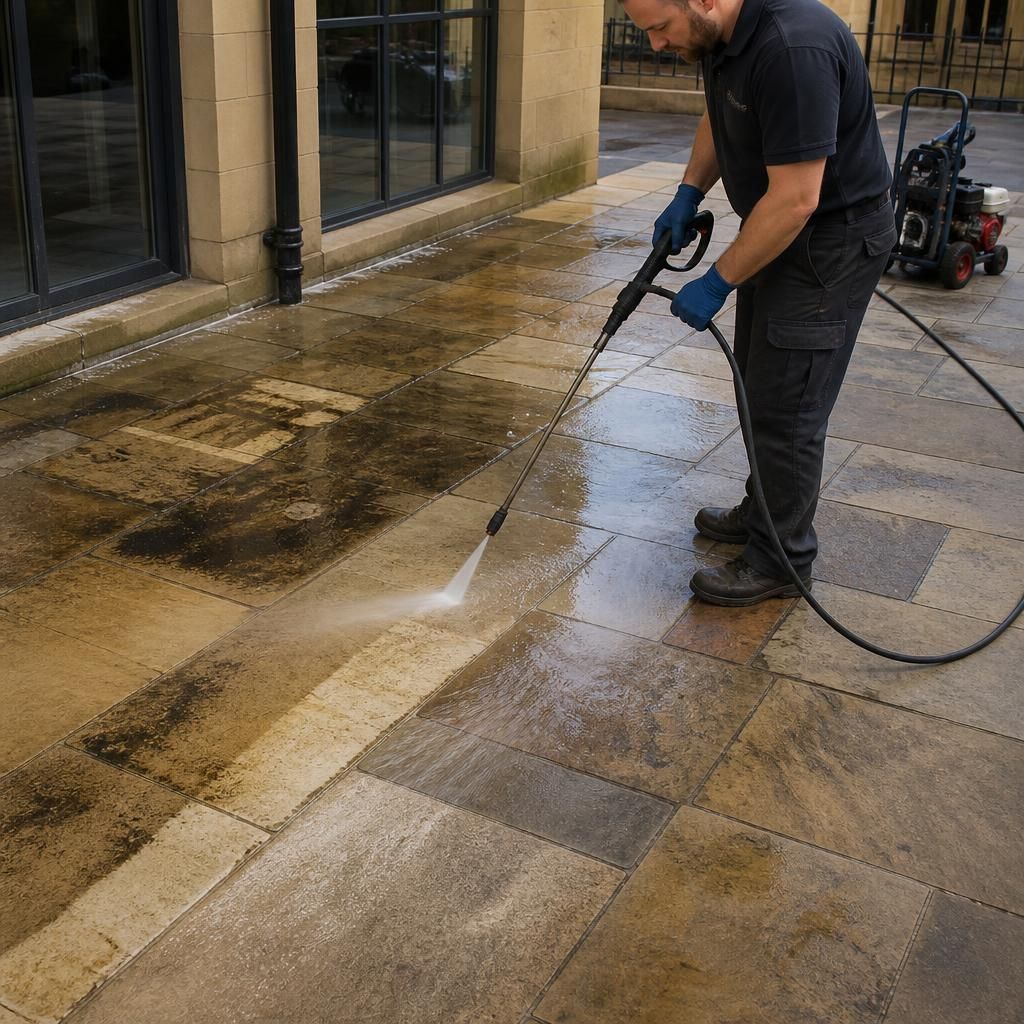
Removing stains from sandstone pavers requires a stain-specific, low-impact cleaning process because the stone is porous and can be etched, scratched or discoloured. Identify the contaminant first, then test a sandstone-compatible cleaner on an inconspicuous area before treating the visible stain.
Use soft brushing and controlled rinsing rather than wire brushes, abrasive powders or concentrated jet pressure. Oil may require a stone-safe degreaser or poultice, while organic marks may need a suitable biocidal treatment. Rust, cement residue and efflorescence require particular caution because acidic products can damage sandstone. Allow the test area to dry fully before assessing the result, as colour and staining can look different while the stone is wet.