
How do regular maintenance and cleaning schedules impact the longevity and safety of paved surfaces?
Regular maintenance and cleaning schedules extend the service life of paved surfaces by removing oil, dirt, algae, moss and efflorescence before they cause deeper staining, surface deterioration or blocked drainage. They also improve safety by reducing slip hazards, preserving even, visible walking and driving areas, and helping commercial sites remain presentable and compliant.
Regular maintenance and cleaning schedules extend the service life of paved surfaces and improve safety by controlling contaminants before they cause permanent staining, surface deterioration, loss of traction or drainage problems. A planned programme is more effective than occasional reactive cleaning because it combines inspection, prompt stain removal, vegetation control, repairs and periodic deep cleaning.
How scheduled cleaning protects paving
Oil, fuel, grease, organic matter, soil and de-icing residues can collect on paving and work into porous materials. If they remain in place, they may attract further dirt, create darkened areas and make later removal more difficult. Oil can also soften or discolour some jointing materials, while repeated contamination may affect the appearance and condition of concrete, natural stone, clay paving and asphalt.
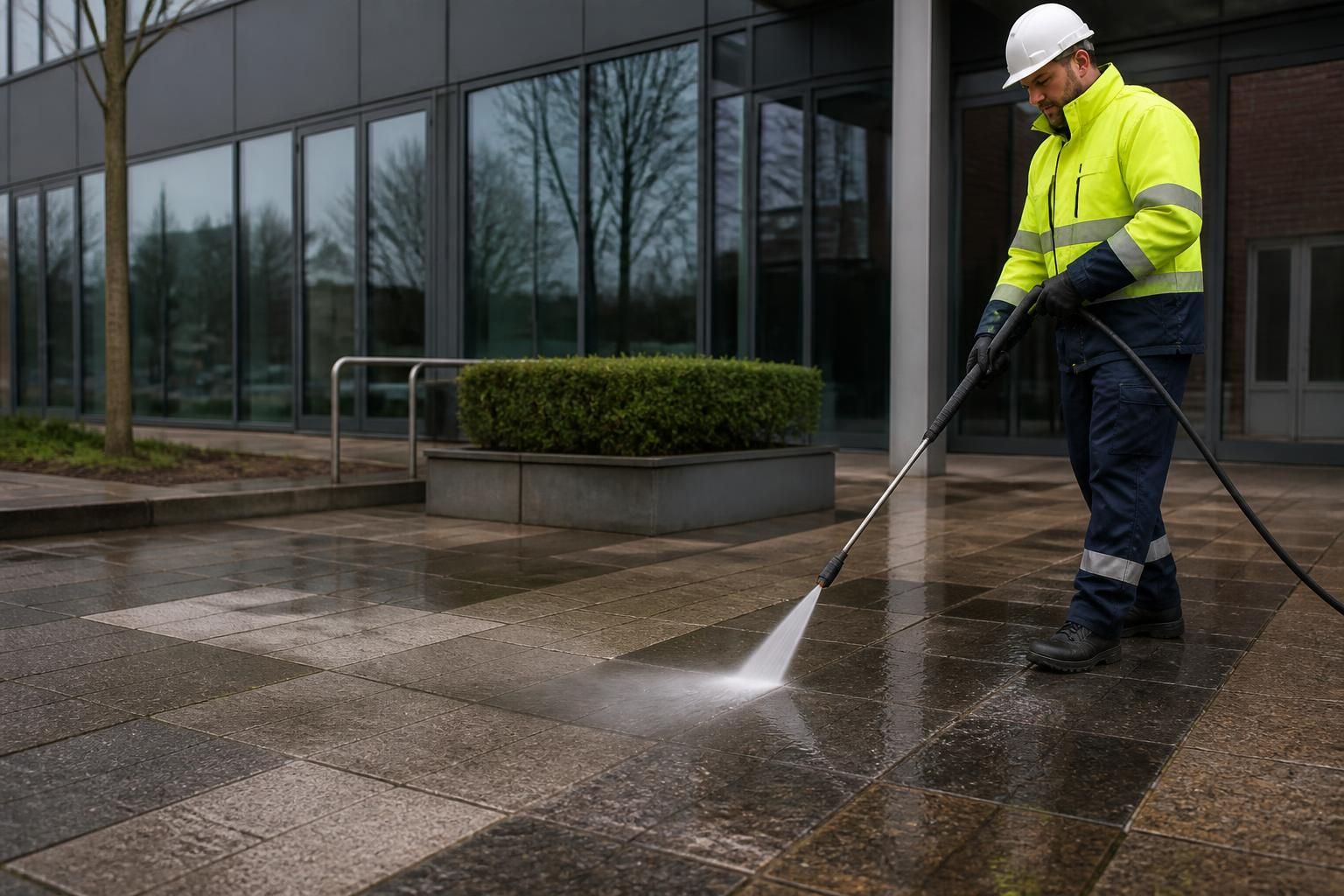
Routine cleaning removes surface contamination before it penetrates deeply. Appropriate pressure washing, hot water or steam cleaning can lift general soiling, while specialist treatments may be needed for oil, rust, chewing gum, biological growth or efflorescence. The method should be selected according to the paving material, its age, surface finish, jointing system and condition. Excessive pressure or unsuitable chemicals can cause damage, so cleaning should be controlled rather than simply carried out at the highest available pressure.
Reducing slip, trip and vehicle hazards
Algae, moss, lichen and accumulated organic debris can make paved walkways, ramps, loading areas and car parks slippery, particularly when wet. Oil and fuel deposits can create a separate traction hazard for pedestrians and vehicles. Regular cleaning reduces these contaminants and makes defects easier to identify.
Maintenance inspections should also look for cracked or rocking paving, failed joints, displaced blocks, surface settlement, potholes, exposed edges and uneven transitions. Cleaning does not correct these defects, but it can reveal them clearly so that repairs can be arranged before they become more serious. Keeping markings, kerbs, steps and access routes visibly clean also helps users recognise changes in level and designated traffic or pedestrian areas.
Protecting joints, drainage and the paving structure
Debris and sediment can collect in joints, channels, gullies and drainage grilles. This restricts water flow and increases the risk of standing water, staining and frost-related deterioration. On sloped or heavily trafficked sites, blocked drainage can allow water to remain against paving edges or enter weak joints, contributing to movement and washout.
A suitable schedule should therefore include sweeping or debris removal, inspection and clearance of drainage points, and checks for areas where water is ponding. Jointing sand or other joint material may need to be reinstated after cleaning, particularly where pressure washing has removed loose material. Repointing or joint repairs should be completed with products compatible with the paving and expected traffic conditions.
Why early stain removal matters
Prompt treatment is particularly important for oil and other petroleum-based stains. Fresh contamination is generally easier to contain and remove than an old deposit that has been repeatedly driven over and absorbed into porous paving. Leaving oil in place can spread the affected area, attract dirt and increase the amount of treatment required.
Efflorescence should be assessed before cleaning because the white, powdery deposit may be caused by soluble salts moving through masonry or paving as moisture evaporates. Dry brushing may be suitable for light deposits, whereas persistent efflorescence may require a carefully controlled specialist treatment. The underlying moisture source should also be considered; otherwise, the deposit may return. Acidic or other chemical treatments must be tested in an inconspicuous area and controlled to avoid damaging nearby surfaces, plants, drainage systems or protective finishes.
Adapting the schedule to site conditions
There is no single maintenance interval that suits every paved area. Frequency should reflect the type and intensity of use, the paving material, drainage, shade, nearby trees, weather exposure, traffic, the presence of food or fuel contamination and the consequences of a slip or vehicle incident.
- High-traffic entrances, walkways and car parks: inspect frequently for oil, litter, organic growth, damaged paving and blocked drainage, with cleaning arranged when contamination is identified.
- Loading bays and service yards: monitor for fuel, hydraulic fluid, grease, tyre marks and heavy deposits, and treat spills promptly using procedures suitable for the surface and drainage arrangements.
- Shaded or damp areas: check for moss, algae and lichen, as these areas may need more frequent biological growth removal than exposed paving.
- Natural stone and decorative paving: use gentler, material-appropriate methods and avoid assumptions that a treatment suitable for concrete or brick will be safe for stone.
- Winter-exposed areas: inspect after periods of freezing weather for cracked surfaces, open joints, movement and damage associated with trapped water or de-icing materials.
A practical maintenance programme
An effective programme normally combines several levels of attention:
- Routine housekeeping: remove litter, leaves, loose soil and spillages before they become embedded or enter drainage systems.
- Planned inspections: record surface condition, contamination, joint integrity, drainage performance and any areas requiring repair.
- Targeted treatments: remove oil, stains, efflorescence and biological growth using a method tested for the specific paving and contamination.
- Periodic deep cleaning: clean larger areas to restore consistent appearance and remove accumulated soiling that routine sweeping cannot address.
- Follow-up repairs: reinstate joints, replace damaged units, correct drainage issues and address recurring sources of contamination.
Cleaning should be planned around site operations so that pedestrian and vehicle routes can be segregated safely. The work area should be assessed for run-off, nearby drains, electrical equipment, vehicles and vulnerable landscaping. Residues and wastewater must be managed in accordance with the site’s environmental controls, particularly where oil or chemical treatments are involved.
Records, compliance and risk control
Maintenance records provide a useful history of inspections, stains, repairs, cleaning methods and recurring problems. They help site managers identify deterioration early, demonstrate that foreseeable hazards are being managed and plan work before defects interrupt operations. Records should note the location and nature of the issue, the action taken, any restrictions applied during cleaning and whether a follow-up inspection is required.
For commercial and industrial premises, scheduled maintenance should form part of the wider site risk assessment and planned preventative maintenance system. This is especially important where paving is used by the public, staff, delivery vehicles or mobility-impaired users. Cleaning alone cannot guarantee a safe surface, but a consistent combination of cleaning, inspection, repair and drainage management significantly reduces avoidable risks and helps paving remain serviceable and presentable for longer.
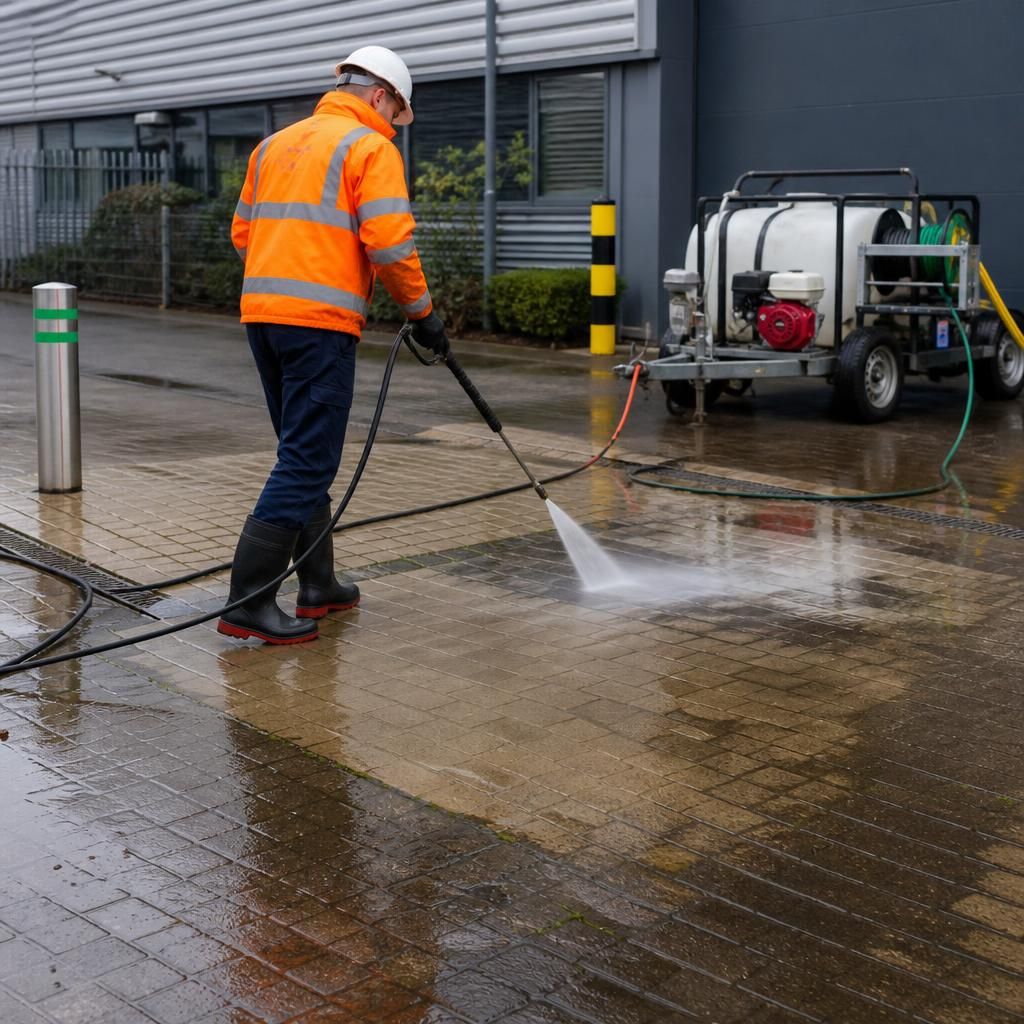
Regular cleaning and inspection help preserve paved surfaces by removing oil, organic growth, grit and other contaminants before they become embedded or contribute to surface deterioration. This is particularly important on entrances, walkways, loading areas and car parks, where contamination can reduce traction and increase slip or vehicle-control risks when the surface is wet.
A planned schedule should combine routine sweeping and spill response with periodic deep cleaning, drainage checks and inspections for cracked, loose or uneven paving. Cleaning will not repair structural defects, but it makes them easier to identify so that damaged units, failed joints and drainage problems can be addressed before they create larger hazards or shorten the serviceable life of the paved area.
Arrange a Paved Surface Maintenance Assessment
Arrange a paved surface maintenance assessment to identify contamination, drainage issues, damaged joints and other hazards affecting your site. We can recommend a suitable cleaning and maintenance schedule for the paving materials, traffic levels and operational requirements involved.