
How do different paving materials affect the choice of stain and efflorescence removal methods?
Different paving materials vary in porosity, strength, surface finish and chemical tolerance, so stain and efflorescence removal must be tailored accordingly. Concrete and block paving may tolerate controlled pressure and specialist treatments, while sandstone, limestone, brick and other porous surfaces generally require gentler cleaning, carefully selected chemicals and thorough testing to prevent etching, discolouration or surface damage.
The paving material determines which stain and efflorescence removal method is safe because porosity, hardness, surface finish, joint construction and chemical resistance vary considerably. Concrete and many block-paved surfaces can usually tolerate controlled pressure washing and compatible alkaline or acidic treatments, whereas sandstone, limestone and brick often require lower pressure, softer agitation and carefully diluted products. The correct approach is to identify the material and the contaminant first, then test the proposed method in an inconspicuous area.
Concrete paving
Concrete is relatively robust, but it is still porous and can be affected by aggressive cleaning. Oil, diesel, hydraulic fluid and other petroleum-based marks are normally treated with an appropriate degreaser or poultice before controlled pressure washing. Allowing the treatment time to work is generally more effective than relying on high pressure alone, which can drive contamination deeper into the surface or leave a visibly cleaner area around the stain.
Efflorescence on concrete is a mineral deposit caused by soluble salts moving to the surface with moisture. Light deposits may respond to dry brushing and washing, while established deposits may need a carefully selected efflorescence or cement-residue treatment. Acidic products must be compatible with the concrete, used at the correct dilution and rinsed thoroughly. Newly laid or weak concrete may be more vulnerable to surface softening, colour variation and damage to decorative finishes, so treatment should be more conservative.
Concrete block paving
Block paving presents additional considerations because the blocks, joints and sub-base all respond differently to water and pressure. Oil can migrate into the face of an individual block and may also collect around the jointing material. Treatment should therefore be localised where possible, with pressure directed across the surface rather than into the joints. Excessive washing can remove jointing sand, destabilise edges and encourage weed growth or further movement.
Efflorescence is common on cement-based blocks, particularly where moisture is travelling through the pavement. Surface deposits can often be removed with brushing, washing or a compatible specialist treatment, but removing the visible salts will not correct an underlying drainage or moisture problem. Replacement of severely contaminated blocks may sometimes be more appropriate than repeatedly applying chemicals. Any removed jointing material should be reinstated with a suitable product once the surface is clean and dry.
Brick paving
Brick is porous and can have a relatively soft or weathered face. Oil and grease can penetrate quickly, making prolonged soaking and aggressive pressure counterproductive. A suitable absorbent treatment or mild detergent, combined with gentle agitation, is usually preferable. Pressure washing should be controlled to avoid opening the brick face, removing the fired surface or eroding mortar and jointing material.
Brick efflorescence is usually treated by dry brushing once the surface is dry, followed by careful washing if deposits remain. Acidic cleaners can react with the brick, mortar or surrounding materials and may cause pale staining, colour loss or surface damage. They should not be applied without confirming that the brick is acid-resistant and carrying out a small test. Where salts continue to return, inspect drainage, pointing, adjacent soil levels and sources of water rather than repeatedly treating the face of the paving.
Sandstone paving
Sandstone varies widely in absorbency, grain structure, iron content and strength. It can absorb oil deeply and may also be sensitive to harsh acids, strong alkalis, heat and excessive pressure. Oil removal commonly requires an absorbent poultice or a stone-safe degreasing treatment, sometimes with repeated applications. The aim is to draw contamination out without spreading it into adjacent pores.
Efflorescence on sandstone should generally be approached with dry brushing, low-pressure rinsing and a stone-compatible treatment where necessary. Acidic products can etch some sandstone or alter its colour, while pressure can loosen grains and leave a roughened patch. Avoid assuming that a treatment suitable for concrete or brick is safe for sandstone. Test for colour change, darkening, texture alteration and moisture-related staining before proceeding.
Limestone and other calcareous stone
Limestone, travertine and similar calcareous stones are particularly sensitive to acids because they contain calcium carbonate. Even relatively mild acidic products can cause dulling, etching or loss of the original finish. Efflorescence should therefore be addressed with dry methods, pH-neutral stone cleaners and controlled rinsing wherever possible. Oil stains may require a stone-safe alkaline cleaner or poultice, but the product must be selected for the stone rather than simply for the type of stain.
Mechanical abrasion, rotary equipment and concentrated pressure can also change the appearance of a honed, tumbled or textured finish. Cleaning should follow the existing texture and avoid creating a smooth or visibly different area. If the stone has been sealed, assess whether the stain is in the sealer or in the stone itself; stripping or re-sealing without removing the underlying contamination can trap the problem.
Granite and other dense natural stone
Granite is generally denser and less absorbent than sandstone or limestone, so surface oil may be easier to treat. However, polished, flamed, riven and textured finishes have different tolerances. Strong chemicals, abrasive methods or unsuitable pressure can damage the finish even when the stone itself is hard. Use a compatible stone cleaner and adjust agitation and pressure to the surface profile.
Efflorescence is less likely to penetrate dense granite, but it can still appear around joints or where moisture carries salts onto the surface. Brushing and controlled rinsing are often preferable to aggressive chemical cleaning. Check adjacent paving and jointing before using any treatment, as runoff can affect more sensitive materials.
Porcelain paving
Porcelain has low water absorption and usually resists oil penetration better than porous natural stone or concrete. Stains may therefore remain closer to the surface and respond to a suitable detergent with mechanical agitation. The grout or jointing system can be more vulnerable than the tile, particularly if pressure is aimed directly at the joints.
Efflorescence on porcelain is commonly associated with cement-based grout, bedding materials or deposits brought onto the surface by water. A compatible cement-residue or efflorescence cleaner may be used where appropriate, but it must not be allowed to dry on the paving or surrounding stone. Avoid assuming that a low-porosity surface can tolerate every chemical; the glaze, textured finish and jointing materials still need protection.
How the contaminant changes the method
- Oil and grease: use absorption, a suitable degreaser or a poultice before rinsing. Strong pressure alone rarely removes deeply penetrated oil and may spread it.
- Efflorescence: remove loose salts first by dry brushing, then select a treatment based on the paving’s chemistry. Correcting persistent moisture movement is as important as cleaning the visible deposit.
- Rust: use a rust treatment compatible with the material. Acidic rust removers that are acceptable on some concrete may stain or etch natural stone.
- Cement and mortar residues: identify whether the surface is acid-sensitive before using a cement-residue remover. Mechanical removal may be safer on calcareous stone.
- Organic staining: algae, moss and leaf marks often need a biocidal or detergent-based approach rather than an oil or efflorescence treatment. The method must still protect joints and nearby planting.
Testing and choosing the cleaning process
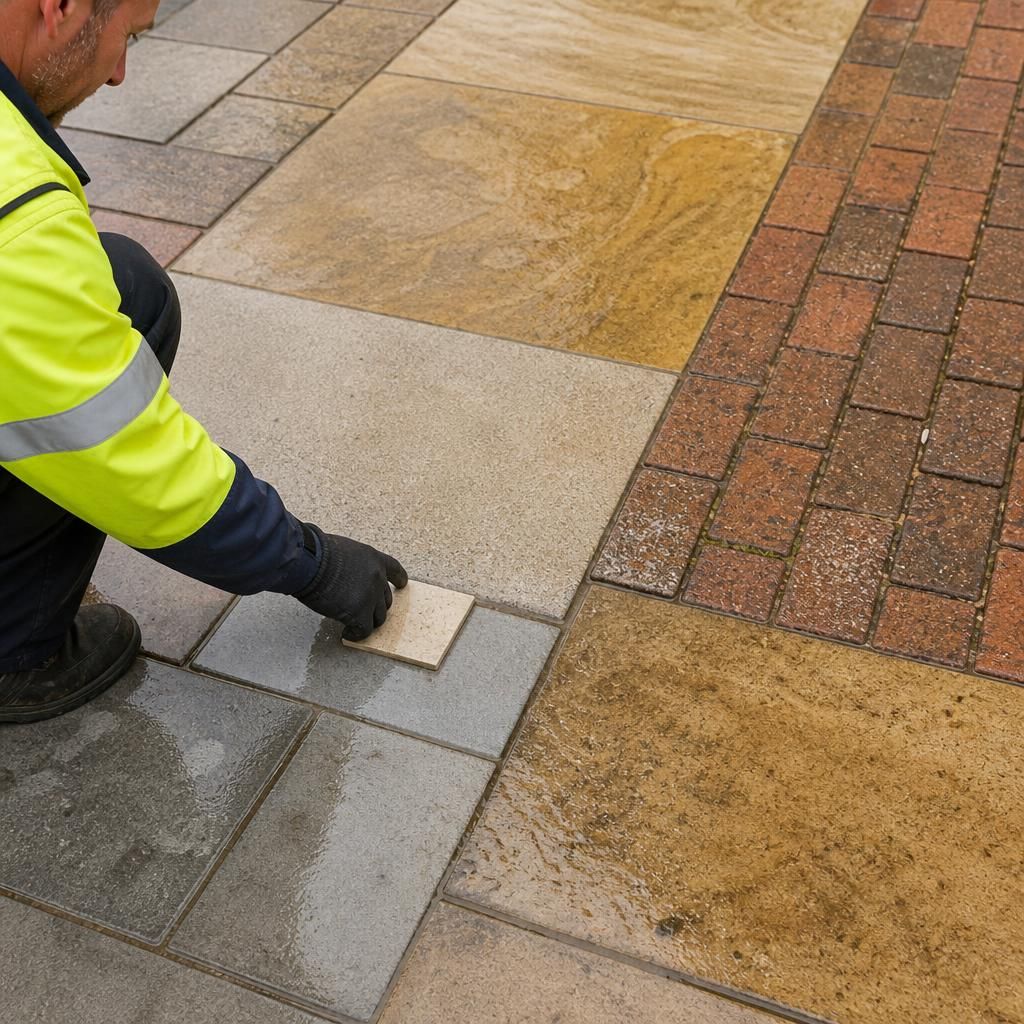
A competent assessment should record the paving type, age, finish, condition, jointing material, drainage and nearby surfaces. The test area should include both the paving and its joint, because a treatment that cleans the block may weaken the joint or change its colour. Leave the test area to dry before judging the result; natural stone and concrete can look temporarily darker or lighter while moisture remains.
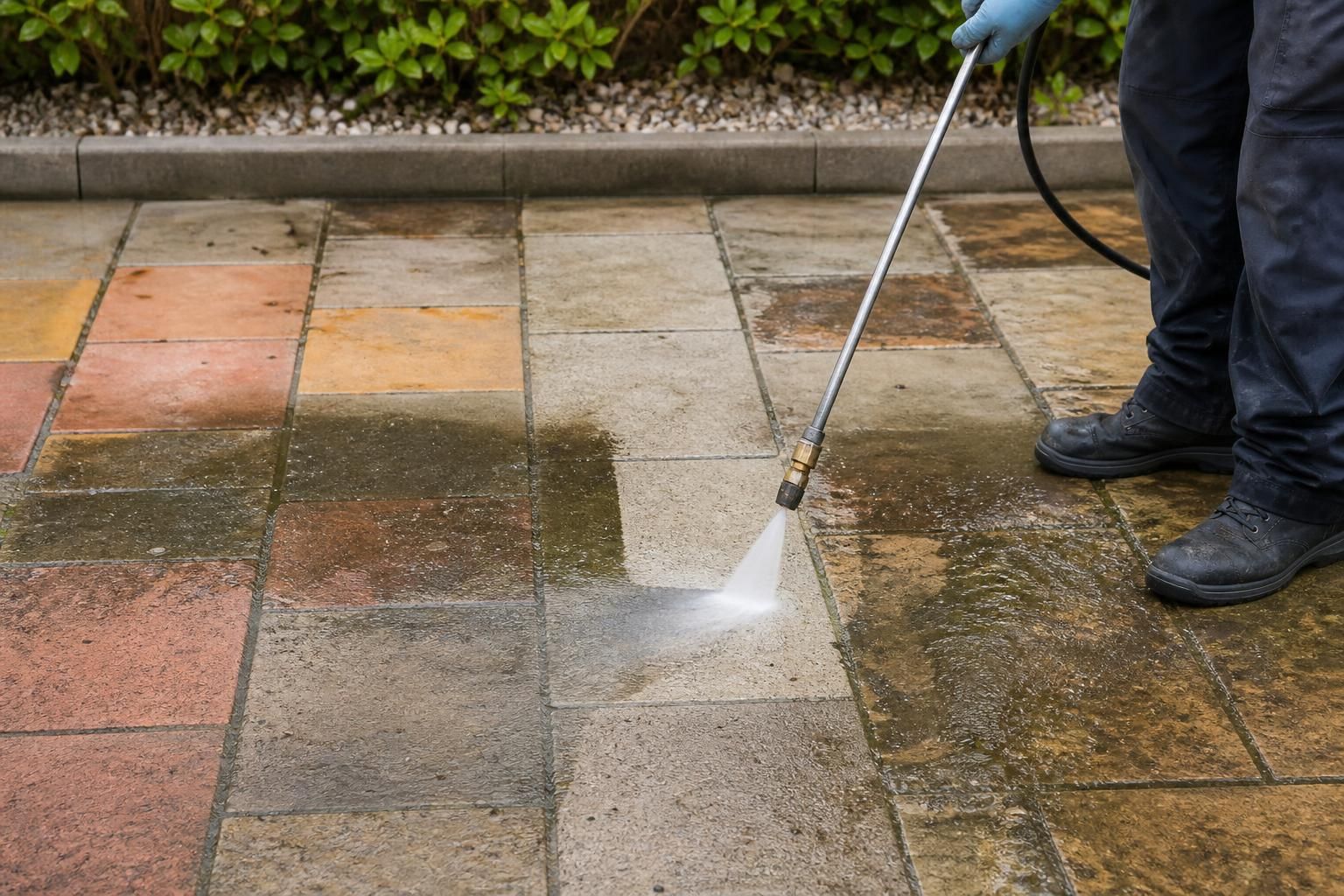
Pressure should be set according to the weakest part of the construction, not the hardest material present. Use the lowest effective pressure, suitable spray distance and controlled passes. On porous or weathered paving, softer washing and longer dwell time are generally safer than increasing pressure. Collect or control contaminated wash water where necessary, particularly when oil, chemicals or sediment could enter drains or watercourses.
After cleaning, allow the paving to dry fully and check for remaining staining, surface change, loose joints and recurring salts. Sealing may help reduce future oil penetration and simplify maintenance, but it is not a substitute for removing existing contamination or resolving damp conditions. The sealer must be suitable for the material and finish, and application should follow the manufacturer’s preparation and curing requirements.
In practice, the safest choice is a material-specific treatment rather than a single method applied across an entire paved area. Separating concrete, brick, natural stone, porcelain and jointing materials into compatible cleaning zones reduces the risk of etching, colour variation, surface erosion and failed joints while producing a more consistent result.
The paving material determines which stain and efflorescence treatment is safe because its porosity, chemical resistance and surface strength vary. Concrete and porcelain may tolerate controlled cleaning, while sandstone, limestone and weathered brick generally require lower pressure, gentler agitation and carefully selected products.
Always test the proposed method on an inconspicuous area that includes both the paving and its jointing. Check for colour change, etching, surface erosion, loose joints and recurring salts after the area has dried fully. Treat the weakest part of the construction as the limiting factor: excessive pressure or unsuitable chemicals may damage jointing, finishes or adjacent materials even when the paving itself appears robust.