
How can efflorescence be effectively removed from brick surfaces?
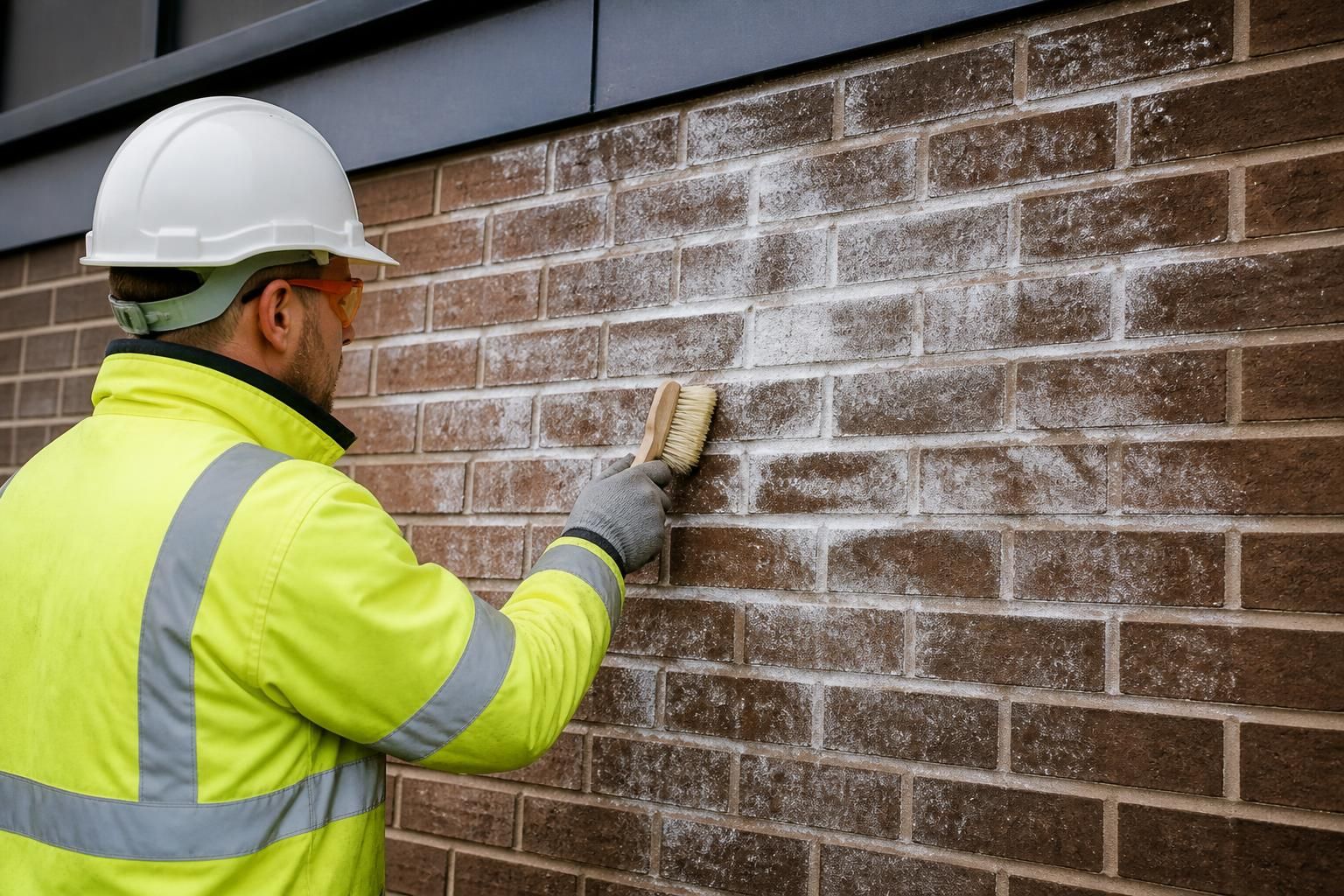
Efflorescence is best removed from brick surfaces by dry-brushing the loose, powdery salts, followed where necessary by controlled low-pressure rinsing or a suitable masonry cleaner. The underlying moisture source must also be addressed, otherwise dissolved salts may migrate back to the surface and recur.
Efflorescence is best removed from brick surfaces by brushing away the dry, powdery salt deposits, followed where necessary by controlled low-pressure rinsing or a compatible masonry cleaner. The moisture source that is carrying salts through the brickwork must also be identified and addressed; otherwise, the deposits can reappear after cleaning.
Efflorescence forms when water moves through masonry and dissolves soluble salts in the brick, mortar or surrounding construction materials. As the moisture reaches the surface and evaporates, it leaves behind a white or pale crystalline residue. It is usually superficial rather than a structural defect, but recurring or heavy deposits can indicate ongoing water penetration, poor drainage, defective pointing, leaking gutters or inadequate damp-proofing.
Initial assessment
Before cleaning, the surface should be inspected to establish whether the deposit is efflorescence or another material. Dry salt deposits are generally loose, powdery and easy to disturb. Paint, cement residue, mortar smears, limescale and some biological growths can look similar but require different treatments. The condition of the brick, mortar joints and adjacent surfaces should also be assessed, particularly where the wall is old, soft, painted, previously repaired or already weathered.
Cleaning should not begin until obvious sources of water have been considered. Common causes include overflowing gutters, leaking downpipes, defective roof details, cracked pointing, bridged damp-proof courses, splashback from hard surfaces and water trapped behind cladding or coatings. Removing the visible salts without correcting the source will usually provide only temporary improvement.
Dry removal is the safest first step
- Allow the surface to dry fully where practical.
- Use a clean, stiff, non-metallic brush to loosen the powder from the brick faces and mortar joints.
- Brush from the top of the affected area downwards, collecting the residue rather than spreading it across adjacent masonry.
- Remove the dry material from the surrounding ground and ledges so that it is not reintroduced when the area becomes wet.
Dry brushing is preferable to immediately washing the wall because water can dissolve the salts and draw them further into the brickwork. It can also spread the contamination over a larger area. A vacuum fitted with suitable filtration may assist with loose residue, provided the equipment does not drive salts into the surface.
Controlled rinsing and masonry cleaning
If brushing does not remove bonded or persistent deposits, the next stage may involve a carefully controlled rinse. Water pressure should be kept appropriate for the brick and mortar, with the least aggressive method selected first. Excessive pressure can erode soft brick faces, widen mortar joints, drive water into the wall or cause damage around already weakened areas. Saturating the masonry should also be avoided, particularly in cold or poorly ventilated conditions.
Where water alone is ineffective, a proprietary masonry cleaner formulated for salt or mineral deposits may be considered. The product must be suitable for the particular brick, mortar and surface finish. It should be applied only after a small, inconspicuous test area has been checked for colour change, surface etching, residue or joint damage. Manufacturer instructions concerning dilution, dwell time, agitation, rinsing and personal protective equipment should be followed precisely.
Acidic cleaners require particular caution. Although they may dissolve mineral residues, unsuitable or overly concentrated products can attack cement-based mortar, alter the appearance of brick, corrode nearby metalwork and damage glass, stone, painted surfaces or vegetation. Strong acids should not be used as a substitute for assessment and controlled application. Chemicals should never be mixed, and all runoff should be managed so that it does not enter drains, watercourses or planted areas without appropriate controls.
Protecting brickwork during the process
- Test the cleaning method before treating the full elevation.
- Protect windows, doors, metal fittings, painted surfaces, signage and nearby paving from splashes and chemical contact.
- Use suitable access equipment rather than leaning ladders against fragile or contaminated masonry.
- Keep water and cleaning solutions away from open joints, cracks and unsealed penetrations where possible.
- Rinse thoroughly but in a controlled manner when the selected product requires rinsing.
- Inspect the wall after drying, as remaining deposits can be easier to identify once the surface is no longer wet.
Brick type and age affect the appropriate method. Soft, handmade, historic or heavily weathered bricks are more vulnerable to abrasion, pressure and acidic products than dense modern facing bricks. Lime mortar can also be damaged by aggressive cleaning. Historic or listed masonry may require a conservation-led approach, and the cleaning specification should take account of the original materials rather than treating the wall as a standard modern façade.
Preventing recurring efflorescence
Once the deposits have been removed, the wall should be monitored as it dries. Recurrence may point to defective rainwater goods, leaking services, damaged pointing, rising damp, trapped moisture or poor detailing at the base of the wall. Repairs may include clearing gutters, redirecting downpipes, renewing unsuitable pointing, improving drainage or removing impermeable coatings that prevent normal evaporation. Any repair should be compatible with the existing masonry.
Water-repellent treatments are not a universal solution. Applying a coating to a damp wall can trap moisture and salts behind the treatment, increasing the risk of staining, frost damage or flaking. If a breathable treatment is considered, the brickwork should first be clean, dry and structurally sound, and the product should be confirmed as compatible with the substrate.
Professional efflorescence removal is most appropriate where deposits cover a large elevation, the brick is delicate, chemical treatment may be needed, access is difficult or the cause of moisture is unclear. A suitable method should be based on inspection and testing rather than applying high pressure or strong chemicals as a first response. This approach removes the visible salts while reducing the risk of damaging the brickwork and helps identify the building defects responsible for recurring staining.
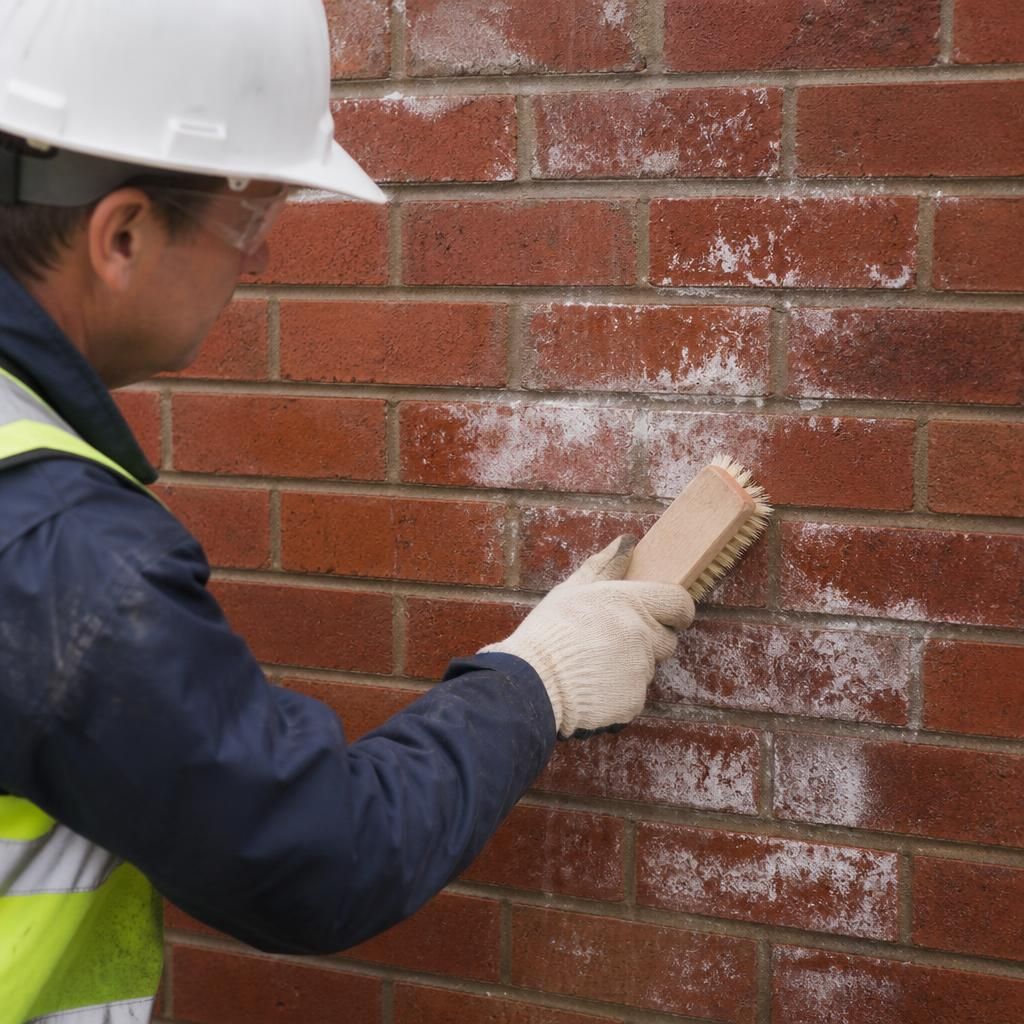
Efflorescence is a powdery deposit of soluble salts left on brickwork when moisture evaporates from the masonry. The safest initial treatment is to let the surface dry fully, then remove the residue with a clean, stiff non-metallic brush, working from the top down and collecting the loosened salts rather than spreading them across the wall.
If deposits remain, controlled low-pressure rinsing or a compatible masonry cleaner may be appropriate after testing an inconspicuous area. The brick type, mortar condition and age of the wall should guide the method, as excessive pressure and unsuitable acidic products can erode brick faces or damage pointing. Any recurring efflorescence should also be investigated for leaking gutters, defective pointing, poor drainage or other sources of moisture.
Arrange a professional efflorescence assessment
Arrange a professional efflorescence assessment to identify the cause of recurring salt deposits and confirm the safest cleaning method for your brickwork. Our team can assess the masonry, moisture sources and access requirements before recommending a suitable treatment.