
What surfaces are most susceptible to moss and algae growth?
Moss and algae are most likely to grow on damp, shaded and porous surfaces, including roof tiles, paving, brickwork, concrete, render and untreated cladding. Areas with poor drainage, limited sunlight or nearby vegetation are particularly susceptible because they retain moisture and allow organic growth to establish.
The surfaces most susceptible to moss and algae growth are damp, shaded and porous materials that retain water and organic debris. Roof tiles, paving, brickwork, concrete, render and untreated cladding are particularly vulnerable, especially where drainage is poor, sunlight is limited or vegetation is close by. Smooth, well-drained and regularly maintained surfaces are generally less likely to support persistent growth.
Roof tiles and roofing materials are among the most common areas affected. Moss establishes readily on textured concrete tiles, clay tiles and slate where rainwater, leaves and airborne debris collect. North-facing or shaded roof slopes tend to remain damp for longer, while overhanging trees can increase both shade and organic contamination. Moss may grow along tile laps and around the edges of roof coverings, where it can obstruct drainage and retain further moisture. Algae often appears as dark, green or brown staining across larger areas of the roof.
Roofing materials do not all respond in the same way. Porous or weathered tiles absorb moisture and provide a more suitable surface for biological growth than sealed, smooth materials. Older coatings, damaged surfaces and areas with blocked gutters may also remain wet for longer. Cleaning must therefore take account of the roof covering, its condition, access requirements and the risk of dislodging tiles or forcing water beneath them.
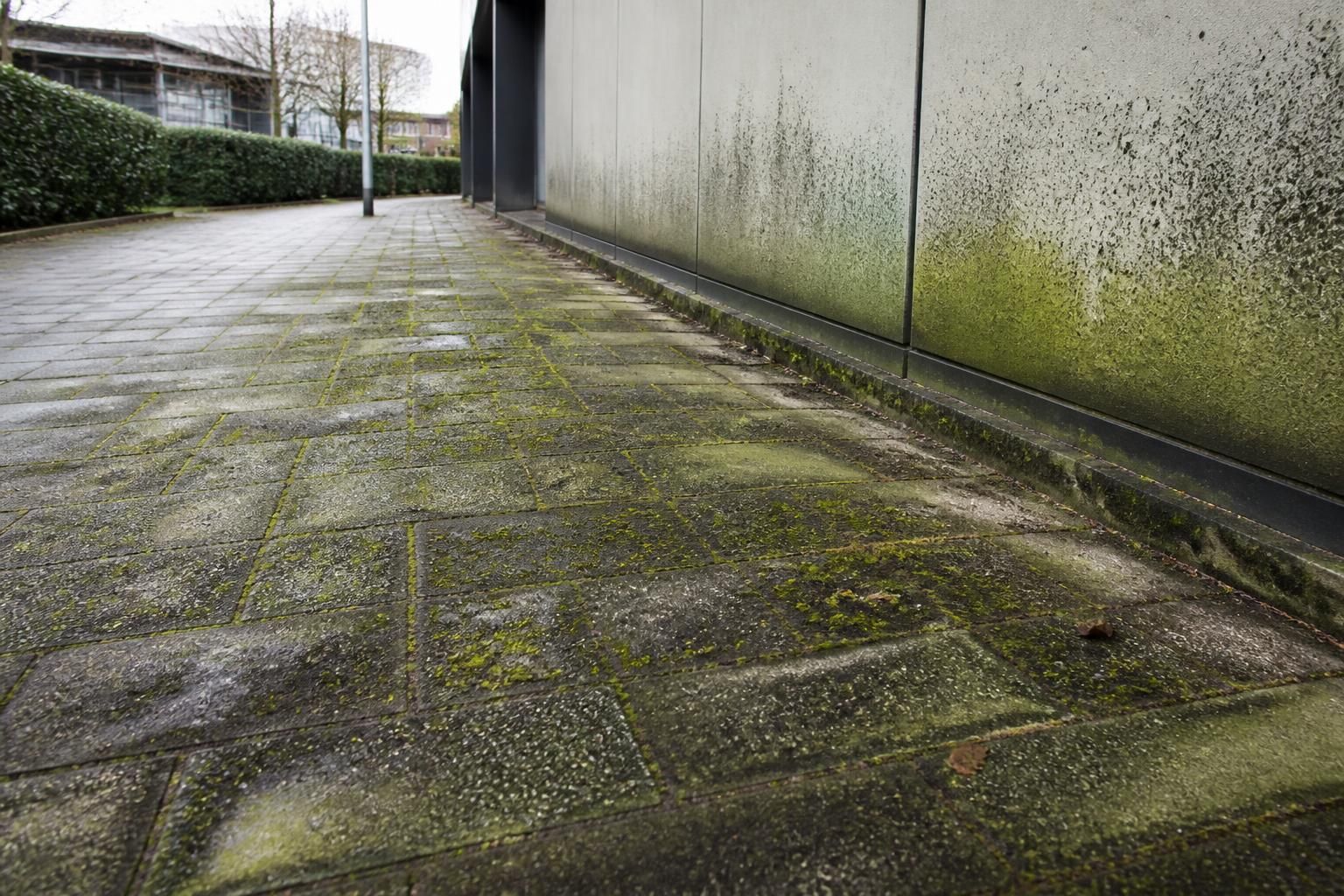
Block paving, concrete paving and slabs are highly susceptible where joints, cracks and uneven areas hold moisture and soil. Moss commonly develops between paving blocks, along kerbs and in areas that receive little foot or vehicle traffic. Algae and other green growth can form a slippery film on the surface, particularly in shaded walkways, courtyards, car parks and service yards. Porous concrete and aged paving are more likely to retain contamination than dense, well-sealed surfaces.
Large paved areas can also be affected by poor falls or inadequate drainage. Water that remains after rainfall gives algae and moss the conditions needed to return after cleaning. Organic matter in joints can act as a growing medium, so removing surface staining alone may not provide a lasting result. Commercial paving often requires careful pressure control to clean effectively without displacing jointing material, damaging the surface or spreading contaminated run-off.
Brickwork, masonry and stone are vulnerable because many masonry materials contain pores that absorb water. Moss tends to favour rough, weathered areas, recessed joints, low-level walls and surfaces close to planting beds. Algae may appear as green or dark discolouration on elevations that receive limited sunlight. Natural stone can also develop biological staining, although its porosity, mineral composition and existing weathering determine how it should be treated.
Brick and stone should not automatically be cleaned using the same pressure or chemical treatment. Soft brick, deteriorated pointing and friable stone may be damaged by aggressive methods. A suitable approach normally involves identifying the material, checking its condition, testing the proposed treatment in an inconspicuous area and controlling the cleaning process so that the face of the material and surrounding joints are protected.
Render, painted masonry and external wall coatings can support algae and green growth where moisture is retained behind surface irregularities or where rainwater repeatedly runs down the elevation. Shaded elevations, parapets, window reveals and areas below leaking gutters are common problem locations. Algae staining is often more visible on light-coloured render, while textured finishes can trap spores, dust and organic debris.
These surfaces require particular care because excessive pressure can mark, strip or loosen the finish. Cleaning may need to be adjusted according to the render type, coating condition and whether the surface has already weathered. Resolving the source of persistent dampness, such as defective rainwater goods or splashback at ground level, is important if the growth is to be controlled rather than repeatedly removed.
Cladding and façade panels can develop algae, moss and general organic staining when moisture and debris remain on horizontal ledges, joints, canopies and sheltered elevations. Metal, composite, uPVC and coated panels are usually less porous than masonry, but their profiles can still retain contamination. Green growth is particularly likely around drainage outlets, behind plant growth and on façades that receive little direct sunlight.
Cladding should be assessed for its coating, fixings, joints and any areas of corrosion or deterioration before cleaning. The objective is to remove biological contamination without driving water into seams, damaging the finish or affecting adjacent seals. Low-pressure washing, steam cleaning or a controlled treatment may be more appropriate than an aggressive high-pressure application, depending on the façade system.
Asphalt, tarmac and resin-bound surfaces can develop algae and moss where water pools or where shaded areas remain damp. These materials are less porous than some masonry surfaces, but cracks, edges and accumulated dirt can hold enough moisture for growth to establish. Resin-bound surfacing may be especially sensitive to unsuitable pressure, heat or cleaning chemicals, while aged asphalt can loosen or deteriorate if treated too aggressively.
Timber decking, fencing and external structures are susceptible because wood absorbs moisture and often remains shaded beneath trees or near planting. Algae can create a green film, while moss may establish on weathered, rough timber. The biological growth can make decking slippery and may conceal decay or damaged boards. Cleaning should be controlled to avoid raising the grain, eroding the timber or forcing water into joints.
Areas around water and vegetation are more likely to experience recurring growth regardless of the underlying material. Canalside premises, landscaped commercial estates, courtyards, retaining walls and surfaces beneath trees receive additional moisture, shade, leaves and organic matter. Irrigation overspray, leaking downpipes and condensation can create similar conditions on façades, paving and roof edges.
Susceptibility is determined by the combination of material and site conditions rather than by the material alone. The main factors are:
- Persistent dampness caused by rainfall, leaks, condensation, irrigation or poor drainage.
- Limited sunlight and air movement, particularly on shaded elevations and enclosed courtyards.
- Porosity, surface texture, open joints, cracks and other areas where water and debris can collect.
- Nearby trees, planting and soil that introduce organic matter and maintain local humidity.
- Low-traffic areas where contamination is not regularly disturbed or removed.
- Blocked gutters, defective downpipes, failed seals and other maintenance problems that keep surfaces wet.
- Existing weathering, damaged coatings or neglected surfaces that provide a better foothold for growth.
Moss and algae are related but should not be treated as identical contamination. Moss is a more substantial plant growth that can form a raised, fibrous layer and retain significant moisture. Algae is usually a thin film or stain, although it can become slippery and widespread. Lichen, mould and other organic deposits may also be present and can require a different treatment. Correct identification helps determine the appropriate cleaning method and reduces the risk of damaging the substrate.
For commercial and industrial properties, the most vulnerable locations should be identified during a site assessment rather than judged only by appearance. A suitable inspection considers the surface material, height, access, drainage, surrounding vegetation, condition of coatings and the destination of cleaning run-off. It should also identify areas where growth creates a safety issue, such as pedestrian routes, entrance steps, loading areas, ramps and car parks.
Cleaning removes established growth, but it does not remove the conditions that allowed it to develop. Keeping gutters and drainage clear, repairing leaks, managing overhanging vegetation, improving water run-off and maintaining protective coatings can reduce recurrence. Where a surface remains shaded or damp, periodic professional inspection and cleaning may still be necessary to maintain appearance, traction and safe access.
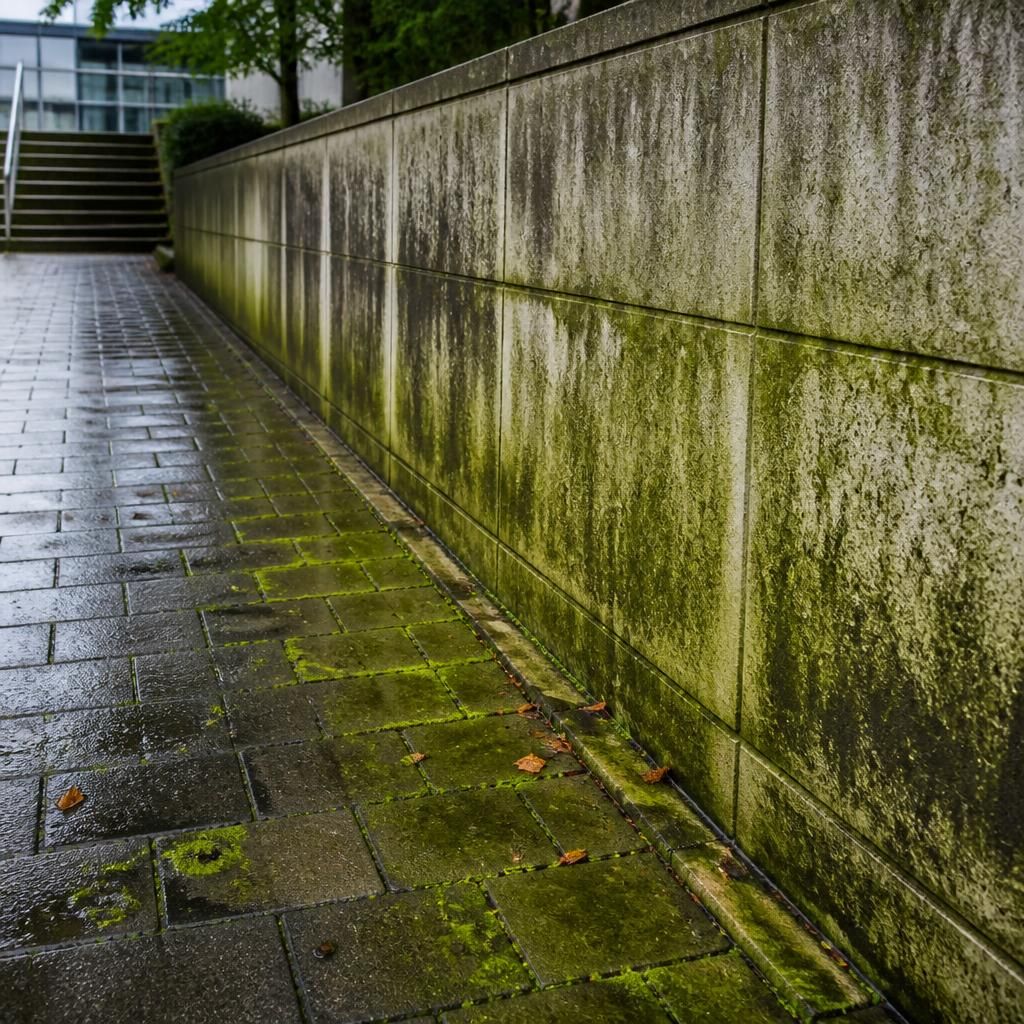
Damp, shaded and porous surfaces are most susceptible to moss and algae growth. Roof tiles, block paving, brickwork, concrete, render and weathered timber can retain moisture and organic debris, creating conditions where growth establishes readily. North-facing elevations, areas beneath trees and surfaces near planting or poor drainage are particularly vulnerable.
Material alone does not determine the risk. Cracks, open joints, rough textures, blocked gutters, leaking downpipes and standing water can all prolong dampness. Identifying and correcting these conditions alongside professional cleaning helps reduce recurring growth and improves safety on walkways, steps, ramps, car parks and other frequently used areas.