
What specific methods and equipment are used for effective moss and algae removal on exterior surfaces?
Effective moss and algae removal combines controlled pressure washing, low-pressure soft washing, steam cleaning and suitable biocidal treatments, selected according to the surface and level of growth. Professional equipment may include adjustable pressure washers, steam-cleaning systems, surface cleaners, telescopic tools and access equipment, allowing the growth to be removed while limiting damage to roofs, paving, façades and cladding.
Effective moss and algae removal depends on matching the cleaning method and equipment to the surface, the type of growth and the surrounding environment. In practice, this may involve manual removal, controlled pressure washing, low-pressure soft washing, steam cleaning or a suitable biocidal treatment, often used in combination. The objective is to remove visible growth and contamination without stripping coatings, dislodging roof materials, damaging joints or allowing contaminated run-off to affect nearby areas.
Initial inspection and preparation
Before selecting equipment, the surface is assessed for its material, condition, drainage, access requirements and level of biological growth. Moss can form a thick, rooted layer that needs loosening before washing, while algae and other green growth may be present as a thin film across paving, façades, cladding or roof surfaces. The inspection also identifies cracked tiles, open joints, defective pointing, fragile coatings and areas where water could enter the building.
Nearby vehicles, doors, vents, landscaping and drainage points are protected as necessary. Where contaminated water or cleaning solution could enter a surface-water drain, suitable controls are planned before work begins. This preparation is particularly important on commercial and industrial premises, where pedestrian routes, loading areas and neighbouring properties may need to remain safe and operational.
Manual removal and agitation
Loose moss is often removed manually before any water-based cleaning takes place. Suitable tools can include scrapers, stiff brushes and telescopic brushes selected for the surface. This reduces the amount of organic matter that has to be washed away and helps prevent large clumps from blocking gutters, gullies or drainage channels.
Manual work is especially useful on roof coverings, delicate paving, textured façades and areas where aggressive pressure could cause damage. It is carried out carefully so that tiles, membranes, pointing and protective finishes are not lifted or abraded. Brushing can also be used to agitate algae after a treatment has been applied, allowing the residue to be removed with less mechanical force.
Controlled pressure washing
Pressure washing uses a pump, hose, lance and selected nozzle to deliver water at a controlled pressure. The pressure, flow rate, nozzle pattern and working distance are adjusted to suit the surface rather than applying maximum force by default. This is commonly effective on robust hard surfaces such as concrete paving, some block paving, kerbs and heavily contaminated service yards.
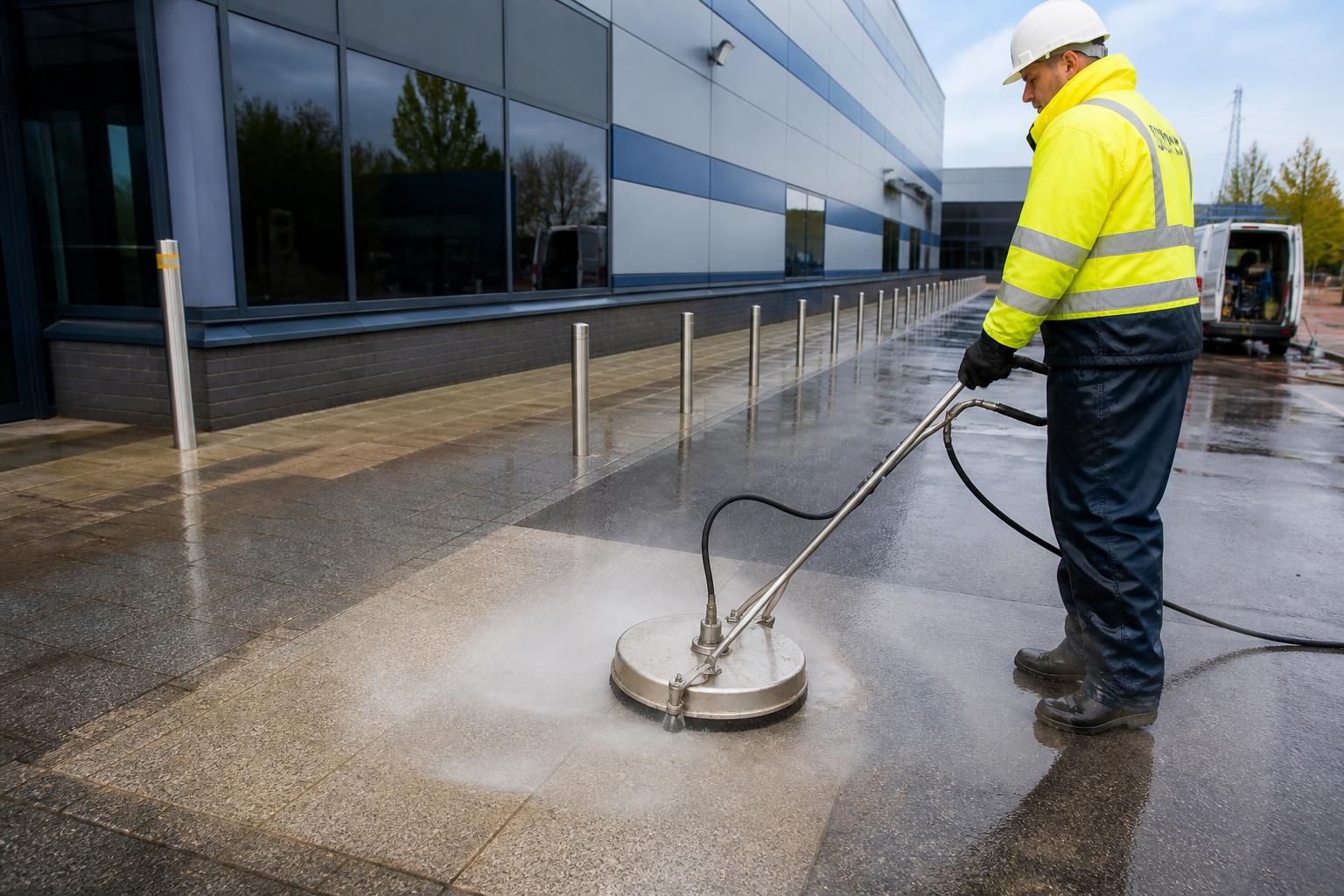
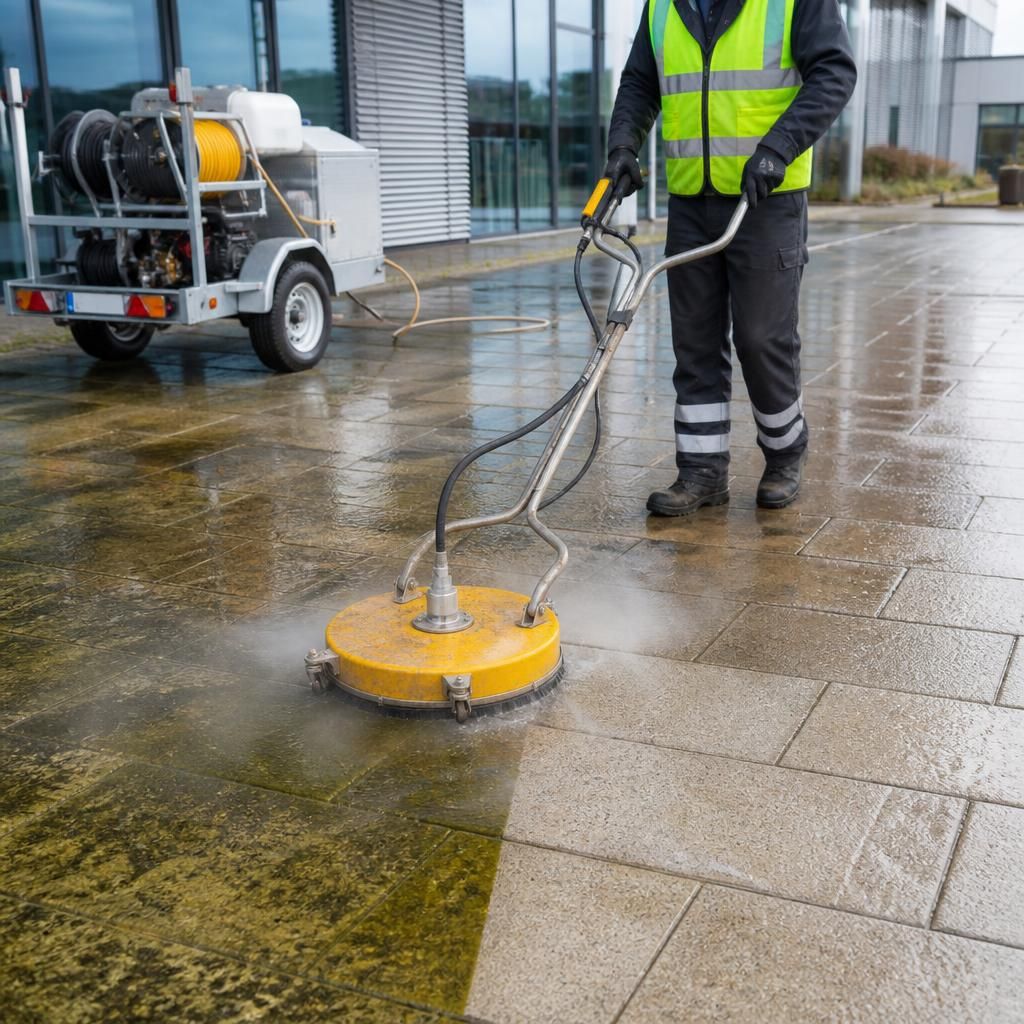
Surface-cleaning attachments can be used on larger paved areas. Their enclosed rotating jets help produce a more even finish than a hand-held lance and can reduce uncontrolled spray. They are useful for car parks, walkways, loading areas and courtyards, although the surface still needs to be checked for loose joints, damaged coatings and areas requiring lower pressure.
Pressure washing is not automatically suitable for every roof, façade or cladding system. Excessive pressure can drive water beneath roof coverings, remove surface coatings, damage mortar joints or mark softer materials. For this reason, test cleaning and progressive adjustment are important before treating a large or visible area.
Low-pressure soft washing
Soft washing combines a low-pressure application system with a cleaning solution selected for the type of biological contamination and the material being treated. The solution is allowed suitable contact time so that it can break down algae, lichen and other organic residues before the surface is rinsed gently or left to weather in accordance with the treatment instructions.
This method is often appropriate for delicate roof coverings, painted surfaces, rendered façades, coated cladding and areas where high-pressure water would be unsuitable. Low pressure does not mean that the process is uncontrolled: the solution must be applied evenly, overspray must be managed, and surrounding plants, drainage systems and occupants must be protected.
Only products suitable for the intended surface and application should be used. Product instructions, control-of-substances requirements and site-specific environmental controls determine the correct handling, dilution, application and rinsing procedure. A treatment may remove active growth without immediately making every stain disappear, particularly where the surface has been weathered or permanently discoloured.
Steam and hot-water cleaning
Steam cleaning and hot-water systems use heat to loosen organic growth and surface deposits, often with less reliance on high mechanical pressure. They can be useful on paving, masonry, façades and other surfaces where controlled heat can improve cleaning efficiency. Steam is also valuable for detailed work around edges, joints and textured areas where cold-water pressure may be too aggressive or may leave residue behind.
Heat must be matched to the material and existing finish. Sudden temperature changes, prolonged heating or direct application to vulnerable coatings and sealants can cause damage. A professional operator therefore uses the appropriate setting, keeps the equipment moving and checks the surface response throughout the work.
Biocidal and post-treatment applications
Where moss or algae has established itself in pores, joints or textured finishes, a suitable biocidal treatment may be applied before or after physical cleaning. Pre-treatment helps weaken organic growth and can make removal more controlled. Post-treatment can help deal with remaining microscopic contamination, subject to the product instructions and the requirements of the surface.
Biocides are not a substitute for sound cleaning practice. They must be selected for the particular application, applied in a controlled manner and prevented from reaching sensitive vegetation, watercourses or unprotected drainage systems. The surrounding area is monitored during application, and any required rinsing or recovery is completed in line with the agreed environmental controls.
Specialist equipment used on larger or difficult sites
- Adjustable pressure-washing systems: These allow pressure and flow to be selected for hard paving, masonry, roof coverings and other materials.
- Soft-wash pumps and low-pressure applicators: These provide controlled coverage for façades, roofs, cladding and painted surfaces.
- Steam-cleaning equipment: This uses controlled heat to loosen biological growth and deposits while limiting the need for aggressive pressure.
- Rotary surface cleaners: These are used on suitable flat surfaces to improve consistency and reduce uncontrolled spray.
- Telescopic lances and brushes: These extend reach while allowing work from a safer position and reducing the need to place equipment directly on fragile surfaces.
- Access equipment: Mobile elevated work platforms, towers, scaffold systems or other access arrangements may be required where roof edges, façades or high-level cladding cannot be reached safely from ground level.
- Wet vacuums, drain covers and recovery equipment: These can help control slurry, loosened moss and contaminated water in areas where run-off must be contained.
- Inspection and testing equipment: Moisture checks, surface observations and test-cleaning areas help identify unsuitable pressure, heat or chemical application before the full treatment proceeds.
How the method changes by surface
- Roofs: Loose moss is usually removed with minimal mechanical force, followed by a low-pressure rinse or suitable treatment. Fragile tiles, membranes, coatings, flashings and gutters require particular care, and access equipment should be selected to avoid unnecessary loading of the roof.
- Block paving and concrete: Controlled pressure washing and rotary surface cleaning are commonly effective. Joints may need checking and reinstating if they have been disturbed, while slurry and organic debris should be prevented from entering drainage systems.
- Masonry and façades: The material, age, porosity and condition of the façade determine whether steam, soft washing or a carefully controlled rinse is appropriate. Pointing and surface coatings should be tested before broad cleaning begins.
- Cladding: Low-pressure cleaning with a compatible solution is often preferred, particularly where painted or coated finishes could be marked by abrasive action. Rinsing must be controlled around panel joints, seals, vents and openings.
- Car parks and service yards: Mechanical surface-cleaning equipment can cover broad areas efficiently, but traffic management, pedestrian protection, drainage control and drying time must be included in the work plan.
Rinsing, inspection and finishing
After the main treatment, surfaces are rinsed or left to weather as required by the selected method and product. The area is then checked for remaining growth, blocked drainage, displaced joint material, residue and any areas needing further local treatment. Gutters, channels and gullies should be cleared of removed moss and debris rather than allowing it to remain in the drainage system.
The most effective approach is therefore not simply the use of a powerful machine. It is the controlled combination of surface assessment, suitable agitation, correctly adjusted water or steam, compatible treatment products, safe access and responsible run-off management. For commercial premises, this ensures that roofs, paving, façades and cladding are cleaned in a way that supports both appearance and safe ongoing use.
Effective moss and algae removal uses controlled cleaning rather than maximum pressure. The equipment and method are selected for the surface, the condition of the material and the location of the growth, helping remove organic contamination without damaging roof coverings, coatings, joints or façade finishes.
For example, a rotary surface cleaner may be suitable for robust concrete paving, while a low-pressure applicator, soft brush or steam-cleaning system is more appropriate for delicate cladding, masonry or roof surfaces. Telescopic tools and suitable access equipment allow high-level areas to be treated from a safer working position. Where run-off requires control, drain covers, wet vacuums and recovery equipment help prevent moss, slurry and cleaning solutions from entering sensitive drainage systems.
Arrange a professional moss and algae removal assessment
Arrange a professional moss and algae removal assessment so we can identify the most suitable cleaning method, equipment and run-off controls for your surfaces.
Contact Encanto Exterior Cleaning to discuss your site and plan the work around access, safety and ongoing operations.