
What safety precautions are taken during the moss and algae removal process?
Professional moss and algae removal is carried out using a site-specific risk assessment, secure access equipment and controlled cleaning methods to protect workers, occupants, the public and the building. Surfaces, drainage points and nearby vegetation are protected from damage or contaminated run-off, while appropriate personal protective equipment and exclusion zones help keep the work area safe.
Professional moss and algae removal is managed through a site-specific risk assessment, documented method statement, secure access arrangements and controlled cleaning techniques. These precautions are designed to protect operatives, building users, members of the public, vehicles, landscaping, drainage systems and the surfaces being cleaned.
Site inspection and risk assessment
Before work starts, the site is assessed for hazards that could affect the cleaning method or the people nearby. This includes identifying fragile or deteriorated surfaces, roof edges, sloping ground, trip hazards, overhead obstructions, access restrictions, vehicle movements, public footpaths and nearby electrical equipment. The assessment also considers weather conditions, the height and condition of the surface, drainage routes and the possibility of contaminated or chemically treated run-off entering sensitive areas.
The findings are used to prepare a suitable method statement. Where the work involves hazardous substances, the relevant COSHH assessment identifies the product risks, required controls, storage arrangements, dilution instructions and first-aid measures. The team should review these controls with the operatives carrying out the work, and the arrangements may be updated if site conditions change.
Secure access and work at height
Moss and algae often develop on roofs, canopies, façades, wall tops and other elevated areas. Access is selected according to the surface, height, duration and surrounding conditions. This may involve properly positioned ladders for suitable short-duration tasks, scaffold, mobile access equipment, edge protection or other appropriate systems. Access equipment must be inspected, used on stable ground and operated by people with the necessary training.
Operatives do not rely on moss-covered or fragile surfaces for support. Roofs are assessed for weak areas, fragile rooflights, loose tiles, unprotected edges and concealed voids. Where necessary, temporary protection, crawling boards, fall-prevention equipment or a different access method is used. Work at height is avoided or reduced where a safer ground-based method is practical.
Exclusion zones and public protection
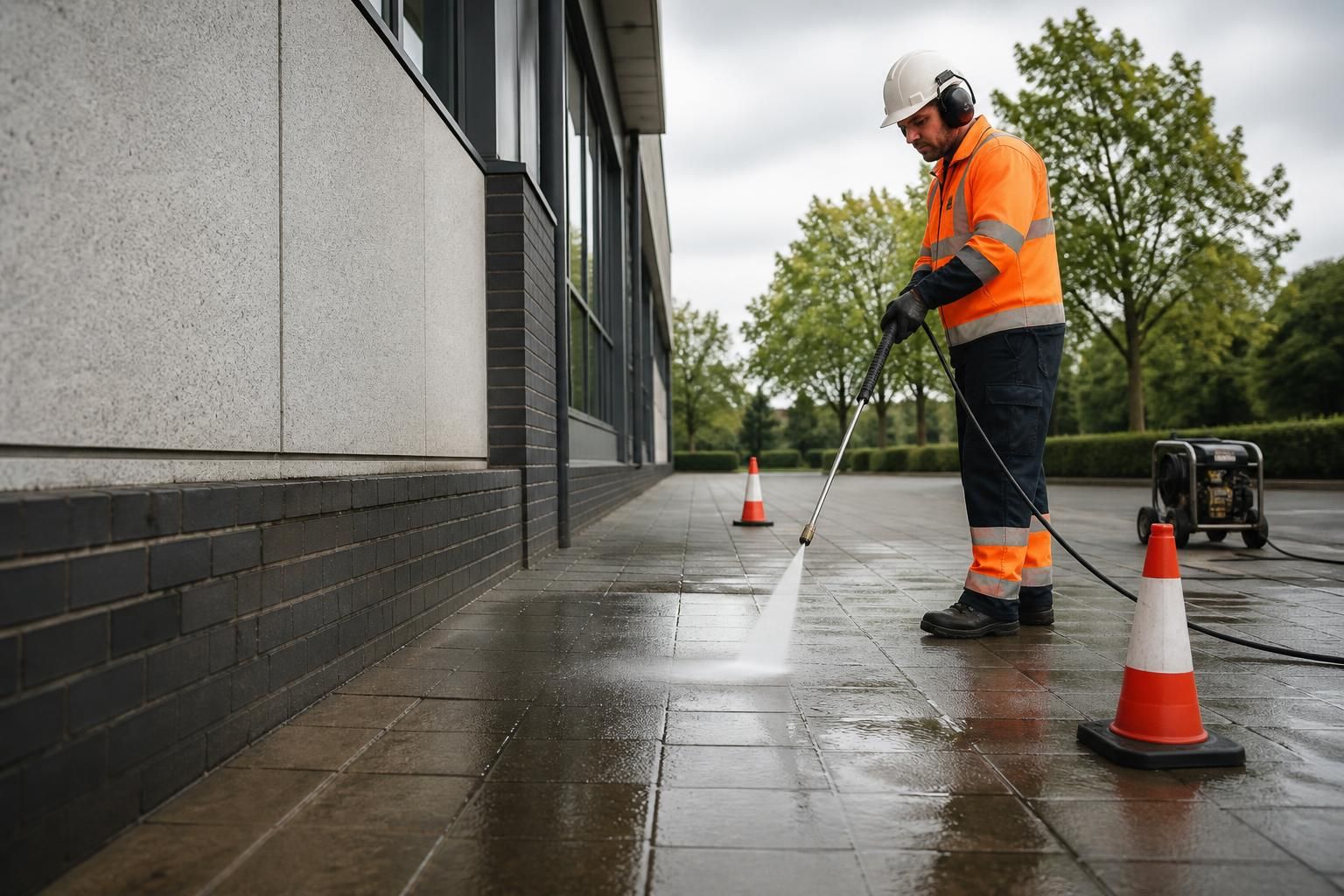
The work area is isolated with barriers, cones, signs or other suitable controls. This prevents people from walking beneath elevated work, entering a slippery treatment area or coming into contact with equipment and cleaning solutions. Access routes, entrances and emergency exits are kept clear wherever possible, and the sequence of work is planned around building occupancy and vehicle movements.
Where a site borders a public pavement, road or shared access route, additional controls may be needed. These can include a banksman, temporary diversion, agreed working times or coordination with the site manager and other contractors. Hoses and cables are routed to reduce trip risks and are not left across access points without suitable protection.
Personal protective equipment
Personal protective equipment is selected from the risk assessment and the cleaning products being used. Depending on the task, this can include protective footwear with slip-resistant soles, gloves, eye or face protection, protective clothing, hearing protection and suitable respiratory protection. Fall-arrest or restraint equipment is used where the access system and risk assessment require it.
PPE is not treated as the only control. It is used alongside safe access, exclusion zones, correct equipment settings, training and appropriate handling procedures. Contaminated or damaged PPE is removed, cleaned or replaced in accordance with the relevant instructions.
Controlled cleaning methods
Cleaning pressure, water temperature, nozzle selection and working distance are adjusted to suit the surface. The aim is to remove biological growth without forcing water beneath roof coverings, dislodging pointing, damaging coatings, opening joints or eroding vulnerable materials. Test cleaning is often carried out in an inconspicuous area before the main work proceeds.
Operatives keep people, glazing, vents, electrical fittings and vulnerable finishes outside the spray path. Pressure washing is not directed at live electrical equipment, unsealed openings or areas where water could enter the building. Steam cleaning and soft-washing methods are selected where they provide better control or reduce the risk of damaging the substrate.
Loose moss is removed in a controlled manner rather than being allowed to fall unpredictably from roofs or elevations. Debris is collected where practical, and cleaned areas are checked for remaining loose material that could create a slip or falling-object hazard.
Safe use of cleaning solutions
Where a treatment solution is appropriate, it is handled, diluted, labelled and applied according to its safety data sheet and the product instructions. Operatives avoid unnecessary overspray and use only the concentration and application method suitable for the surface and the intended result. Containers are kept secure, and solutions are not mixed unless the manufacturer specifically permits this.
Nearby occupants, contractors and visitors are informed of any precautions they need to take. Windows, air intakes, doors, vehicles and sensitive equipment may be closed, covered or moved before application. Appropriate controls are used to prevent skin or eye contact, inhalation of spray and accidental ingestion.
Protection of drainage, landscaping and surrounding property
Before treatment, the team identifies gullies, surface-water drains, rainwater outlets, planted areas, ponds, watercourses and other sensitive receptors. Run-off is controlled so that cleaning residues and dislodged growth do not spread across paths, enter unsuitable drainage systems or damage vegetation. Drain covers, temporary bunding, collection methods or controlled rinsing may be used where appropriate and lawful.
Plants, landscaped areas, vehicles, signage, doors, windows and adjacent finishes are protected from splash and debris. Any required treatment near vegetation or water is planned carefully, using a less aggressive method or additional containment where necessary. Wastewater and removed material are dealt with in accordance with the site requirements and applicable environmental controls; they are not deliberately discharged into a watercourse.
Managing slips, weather and changing conditions
Moss and algae can make surfaces extremely slippery, particularly when wet. Operatives use suitable footwear, maintain controlled access and keep treated areas segregated until they have been rinsed, inspected and judged safe for normal use. Warning signs remain in place while a hazard persists.
High winds, heavy rain, lightning, freezing conditions or poor visibility can make access, spraying or fall protection unsafe. Work is paused or rescheduled when weather affects the stability of equipment, the control of spray, the ability to see hazards or the safety of people on the site. Cleaning is also stopped if unexpected surface defects, unstable materials, damaged access equipment or uncontrolled run-off are discovered.
Equipment checks and operator competence
Pressure washers, steam equipment, pumps, hoses, ladders, access platforms and associated protective equipment are checked before use. Defective hoses, couplings, electrical leads or guards are removed from service. Equipment is operated within its intended limits, and fuel, electrical and pressurised systems are managed to reduce fire, shock, burn and injection risks.
Operatives should be competent for the equipment and access arrangements involved. This includes understanding surface limitations, chemical handling, emergency procedures and the risks associated with work at height. On larger or occupied sites, the cleaning team works to the agreed site rules and communicates with the responsible person throughout the project.
Final checks and handover
On completion, the area is inspected for remaining loose growth, slippery patches, damaged finishes, blocked outlets, overspray and debris. Protective coverings and controls are removed only when it is safe to do so. Paths, entrances and working areas are left in a condition suitable for use, subject to any agreed drying or treatment period.
Any defects or limitations identified during the work are reported rather than concealed. If the cleaning method has been restricted by fragile materials, access limitations, drainage concerns or environmental controls, this is recorded so that future maintenance can be planned safely.
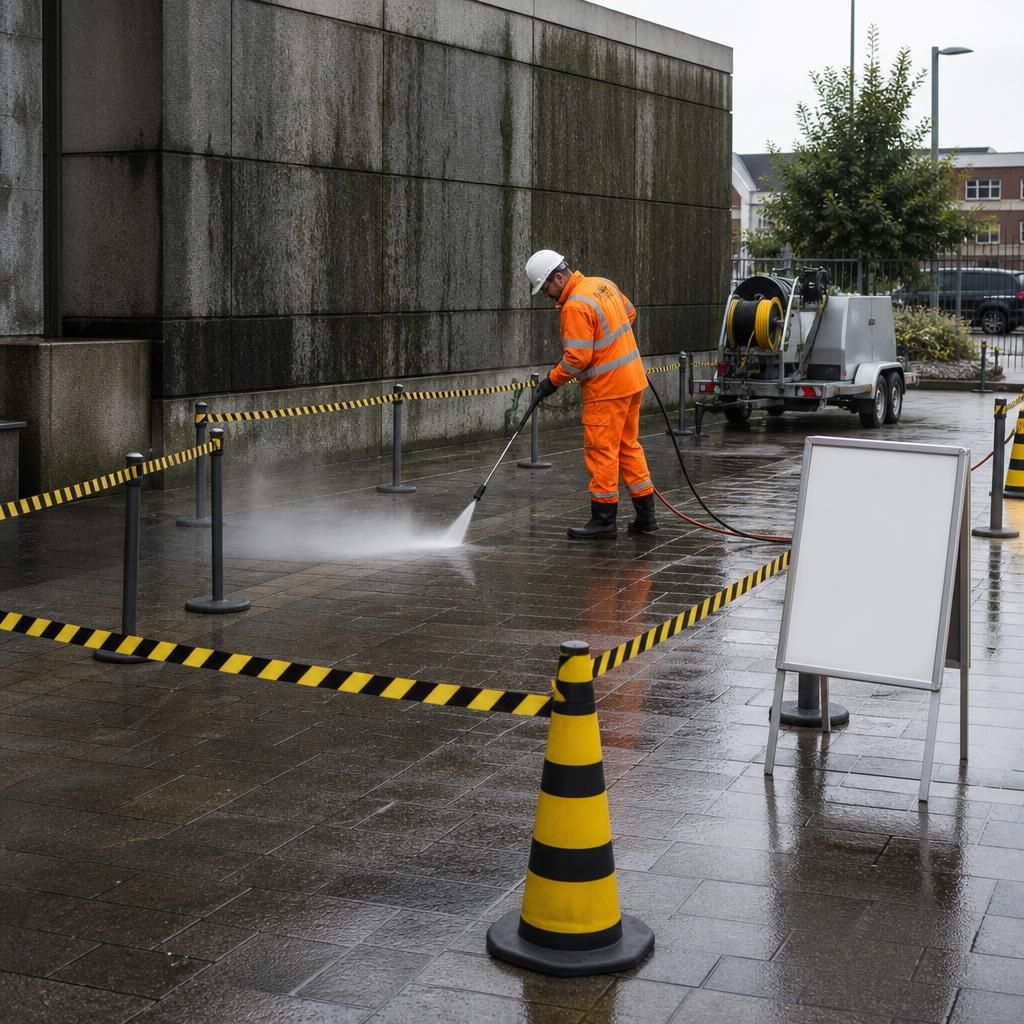
Safety during moss and algae removal starts with controlling access to the work area. Barriers, warning signs and suitable segregation prevent occupants, visitors and vehicles from entering wet, slippery areas or passing beneath elevated work.
Where cleaning takes place near a public pavement, entrance or shared access route, the team coordinates with the site contact and may use a banksman, agreed working times or a temporary diversion. Hoses and cables are routed or protected to reduce trip hazards, and the area remains restricted until loose growth, debris and residual slip risks have been checked.