
What measures are taken to ensure the safety and effectiveness of the cleaning process for both surfaces and surrounding environments?
We assess the surface, surrounding conditions and type of moss or algae before selecting a compatible cleaning method, pressure, temperature and treatment, including a test patch where appropriate. We protect people, nearby materials, vegetation and drainage systems through controlled access, suitable PPE, runoff management and careful rinsing, while checking the finished surface for effective, even removal without avoidable damage.
Safe and effective moss, algae and green growth cleaning depends on matching the treatment to the surface and contamination while controlling risks to people, property, vegetation and drainage. Before work begins, we assess the substrate, the condition of the area, access requirements, nearby materials and the likely route of wastewater. We then select suitable equipment, pressure, temperature and cleaning products, using the least aggressive method that can achieve the required result.
Initial inspection and risk assessment
The inspection identifies the surface type, its age and condition, existing coatings, joints, cracks, loose materials and areas that may already be weakened by moisture or organic growth. We also consider the height and layout of the building, pedestrian and vehicle movements, overhead services, weather conditions and nearby businesses or public areas. This information supports a task-specific risk assessment and method statement, particularly for commercial sites, roofs, façades, car parks and shared access routes.
Where the surface or coating is sensitive, a small test patch may be completed in an inconspicuous area. This allows us to check whether the selected pressure, temperature, dwell time and treatment are compatible before cleaning the wider surface. The test area is assessed for colour change, marking, coating failure, water penetration and the standard of moss or algae removal. The method can then be adjusted if necessary.
Choosing a compatible cleaning method
Different surfaces require different levels of control. Masonry, concrete, paving, render, roof coverings, cladding and painted surfaces must not be treated as interchangeable. Pressure washing may be appropriate for robust materials, while lower-pressure washing, softwashing or steam cleaning may be more suitable where aggressive water impact could cause damage. Pressure is controlled at the machine and at the surface, taking account of the nozzle, working distance and angle.
Water temperature, cleaning agents and contact time are also selected according to the type of growth and the substrate. Treatments are applied only where suitable, following the product instructions and relevant safety information. We avoid allowing chemicals to dry on unintended surfaces and use controlled application rather than indiscriminate spraying. Sensitive finishes, seals, pointing, joints, membranes and painted areas receive particular attention because excessive pressure or unsuitable chemistry can cause deterioration or water ingress.
Protecting people and the work area
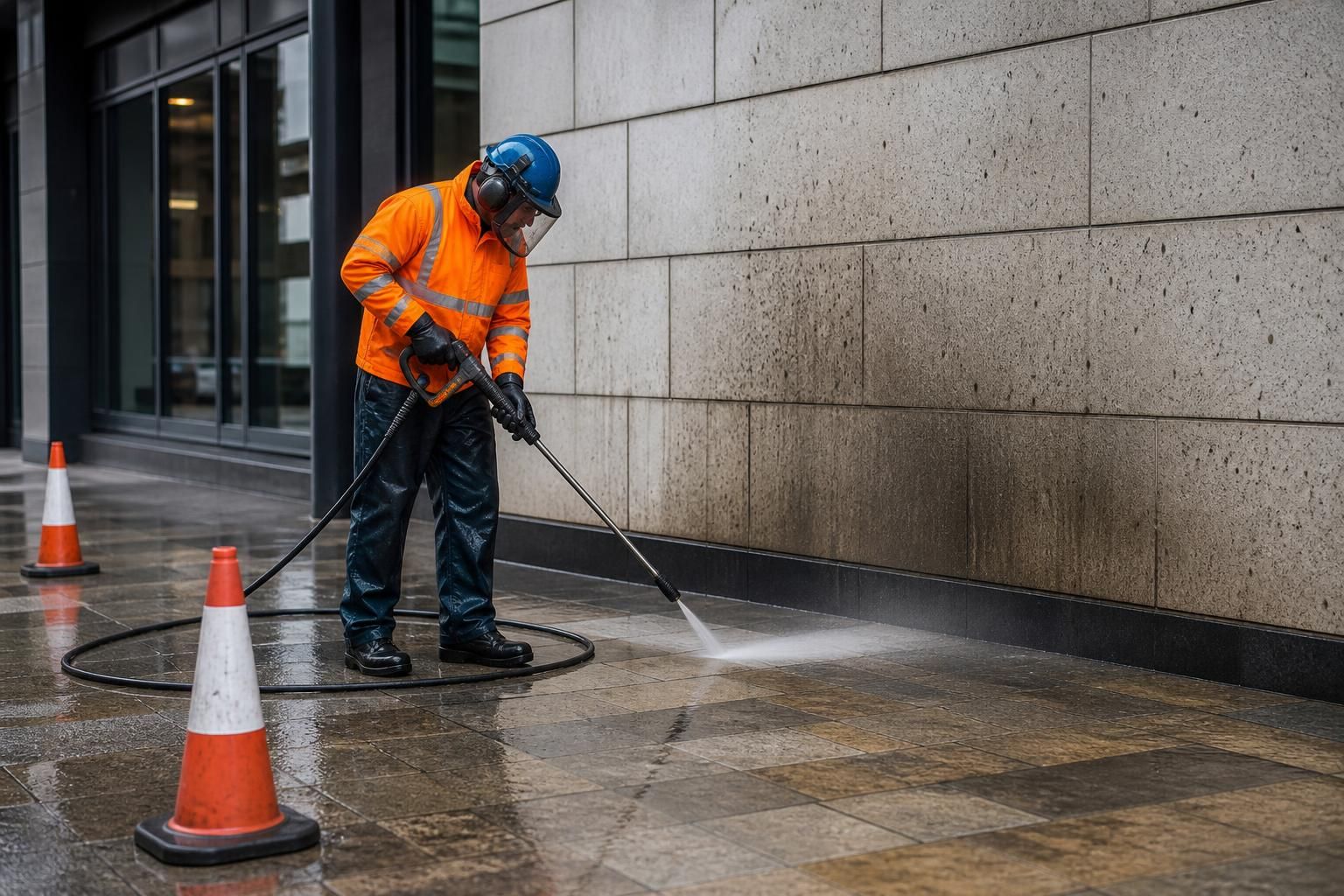
Work areas are controlled with appropriate barriers, warning signs and exclusion zones. Pedestrian routes, entrances, loading areas and vehicle movements are considered before equipment is positioned. Where access equipment is required, it is selected for the location and task, used by competent operatives and set up on suitable ground. Operatives use task-appropriate personal protective equipment, which may include eye and face protection, gloves, protective footwear, hearing protection, respiratory protection and fall-arrest equipment where the risk assessment requires it.
Hoses, cables and equipment are routed to reduce trip hazards, and access points are kept clear where reasonably practicable. Cleaning is planned around site operations and weather conditions so that wind, rain, frost or poor visibility does not create avoidable risk or spread spray beyond the controlled area. Additional precautions are used near occupied premises, public highways and sensitive operational environments.
Protecting surrounding materials and vegetation
Nearby doors, windows, vents, electrical equipment, signage, vehicles and vulnerable finishes are identified before cleaning. They may be covered, sealed or kept outside the spray zone, provided that the protection itself will not trap moisture or create another hazard. Water is directed away from openings and vulnerable joints, and rinse water is controlled rather than allowed to migrate across unaffected areas.
Plants, planted beds, lawns and other landscaping are protected from overspray and contaminated runoff. Where appropriate, vegetation is covered or dampened before treatment and rinsed afterwards, subject to the requirements of the cleaning product and site conditions. Any plants or habitats that could be particularly sensitive are reported during planning so that the method and controls can be reviewed.
Managing drainage and runoff
Drainage points, channels, gullies and surface falls are checked before work starts. We prevent dirty water, removed organic matter and cleaning solutions from entering uncontrolled areas or watercourses. Drain covers, drain guards, temporary bunding, wet vacuums or other collection measures may be used where the site assessment indicates a risk. Debris is collected from the cleaned surface and surrounding area rather than being left to wash into drains.
Runoff is handled in accordance with the site requirements and applicable environmental controls. It may be collected, filtered, diverted to an appropriate foul drainage connection where permitted, or removed for suitable disposal. We do not assume that every drain can accept contaminated water, and any restrictions imposed by the site, local drainage arrangements or product instructions are taken into account.
Controlling cleaning products
Product selection is based on the contamination, surface compatibility and environmental risk. Operatives follow the relevant safety data and control-of-substances information, including requirements for storage, dilution, application, PPE, first aid and spill response. Containers are labelled and secured, and products are not mixed unless the manufacturer specifically permits it. Spill kits and suitable response procedures are available where chemicals or contaminated water are being used.
We use only the quantity needed for the task and avoid application during conditions likely to cause drift or uncontrolled runoff. If a treatment requires time to work, the area remains controlled until it can be rinsed or otherwise managed safely. This helps achieve effective removal without relying on excessive pressure or unnecessary chemical use.
Checking the result and the surface
After cleaning, the area is inspected for remaining moss, algae, staining, uneven treatment, water retention and any signs of damage. Particular attention is given to joints, edges, drainage paths, roof details and areas beneath dense growth, as these can require careful follow-up rather than more aggressive cleaning. The surface is rinsed or finished in a way that is appropriate for its material, and loose debris is removed from the work area.
Effectiveness is judged against the agreed scope and the condition of the substrate, not simply by using the highest pressure or strongest treatment. Some staining or biological marks may be embedded in porous materials or associated with permanent weathering, so further treatment is considered only after checking that it will not compromise the surface. Any defects or pre-existing damage identified during the work are recorded and brought to the customer’s attention.
Final handover and ongoing control
Before the area is reopened, barriers and protection are removed only when surfaces, access routes and surrounding areas are safe. Walkways are checked for residual sludge or slip hazards, equipment and waste are cleared, and drainage points are inspected where runoff controls have been used. The completed work can then be reviewed against the agreed requirements, with any recommendations for maintenance, repairs or future treatment explained clearly.
These measures make the process safer while also improving the quality and consistency of the clean. Careful assessment prevents unsuitable methods being used, controlled application limits unintended impact, and final inspection confirms that moss and algae have been removed as effectively as the surface and site conditions allow.
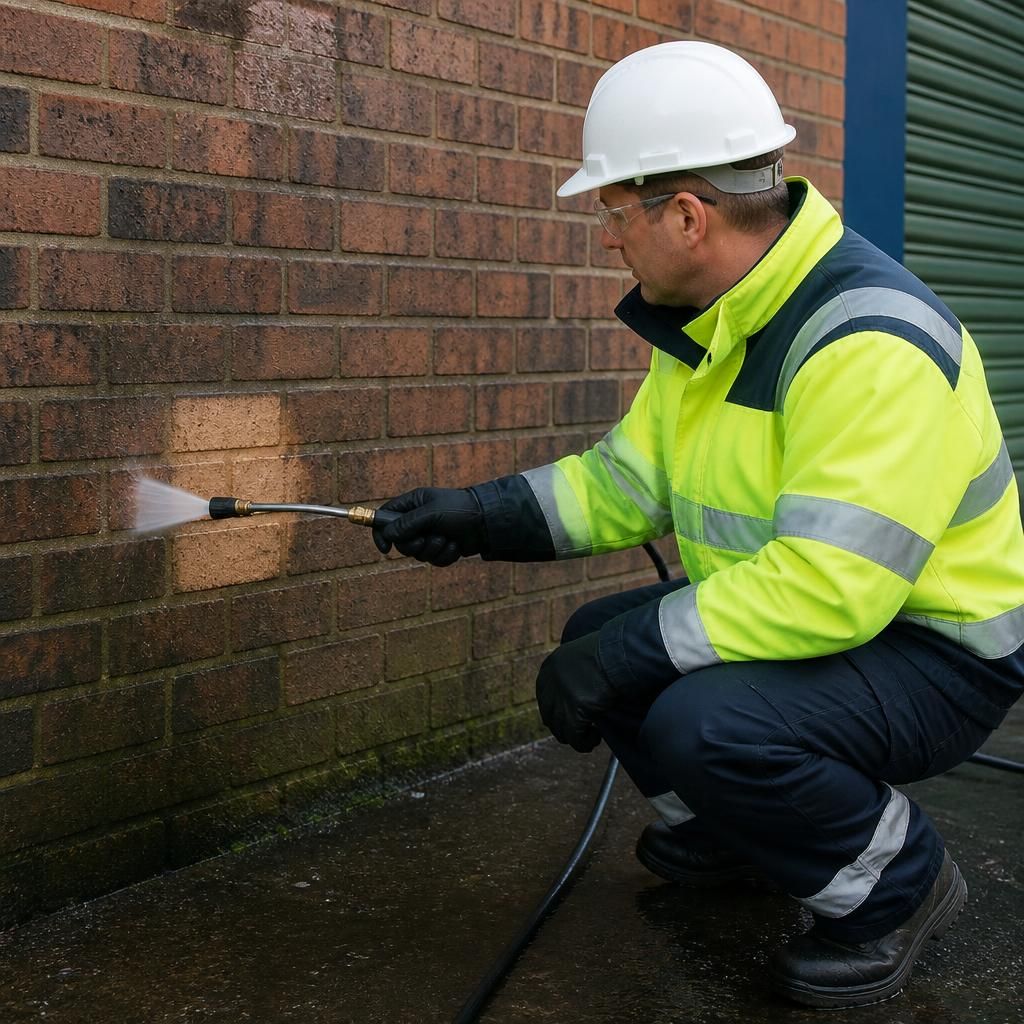
A small test patch is used to confirm that the selected cleaning method is safe for the surface before the wider area is treated. This is particularly important for painted finishes, render, roof coverings, cladding, delicate masonry and surfaces with existing weathering or coatings.
The test checks pressure, temperature, cleaning product and contact time for signs of colour change, coating failure, water penetration or incomplete moss and algae removal. The method can then be adjusted before full cleaning begins, reducing the risk of avoidable damage while maintaining effective results.