
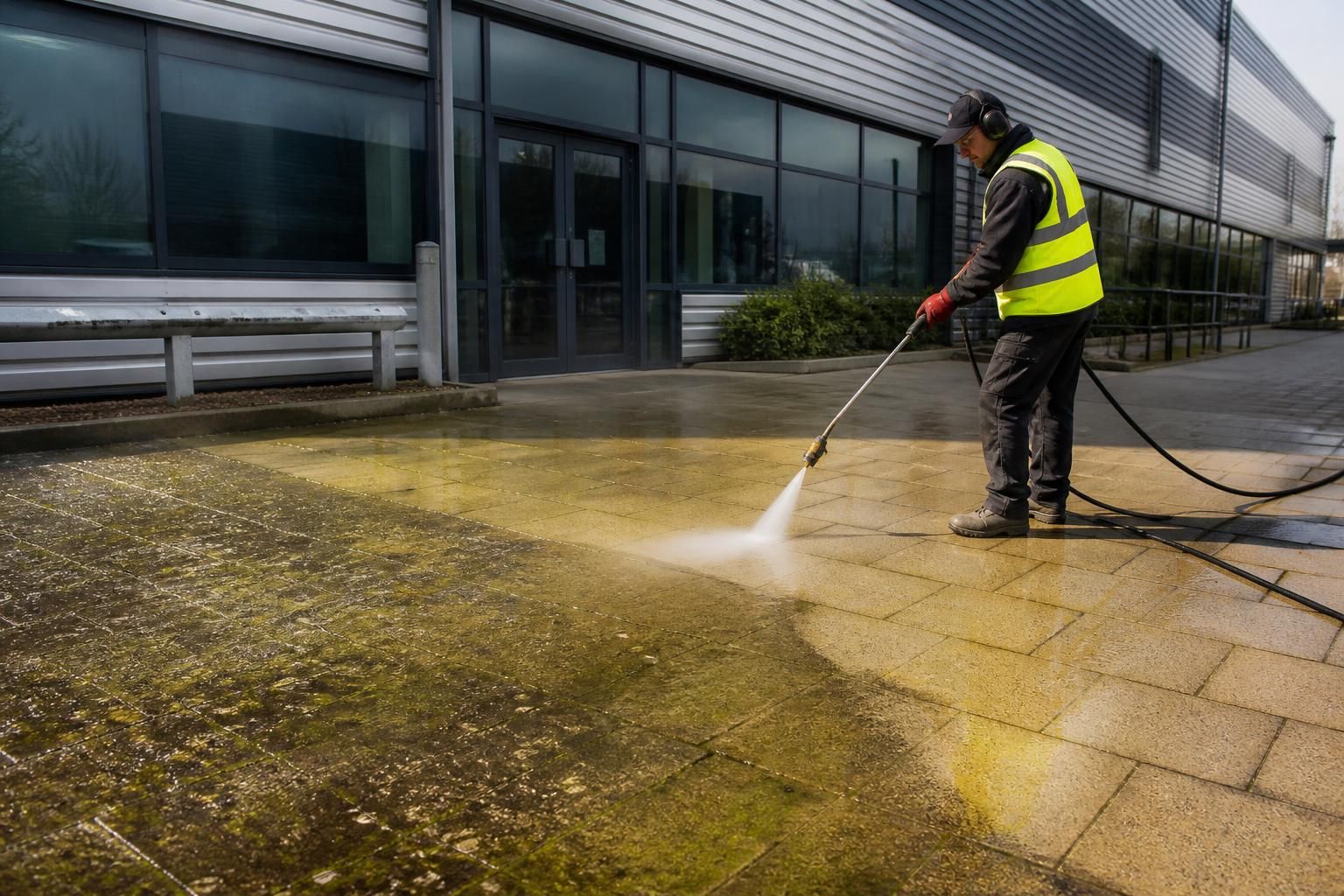
What factors determine the cost of professional moss and algae removal services?
The cost of professional moss and algae removal is determined by the size and condition of the affected surface, the type of material, ease of access, the treatment and equipment required, and whether protective or follow-up treatments are needed. Roof pitch, height, surrounding risks, waste handling and the extent of regrowth can also affect the final quotation, so an assessment is normally needed to price the work accurately.
Professional moss and algae removal costs are mainly determined by the area to be cleaned, the surface condition, access requirements, the treatment method and the level of follow-up work needed. Roof pitch and height, contamination severity, surrounding risks, water and waste management, and whether protective treatment is required can also affect the quotation. An accurate price normally requires a site assessment or detailed photographs because apparently similar areas can involve very different levels of labour, equipment and safety control.
Surface area and the extent of growth
The total area affected is one of the first pricing considerations. Larger roofs, façades, paved areas, car parks and cladding require more preparation, cleaning time, water, treatment solution and post-cleaning inspection. However, cost is not based on area alone. Light surface staining may require a relatively straightforward treatment, whereas established moss with thick growth, embedded organic matter or extensive algae can require careful mechanical removal followed by a biocidal treatment.
Growth concentrated in isolated sections may also take longer to clean than a uniform covering, particularly where operatives must move between separate elevations or protect unaffected areas. A quotation should therefore reflect the actual condition and layout of the site rather than rely solely on a broad area measurement.
Type and condition of the surface
Different materials need different cleaning approaches. Roof tiles, slate, concrete, tarmac, block paving, render, brickwork, stone, metal cladding and painted surfaces vary in their tolerance of pressure, moisture and chemical treatment. A method suitable for robust paving may damage a delicate roof covering or remove a surface coating from cladding.
Older, weathered or damaged materials usually require slower work and closer control. Cracked tiles, open joints, loose pointing, fragile coatings and areas of existing water ingress must be identified before cleaning. If minor preparation, masking or protection is needed, this can increase the labour involved. Professional cleaning should not be priced on the assumption that every surface can be treated with the same pressure or equipment.
Access, height and site conditions
Access is often a significant part of the cost, particularly for commercial and industrial premises. Ground-level paving may be accessible with standard equipment, while a roof, high façade or elevated cladding may require mobile access equipment, edge protection, scaffolding or controlled work from a suitable platform. The choice depends on the building design, height, roof pitch, access around the property and the risks identified during the assessment.
Restricted entrances, narrow service yards, busy car parks, adjacent roads, fragile landscaping and occupied premises can all affect how equipment and materials are brought to the work area. Where access equipment is needed, the hire, delivery, set-up and competent operation of that equipment may form part of the quotation. Work may also need to be phased to maintain pedestrian routes, vehicle movements or access for tenants and customers.
Cleaning method and equipment
The required process depends on the surface and the type of contamination. Possible elements include low-pressure washing, controlled pressure cleaning, steam cleaning, manual removal, soft washing or the application of a suitable biocidal treatment. Some projects need a combination of methods rather than one application.
Equipment costs can include specialist pumps, hoses, steam systems, surface cleaners, water recovery equipment, access platforms and protective sheeting. More controlled equipment may be necessary where excessive pressure could cause damage or where run-off must be carefully managed. The quotation should account for safe set-up, testing a small area, cleaning, rinsing where appropriate and inspecting the finished surface.
Severity of moss, algae and organic contamination
Early-stage algae or green staining is usually less demanding to address than mature moss with established roots and heavy debris. Thick growth may need to be removed in stages to avoid blocking outlets, contaminating drainage systems or placing unnecessary stress on the surface. Gutters, valleys, gullies and drainage channels may need additional attention where moss has accumulated.
Other contamination, such as bird fouling, lichen, dirt, oil or atmospheric deposits, can also affect the process. If several types of contamination are present, additional cleaning stages or different treatments may be needed. The condition of the surface after the visible growth has been removed can also reveal defects that should be recorded and reported rather than concealed.
Protective and follow-up treatments
Some quotations cover physical removal only, while others include a treatment intended to deal with remaining spores and organic residue. A suitable post-cleaning treatment may help slow the return of moss or algae, but its suitability depends on the surface, local drainage and environmental controls. It should be applied at the correct concentration and in conditions that allow it to work effectively.
Optional follow-up visits, inspections or maintenance cleaning can affect the overall cost. For a commercial site, planned maintenance may be more practical than waiting for heavy regrowth, particularly on surfaces where repeated aggressive cleaning could shorten the life of the material. The quotation should clearly distinguish between the initial clean, any protective treatment and future maintenance so that the scope is understood.
Water supply, run-off and waste handling
The availability of a suitable water supply, drainage arrangements and the need to control run-off can influence the work plan. Cleaning solutions, dirty water, detached moss and contaminated debris must be managed responsibly, especially near public areas, planting, watercourses and neighbouring premises. Where water recovery, temporary drain protection, collection, filtration or controlled disposal is required, this adds time and equipment to the project.
Loose moss and other organic waste may need to be collected from roofs, gutters, paving or landscaped areas and removed from site. Waste handling is particularly relevant on larger commercial projects, where keeping the premises safe and operational during and after cleaning requires additional housekeeping.
Risk controls and compliance requirements
Professional pricing includes more than the visible cleaning work. Site-specific risk assessment, method statements, personal protective equipment, exclusion zones, traffic and pedestrian management, equipment checks and protection of nearby property may all be required. Work at height, chemical handling and cleaning near electrical services or public areas require suitable controls and trained operatives.
Commercial clients may also require evidence of insurance, training, safe systems of work, waste documentation and coordination with their own site procedures. These requirements can increase preparation time, but they are essential where the work affects employees, visitors, tenants, contractors or members of the public.
What should be included in a quotation?
- The areas and surfaces included in the work.
- The proposed cleaning and treatment method.
- Preparation, protection, access equipment and site set-up.
- How gutters, drains, landscaping, vehicles and neighbouring surfaces will be protected.
- Whether waste collection, water management and disposal are included.
- Any exclusions, surface limitations or defects identified during the assessment.
- Whether follow-up treatment or maintenance visits are included or priced separately.
- Any access, timing or site-management requirements that could affect the programme.
Providing clear photographs, approximate dimensions, details of the surface and information about access can help produce an initial indication, but a site visit is preferable for larger, elevated or higher-risk work. The most useful comparison is not simply the lowest price; it is whether each quotation covers the same areas, safety controls, treatment stages, waste arrangements and aftercare. A properly scoped quotation gives a more reliable view of the true cost and reduces the likelihood of additional charges when work begins.
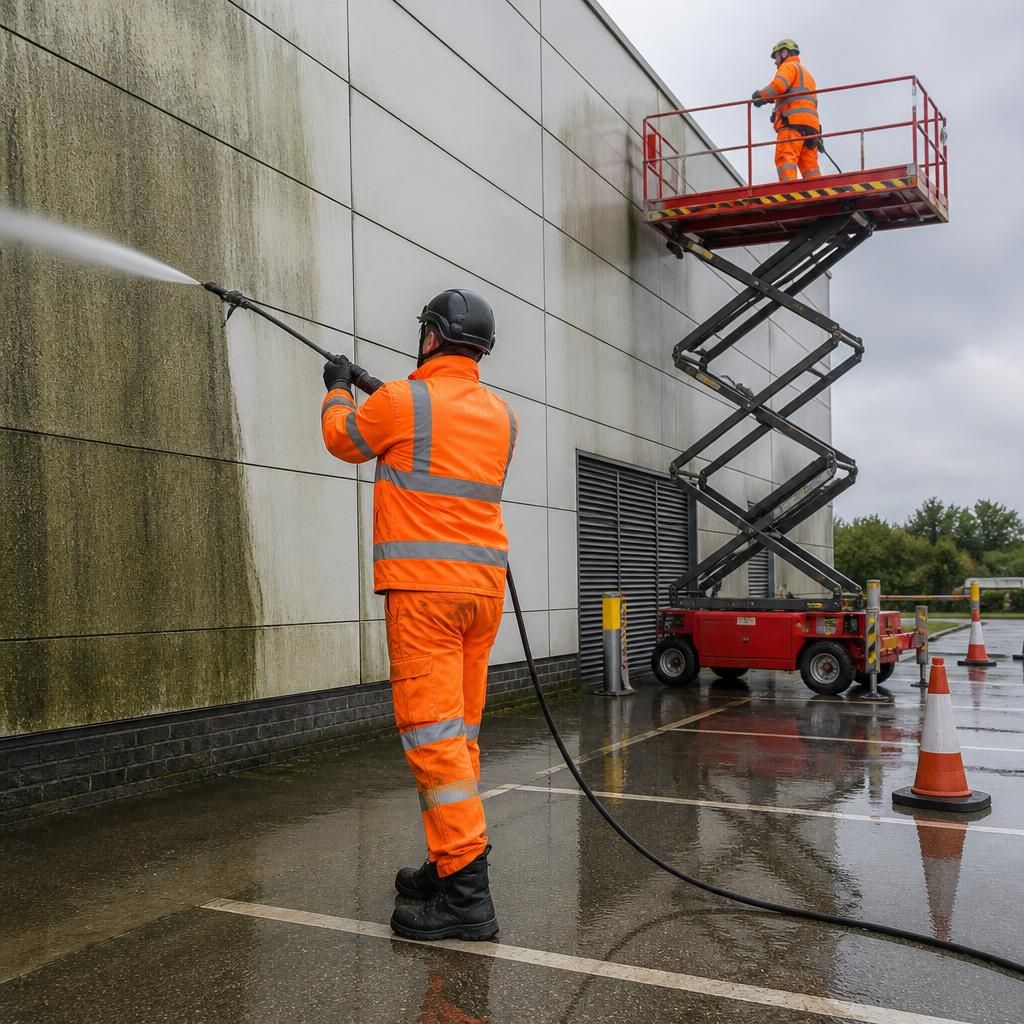
Access and site conditions can significantly affect the cost of professional moss and algae removal. A roof, high façade or restricted commercial yard may require access equipment, edge protection, exclusion zones or additional coordination, even when the affected area is relatively small.
When assessing the work, we consider roof pitch, working height, ground conditions, nearby vehicles and pedestrians, drainage, landscaping and the availability of a suitable water supply. These factors determine the equipment, labour and protection needed to complete the cleaning safely and manage moss, dirty water and treatment run-off responsibly.
Request a tailored moss and algae removal quotation
Send us details of the affected surfaces, site access and any known drainage or safety requirements so we can assess the work accurately. We can then provide a tailored moss and algae removal quotation covering the cleaning method, access arrangements, waste handling and any recommended follow-up treatment.