
What are the potential environmental impacts of using cleaning solutions for moss and algae removal, and how are they mitigated?
Cleaning solutions used for moss and algae removal can affect soil, plants, aquatic life and drainage systems if they are misapplied or allowed to enter watercourses. These risks are mitigated through suitable product selection, controlled application, surface protection, responsible collection or disposal of runoff, and compliance with relevant environmental requirements.
Cleaning solutions used for moss and algae removal can harm soil, plants, aquatic organisms and drainage systems if they are incorrectly selected, over-applied or allowed to enter a watercourse. The environmental risk depends on the product’s active ingredients, dilution, application method, surface, weather conditions and how contaminated runoff is controlled. Responsible contractors reduce these risks by using the least hazardous effective method, protecting nearby areas and managing wastewater in accordance with the product instructions and relevant UK environmental requirements.
Potential impacts include:
- Damage to aquatic life: Biocidal ingredients, disinfectants and oxidising agents can be harmful to fish, invertebrates, algae and microorganisms if concentrated solution or untreated runoff reaches rivers, streams, ponds, ditches or surface-water drains. Even products that are suitable for exterior use can cause pollution when misapplied.
- Harm to plants and soil: Overspray or splashes may scorch foliage, affect roots and disturb soil microorganisms. Repeated discharge onto planted areas can also alter local soil conditions, particularly where the solution is stronger than specified.
- Pollution of drainage systems: Runoff entering a surface-water drain may be conveyed directly to a watercourse rather than through a treatment works. This creates a different risk from discharge to a foul sewer, and neither route should be assumed to be suitable without assessment and, where necessary, permission.
- Residues on surfaces: Poor rinsing or excessive application can leave residues on masonry, cladding, roof coverings, paving or painted finishes. These residues may affect the appearance or condition of the material and can be washed away later during rainfall.
- Unnecessary chemical use: Applying treatment where mechanical removal, low-pressure washing or steam cleaning would be sufficient increases the environmental load without improving the result.
Mitigation starts with a site assessment. Before work begins, the cleaning team should identify nearby watercourses, gullies, open drains, planted areas, ponds, soil beds, sensitive materials and locations where runoff could leave the site. The condition of the surface and the type of growth are also assessed. Moss attached to a roof, algae on paving and green growth on a rendered façade may require different methods and products.
Where practical, physical methods are used first. Brushing, scraping, controlled pressure washing and steam cleaning can remove much of the growth without introducing a chemical treatment. A cleaning solution may still be appropriate where organic growth has penetrated textured surfaces or where a residual treatment is needed to slow regrowth, but its use should be proportionate to the condition and intended outcome.
Product selection is another important control. A professional contractor should review the label, safety data sheet and use instructions before application, checking the approved surface, dilution, contact time, personal protective equipment and disposal requirements. Products should not be mixed unless the manufacturer specifically permits it. Stronger concentrations do not automatically produce a better result and may increase damage and pollution risks.
Application is kept controlled by using suitable equipment and avoiding overspray. Operators can work in manageable sections, apply only the volume required to wet the affected area and avoid windy or rainy conditions that could carry mist or wash the product away before it has acted. Nearby vegetation, vehicles, façades and other vulnerable surfaces can be protected with appropriate sheeting or temporary barriers, while ensuring that coverings do not direct contaminated liquid into an unprotected area.
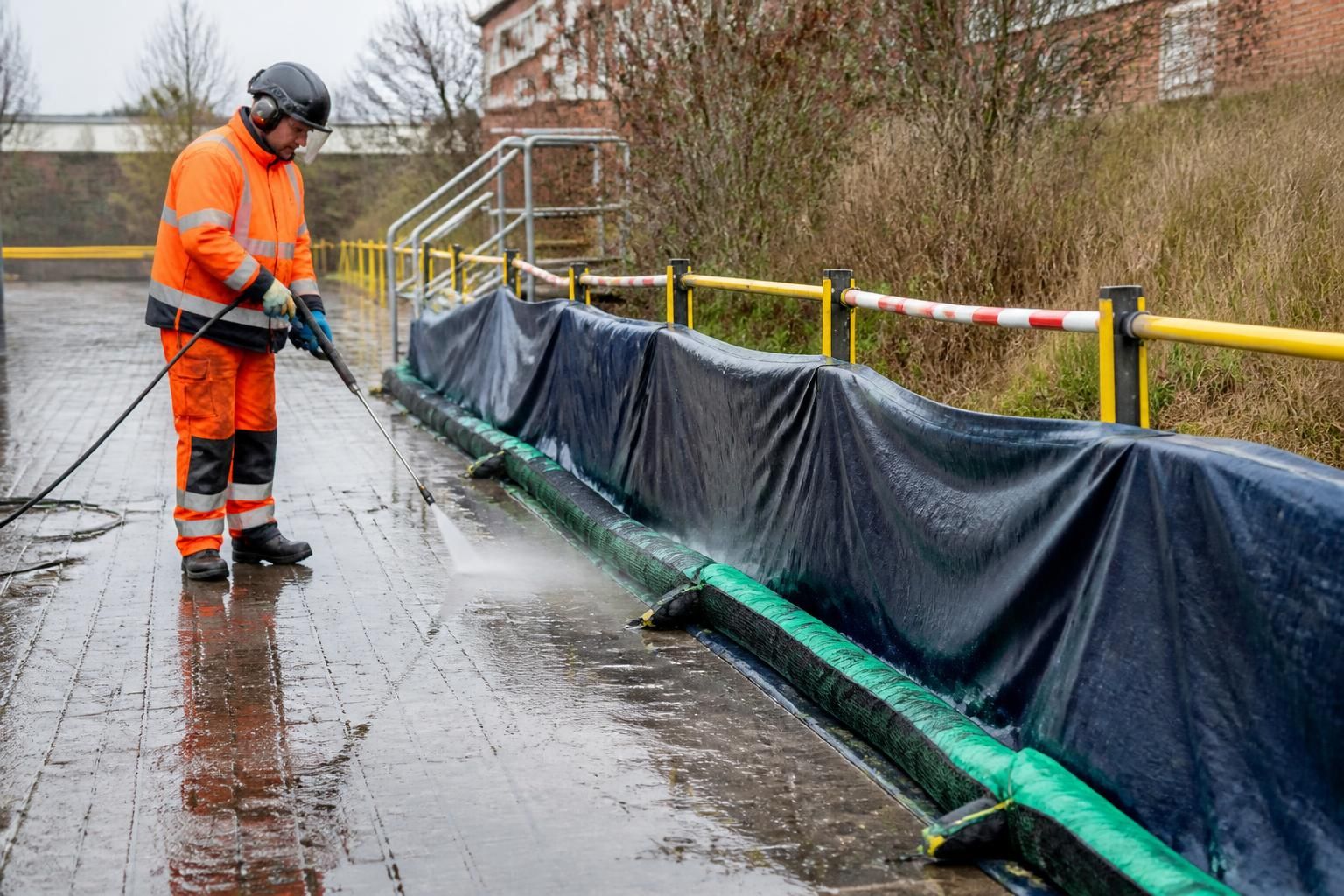
Runoff management should be planned rather than treated as an afterthought. Depending on the site, controls may include drain covers, bunding, absorbent barriers, temporary collection points, wet vacuum recovery or staged rinsing. Collected liquid and contaminated debris must be handled according to its composition and the receiving site’s requirements. Water should not be directed into a surface-water drain, watercourse or open ground simply because it appears diluted or clear. Where discharge to a foul sewer is being considered, the contractor should confirm that it is acceptable and obtain any required consent from the relevant sewerage provider.
Weather and timing also affect environmental protection. Work is generally avoided when rain is forecast, when strong wind could cause drift, or when frozen conditions could prevent proper containment. Allowing the specified contact time while keeping the solution within the controlled work area helps avoid both premature wash-off and repeated applications. Following treatment, surfaces are rinsed or left to weather only where this is consistent with the product instructions and the site’s drainage controls.
Good practice also includes protecting the wider site during preparation and clean-up. Chemical containers should be stored securely, kept upright and labelled, with spill materials available. Empty containers, used absorbents, removed moss and other contaminated waste should be segregated and disposed of through an appropriate waste route. Staff should understand the relevant Control of Substances Hazardous to Health requirements, spill procedures and the environmental constraints of the site, rather than relying solely on general pressure-washing experience.
For larger commercial or industrial premises, the method statement and risk assessment should record the proposed chemical, dilution, application area, drainage arrangements, weather limitations, surface protections, runoff controls and waste procedure. Additional controls may be needed near sensitive habitats, food-production areas, public spaces or watercourses. If a spill occurs, work should stop, the source should be contained, drains protected and the incident escalated in line with the site’s emergency arrangements. Serious pollution incidents may need to be reported to the relevant environmental authority.
The most environmentally responsible approach is therefore not to ban every cleaning solution, but to use chemical treatment only where it is necessary, select it carefully and prevent it from leaving the controlled work area. A competent contractor should be able to explain why a particular method has been chosen, how nearby drains and planting will be protected, and how any contaminated water or waste will be managed before cleaning starts.
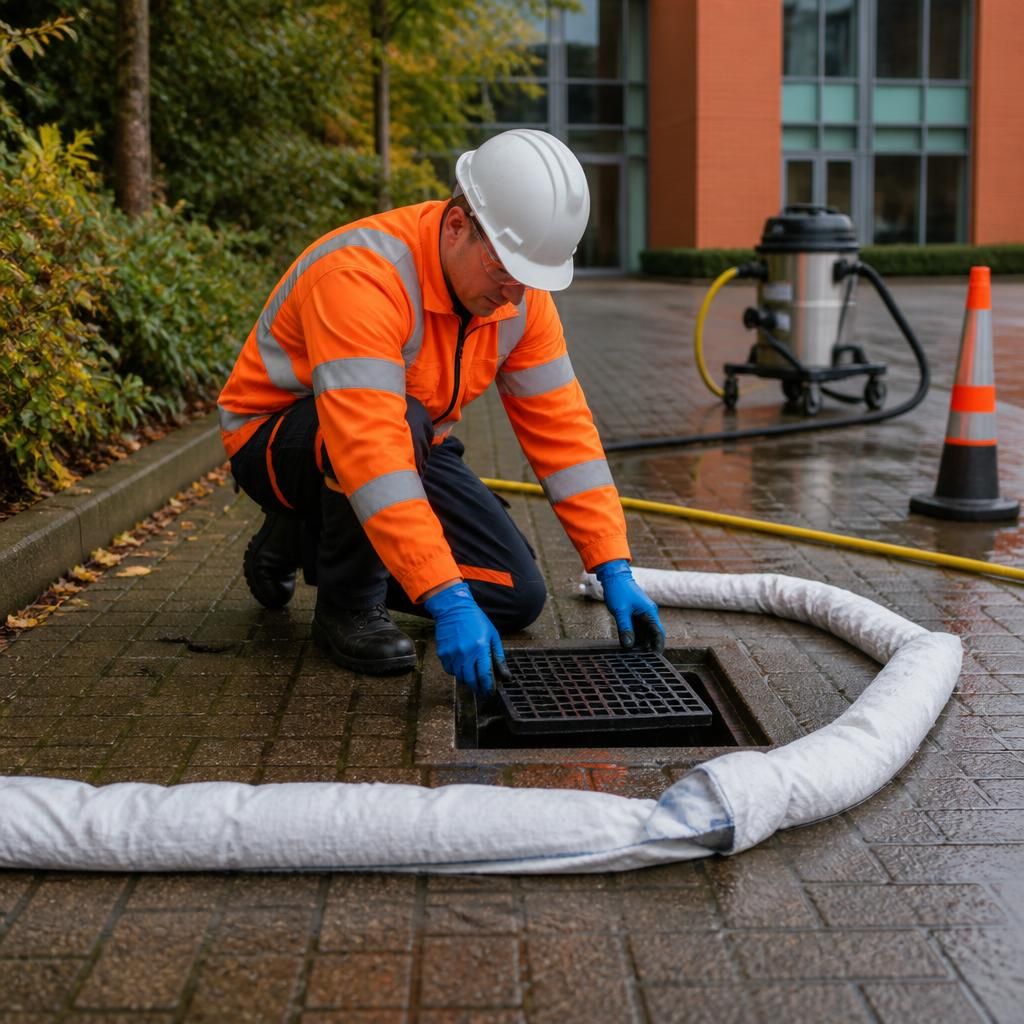
Runoff control is one of the most important ways to reduce the environmental impact of moss and algae cleaning solutions. Water carrying biocides, disinfectants, loosened growth or contaminated debris must not be allowed to enter watercourses, ponds, open ground or surface-water drains without appropriate assessment and authorisation.
Before cleaning starts, the team should identify drainage routes and protect vulnerable points with suitable drain covers, bunding or absorbent barriers. Work can then be completed in manageable sections, with controlled rinsing and, where necessary, wet-vacuum recovery or temporary collection. Any recovered liquid must be handled according to its composition and the site’s disposal requirements; clear or diluted-looking water is not automatically safe to discharge.
This approach keeps treatment within the designated work area and helps protect nearby planting, soil and aquatic life. Where discharge to a foul sewer is considered, its suitability should be confirmed with the relevant sewerage provider and any required consent obtained.