
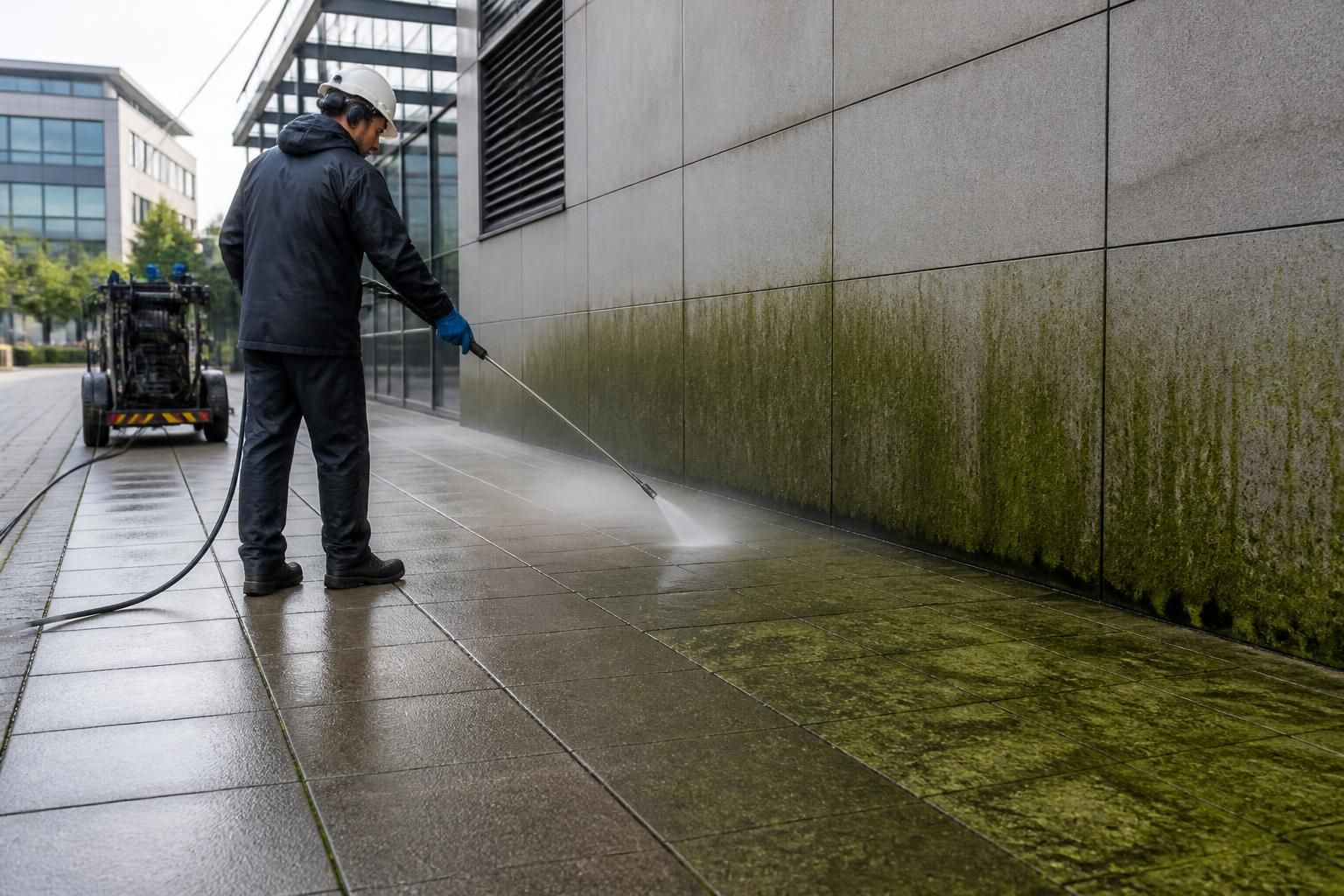
What are the benefits of professional moss and algae removal over DIY methods?
Professional moss and algae removal provides safer, more thorough results than DIY cleaning by using the correct methods, equipment and treatments for each surface. It helps protect roofs, façades and other exterior areas from damage while reducing the risk of falls, chemical misuse and recurring growth.
Professional moss and algae removal is generally safer, more thorough and less damaging than DIY cleaning because the work is matched to the surface, the growth and the site conditions. Trained technicians can assess the cause of the growth, select an appropriate cleaning method, work safely at height and manage treatment and runoff. This is particularly important on roofs, façades, cladding, paved areas and other commercial surfaces where incorrect cleaning can create damage, disruption or liability.
Reduced risk of injury
Moss and algae often develop on roofs, canopies, steps, walkways and other areas that are difficult to reach. These surfaces may become slippery, unstable or fragile, and ladders can be unsafe if they are placed on uneven ground or close to access routes. Professional teams use suitable access equipment, fall-protection measures and site controls for the property and task. This reduces the risks associated with climbing, working above ground level and handling pressurised equipment.
For commercial premises, professional planning also helps protect employees, visitors, contractors and members of the public. Work areas can be isolated where necessary, with consideration given to entrances, vehicle movements, pedestrian routes and neighbouring properties.
Less risk of surface damage
DIY cleaning commonly relies on excessive pressure, unsuitable attachments or harsh products. These can strip protective coatings, loosen pointing, force water beneath roof materials, damage seals or mark paving and cladding. Moss may also be pulled from a surface in a way that disturbs tiles, membranes or other vulnerable components.
A professional assessment identifies the surface type, its condition and the level of contamination before cleaning begins. The method may involve controlled pressure washing, low-pressure application, steam cleaning, manual removal or a carefully selected treatment. Using the least aggressive effective approach helps preserve the substrate and avoids treating a delicate surface as if it were robust masonry.
More complete removal
Moss and algae are not always limited to the visible green growth. Spores, organic residue and staining can remain in joints, textured finishes, drainage channels and shaded areas. A quick DIY wash may improve the appearance without addressing these deposits, allowing regrowth to occur quickly.
Professional cleaning combines preparation, removal and rinsing with attention to edges, corners, overlaps and drainage points. Where appropriate, a compatible treatment can be applied after cleaning to deal with residual organic contamination. The treatment must be selected for the surface and used in accordance with its instructions; a stronger chemical is not automatically a better solution.
Better protection against recurring growth
Cleaning alone may not solve the conditions that encourage moss and algae. Persistent shade, poor drainage, blocked gutters, standing water, surface porosity and overhanging vegetation can all contribute to recurrence. During professional work, these factors can be identified and reported so that maintenance or remedial measures can be considered.
Depending on the site, useful measures may include improving drainage, removing organic debris, keeping gutters clear, reducing avoidable shading or arranging periodic inspections. This does not guarantee that growth will never return, but it can support a more durable result than one-off surface washing.
Appropriate equipment for difficult or large areas
Professional contractors have access to equipment suited to commercial and industrial work, including controlled pressure systems, steam equipment, water-fed tools and access platforms where required. The choice depends on the material, contamination, height, surrounding environment and required finish.
This is valuable where a property has extensive roof areas, large façades, car parks, service yards or multiple elevations. Using suitable equipment can provide more consistent coverage and reduce the need for repeated passes that may increase wear on the surface.
Improved control of cleaning products and runoff
DIY users may apply household bleach, unsuitable detergents or concentrated treatments without understanding how they interact with roofing materials, coatings, plants, metals or drainage systems. Incorrect mixing or application can create harmful vapours, damage nearby surfaces and expose people or animals to avoidable risk.
Professional work includes selecting products for the material and contamination, following the manufacturer’s instructions and controlling overspray. Where cleaning solutions or contaminated water are present, the team can take steps to protect planting, watercourses, drainage systems and neighbouring areas. Runoff control and disposal requirements depend on the site and the substances used, so these should be assessed before work starts rather than treated as an afterthought.
More reliable results for commercial properties
On a business premises, moss and algae can affect the appearance of façades, create slippery walkways and contribute to blocked drainage or surface deterioration. A professional service can be planned around operating hours, access requirements and other contractors, helping to limit disruption while maintaining site safety.
Documented site assessments, method statements and risk controls may also support a property manager’s maintenance records and contractor-management procedures. The exact documentation required depends on the work and the client’s own policies, but it is more suitable for managed sites than an informal DIY approach.
Potentially lower overall cost
DIY cleaning may appear cheaper because it avoids a contractor’s charge. However, the total cost can increase if equipment must be hired, work has to be repeated, a surface is damaged or an injury occurs. Incorrect cleaning can also shorten the life of coatings, roof materials or paving, leading to repair or replacement costs.
Professional removal is not automatically the lowest-cost option for every small, accessible task. The benefit is that the work is assessed and carried out with the surface, risks and desired maintenance outcome in mind. For larger, higher or more sensitive areas, this can provide better value by reducing avoidable damage and repeat cleaning.
When DIY cleaning may be unsuitable
- Roof areas, steep pitches, fragile coverings or surfaces requiring access equipment.
- Large commercial façades, cladding, car parks and service yards.
- Surfaces with loose pointing, damaged coatings, failed seals or existing defects.
- Sites close to public footways, planted areas, watercourses or sensitive drainage systems.
- Locations where chemical treatment, runoff control or formal risk assessment is required.
- Cleaning that could interfere with employees, visitors, vehicles or other contractors.
For a straightforward, low-level area, a property owner may be able to remove light growth with suitable hand tools and a product approved for the surface. Pressure should not be increased simply to obtain a faster result, and chemicals should never be mixed or discharged irresponsibly. If the area is elevated, extensive, fragile or regularly used by the public, professional assessment is the safer choice.
Overall, professional moss and algae removal provides more than a cleaner appearance. It combines surface-specific methods, controlled access, safer product handling, thorough cleaning and practical advice on reducing recurrence. That combination helps protect the condition and usability of exterior areas while giving commercial property owners and managers a clearer, more controlled maintenance process.
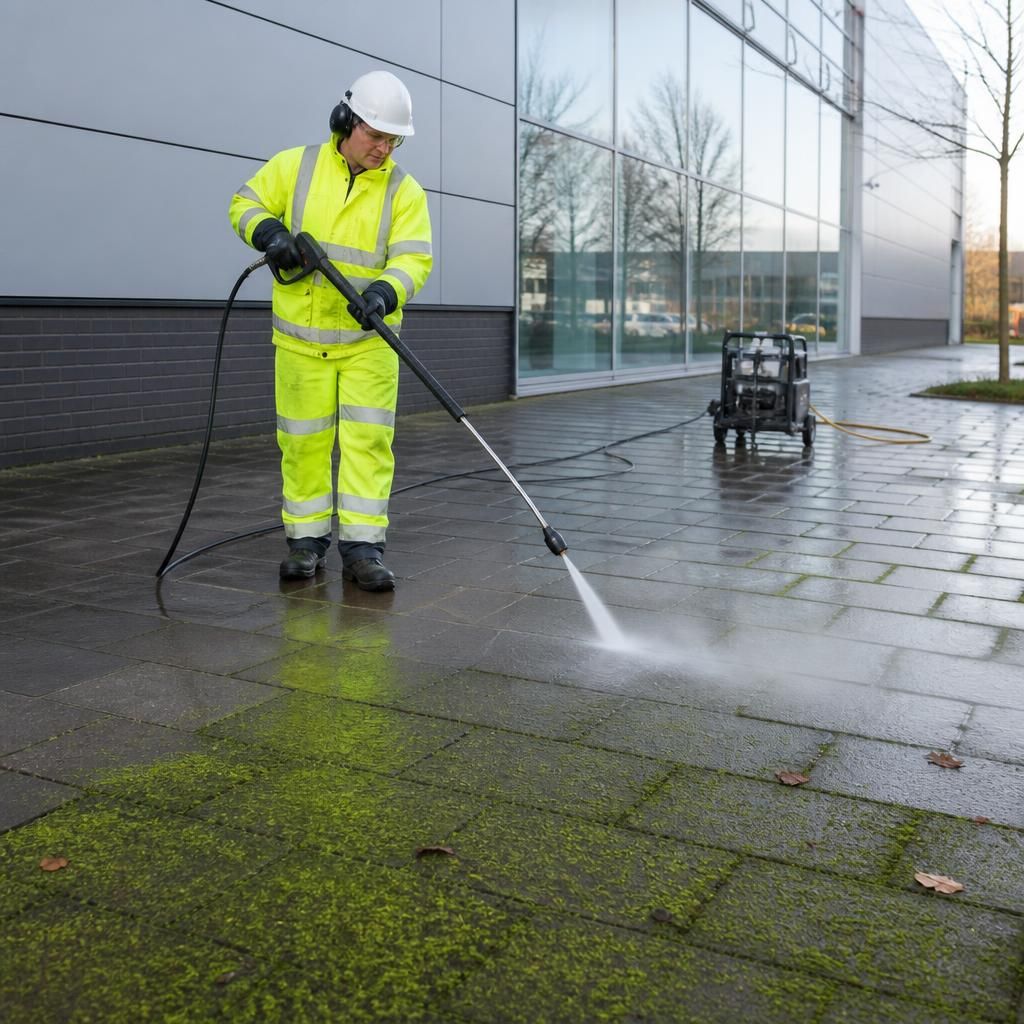
Professional moss and algae removal is safer than DIY cleaning because the method, equipment and access arrangements are selected for the surface and site conditions. This is particularly important on roofs, fragile cladding, steep areas and slippery walkways, where excessive pressure, unstable ladders or unsuitable chemicals can cause injury or damage.
Technicians can use controlled pressure, steam cleaning, manual removal or a compatible treatment, depending on the material and contamination. They can also manage overspray and runoff near planting, drainage systems and public areas. The result is more than visible stain removal: it helps protect the surface, reduce avoidable disruption and address conditions that may encourage the growth to return.