
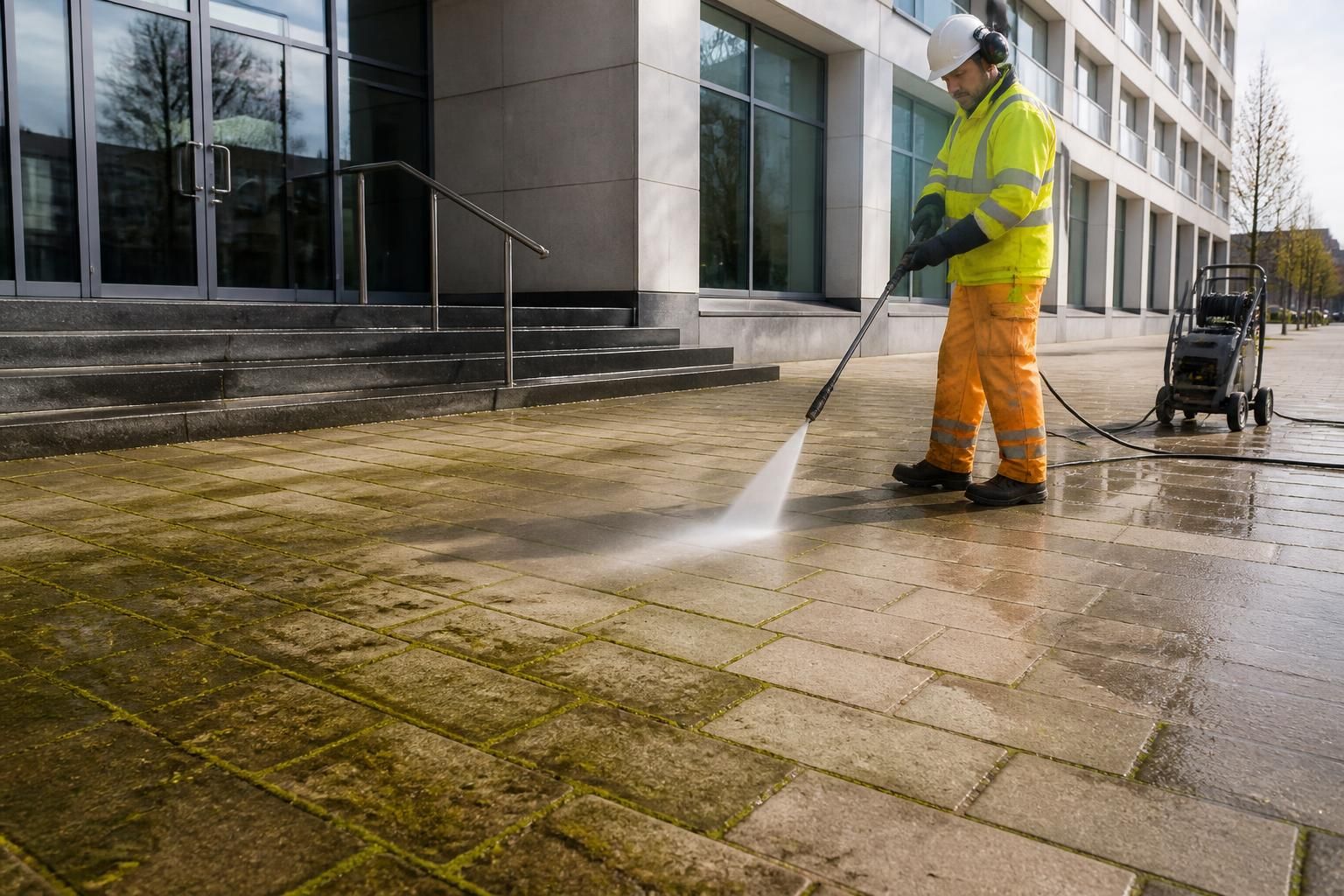
How often should professional cleaning for moss and algae removal be scheduled to maintain surface safety and aesthetics?
Professional moss and algae removal should generally be scheduled annually to maintain surface safety and appearance, with inspections more frequently where surfaces are shaded, damp, heavily trafficked or exposed to persistent contamination. The appropriate interval should be adjusted according to the surface material, local conditions and the rate at which green growth returns.
Professional moss and algae removal should generally be scheduled annually to maintain surface safety and appearance. An inspection at least once a year helps identify early regrowth, blocked drainage and slippery areas, while the cleaning interval should be shortened where surfaces remain shaded, damp, heavily trafficked or exposed to persistent contamination.
There is no single schedule suitable for every commercial site. Moss and algae develop when moisture, limited sunlight and organic debris remain on a surface. The correct interval depends on the material, the surrounding environment, the amount of foot or vehicle traffic and the consequences of contamination being left untreated.
- Annual maintenance: Often suitable for façades, hard standings, roof areas and external paving where growth is moderate and drainage is effective.
- Six-monthly inspections or cleaning: Appropriate for shaded elevations, north-facing areas, damp paving, sites beneath trees and locations with recurring green growth.
- More frequent monitoring: Necessary where algae creates a slip risk, moss affects drainage, the premises must meet strict presentation standards or the site experiences heavy public use.
- Reactive cleaning: Required when growth becomes established, surfaces become slippery, water flow is restricted or the appearance of the premises falls below the required standard.
Roofs and roofline areas should be assessed separately from ground-level surfaces. Moss can retain moisture, lift or obscure roof materials and enter gutters and outlets. Cleaning should be planned before growth becomes dense, with attention to fragile coverings, flashings, access restrictions and the need to protect the building below. Gutter and drainage checks should form part of the maintenance plan rather than being treated as an unrelated task.
Hard surfaces such as car parks, loading areas, steps, ramps and pedestrian routes may need closer attention than less frequently used areas. Algae and moss can reduce grip when wet, particularly on smooth paving, concrete, stone, decking and other porous materials. A site inspection should consider where people walk, where vehicles turn or brake, and where standing water or leaf debris encourages regrowth. High-risk areas may require cleaning before the main annual programme if contamination returns quickly.
Commercial premises with shaded elevations or poor air movement often benefit from scheduling work during a drier period, when surfaces can dry properly after treatment. However, timing should not be based on season alone. A professional assessment should take account of current weather, the surface condition, access arrangements and any requirements for containing runoff. Cleaning after prolonged damp weather may be necessary for safety, but treatment may need to be postponed if conditions prevent safe access or effective application.
Warning signs that a scheduled clean is due include green or black discolouration, visible moss, slippery deposits, persistent damp patches, blocked gutters, organic debris collecting in joints and complaints about appearance or footing. Early treatment is normally more controlled than removing thick growth, and it can reduce the need for aggressive pressure on vulnerable surfaces. New growth should not automatically be treated with high pressure, as excessive force can damage pointing, coatings, roofing materials or decorative finishes.
An effective maintenance programme should record the date of each inspection and clean, the surfaces treated, the condition found, any areas requiring follow-up and observations about drainage or recurring dampness. These records allow the next visit to be based on the actual rate of regrowth rather than a fixed calendar assumption. They are also useful for coordinating access, notifying occupants, managing traffic and demonstrating that foreseeable slip and appearance risks are being monitored.
Cleaning frequency should also reflect the cleaning method and the surface’s tolerance. Steam cleaning, controlled pressure washing and suitable treatment solutions may each be appropriate in different circumstances. The process should be selected after assessing the substrate, coating, joints, nearby planting, drainage and the risk of contaminated runoff. Any treatment intended to slow regrowth must be used in accordance with its instructions and with appropriate environmental controls.
For most commercial sites, a sensible approach is to arrange a detailed inspection and professional clean annually, then review the result and set the next interval according to the site’s conditions. Where moss or algae returns between visits, move to more frequent inspections or a planned maintenance cycle. Where the site remains clean and well drained, the programme may be extended after a professional review, provided safety and presentation standards continue to be met.
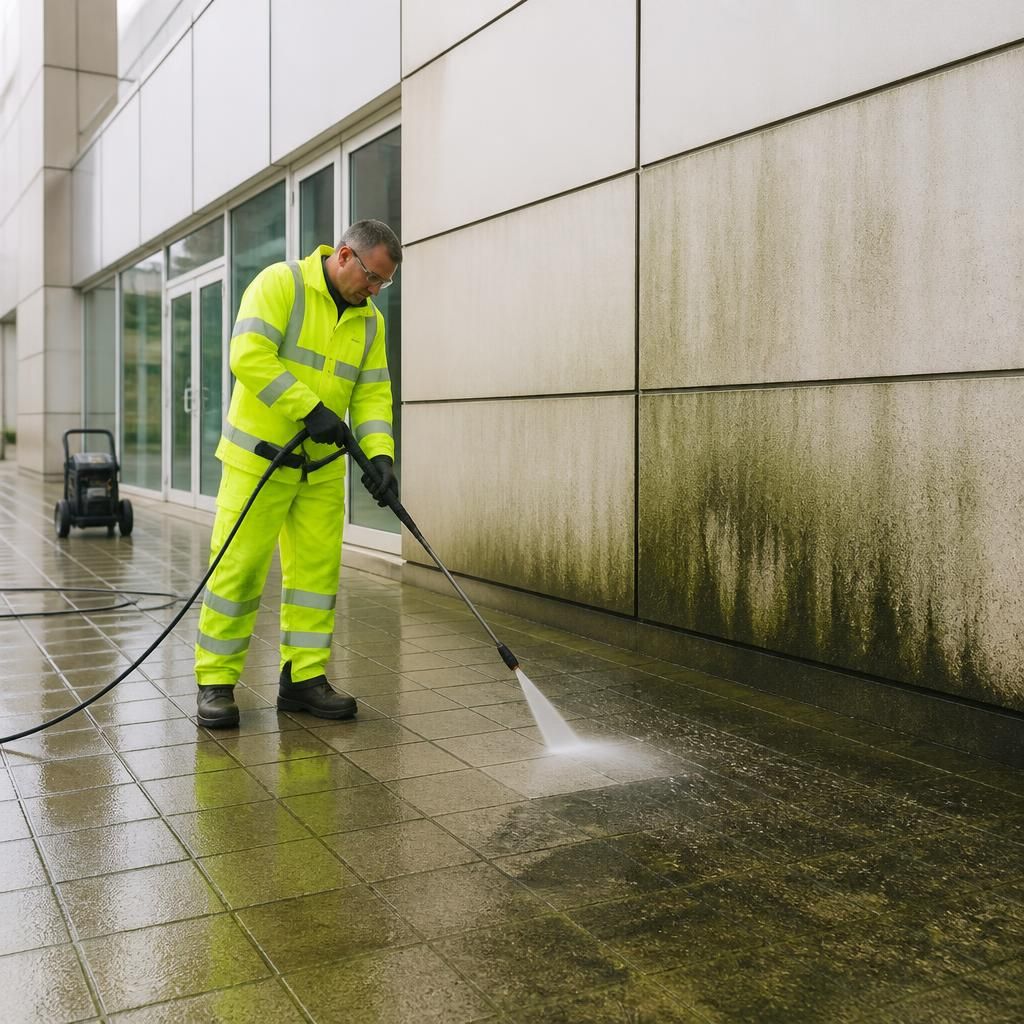
Professional moss and algae removal is usually best reviewed annually, but the cleaning interval should be adjusted to the site’s conditions. Shaded façades, damp paving, areas beneath trees and surfaces with poor drainage often need six-monthly inspections because green growth can return more quickly.
High-use routes, steps, ramps, car parks and loading areas should be monitored especially closely. Arrange an earlier visit if surfaces become slippery, moss starts to block drainage, green or black deposits reappear, or the premises no longer meets the required presentation standard. Recording the condition found after each clean helps establish a maintenance schedule based on actual regrowth rather than a fixed calendar.