
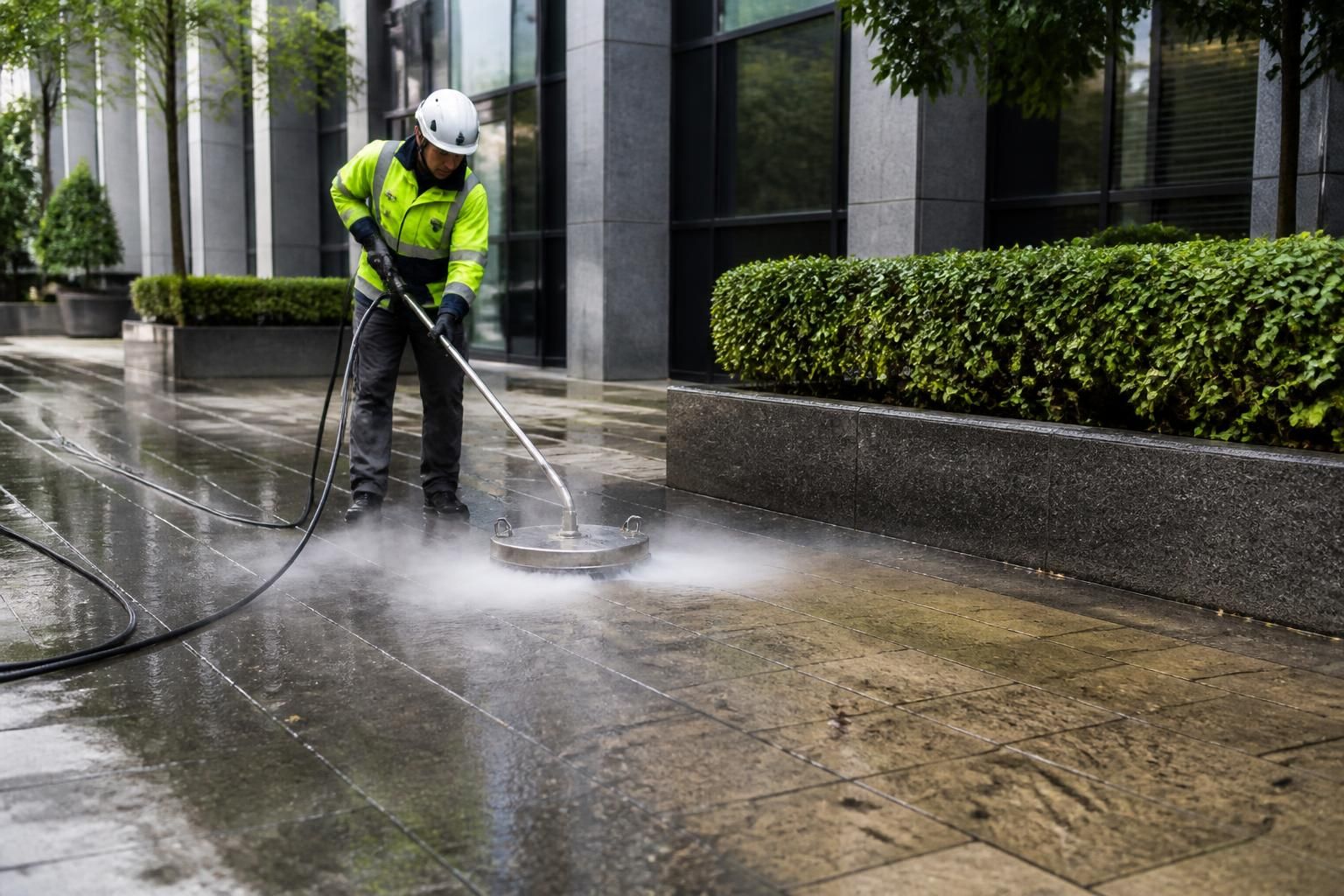
How do you effectively prevent moss and algae from returning after cleaning?
Prevent moss and algae from returning by removing the growth thoroughly, applying a suitable post-clean treatment, and addressing the moisture, shade and debris that support regrowth. Regular inspections, clearing gutters and drainage routes, trimming overhanging vegetation, and promptly treating early signs will help keep roofs, paths and façades cleaner for longer.
Effective prevention depends on combining thorough cleaning with a suitable after-treatment and ongoing control of moisture, shade and debris. Moss and algae will often return if spores, organic residue or embedded staining remain on the surface, or if the conditions that supported the original growth are unchanged. Cleaning should therefore be treated as the first stage of a maintenance plan rather than a permanent cure.
Remove the growth and its underlying residue properly. Moss should be lifted and removed from the surface, joints, edges and drainage points before the main wash. Algae and other green growth may leave a biological film that is not always removed by a quick rinse. The cleaning method must be matched to the material and its condition: pressure washing, soft washing, steam cleaning or manual treatment may be appropriate in different situations. Excessive pressure can damage coatings, pointing, roof coverings and porous surfaces, creating rougher areas where moisture and spores can collect.
Once the surface has been cleaned, a compatible post-clean treatment can help control remaining organic contamination and slow regrowth. The product and application method should be selected for the specific surface, the type of growth and the surrounding environment. Treatments used on roofs, rendered façades, paving, cladding and painted surfaces are not necessarily interchangeable. They should be applied in accordance with the manufacturer’s instructions, with suitable controls for run-off, nearby vegetation, drainage systems, occupants and the public.
A treatment can reduce regrowth, but it does not remove the causes of it. Before completing the work, inspect the area for conditions that keep the surface damp or shaded, including:
- Blocked or overflowing gutters, downpipes, gullies and channel drains.
- Leaves, soil and other organic debris collecting on roofs, paths, ledges and around façade details.
- Overhanging trees, dense planting or structures that restrict sunlight and airflow.
- Leaking roofs, defective joints, failed sealants or damaged drainage components.
- Low points where water remains on paving, car parks or other hard surfaces.
- Porous, weathered or damaged materials that retain moisture for longer.
Correcting these issues is often more effective than repeatedly washing the same area. Clear gutters and drainage routes as part of the work where appropriate, repair leaks through the relevant contractor, and improve falls or drainage where standing water is a recurring problem. Vegetation should be trimmed back carefully, taking account of local requirements and the condition of nearby façades, roofs and access routes.
Routine inspection and early intervention are essential. Regularly check shaded elevations, north-facing roof slopes, paving joints, parapets, stairways, loading areas and places where water or debris accumulates. Small patches of green growth are easier to remove than established moss with an extensive root-like hold on the surface. Early treatment also reduces the risk of slippery paths, blocked drainage and deterioration of joints or coatings.
For commercial and industrial premises, prevention is best managed through a planned maintenance schedule. The schedule should record the areas cleaned, the surface materials, the treatment applied, drainage or vegetation issues identified, and any points requiring repair. Inspection frequency should reflect the site’s exposure to shade, rainfall, tree cover, traffic, pollution and footfall. High-risk walkways, entrances, service yards and access routes may require more frequent checks than low-traffic façades.
Cleaning alone should not be used as a substitute for safe surface management. Moss and algae can make paving, steps, ramps and other pedestrian areas slippery, particularly when wet. After cleaning, confirm that the surface is safe to reopen, that treatment residues and removed growth have been managed correctly, and that water has not been directed towards occupied areas or unprotected drainage systems. Appropriate signage, exclusion zones and access equipment may be required during the work.
Preventative treatment must also be environmentally controlled. The cleaning contractor should assess the site before work begins, protect sensitive planting and watercourses, control overspray and collect or divert contaminated run-off where necessary. Product selection, dilution, storage and disposal should follow the relevant safety information and site procedures. Stronger chemical treatment is not automatically more effective; an unsuitable product can discolour surfaces, damage coatings or create avoidable risks to people and the surrounding environment.
In practice, the most reliable approach is to combine complete removal, surface-appropriate after-treatment, good drainage, reduced shading, regular housekeeping and scheduled inspections. No treatment can guarantee that moss and algae will never return, because weather, airborne spores and site conditions continue to change. However, addressing the source of moisture and contamination and responding to early regrowth will keep roofs, paths, façades and other exterior surfaces cleaner and safer for longer.
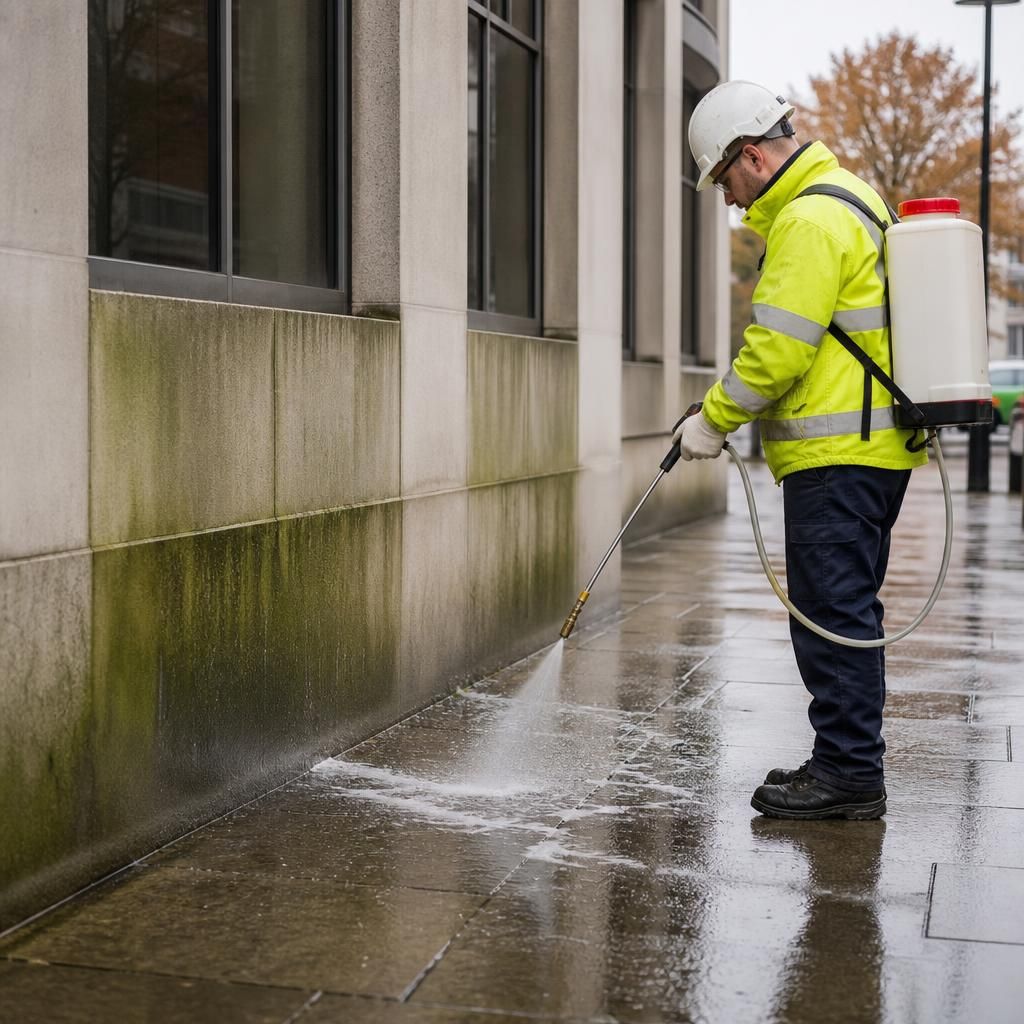
A post-clean treatment helps prevent moss and algae from returning by controlling residual biological contamination after the visible growth has been removed. It does not replace thorough cleaning or correct the damp, shaded and debris-filled conditions that encourage regrowth.
The treatment must be compatible with the surface, whether it is roofing, paving, cladding, render or painted masonry. It should be applied at the correct dilution and allowed to work as specified by the manufacturer, while protecting nearby planting, drainage systems, watercourses and occupied areas. A product suitable for one material may stain, weaken or damage another.
For longer-lasting results, combine the treatment with practical site maintenance:
- Keep gutters, gullies and channel drains clear.
- Remove leaves, soil and other organic debris before it holds moisture against the surface.
- Reduce excessive shade and overhanging vegetation where this can be done safely.
- Inspect vulnerable areas regularly and treat small signs of regrowth promptly.