
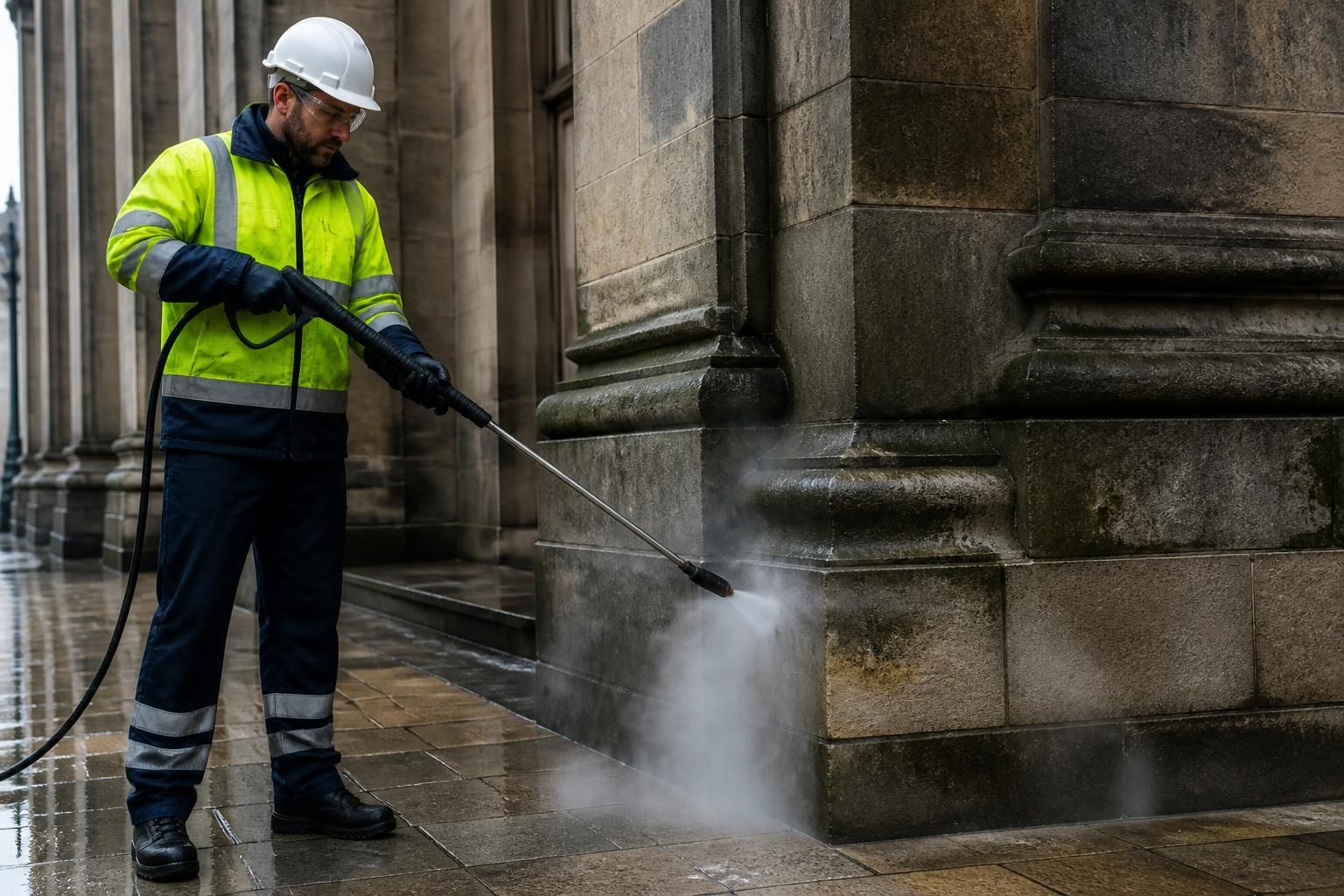
How does steam cleaning differ from pressure washing for masonry and paving surfaces?
Steam cleaning uses high-temperature vapour with relatively low water pressure to loosen dirt, algae, stains and biological growth, making it suitable for many masonry and paving surfaces where controlled cleaning is important. Pressure washing uses a concentrated jet of pressurised water to remove surface deposits and is often effective on robust paving, but requires careful adjustment to avoid eroding joints, damaging older brickwork or marking delicate stone.
Steam cleaning relies primarily on heat and controlled moisture, while pressure washing relies primarily on the mechanical force of pressurised water. Steam, or very hot low-pressure cleaning, softens and lifts dirt, algae, moss residues, organic staining and some deposits with less impact on the masonry surface. Pressure washing uses a more powerful water jet to dislodge contamination and is usually faster on robust paving, but the pressure must be selected carefully to avoid eroding joints, opening the surface or damaging older materials.
The most suitable method depends on the type, age and condition of the masonry or paving, the contamination present and the finish required. Neither method is automatically safe or unsuitable for every surface. A professional assessment is needed before cleaning porous stone, weathered brickwork, historic masonry, repaired areas or paving with loose joints.
How steam cleaning works
Steam cleaning uses high-temperature water vapour, or very hot water delivered at controlled pressure, to break down surface contamination. Heat helps loosen biological growth, traffic film, atmospheric dirt and some greasy residues so they can be removed with limited mechanical agitation. The process generally uses less water than conventional pressure washing and can reduce the force applied directly to the surface.
This controlled approach can be useful for:
- Older or softer brickwork that could be marked by an aggressive jet.
- Natural stone where preserving the surface texture is important.
- Areas affected by algae, moss residue, lichen or other organic deposits.
- Façades, steps, walls and paved areas where water use or splash-back needs to be controlled.
- Surfaces with sound but delicate pointing or joints that may be disturbed by high pressure.
Steam does not dissolve every type of stain. Deep oil contamination, paint, rust, efflorescence and some construction residues may need a compatible treatment, dwell time, agitation or a different cleaning process. Heat can also affect certain coatings, sealants, plastics and resin repairs, so these materials must be identified before work begins.
How pressure washing works
Pressure washing removes contamination through the impact and shear force of a concentrated water jet. It is particularly effective at removing loose dirt, soil, mud, surface algae and accumulated debris from durable paving. The operator can alter the pressure, flow, nozzle, distance and cleaning angle to match the surface, although greater pressure is not necessarily a better cleaning method.
Pressure washing is often appropriate for sound:
- Concrete paving slabs and other durable concrete surfaces.
- Block paving with stable joints and no significant surface failure.
- Hard-wearing stone paving that has been assessed as suitable.
- Car parks, yards, paths and service areas with substantial ground-in dirt.
- Large areas where efficient removal of loose contamination is required.
Excessive pressure, an unsuitable nozzle or holding the lance too close can cause surface damage. Possible problems include etching, pitting, exposed aggregate, scarring, loss of the softer face of a brick, and removal of pointing or jointing material. Water can also be driven into cracks, open joints or defective masonry, potentially worsening existing defects or causing damp-related problems.
Key differences for masonry and paving
- Cleaning action: Steam uses heat to soften and release deposits; pressure washing uses water impact to break them away.
- Surface stress: Steam can clean with relatively low mechanical force, whereas pressure washing places more direct force on the surface and joints.
- Water use: Steam cleaning commonly uses a more controlled volume of water, although actual consumption depends on the equipment and method.
- Biological growth: Heat can help treat algae, moss residue and other organic contamination, but remaining roots and spores may require a suitable biocidal treatment and ongoing maintenance.
- Speed on heavy deposits: Pressure washing can remove thick, loose deposits quickly from robust paving. Steam may be preferable where a slower, more controlled process reduces the risk of damage.
- Run-off and overspray: Both methods produce run-off, but pressure washing can create greater splash and spread loosened contamination. Drainage, neighbouring surfaces and water recovery must be considered in either case.
Choosing the method for common surfaces
Sound concrete and well-maintained block paving will often tolerate carefully controlled pressure washing. The joints still need checking, particularly where kiln-dried sand, older mortar or resin-bound materials are present. After cleaning, joints may need reinstating or the surface may require a compatible sealer once it is fully dry and suitable for treatment.
Brickwork requires more caution because bricks vary in hardness and porosity. Older or handmade bricks can have a softer outer face, and aggressive pressure may remove that protective surface. Steam or a low-impact cleaning method is often considered first, especially on weathered elevations, but a test area is still necessary.
Sandstone, limestone and other natural stones should not be treated solely according to their appearance. Their hardness, porosity, previous repairs and finish all affect the safe cleaning method. Some stone can be scratched, etched or discoloured by excessive pressure, heat or unsuitable chemicals. Steam may reduce mechanical stress, but it is not automatically risk-free; temperature, dwell time and the condition of the stone must be controlled.
Efflorescence is a particular case. This white, powdery deposit is caused by soluble salts moving through masonry and is not normally removed reliably by simply increasing pressure. Dry brushing, careful rinsing and identifying the source of moisture may be more appropriate. Oil, paint and rust also require separate assessment because forcing them deeper into porous masonry can make the problem worse.
How the cleaning method is selected
- The surface is identified, including its material, finish, age and porosity.
- Existing defects such as cracks, loose pointing, failed repairs, open joints and unstable slabs are recorded.
- The contamination is assessed to determine whether heat, pressure, a detergent, a biocidal treatment or another process is required.
- A small, representative test area is cleaned using the least aggressive effective setting.
- The result is checked for colour change, marking, surface loss, joint stability and any reaction with nearby materials.
- The final method, equipment settings and protection measures are agreed before cleaning the wider area.
In some cases, the safest and most effective approach combines methods. For example, a controlled pressure wash may remove loose soil from durable paving, followed by a suitable treatment for remaining biological growth. On delicate masonry, steam may loosen deposits before gentle rinsing or manual removal. Combining processes should be based on the surface assessment rather than applying several treatments by default.
Before work starts, surrounding walls, doors, vents, electrical points, planted areas and drainage channels should be protected or considered. Run-off must be managed so that loosened dirt, treatment residues and contaminated water do not enter unsuitable areas. Once cleaning is complete, the surface should be allowed to dry and inspected for remaining stains, joint defects or areas requiring repair. Cleaning cannot correct failed pointing, cracked slabs or structural movement, and those issues may need to be addressed separately.
For masonry and paving, the practical distinction is therefore not simply steam versus pressure. It is controlled heat and low mechanical impact versus water force and faster physical removal. Robust, stable paving may benefit from pressure washing, while delicate, porous or weathered masonry often calls for steam or another low-impact method. The correct choice is the least aggressive process that achieves the required result without compromising the surface, its joints or the surrounding property.
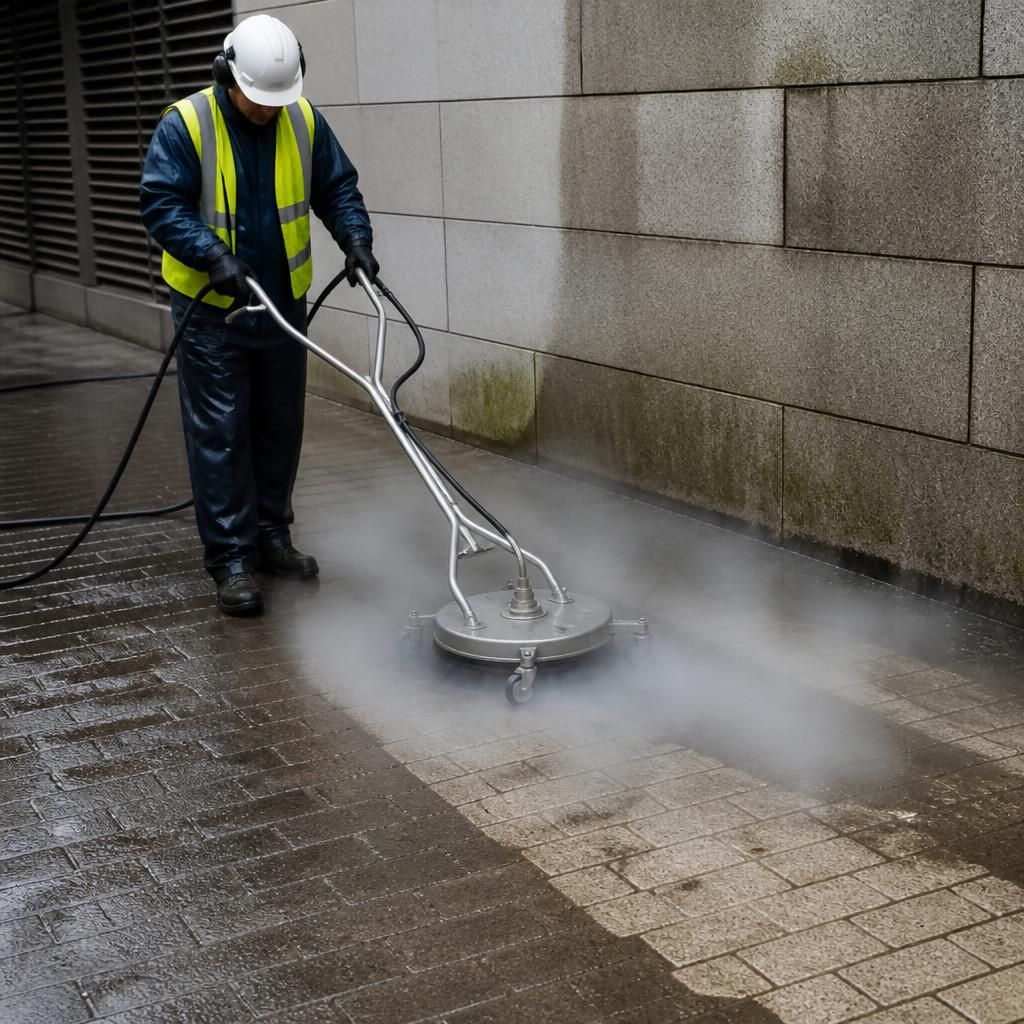
Steam cleaning differs from pressure washing mainly in how it removes contamination: steam uses heat and controlled moisture to loosen deposits, while pressure washing uses the impact of a concentrated water jet. This makes steam useful where reducing mechanical stress is important, whereas pressure washing can be efficient on sound, durable paving with stable joints.
The surface should always be assessed before choosing a method. Older brickwork, porous sandstone, weathered pointing and previously repaired masonry may be marked or weakened by excessive pressure. Concrete paving and robust block paving may tolerate controlled pressure washing, but loose joints, surface deterioration or failed repairs can still make a lower-impact approach more suitable.
- Check the material, age, porosity, finish and existing defects.
- Identify whether the contamination is biological growth, traffic film, oil, paint, rust or efflorescence.
- Test the least aggressive effective method on a representative area.
- Inspect for marking, colour change, surface loss and joint movement before wider cleaning.