
How do your cleaning methods prevent damage to delicate surfaces like sandstone or old brick?
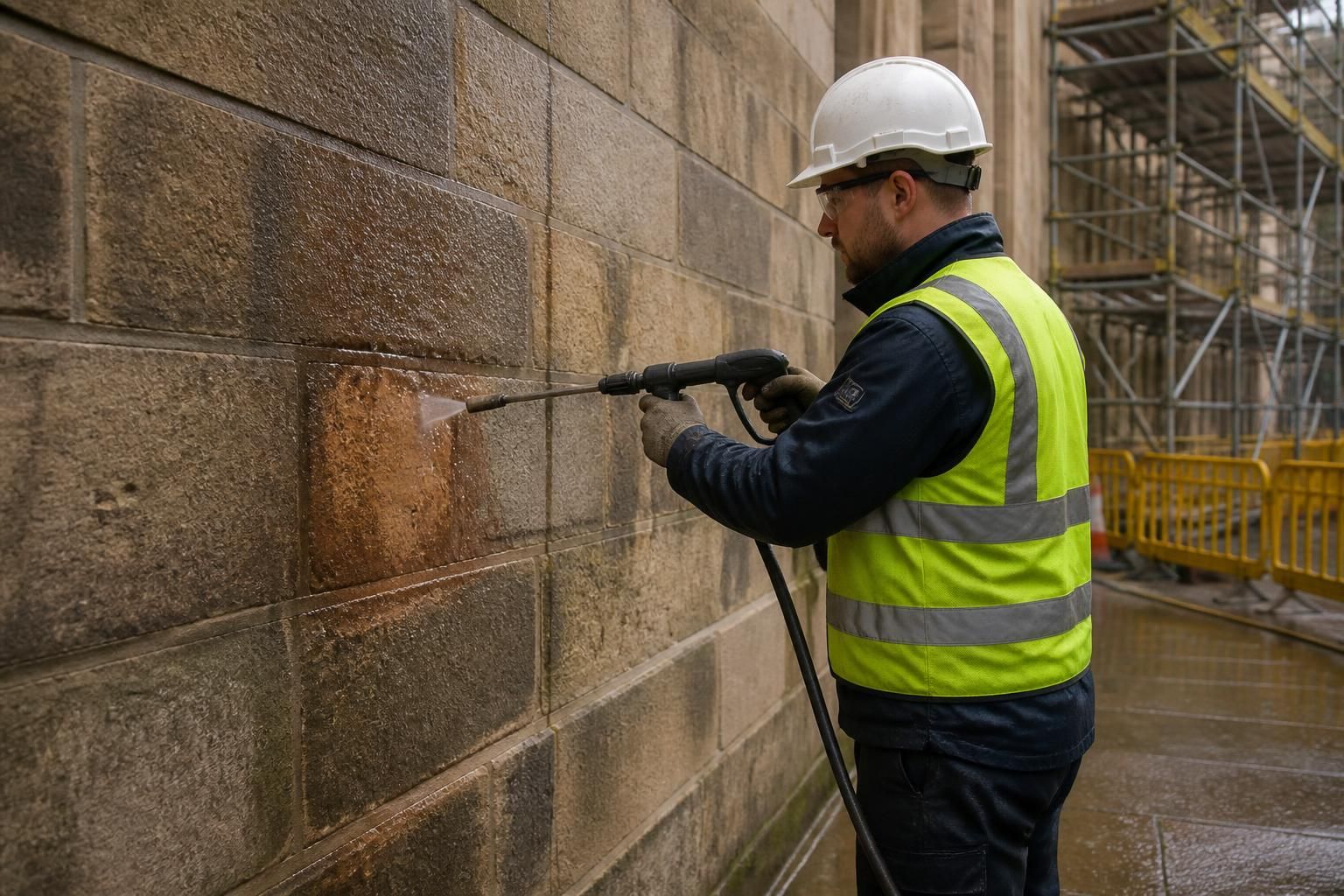
We prevent damage to sandstone and old brick by assessing the masonry first, then using the gentlest effective method—such as low-pressure washing, steam cleaning or controlled chemical treatment—rather than applying unnecessary force. We test a small area, regulate pressure, temperature and dwell time, and use suitable nozzles and rinsing techniques to protect soft, weathered or friable surfaces.
We prevent damage to sandstone and old brick by matching the cleaning method to the condition and absorbency of the masonry, using the least aggressive process that will achieve the required result. Before work starts, we assess the surface for softness, erosion, cracking, open joints, previous repairs, salt deposits, paint, biological growth and areas that sound hollow or unstable. This assessment determines whether low-pressure washing, steam cleaning, a controlled chemical treatment, gentle manual cleaning or a combination of methods is appropriate.
Delicate masonry can be damaged by excessive pressure, heat, abrasive particles, unsuitable chemicals or water being forced behind the face of the material. Sandstone is particularly variable: some types are relatively robust, while others are soft, friable or vulnerable to surface erosion. Older brick may also have a weakened face, porous bodywork or lime mortar joints that can be scoured out by aggressive cleaning. We therefore treat the masonry, mortar and any adjoining materials as part of the same system rather than cleaning only the visible face.
Our process normally includes the following safeguards:
- Initial condition survey: We identify loose material, spalling, failed pointing, cracks, staining, previous coatings and signs of water penetration. Areas that require repair are recorded so cleaning does not conceal a structural or maintenance issue.
- Small test area: We test the proposed method in an inconspicuous location and inspect the result after rinsing and drying. This confirms whether the process removes the soiling without changing the colour, texture or profile of the masonry.
- Controlled pressure: Where water cleaning is suitable, we use the lowest effective pressure, appropriate flow and a suitable nozzle rather than directing a concentrated jet at the surface. The lance is kept at a controlled distance and is not held close to vulnerable edges, joints or damaged areas.
- Careful water management: We avoid forcing water into open joints, cracks, vents, cavities and interfaces around windows or doors. Rinsing is controlled so that loosened dirt and cleaning residues are removed without saturating the wall unnecessarily.
- Targeted chemical treatment: Where deposits cannot be removed safely with water alone, a masonry-compatible treatment may be applied at a controlled concentration and dwell time. It is never left to dry on the surface, and the area is thoroughly rinsed in accordance with the product and material requirements.
- Appropriate temperature: Steam cleaning may be used where low-pressure vapour can soften organic growth, atmospheric soiling or certain coatings with less mechanical force. Temperature, exposure time and working distance are controlled because heat and prolonged moisture can still affect vulnerable masonry, old mortar or existing finishes.
- Protection of adjoining surfaces: Glass, painted finishes, metalwork, timber, landscaping, drainage points and neighbouring surfaces are protected from spray, chemical contact and contaminated runoff. Water and residues are managed so they do not migrate into the building or onto sensitive areas.
For sandstone, the main objective is to remove contamination without stripping away the naturally weathered surface. We avoid abrasive blasting and overly forceful rotary cleaning where these could expose fresh stone, increase porosity or leave visible tracking. Organic growth may be treated first so it can be removed with minimal agitation. Carbon staining, paint and other deposits are assessed separately because attempting to remove every mark can cause more damage than leaving a firmly bonded stain in place.
With old brick, preserving the fired face and mortar joints is equally important. If the brick face has become soft or powdery, pressure washing may be unsuitable even when the wall appears sound from a distance. We work around eroded joints, friable faces and historic repairs, and we do not use cleaning to compensate for failed pointing or loose brickwork. Where necessary, we recommend that repairs or repointing are completed before, or after, cleaning depending on the condition and the likely effect of the proposed method.
We also distinguish between removing surface soiling and attempting to return masonry to a uniform new appearance. Some variation in colour, weathering and historic staining is part of the material’s condition. Aggressive cleaning to achieve complete uniformity can remove the protective outer surface or highlight patches where repairs have been made. The test area helps establish a realistic finish before the main work proceeds.
During the clean, the operative monitors the surface continuously rather than relying only on the original test. Work is paused if the masonry begins to shed its face, the joints soften, the colour changes unexpectedly, water enters a building interface or the cleaning result indicates that a different method is needed. The final rinse is controlled to remove residues, and the surface is allowed to dry before its condition is reviewed fully, as damp masonry can temporarily appear darker or uneven.
No cleaning method can make severely deteriorated masonry risk-free. Loose bricks, unstable sections, failed pointing, deep cracking and serious water ingress should be assessed by an appropriate building or masonry professional. Subject to the condition survey, however, careful testing, controlled application and a willingness to use less aggressive methods provide the best protection for sandstone, old brick and other sensitive masonry surfaces.
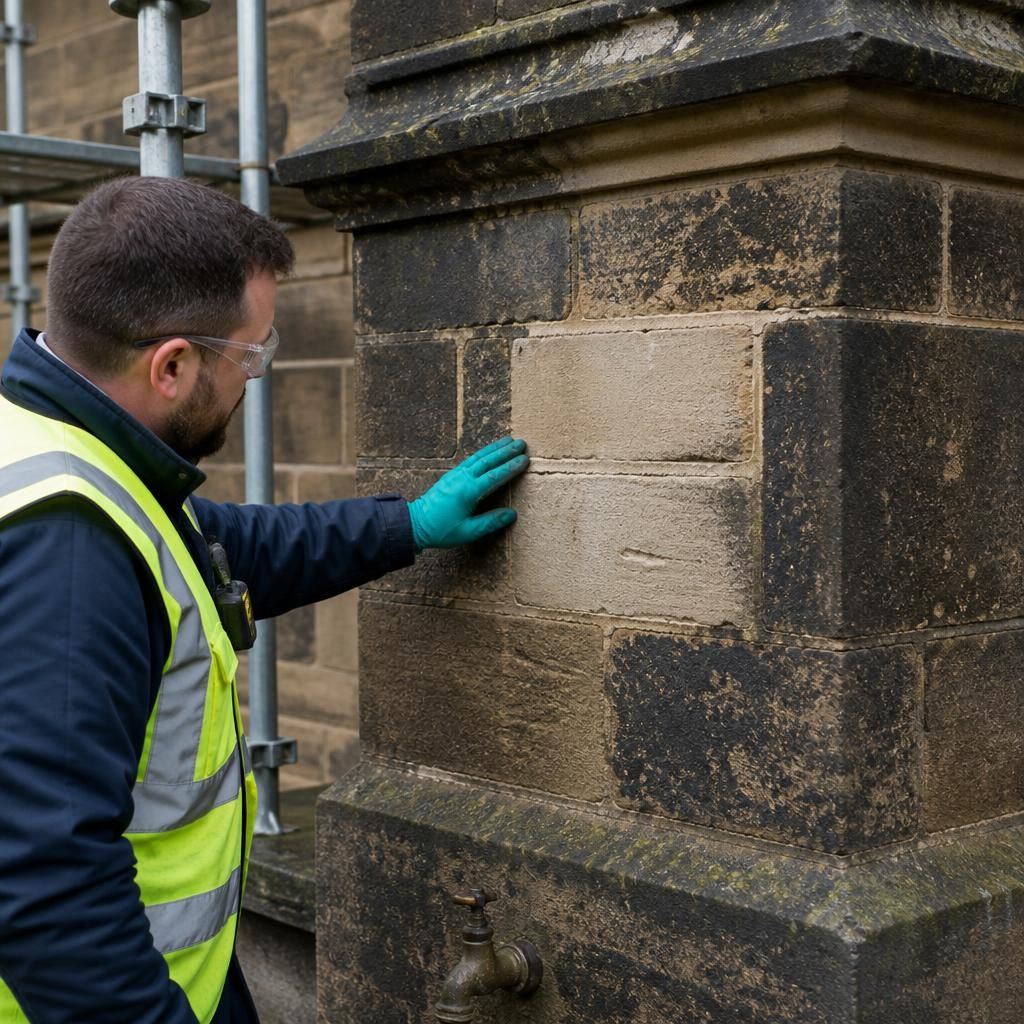
A small test area is essential when cleaning sandstone or old brick. We first apply the proposed method in an inconspicuous location, then inspect the surface after rinsing and drying. This shows whether the process removes the soiling without altering the masonry’s colour, texture or weathered face. If the result indicates that the pressure, temperature or treatment is too aggressive, we adjust the method before progressing. This controlled approach also helps identify weak mortar joints, friable brick faces or areas where cleaning should be avoided altogether.