
What safety precautions are necessary when cleaning concrete and paving slabs?
Cleaning concrete and paving slabs safely requires suitable PPE, pre-use checks on pressure-washing equipment, controlled water pressure and careful management of spray, chemicals, access and runoff. On commercial or industrial sites, isolate the work area, protect nearby people and property, and follow the relevant risk assessment and method statement.
Safe cleaning of concrete and paving slabs depends on controlling pressure, water, chemicals, access equipment, traffic and runoff before work begins. A suitable risk assessment and method statement should identify the surface condition, nearby hazards, likely contaminants and the safest cleaning method for the particular commercial or industrial site.
Carry out a site assessment first. Inspect the concrete or paving for cracks, loose joints, damaged edges, lifting slabs, trip hazards and areas of settlement. Note nearby entrances, roads, loading bays, plant, parked vehicles, pedestrians, drainage channels and electrical equipment. Cleaning can expose defects that were hidden by algae, moss, dirt or oil, so these should be recorded and reported before work starts.
Confirm whether the surface is sealed, painted, resin-bound, jointed with sand or constructed from older or weaker materials. This affects the pressure, nozzle selection and cleaning solution that can be used. A small test area in an inconspicuous location is advisable, particularly where the surface has a decorative finish, previous repairs or uncertain construction.
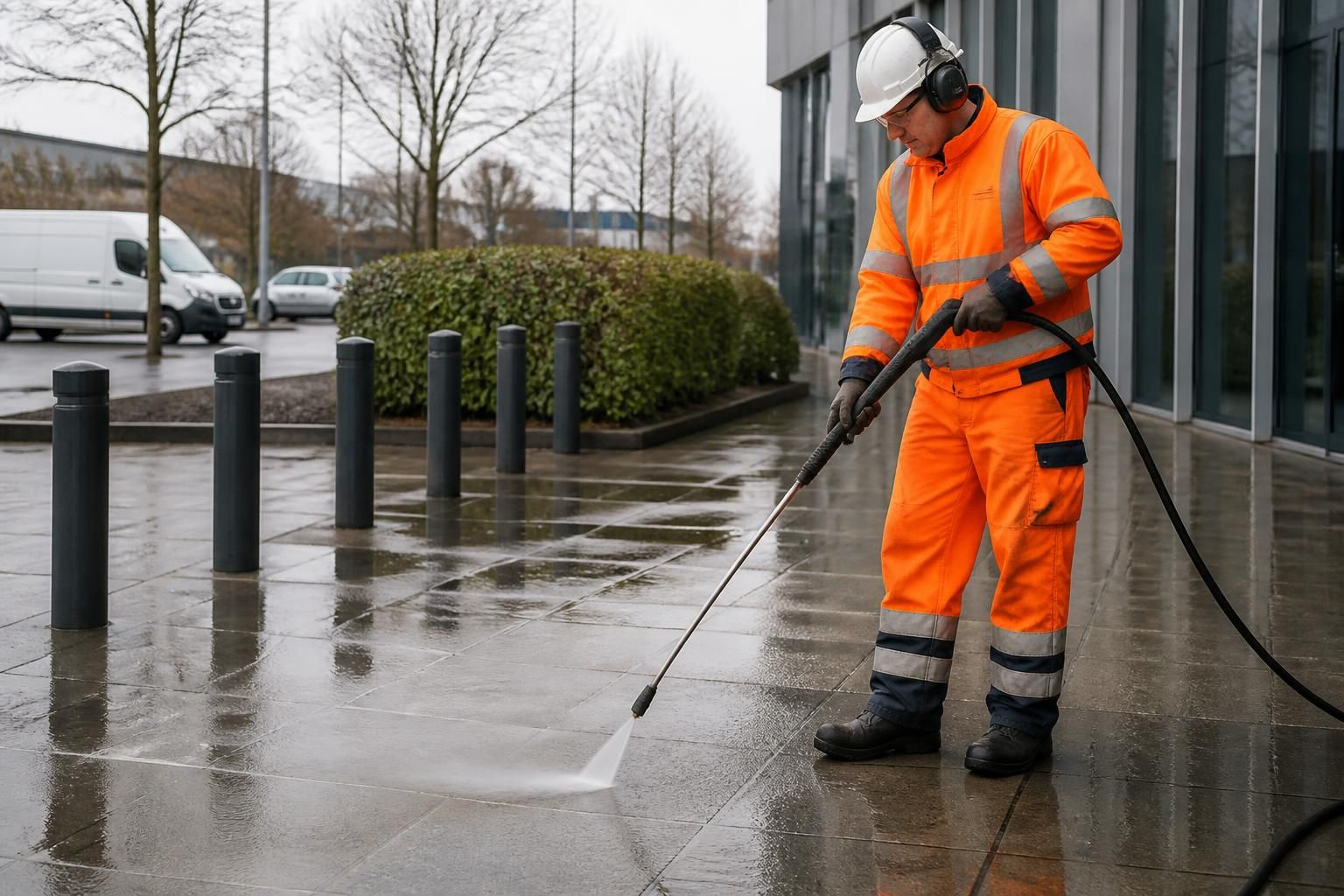
Use appropriate personal protective equipment. The exact equipment depends on the process and site assessment, but may include:
- Water-resistant safety boots with slip-resistant soles and suitable toe protection.
- Waterproof gloves selected for the cleaning chemicals being used.
- Safety glasses or a face shield to protect against spray, grit and dislodged debris.
- Hearing protection when operating high-noise pressure-washing equipment for extended periods.
- Protective waterproof clothing that does not restrict movement or create a snagging hazard.
- Respiratory protection where the assessment identifies a risk from dust, aerosols or chemical vapour.
PPE is the final line of defence rather than a substitute for safe equipment, controlled working methods and proper exclusion zones. Gloves and face protection should be checked for damage, and contaminated clothing should be removed or cleaned in accordance with the product and site requirements.
Check the pressure-washing equipment before use. Inspect the machine, hose, lance, trigger, couplings, seals and electrical connections. Do not use equipment with damaged hoses, exposed wiring, leaking fittings or a trigger that does not operate correctly. Confirm that guards are in place, fuel or power connections are secure and the machine is suitable for the available water supply. Hoses should be routed to prevent kinks, vehicle damage and trip hazards, with couplings secured before the system is pressurised.
Start at a low pressure and increase it only when the test area confirms that the surface can tolerate the process. Keep the lance moving rather than holding the jet in one position, and use the correct nozzle and working distance. A concentrated jet at close range can remove jointing material, mark the surface, damage edges and force water beneath slabs or into building details.
Never point a pressure washer at people, animals, unprotected glazing, vehicles, electrical equipment, ventilation openings or building joints. Be particularly careful around doors, thresholds, wall bases and façade interfaces, where water can enter the building. Operatives should maintain a stable stance and avoid working from ladders while handling a pressure-washing lance. Where high-level areas must be reached, use suitable access equipment operated by trained personnel.
Control slips, trips and vehicle movements. Wet concrete and paving can become extremely slippery, especially when algae, moss, oil or detergent is present. Establish a clearly marked exclusion zone with suitable barriers and signs, and keep pedestrians away from wet areas, hoses and equipment. On active commercial sites, coordinate the work with the site manager and segregate cleaning from deliveries, loading operations and vehicle routes wherever possible.
Plan the order of work so that people do not have to cross freshly cleaned areas. Remove loose debris before wet cleaning, manage hoses across walkways with suitable protection, and keep access routes clear. Do not reopen an area until it is safe to walk or drive on and any required warning signs have been removed or updated.
Handle cleaning chemicals in accordance with their safety information. Read the product label and safety data sheet before use, and follow the specified dilution, contact time, storage and disposal instructions. Use only a product suitable for concrete or the particular paving material. Never mix products unless the manufacturer expressly permits it, as incompatible cleaners can create dangerous reactions or fumes.
Provide ventilation where chemicals are used near enclosed areas, protect skin and eyes from splashes, and keep containers labelled and secured. COSHH controls may be required where a substance could harm health. Chemical application should be controlled so that spray does not drift towards people, occupied buildings, air intakes, vehicles or sensitive landscaping.
Protect drainage systems and the surrounding environment. Do not allow dirty water, oil, detergent or biocidal residue to enter surface-water drains unless the discharge is known to be permitted and appropriately controlled. Use drain covers, bunding, booms, wet vacuums or other suitable recovery measures where necessary. Identify where runoff will go before cleaning starts, and arrange collection, treatment or disposal in line with the site requirements and applicable regulations.
Oil, fuel, paint, biological growth and chemical residues may need different containment and disposal arrangements. A pressure washer should not be used to spread contamination from one area to another. Clean equipment between work zones where cross-contamination is a risk, particularly on industrial premises, food-related sites or areas affected by oil and other hazardous substances.
Take extra care with biological contamination and dry debris. Moss, algae and organic matter can contain microorganisms, while bird fouling and other waste may present additional health risks. Avoid creating unnecessary aerosols, use the required protective equipment and follow the site’s hygiene and waste procedures. Where dry sweeping, grinding or other dust-producing work is proposed on concrete, assess the risk of respirable silica dust and use suitable dust suppression or extraction rather than allowing dust to become airborne.
Consider electricity, weather and access conditions. Keep electrical connections, extension leads and machinery away from standing water and use equipment that is suitable for the working environment. Stop work if conditions make control of the spray unsafe, visibility poor or surfaces dangerously slippery. Strong wind can carry spray and chemicals beyond the exclusion zone, while freezing conditions can create ice and damage wet surfaces or equipment.
Access platforms, mobile elevated work platforms and other equipment must be selected for the task, inspected and used by competent people. The ground should be capable of supporting the equipment, and the work area must be protected from collision with vehicles or plant. High-level cleaning should not proceed where falling water, debris or equipment could endanger people below.
Use a controlled sequence and maintain communication. Before starting, brief everyone involved on the method, hazards, emergency arrangements and stop-work conditions. Confirm who is responsible for isolating nearby services, controlling access and dealing with runoff. Keep communication open with the client or site contact throughout the work, especially if unexpected damage, contamination or unsafe ground conditions are discovered.
After cleaning, inspect the area for remaining hazards, displaced jointing material, damaged slabs, exposed defects and pooled water. Remove barriers only when the surface is safe and the work area is tidy. Record any incidents, near misses, equipment faults or changes to the agreed method so that future maintenance can be planned safely.
For large commercial or industrial areas, the safest approach is a documented site-specific assessment supported by competent operatives, suitable equipment and effective supervision. Where the surface is fragile, contaminated, close to live traffic or difficult to access, professional cleaning controls help reduce the risk of injury, property damage, uncontrolled runoff and disruption to site operations.
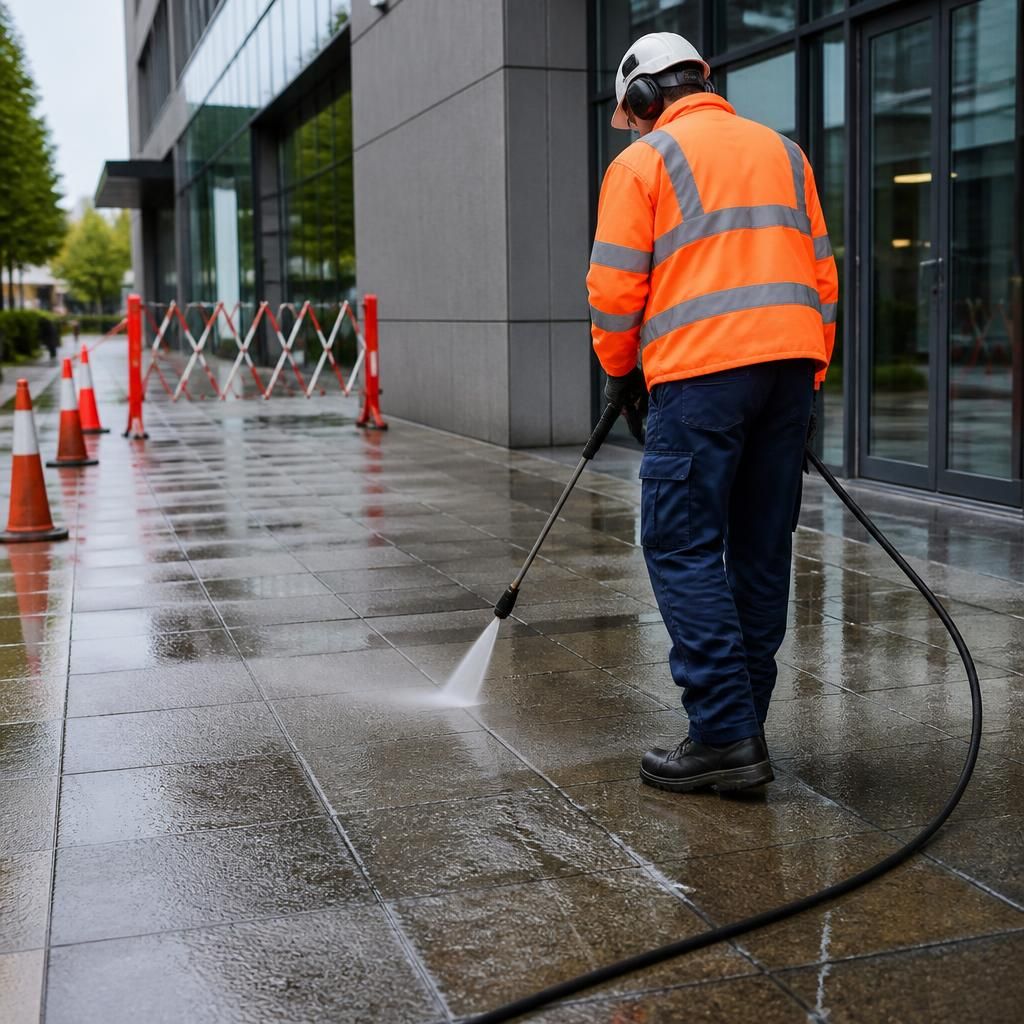
Controlling the work area is a fundamental safety precaution when cleaning concrete and paving slabs. Wet surfaces, hoses, spray, loosened debris and cleaning chemicals can create risks for pedestrians, vehicles, nearby buildings and drainage systems.
- Use barriers and clear warning signs to establish an exclusion zone.
- Keep pedestrians, deliveries and vehicles away from the cleaning area, particularly on active commercial sites.
- Route and protect hoses across walkways to prevent trip hazards.
- Plan the cleaning sequence so that people do not need to cross wet surfaces.
- Control dirty water and chemical runoff so it cannot enter drains or contaminate surrounding areas.
Only reopen the area after the surface has been inspected, excess water has been managed and it is safe for pedestrians or vehicles. A site-specific risk assessment should identify access routes, drainage points, traffic movements and suitable stop-work conditions before cleaning begins.