What methods are most effective in removing stubborn stains from concrete and paving slabs without causing damage?
The safest approach is to identify the stain first, then use a suitable pre-treatment followed by controlled pressure washing, steam cleaning or specialist treatment at the lowest effective pressure. This removes oil, rust, algae, chewing gum and organic staining while reducing the risk of etching concrete, dislodging jointing material or damaging paving slabs.
The most effective way to remove stubborn stains from concrete and paving slabs without causing damage is to match the treatment to the stain, loosen it with an appropriate pre-treatment, and then use the lowest effective pressure or temperature. Controlled pressure washing, steam cleaning and specialist chemical treatments can remove oil, rust, algae, chewing gum, tyre marks, paint and organic staining, but using the same method for every surface can cause etching, surface erosion, colour loss or damage to joints.
Begin with a surface and stain assessment
Before cleaning, identify the paving material, its condition and the likely source of the staining. Cast concrete, decorative concrete, natural stone paving and concrete block paving do not respond identically to cleaning. Older or weathered surfaces may have weakened areas, open pores, loose aggregate or deteriorated joints that require a gentler approach.
Stains should also be assessed individually. Oil and grease need a degreasing treatment; rust requires a suitable rust remover; algae and moss respond to biocidal or environmentally responsible treatments; chewing gum is usually softened with heat; and paint may need careful mechanical or chemical removal. A preliminary inspection can also identify cracks, loose slabs, unstable jointing sand and areas that have previously been sealed.
A small test area should be cleaned before treating the full surface. This confirms whether the chosen pressure, nozzle, temperature and treatment are suitable, and helps identify possible colour variation between the cleaned and untreated areas.
Use pre-treatment to reduce the need for aggressive pressure
Pre-treatment is often the most important step when dealing with stubborn marks. Applying a suitable cleaning agent allows the stain to break down or detach from the surface before rinsing. This is safer than relying on high pressure alone, particularly where the concrete or paving has a delicate finish.
- Oil, diesel and grease: Use a professional degreaser or absorbent treatment suited to porous concrete. Allow sufficient dwell time for the product to work, agitate where appropriate, then rinse thoroughly. Heavy deposits may require repeated treatment rather than excessive pressure.
- Algae, moss and organic growth: Apply a suitable treatment to kill and loosen biological growth, followed by controlled cleaning. Removing the visible growth without addressing the underlying contamination can result in rapid regrowth.
- Rust and iron staining: Use a paving-safe rust treatment selected for the particular surface. Strong acids can damage cement-based surfaces, alter the appearance of coloured paving and affect nearby metals, so they should not be applied without proper assessment and control.
- Tyre marks and rubber deposits: A compatible degreaser, gentle agitation and controlled rinsing are generally safer than directing very high pressure at the mark.
- Chewing gum: Steam or hot-water cleaning can soften the gum so it can be lifted with less force. Scraping tools should be used carefully to avoid gouging the surface.
- Paint and similar coatings: Removal may require a combination of low-pressure washing, steam, careful mechanical work or a specialist coating remover. The safest method depends on whether the paint is bonded to sound concrete or is already flaking.
- Efflorescence and mineral deposits: Dry deposits may sometimes be brushed away, while established deposits may need a controlled specialist treatment. The cause of moisture movement should be considered, particularly where the deposits keep returning.
Control pressure washing rather than simply increasing the pressure
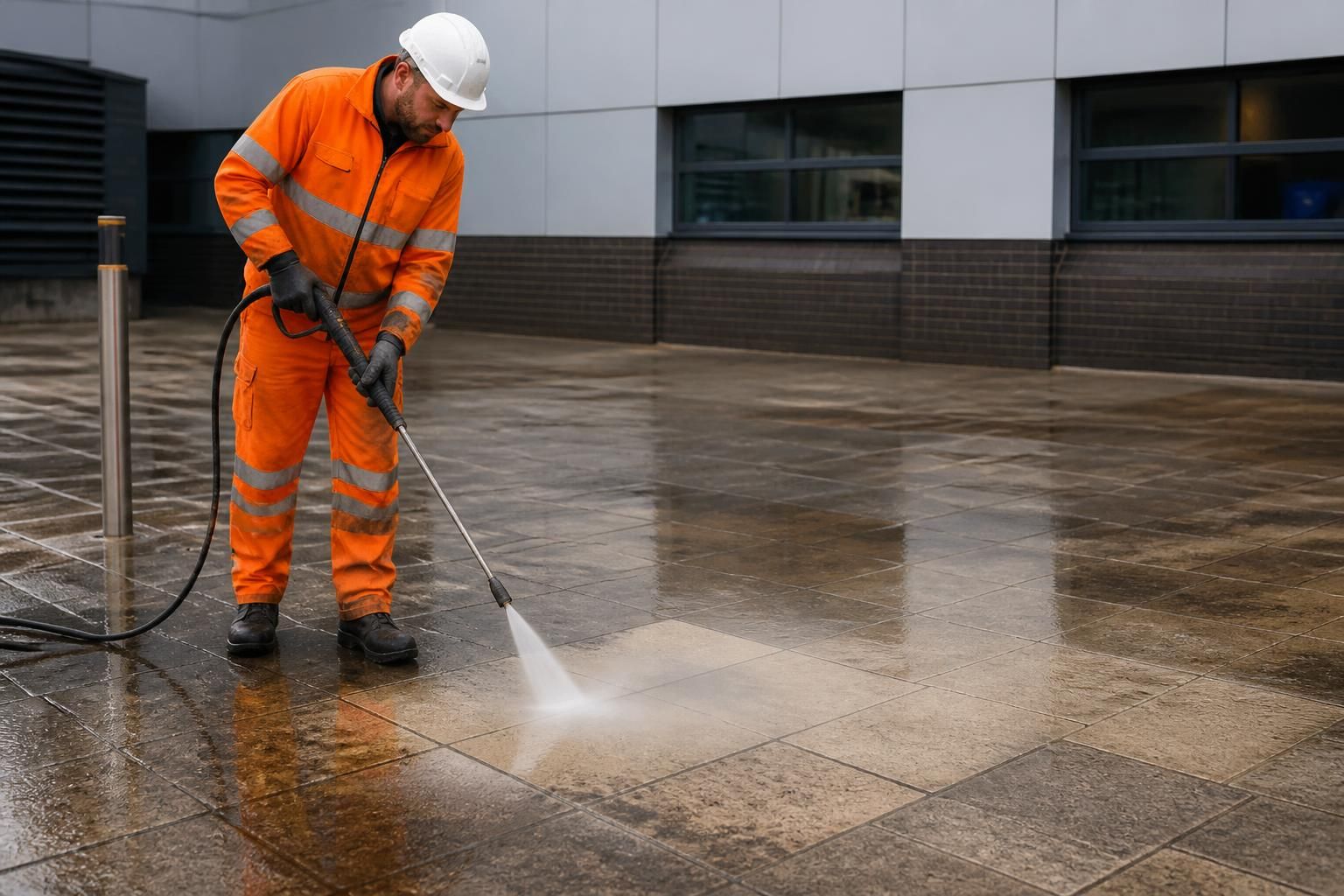
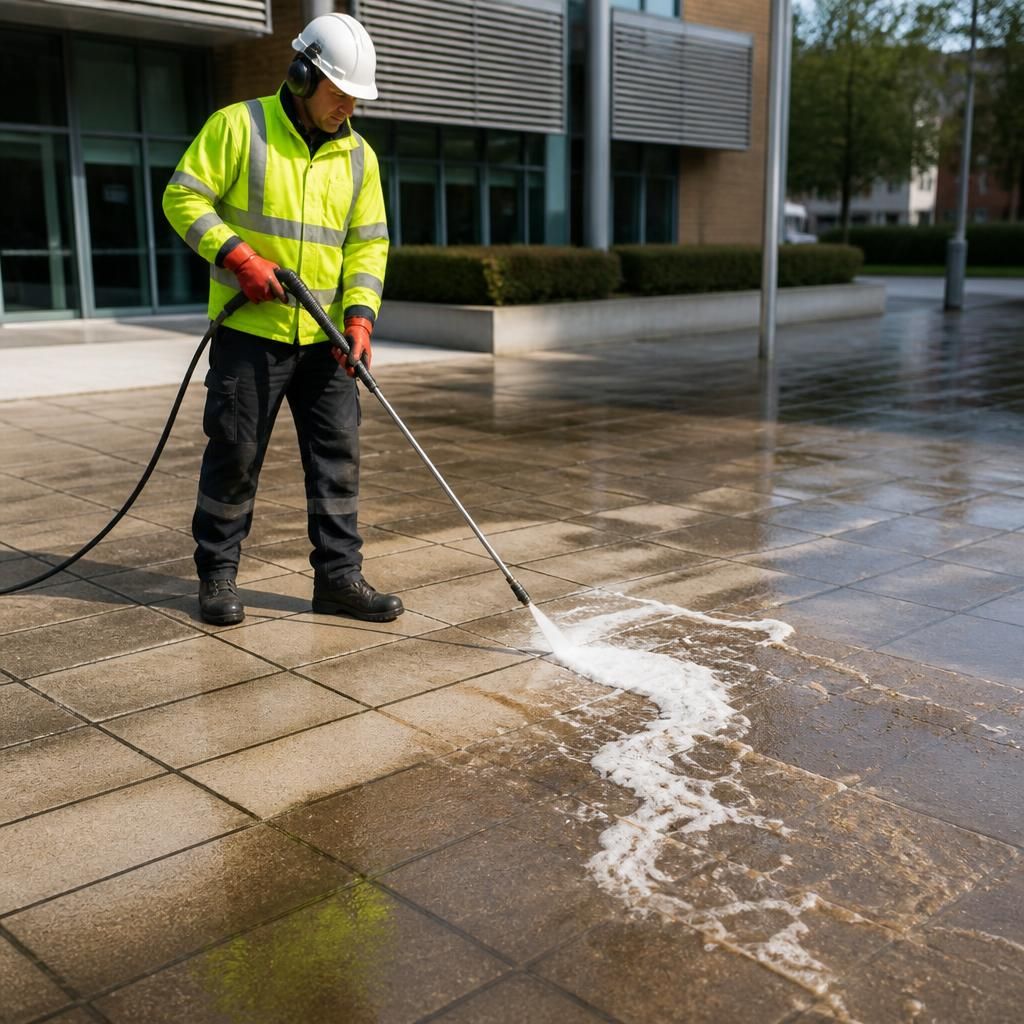
Pressure washing is effective when the operator controls the working pressure, nozzle selection, distance, angle and speed. A fan spray is generally preferable to a concentrated jet for broad concrete and paving areas. The lance should be kept moving, with overlapping passes that provide an even result instead of holding the jet over one point.
High pressure can strip the cement-rich surface layer from concrete, expose aggregate, create visible lines or remove jointing material. It can also force water beneath slabs or into cracks. Cleaning should therefore start at a lower setting and only increase when the test area shows that more cleaning power is needed. Rotary surface cleaners can help produce an even finish on suitable, stable surfaces, but they still need to be operated with the correct setting and pace.
Consider steam cleaning for sensitive or localised stains
Steam cleaning uses heat to loosen grease, chewing gum, organic contamination and some surface deposits while reducing the need for abrasive action. It can be useful around entrances, walls, kerbs and detailed paving where a tightly controlled cleaning area is required. Steam is not automatically suitable for every slab: thermal shock, existing cracks, sealants and sensitive finishes must be considered, and the operator must avoid prolonged heating of one area.
Protect joints, edges and surrounding materials
Many cleaning failures occur at the edges of slabs or in the joints rather than across the centre of the paving. Directing water into open joints can wash out sand or other jointing material, while poorly supported or rocking slabs may become unstable. External walls, doors, painted surfaces, drainage channels, planted areas and vehicles should be protected from overspray and cleaning products.
Where jointing material is removed, it may need to be replaced after the surface has dried and its condition has been checked. Re-sanding or re-pointing is not a substitute for correcting loose or damaged paving, so any structural defects should be recorded during the cleaning assessment.
Rinse, inspect and manage the run-off
After treatment, the surface should be rinsed sufficiently to remove loosened contamination and chemical residue without spreading it to clean areas. Wastewater containing oil, detergents, paint residue or other contaminants must be managed responsibly and prevented from entering unsuitable drains or watercourses. The correct approach depends on the site drainage, the substance removed and applicable environmental requirements.
A final inspection should check for remaining staining, uneven cleaning, disturbed joints, exposed aggregate and residue. Some deep oil or rust marks may lighten substantially without disappearing completely, particularly where contamination has penetrated porous concrete. It is safer to explain this limitation than to continue escalating the treatment until the surface itself is damaged.
Why professional assessment matters
Stubborn stains are safest to remove through a staged process: inspect the surface, test the treatment, pre-treat the contamination, clean at a controlled setting, rinse responsibly and review the result. This approach avoids the common mistake of using maximum pressure or harsh chemicals as a first response. For commercial paving, car parks, pedestrian areas and large concrete surfaces, a planned treatment also helps maintain consistent appearance while reducing the risk of damage, disruption and avoidable future repairs.
Pre-treatment is often the safest way to remove stubborn stains from concrete and paving slabs because it loosens the contamination before cleaning begins. Degreasers can break down oil and tyre marks, specialist rust treatments can target iron staining, and steam can soften chewing gum without relying on excessive pressure.
The treatment should be matched to the stain and paving material, applied with suitable dwell time, and tested on a small area first. Controlled rinsing can then remove the loosened residue while reducing the risk of surface etching, colour loss, exposed aggregate or disturbed jointing material.
Arrange a Professional Concrete and Paving Stain Removal Assessment
Arrange a professional assessment to identify the stain, confirm the paving material and select the safest effective treatment. Our team can recommend a controlled cleaning method for concrete, paving slabs, car parks and pedestrian areas.
For a free quote & consultation
Contact usAccreditations