
What is the best method for cleaning concrete and paving slabs?
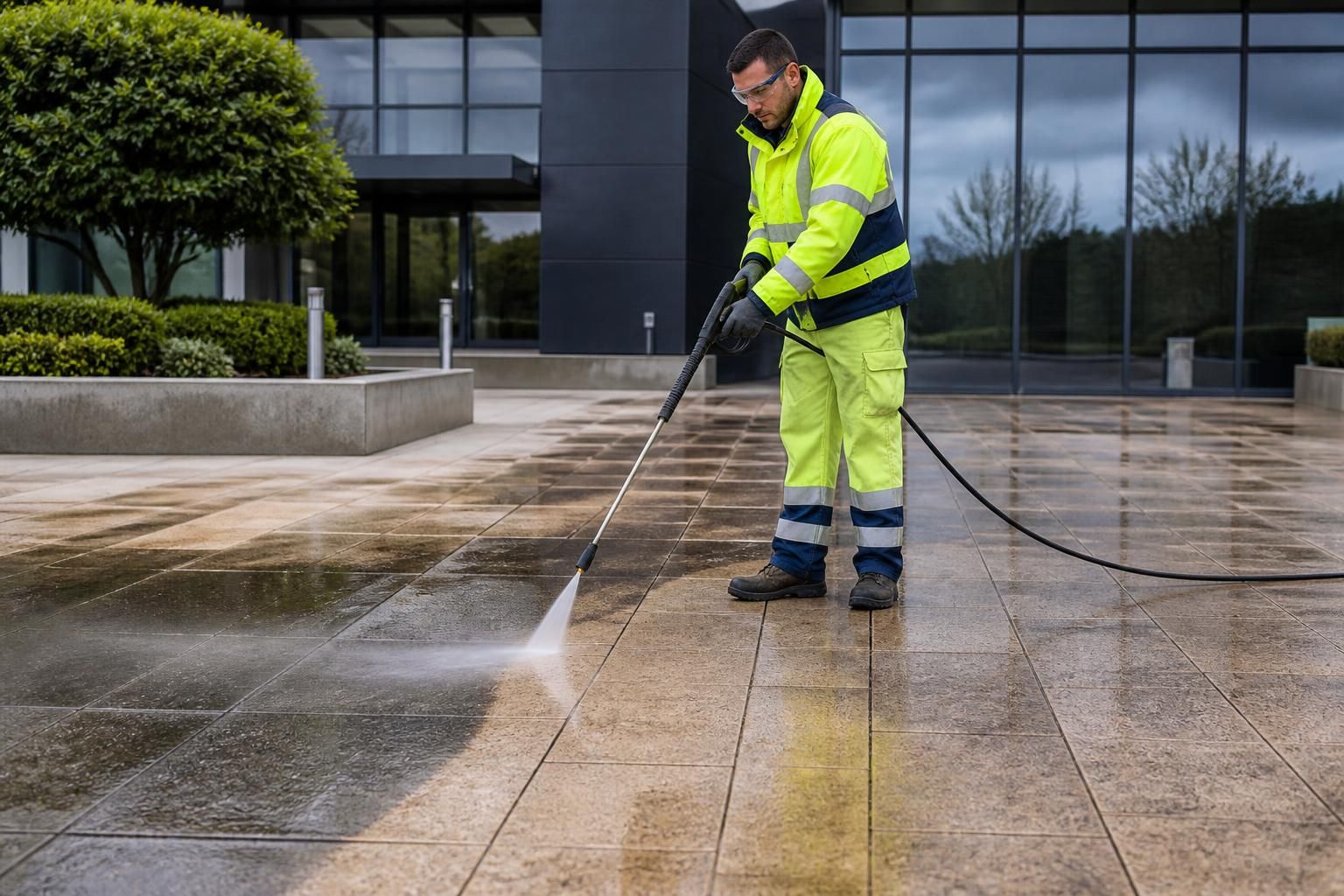
The best method for cleaning concrete and paving slabs is professional pressure washing, using controlled water pressure and the correct nozzle for the surface. Pre-treatment may be used for algae, moss, oil and other stains, followed by careful rinsing to remove ingrained dirt without damaging the concrete or paving.
The best method for cleaning concrete and paving slabs is a controlled professional pressure-washing process, adapted to the surface, its condition and the type of contamination present. The work normally involves an initial inspection, removal of loose debris, suitable pre-treatment, carefully regulated water pressure and a thorough rinse. This combination removes ingrained dirt, algae, moss, oil marks and atmospheric staining more effectively than scrubbing alone, while reducing the risk of damaging the concrete, slabs or joints.
Although concrete is a hard material, it is not indestructible. Excessive pressure, an unsuitable nozzle or holding the lance too close to the surface can expose aggregate, leave stripes, erode the surface or disturb jointing material. Paving slabs may also have a textured, coloured or delicate finish that requires a gentler approach. The correct cleaning method should therefore be selected after checking the slab material, surface condition, drainage, joint stability and the surrounding buildings or landscaping.
A professional clean usually follows a defined process:
- Inspection: The surface is checked for cracks, loose slabs, damaged joints, previous coatings, oil contamination and areas where water could enter a building or affect nearby property.
- Preparation: Litter, leaves, weeds and loose grit are removed. Vulnerable doors, vents, windows, planted areas and electrical equipment are protected where necessary.
- Pre-treatment: Suitable cleaning agents may be applied to loosen ingrained dirt or treat specific contamination. Organic growth such as algae and moss may need a treatment designed to break it down, while oil and grease generally require a degreasing solution.
- Controlled washing: The operator uses appropriate pressure, flow, temperature and nozzle selection for the surface. Cleaning is carried out methodically to avoid missed areas and uneven marks.
- Rinsing and recovery: Residue and loosened contamination are rinsed away, with attention given to drainage and the responsible management of dirty water.
- Final inspection: The surface is checked for remaining stains, disturbed joints, standing water and areas requiring additional treatment.
Pressure washing is generally the most effective primary method for outdoor concrete and paving because it combines mechanical cleaning action with water. It can remove traffic film, mud, weathering, bird deposits, algae and moss from textured surfaces and joints. However, the highest available pressure is not automatically the best option. A trained operator adjusts the equipment to suit the substrate, usually starting with a cautious setting and increasing the cleaning action only where the surface can safely tolerate it.
Pre-treatment is particularly important where contamination is bonded to the surface. Algae, moss and other organic growth can be softened before washing, making removal more consistent and reducing the need for aggressive pressure. Oil, diesel and grease may need a separate degreaser and more than one application, because these substances can penetrate porous concrete. Rust, paint, tyre marks and cement residue each require different treatment, and an inappropriate chemical can discolour paving or affect nearby surfaces. Any cleaning solution should be selected for the material and used in accordance with its instructions.
Hot-water pressure washing can be useful on commercial yards, loading areas, car parks and other surfaces affected by grease or heavy traffic film. Heat helps soften oily deposits and can improve the cleaning result without relying solely on increased pressure. Steam or lower-pressure techniques may be more appropriate near sensitive structures, painted finishes or areas where excessive water could cause a problem. The method should be based on the contamination and the risk to the surface, rather than applying the same process everywhere.
Flat-surface cleaning equipment can help produce a more even finish across large areas than a lance used too close to the ground. It also helps contain spray and reduce visible striping when operated correctly. Edges, corners, steps, joints and areas around fixtures may still require detail work with a lance or brush. On large commercial sites, cleaning is best planned around pedestrian and vehicle movements so that sections can be isolated safely and allowed to drain or dry before they are returned to use.
Some methods are less suitable as a general solution. Dry brushing may remove loose debris but will not normally deal with ingrained grime or biological growth. Strong chemicals used without a surface assessment can cause bleaching, etching or damage to vegetation and drainage systems. Abrasive cleaning can alter the texture of concrete and paving, while excessive pressure can remove jointing sand or weaken already deteriorated areas. Sealants may help protect a sound, clean surface in some situations, but they should not be used to conceal damage or applied before the surface is fully clean and dry.
Where paving slabs are loose, cracked or rocking, cleaning should not be treated as a substitute for repair. Water can expose existing defects, and disturbed joints may need reinstating after washing. Concrete with significant cracking, spalling or exposed aggregate also requires a more cautious approach. A test area in an inconspicuous location is useful when the finish, coating or likely cleaning response is uncertain, particularly on coloured or decorative paving.
Good drainage and wastewater control are part of the cleaning method. Mud, detergent, oil and biological residue should not be allowed to flow unchecked into surface-water drains or neighbouring land. The work area should be assessed before cleaning, and runoff should be contained, diverted or recovered where site conditions require it. This is especially important at commercial premises, car parks, service yards and sites close to watercourses.
For most concrete and paving slab surfaces, the most dependable approach is therefore a site-specific combination of pre-treatment and controlled pressure washing, followed by careful rinsing and inspection. Regular professional cleaning removes contamination before it becomes deeply embedded, helps preserve a more even appearance and reduces the likelihood that aggressive restoration will be needed later. The correct pressure, treatment and access equipment will depend on the material, level of soiling and condition of the site.
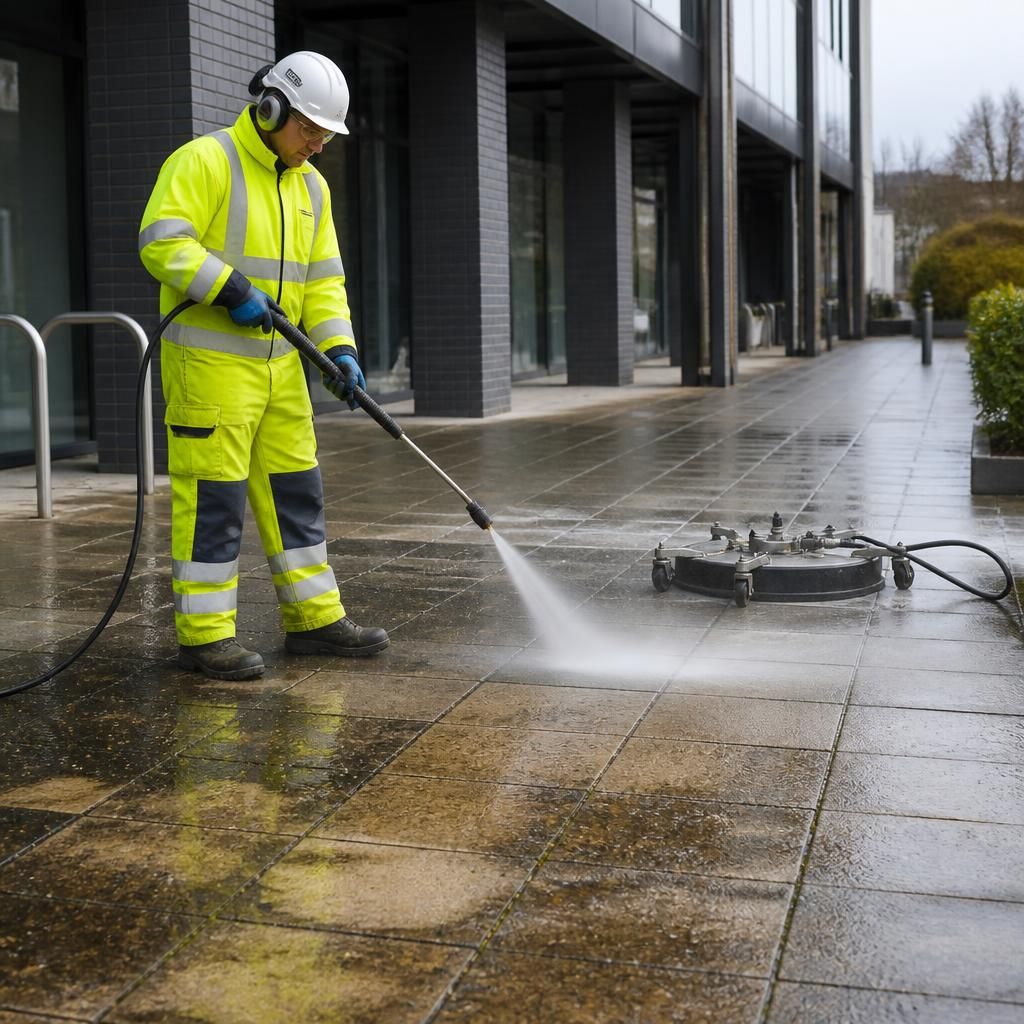
The most effective method for cleaning concrete and paving slabs is usually a combination of suitable pre-treatment and controlled pressure washing. Pre-treatment loosens algae, moss, oil and ingrained grime, allowing the operator to clean thoroughly without relying on excessive pressure. The washing equipment, nozzle and water flow should then be adjusted to the surface condition, as too much pressure can expose aggregate, mark the concrete or disturb paving joints.
A professional clean should also include a surface inspection, protection for nearby features, careful rinsing and responsible control of dirty water. Loose or damaged slabs, cracked concrete and weakened joints may require repair rather than more aggressive cleaning.
Discuss Your Concrete and Paving Slab Cleaning Requirements
Discuss your concrete and paving slab cleaning requirements with our team to identify the safest and most effective method for your site. We can assess the surface, contamination and access needs before recommending a suitable cleaning plan.