
What environmental considerations should be taken into account when selecting cleaning methods for concrete and paving slabs?
When selecting a cleaning method for concrete and paving slabs, consider water consumption, chemical use, runoff control, wastewater disposal and the risk of harming surrounding soil, plants or waterways. Low-chemical methods such as controlled pressure washing or steam cleaning are often preferable, provided the equipment and pressure are matched to the surface and contaminated water is contained and disposed of responsibly.
Environmental considerations when cleaning concrete and paving slabs include water consumption, energy use, chemical selection, surface contamination, runoff control and wastewater disposal. The most suitable method is the one that removes the contamination effectively while using the least harmful combination of pressure, water, heat and cleaning product for the surface and its surroundings.
Assess the site before choosing a method. Identify nearby drains, watercourses, planted areas, soil, ponds and areas where runoff could collect. Establish what is being removed, such as general dirt, algae, moss, oil, fuel, chewing gum, rust or construction residue. The contaminant affects the environmental risk: oily residues and chemical deposits require more careful containment than ordinary surface dust, while moss and algae may release organic matter into drainage systems if they are simply washed away.
Water consumption and recovery should be considered alongside the cleaning result. Uncontrolled pressure washing can use more water than necessary and may spread contaminated runoff across a wider area. Professional cleaning should use equipment that allows pressure and flow to be adjusted to the surface and the type of soiling. Operators can reduce waste by pre-sweeping loose debris, treating only affected areas where appropriate and avoiding repeated passes over already clean paving.
Where site conditions allow, recovered water can sometimes be filtered or treated for suitable reuse. This depends on the contaminants present and the equipment available, so water should not be reused where it could spread oil, hazardous residues or biological contamination. Water-saving equipment is helpful, but careful planning and controlled application are equally important.
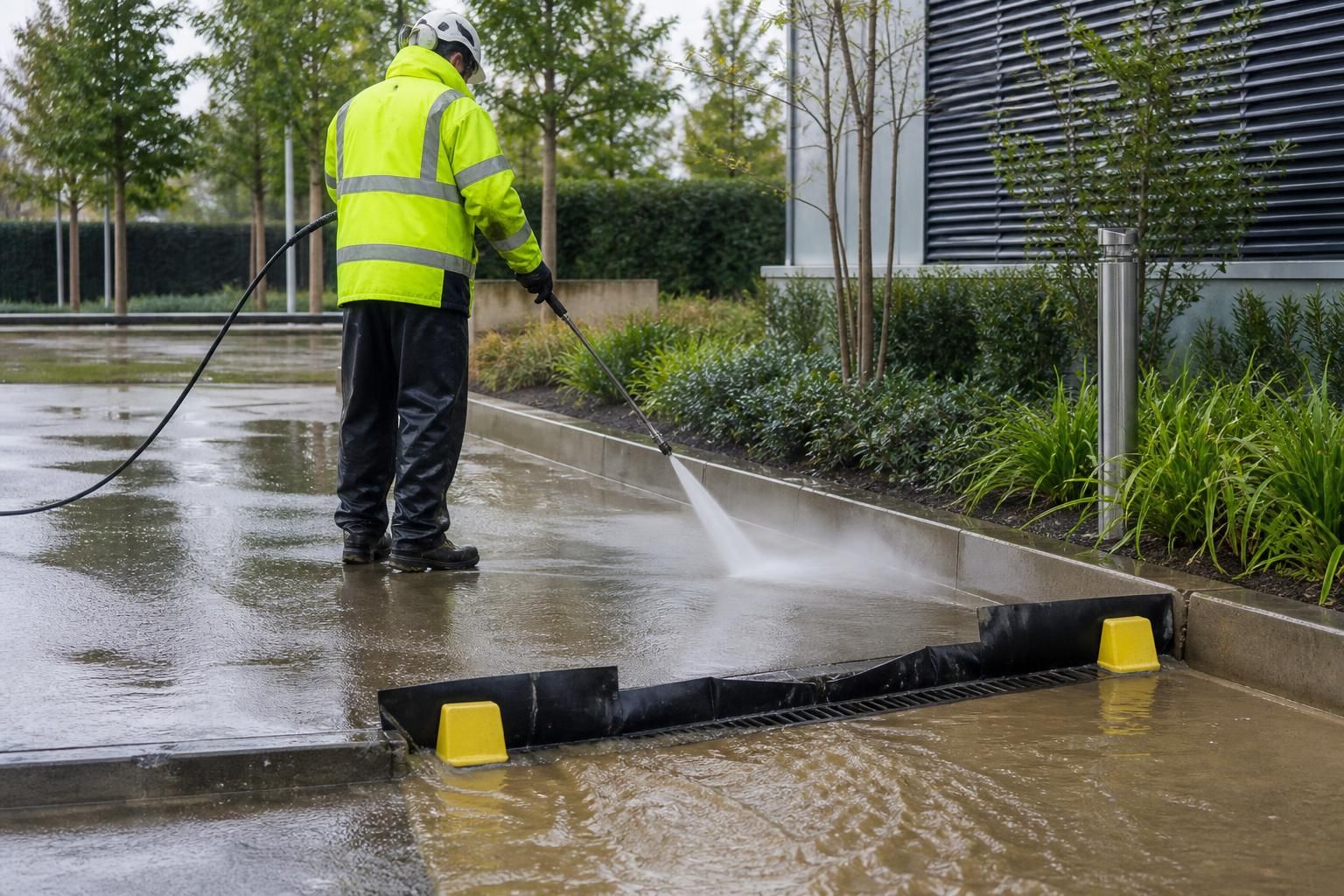
Pressure washing can be an environmentally responsible option when the pressure, nozzle and flow rate are matched to the concrete or paving slabs. It often removes dirt, algae and surface deposits without detergent, reducing chemical use. However, excessive pressure can damage joints, expose aggregate, loosen paving, create surface marks and increase the amount of suspended sediment in runoff. Damaging the surface is also an environmental concern because it can shorten its service life and lead to earlier replacement, with the associated use of new materials and transport.
Steam cleaning uses heated water and can reduce or eliminate the need for some detergents, particularly when treating organic growth, chewing gum and greasy deposits. It may use less water than some conventional washing processes, although the environmental performance depends on the equipment, the duration of the work and the energy source used to generate heat. Steam should still be controlled carefully around jointing materials, sensitive sealants, planted areas and surfaces that could be affected by heat.
Chemical cleaning may be appropriate for oil, rust, efflorescence or other deposits that water and steam cannot remove efficiently. The product should be selected for the specific contaminant and used at the lowest effective concentration. Consider its pH, biodegradability, toxicity, impact on aquatic life and compatibility with the paving, jointing compound and surrounding materials. Strong acids, alkalis, solvents and biocides can harm vegetation, soil organisms, drainage systems and watercourses if they are misapplied or allowed to escape from the site.
Biodegradable does not mean that a product can be discharged without controls. A biodegradable detergent may still affect aquatic life, alter the pH of receiving water or carry oil and suspended solids into a drain. Product labels and safety data sheets should be checked before use, and the cleaning method should include a plan for containing, collecting and disposing of the resulting wastewater.
Runoff control is essential. Dirty water should not be allowed to flow into surface-water drains, road gullies, streams, ponds or neighbouring land. Depending on the site, suitable controls may include drain covers, bunds, temporary barriers, wet vacuums, collection channels, silt controls and pumped extraction. Particular care is needed on sloping sites, near public highways and where paving drains directly to a surface-water system. Dry residues and removed moss should be collected rather than pushed into drainage channels.
Wastewater must be handled according to its contents and the local drainage arrangements. Water containing oil, detergents, heavy sediment, paint, biological treatment residues or other contaminants may need to be collected and removed by an appropriately authorised waste contractor. Discharge to a foul sewer may require the sewerage provider’s permission or a trade effluent agreement, while surface-water drains generally lead directly to the environment and must not be used for contaminated wash water. Requirements vary by site and location, so the responsible person should confirm the approved disposal route before work starts.
Protect surrounding soil and vegetation. Cleaning solutions and concentrated runoff can scorch grass, damage planted borders and affect soil chemistry. Plants should be protected from spray and overspray, and contaminated water should be prevented from entering planting beds. If algae or moss is being removed, consider whether a chemical treatment is actually necessary; mechanical removal, controlled pressure or steam may achieve the required result with less risk to nearby vegetation.
Consider energy use and transport as well as water and chemicals. Steam systems and hot-water pressure washers require energy, so the most sustainable option is not automatically the method using the least detergent. A cold-water process may be preferable for loose dirt, whereas targeted hot water or steam may be more efficient for a firmly bonded contaminant that would otherwise require repeated washing or chemical treatment. Using appropriately sized equipment, planning the work efficiently and avoiding unnecessary return visits can reduce fuel use and emissions.
Surface condition affects environmental impact. Cracked concrete, open-textured slabs, damaged joints and porous paving may retain detergents and contaminated water. Delicate or deteriorated surfaces may need lower-pressure cleaning, localised treatment or manual methods rather than aggressive washing. A small test area helps confirm whether the selected method removes the contaminant without excessive water use, surface erosion or chemical application.
For commercial and industrial sites, the cleaning plan should record the method, products used, runoff controls, drain protection, wastewater route and any requirements for protecting neighbouring land or water. Contractors should follow relevant product instructions and site environmental procedures, and staff should use appropriate personal protective equipment when handling cleaning chemicals or contaminated water. If the contamination may contain hazardous substances, specialist assessment and disposal arrangements are necessary.
In practice, a sensible hierarchy is to remove loose material first, use mechanical cleaning or controlled pressure where it is sufficient, consider steam or heated water for suitable deposits, and reserve chemicals for contaminants that need them. This approach does not make every job chemical-free, but it limits unnecessary product use while maintaining an effective clean. The final choice should balance environmental protection with the risk of damaging the concrete or paving, because a method that cleans quickly but causes erosion, joint failure or early replacement is not a sustainable solution.
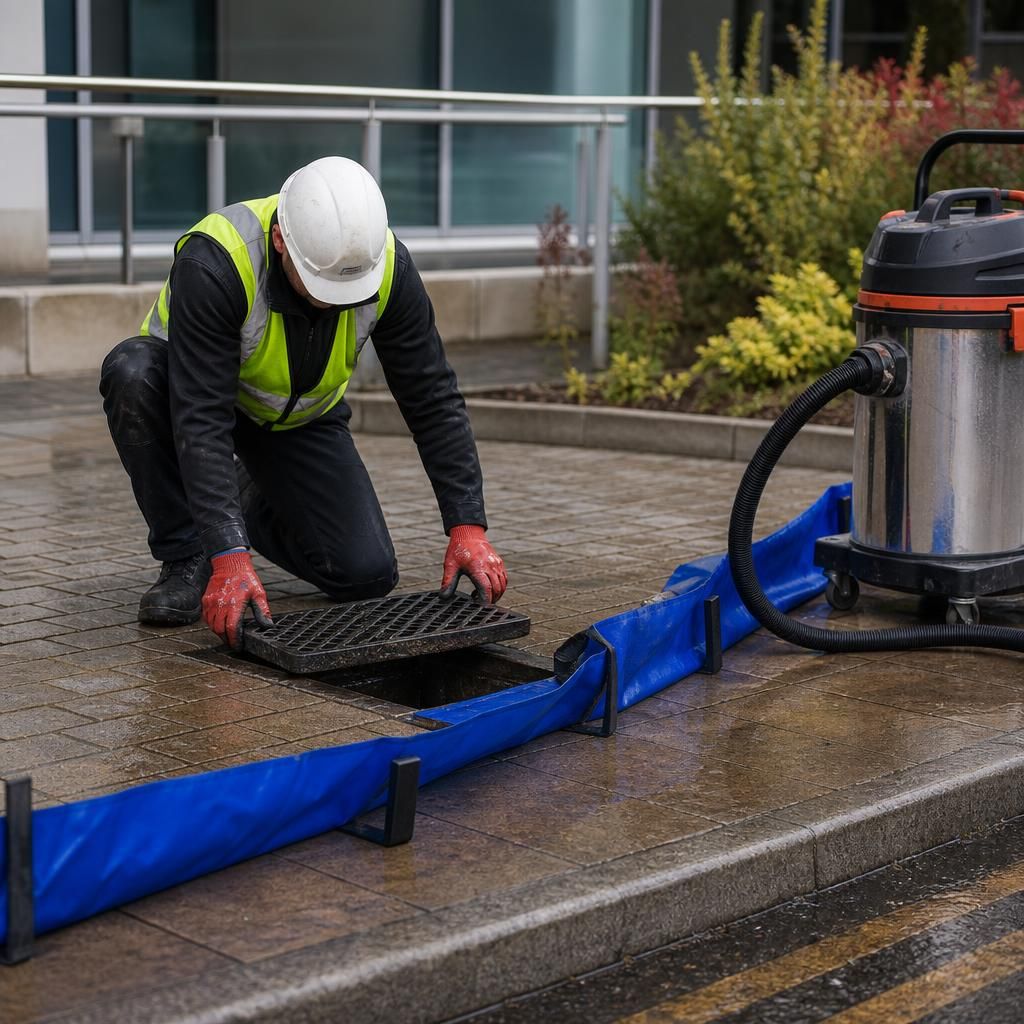
Runoff control is a central environmental consideration when cleaning concrete and paving slabs. Dirty water can carry detergents, oil, sediment, algae and other contaminants into surface-water drains, soil, planted areas or nearby watercourses, so it must be contained rather than allowed to flow away uncontrolled.
Before work begins, identify drainage routes and protect vulnerable areas with suitable measures such as drain covers, temporary barriers, collection channels or wet vacuums. Removed moss and loose debris should be collected, while wastewater should be filtered, recovered or disposed of through an approved route appropriate to its contents. A biodegradable product still requires runoff controls, as it may affect aquatic life or alter the pH of receiving water.