
What are the most effective ways to remove algae and moss from concrete and paving slabs while protecting the environment?
The most effective environmentally responsible approach combines mechanical removal with controlled low-pressure or steam cleaning, using a biodegradable treatment only where necessary to eliminate remaining algae and moss without damaging the concrete or paving slabs. Preventing contaminated runoff from entering drains, soil or watercourses and avoiding unnecessarily harsh chemicals helps protect the surrounding environment.
The most effective environmentally responsible method for removing algae and moss from concrete and paving slabs is a controlled combination of mechanical removal, low-pressure or steam cleaning, and targeted treatment only where necessary. This approach removes surface growth without relying on excessive chemical use, limits damage to the paving, and reduces the risk of contaminated water entering drains, soil or nearby watercourses.
Algae usually forms a slippery film across damp, shaded or poorly drained surfaces, while moss can establish in joints, surface texture and small cracks. Both retain moisture and can make paths, yards, car parks and access routes hazardous. Removing the visible growth is important, but long-lasting results also depend on addressing the moisture, drainage and organic debris that allow it to return.
Mechanical removal should normally be the first stage. Loose moss, leaves and other organic matter can be swept or scraped from the surface and removed rather than washed into drainage systems. Stiff brushes and suitable surface tools can dislodge growth from slabs and joints with little environmental impact. Mechanical methods are particularly useful where growth is concentrated in joints or where runoff must be kept to a minimum.
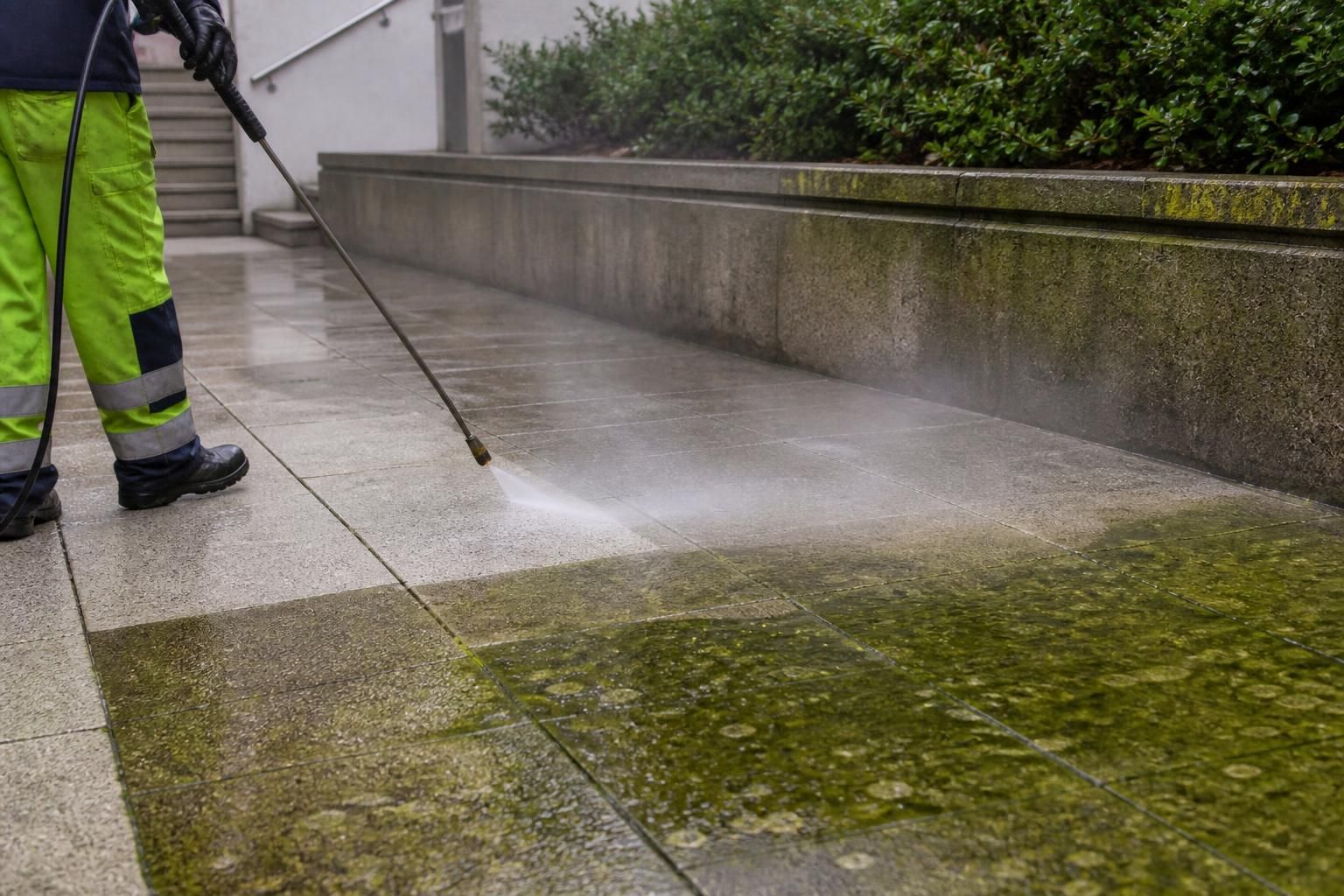
For firmly adhered algae and moss, controlled pressure washing can remove the remaining contamination. The pressure, water flow and cleaning angle should be selected for the condition and type of paving. Excessive pressure can erode the cement surface, expose aggregate, widen joints or damage older and already weakened slabs. Using the lowest effective pressure, keeping the equipment moving and working methodically produces a cleaner result while reducing water use and surface wear.
Steam cleaning is another suitable option where reduced chemical use is a priority. The heat helps break down organic growth and surface deposits, and it can be effective on textured concrete and paving without the same reliance on strong detergents. Steam still requires careful control around jointing materials, sealants, vulnerable surfaces and drainage points. It is most effective when combined with prior brushing and appropriate recovery or containment of the resulting wastewater.
Where growth remains embedded or is likely to return quickly, a carefully selected biodegradable treatment may be applied after the main cleaning process. The product should be appropriate for the surface and used strictly in accordance with its instructions and safety data. Biodegradable does not mean harmless in every situation: concentrated solutions can still affect plants, aquatic life, soil and drainage systems. Treatment should therefore be targeted rather than applied broadly, and unnecessary repeat applications should be avoided.
Protecting the environment depends as much on runoff management as on the cleaning product itself. Before work begins, drainage routes, gullies, planted areas, ponds and watercourses should be identified. Runoff can be contained, diverted, collected or treated where appropriate, and contaminated water should not be allowed to flow directly into surface-water drains or natural habitats. Slurry and removed moss should be collected for suitable disposal instead of being left at the edge of the site or pushed into joints and drains.
- Remove loose vegetation and debris before introducing water.
- Use mechanical brushing or scraping wherever it can achieve the required result.
- Select low-pressure washing or steam cleaning according to the surface condition.
- Use a biodegradable treatment only when physical cleaning is insufficient.
- Protect drains, planted areas, soil and watercourses from contaminated runoff.
- Collect solid waste and dispose of wastewater in accordance with site and local requirements.
- Test unfamiliar products and cleaning methods on an inconspicuous area first.
Surface assessment is essential before choosing the cleaning method. Newer, sound concrete and robust paving may tolerate controlled pressure washing, whereas old, friable, cracked, painted, sealed or previously damaged surfaces may require softer brushing or steam cleaning. Block paving also needs particular care because aggressive washing can remove jointing sand and destabilise the surface. Reinstating suitable jointing material may be necessary after cleaning.
Strong acids, highly concentrated chlorine-based products and indiscriminate chemical treatments are generally poor choices for environmentally sensitive cleaning. They can discolour concrete, corrode nearby metalwork, harm vegetation and create hazardous runoff. They may also clean the surface rapidly without resolving the damp conditions that encourage regrowth. If a chemical treatment is required, its compatibility with the paving, surrounding materials and drainage arrangements should be confirmed before use.
After cleaning, prevention reduces the need for repeated intensive work. Improving drainage, clearing blocked gullies, removing leaf litter and trimming vegetation that creates persistent shade can make the surface less favourable to algae and moss. Promptly treating small areas of regrowth through brushing is usually less disruptive than allowing a thick layer to establish. A suitable breathable sealant may also help some concrete and paving surfaces resist moisture and organic contamination, but it should only be specified after the surface has dried and its condition has been assessed.
For commercial yards, communal paths, car parks and other large paved areas, the cleaning plan should include a site survey, an agreed runoff-control method and a clear specification for pressure, temperature, products and waste handling. This provides a consistent result while protecting adjacent buildings, landscaping, vehicles and drainage infrastructure. The safest sustainable outcome is not simply the use of an environmentally labelled product; it is the combination of appropriate equipment, restrained chemical use, competent surface cleaning and responsible wastewater management.
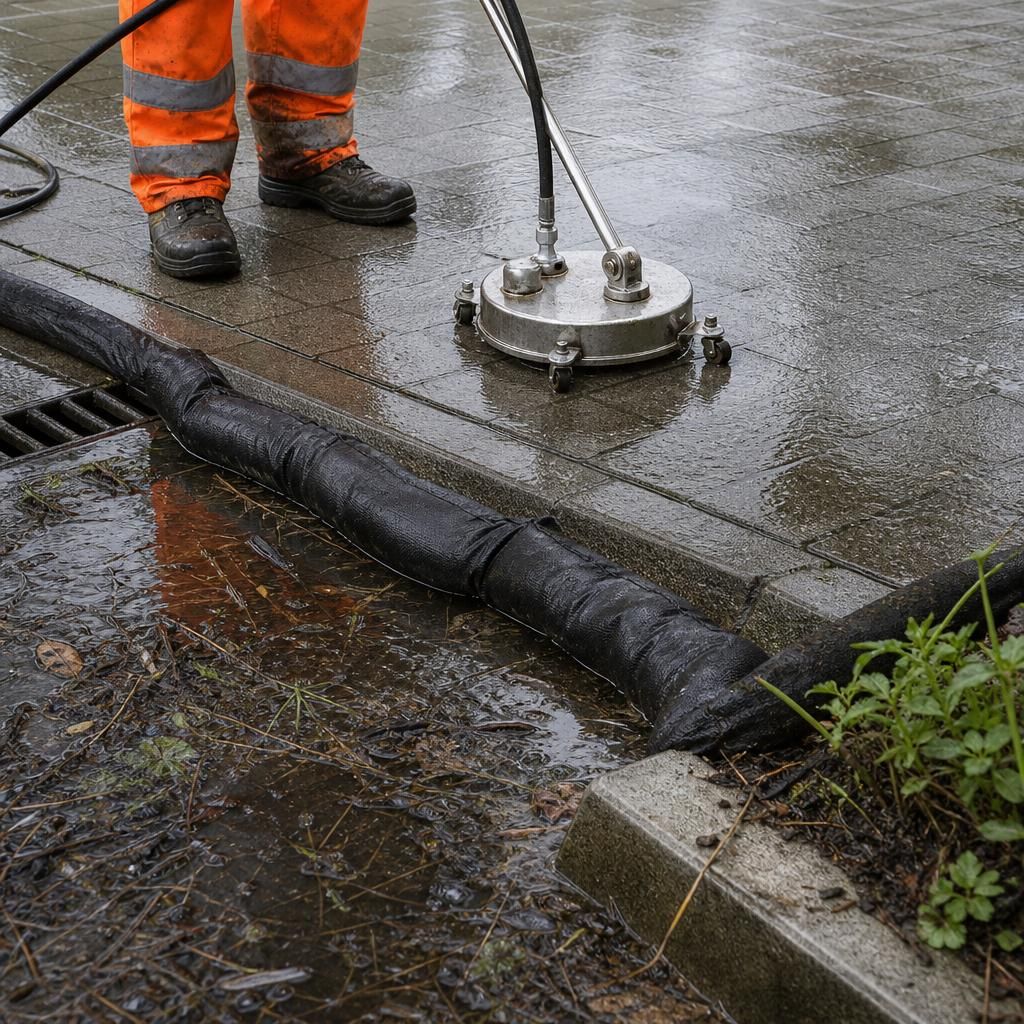
Runoff control is essential when removing algae and moss from concrete and paving slabs because wash water can carry organic matter, cleaning residues and suspended dirt into drains, planted areas or watercourses. Before cleaning begins, identify nearby gullies, surface-water drains, soil, vegetation and ponds, then use suitable barriers, diversion or recovery methods to prevent contaminated water leaving the work area.
Loose moss and debris should be swept up and removed before water is introduced. Any slurry or collected wastewater should be handled in accordance with site procedures and local requirements rather than discharged into a surface-water drain. This approach reduces environmental risk while allowing controlled pressure washing or steam cleaning to remove the remaining growth effectively.
Arrange Environmentally Responsible Algae and Moss Removal
Arrange environmentally responsible algae and moss removal for your concrete or paving slabs, with the cleaning method, runoff controls and treatment selected to suit the surface and site conditions. Contact Encanto Exterior Cleaning to discuss your requirements and plan the work.